
Featured Heating Alloys & Elements for Industrial Furnaces
Engineered with premium metallurgical wire and resistance elements directly integrated into heavy-duty bogie hearth furnace systems worldwide.


Industrial Bogie Hearth Furnaces: Structural Dynamics & Metallurgical Principles
An in-depth technical guide to heavy-duty car bottom furnaces, thermal insulation engineering, advanced alloy element placement, and multi-zone precise thermal control.
Heavy-Duty Bogie Mechanics
Constructed with high-tensile structural steel frames, heat-resistant alloy hearth plates, and dual-drive gear motors with frequency-controlled acceleration to prevent workpiece displacement during movement.
Hermetic Labyrinth Seals
Pneumatic or motorized sand/fiber trough seals prevent parasitic cold-air infiltration at the perimeter of the mobile hearth, ensuring minimal thermal loss and uniform bottom-heating conditions.
Multi-Zone Heating Elements
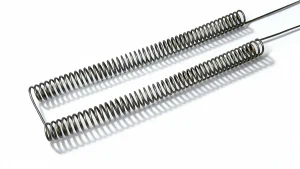
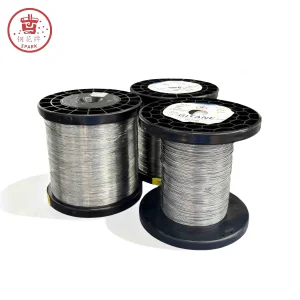
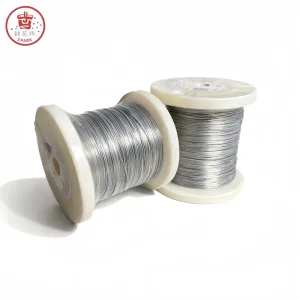
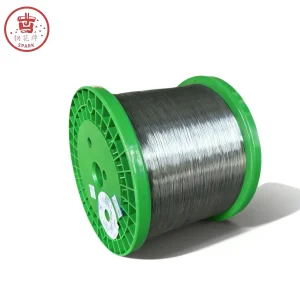
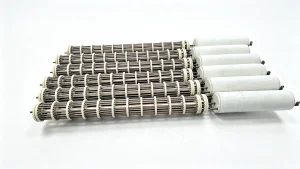
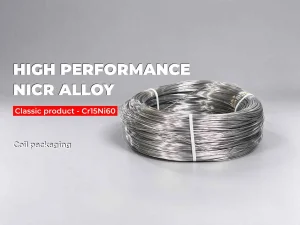
Powered by SPARK FeCrAl (0Cr25Al5, SGHT, SGHYZ) or NiCr (Cr20Ni80) alloy wire coiled on ceramic rods or embedded in ceramic fiber modules across 3 to 12 independent control zones.
Why China Manufacturers Lead Global Bogie Hearth Furnace Supply
Uniting raw metallurgical alloy production, heavy equipment engineering, and vertical manufacturing scale under rigorous ISO 9001 and GB/T standards.
In-House Metallurgy & SPARK Alloys
Unlike traditional furnace assemblers who outsource heating wire, leading Chinese manufacturers operate complete alloy smelting, hot rolling, wire drawing, and annealing lines (such as Beijing Shougang Gitane New Materials Co., Ltd.). This vertical integration guarantees metallurgical purity, tightly controlled electrical resistivity ($\pm 3\%$), and zero component lead-time bottlenecks.
Total Cost Optimization & Scale
Chinese furnace manufacturers leverage comprehensive industrial clusters—spanning structural fabrication, high-purity alumina fiber insulation, precision PLC control panels, and heavy hydraulics. This yields a 30% to 45% capital expenditure reduction compared to European or North American equipment, without compromising metallurgical life or thermal uniformity performance.
Custom Engineering Agility
From 5-ton tool steel annealing kilns to 200-ton turbine shaft stress relief complexes, Chinese factories excel at bespoke engineering. Dedicated CAD/CAE thermal modeling teams customize hearth size, bogie drive mechanisms, door lift pneumatics, and protective atmosphere systems (Nitrogen, Argon, Endothermic gas) to match global buyer RFQs.
Industry 4.0 & Decarbonization Trends in Bogie Hearth Furnaces
How smart thermal sensors, energy-recovery heat exchangers, and advanced powder-metallurgy heating alloys are reshaping global industrial heat treatment.
AI-Driven PID Thermal Control
Modern bogie furnaces integrate Siemens or Allen-Bradley PLCs running self-tuning PID algorithms and Thyristor (SCR) power regulators. Real-time temperature feedback from multi-point thermocouples automatically adjusts individual heating zone outputs, preventing thermal overshoot and compensating for hearth edge radiation losses.
Ultra-Low Mass Refractory Linings
Replacing old heavy refractory bricks with high-purity polycrystalline alumina fiber modules ($1260^\circ\text{C}$ to $1600^\circ\text{C}$ grade) reduces lining thermal storage by up to 75%. This enables fast heating and cooling cycles, slashes standby energy consumption, and eliminates thermal shock spalling during bogie extraction.
Powder Metallurgy Alloys (SGHT)
For continuous operation above $1300^\circ\text{C}$, traditional FeCrAl wires suffer from high-temperature creep and sag. Next-generation dispersion-strengthened alloys like SPARK SGHT (manufactured via powder metallurgy) provide superior sag resistance, a protective dense alumina scale, and operational life up to $1425^\circ\text{C}$.
Macro-Industry Solutions & Application Scenarios
Tailored thermal processing cycles engineered for critical manufacturing sectors around the globe.
| Target Industry | Typical Workpieces | Process Requirement | Recommended Heating Alloy / System |
|---|---|---|---|
| Wind Power & Heavy Gear | Ring gears, main shafts, planet carriers | Carburizing, stress relief, tempering ($600^\circ\text{C} - 950^\circ\text{C}$) | SPARK 0Cr25Al5 FeCrAl ribbon or Cr20Ni80 Nichrome for frequent cycling |
| Aerospace & Defense | Titanium structural forgings, turbine disks | AMS 2750G Class 2 solution treating ($\pm 5^\circ\text{C}$) | Multi-zone thyristor-controlled SPARK SG140 / SGHT ceramic core tubes |
| Railway & Heavy Casting | Bogie frames, wheelsets, coupler knuckles | Normalizing, full annealing ($850^\circ\text{C} - 1050^\circ\text{C}$) | Heavy-duty 0Cr23Al5 coiled wire mounted on high-alumina refractory shelves |
| Glass & Advanced Ceramics | Tempered glass molds, alumina/zirconia blocks | High-temperature sintering ($1200^\circ\text{C} - 1400^\circ\text{C}$) | SPARK SGHYZ & SGHT ultra-high temperature dispersion alloys |
| Aluminum & Alloy Metallurgy | Ingots, extrusion billets, aircraft sheet coils | Homogenizing, solution & aging ($450^\circ\text{C} - 600^\circ\text{C}$) | High-velocity forced convection air circulation with low-density NiCr coils |
Global Enterprise Procurement & Compliance Standards
Essential technical criteria, pyrometry specs, and quality verification protocols required when issuing an RFQ for wholesale bogie hearth furnaces.
Thermal Uniformity Survey (TUS)
International buyers in aerospace and automotive sectors (CQI-9) mandate 9-point or 20-point Thermal Uniformity Surveys across the entire effective work zone. Procuring furnaces manufactured with precision-calibrated SPARK resistance wire ensures compliance with Class 2 ($\pm 5^\circ\text{C}$) or Class 1 ($\pm 3^\circ\text{C}$) requirements.
Mechanical Load & Drive Specifications
Procurement specifications must clearly define maximum static and dynamic hearth loading ($\text{kg/m}^2$), bogie travel speed ($1-5\,\text{m/min}$), drive gear redundancy (pinion/rack vs chain wheel), and emergency manual retracted winch capability in case of power failure.
System Accuracy Tests (SAT) & CE Marking
Global buyers require CE compliance (LVD 2014/35/EU, EMC 2014/30/EU), ISO 9001 factory inspection records, and standardized SAT ports for secondary reference thermocouple insertion. Mill test certificates for heating alloys (GB/T 1234-2012) must accompany all equipment handovers.
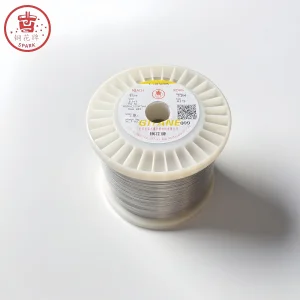
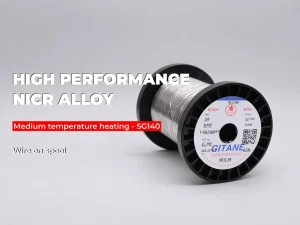
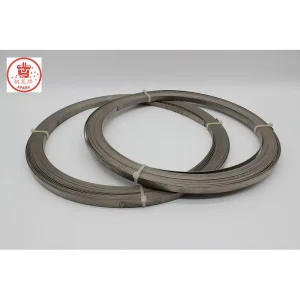
Industrial Heating Wires, Strips & Radiant Core Assemblies
Explore factory-direct wholesale heating wire grades, ceramic bundle radiant tube cores, and specialized nickel-chromium/iron-chromium-aluminum resistance alloys.

Frequently Asked Questions: Bogie Hearth Furnace Engineering
Technical answers to common inquiries from plant managers, procurement specialists, and metallurgists.
Ready to Optimize Your Industrial Thermal Processing?
Consult with our senior metallurgical and furnace engineering teams. Request technical datasheets, custom chamber calculations, or wholesale factory pricing today.