High-Temperature Resistance Alloys & Bends Portfolio
Explore our top-tier industrial heating wires, specialized alloy tubes, and bent heating elements directly from Beijing Shougang Gitane New Materials Co., Ltd.


Industrial Alloy Bends: Engineering Fundamentals & Metallurgical Integrity
A comprehensive guide for global procurement directors, thermal engineers, and industrial furnace OEMs seeking reliable wholesale bending solutions.
High-Temperature Tube & Wire Bending Mechanics
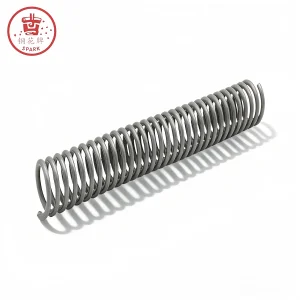
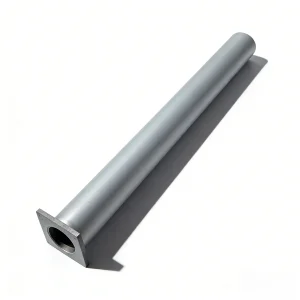
In high-temperature thermal processing systems, custom tubular bends, U-bends, W-bends, and helical wire bends act as core heating loops and structural thermal conduits. Precision bending of specialized electric heating alloys—such as iron-chromium-aluminium (FeCrAl) and nickel-chromium (NiCr)—requires strict control over microstructural grain deformation, stress concentration, and surface micro-cracking.
When selecting a qualified wholesale bends supplier, engineering teams must look beyond simple geometric bending radii. Thermal plastic deformation under cold or hot-bending conditions impacts electrical resistivity, local cross-sectional ovality, and protective oxide film growth ($\alpha\text{-Al}_2\text{O}_3$ or $\text{Cr}_2\text{O}_3$). As an enterprise under the state-owned Shougang Group with over 60 years of metallurgical leadership, Beijing Shougang Gitane New Materials Co., Ltd. delivers engineered bend components backed by full heat-traceability and mill-certified structural integrity.
FeCrAl vs. NiCr Alloy Bending Performance
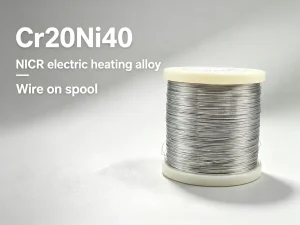
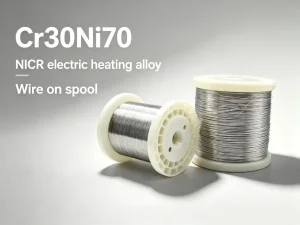
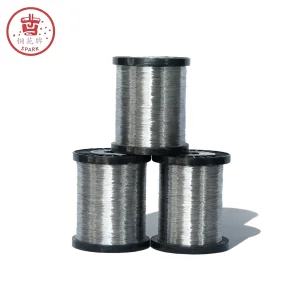
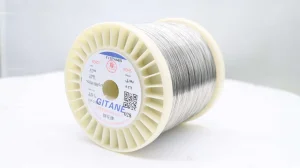
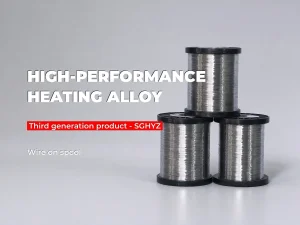
The choice between FeCrAl alloys (such as 0Cr25Al5, 0Cr23Al5, 0Cr21Al6Nb, SGHYZ, and powder-metallurgy SGHT) and NiCr alloys (Cr20Ni80, Cr30Ni70, Cr20Ni40, Cr15Ni60) dictates the bending process parameters:
- FeCrAl Alloys: Feature higher electrical resistivity ($1.35 - 1.45\,\mu\Omega\cdot\text{m}$) and lower density, offering substantial raw material weight savings. However, FeCrAl materials exhibit higher work-hardening rates during cold bending. Precise pre-heating or post-bend annealing is critical to prevent micro-fractures along bend apexes.
- NiCr Alloys: Provide superior ductility, exceptional hot strength, and minimal springback during cold formation. They remain ductile after extended high-temperature thermal cycling, making them the preferred material for complex multi-axis tubular bends and tight-radius hairpin loops.
Achieving maximum heating element service life at temperatures up to 1425°C requires matching the bend radius ratio ($R/D \ge 2.5$) with controlled post-bending stress-relief heat treatment. Improper bending degrades the protective alumina scale, accelerating local thermal runaway and premature element failure.
Shougang Gitane at a Glance
Decades of research, state-of-the-art production facilities, and strict quality control systems empower global enterprise supply chains.
Metallurgical Purity
Vacuum Induction Melting (VIM) and Electroslag Remelting (ESR) technologies guarantee minimal non-metallic inclusions, providing uniform ductility for defect-free tube bending.
National Standards
All resistance wires, strip materials, and tubular bends fully comply with Chinese National Standard GB/T 1234-2012, as well as ASTM B603, ASTM B344, and EN specifications.
Advanced Powder Metallurgy
Proprietary SGHT and SGHYZ alloys manufactured via powder metallurgy prevent high-temperature thermal creep, extending element life in continuous heavy-duty industrial furnaces.
Localized Technical Support & Compliance Assurance
Bridging Chinese manufacturing excellence with seamless international delivery and field application support.
Localized Engineering Support
Navigating technical specifications across international markets requires agile engineering responsiveness. We provide overseas procurement clients with localized technical assistance, including customized CAD drawing reviews, surface load ($\text{W/cm}^2$) calculations, coil diameter optimization, and alloy grade matching for localized operating atmospheres (carbonizing, nitriding, vacuum, or oxidizing environments).
Global Regulatory Compliance
Every shipment of wholesale bends, alloy wires, and radiant tubes comes standard with full batch traceability. We provide Mill Test Certificates (MTC) according to EN 10204 3.1, chemical composition heat logs, electrical resistance verification reports, and third-party RoHS/REACH compliance documentation to ensure frictionless customs clearance in Europe, North America, and East Asia.
End-to-End Export Logistics
To preserve precision bend geometries and fine surface finishes during ocean transport, components are packed in vacuum-sealed moisture-proof polymer wrapping, reinforced wooden crates, and custom anti-vibration framing. We partner with global freight forwarders to provide DDP, CIF, and FOB terms tailored to enterprise ERP schedules.
China Factory Supply Chain Superiority
Leveraging complete vertical integration—from raw ore smelting to automated CNC pipe bending—to deliver unmatched commercial value.
Vertical Metallurgical Integration
Unlike secondary processing operations that source third-party wire rod or seamless tube stock, Shougang Gitane manages the complete production lifecycle. From raw element selection (high-purity electrolytic nickel, chromium, refined iron, and aluminium) to vacuum induction melting, hot rolling, cold drawing, strip rolling, continuous annealing, and CNC bending—every step occurs within our 88,000m² manufacturing hub in Changping, Beijing.
This vertical integration ensures total control over chemical tolerances (e.g., maintaining aluminium levels strictly within 4.5%–5.0% for 0Cr23Al5) and reduces intermediate supply chain markups, granting global buyers direct factory pricing.
Precision CNC Bending & Quality Automation
We utilize multi-axis CNC mandrel tube benders and automated rotary coil bending equipment capable of producing complex geometric bends with tight dimensional tolerances ($\pm 0.5\,\text{mm}$ bend radius accuracy, $<5\%$ wall thinning ratio, and $<3\%$ ovality). Automated optical emission spectrometers (OES), ultrasonic flaw detectors, and digital optical comparators monitor product quality across every production shift.
Our technical team comprises 30% of our total workforce, ensuring continuous innovation in high-temperature alloy formulation and micro-structure optimization.
High-Temperature Resistance Alloy & Bend Specifications
Comparative technical parameters for major alloy grades utilized in industrial heating bends, radiant tubes, and resistance elements.
| Alloy Grade | Alloy Family | Max Temp (°C) | Resistivity at 20°C ($\mu\Omega\cdot\text{m}$) | Density ($\text{g/cm}^3$) | Key Mechanical & Bending Characteristics | Primary Industrial Applications |
|---|---|---|---|---|---|---|
| SGHT | FeCrAl (PM) | 1425°C | 1.45 | 7.10 | Powder metallurgy; extreme creep strength; minimal springback during hot bend formation. | Semiconductor diffusion furnaces, ceramic sintering kilns. |
| SGHYZ | FeCrAl | 1400°C | 1.42 | 7.10 | Rare-earth element (RE) enriched; dense $\text{Al}_2\text{O}_3$ scale; high oxidation resistance. | Ultra-high-temp industrial kilns, powder metallurgy. |
| 0Cr25Al5 | FeCrAl | 1250°C | 1.42 | 7.10 | Industry standard; high thermal efficiency; requires warm bending for $R/D < 3$. | Heat treatment furnaces, industrial radiant heaters. |
| 0Cr23Al5 | FeCrAl | 1250°C | 1.35 | 7.25 | Cost-effective workhorse; consistent elongation; excellent hot resistance stability. | General industrial furnace heating elements, tubular bends. |
| 0Cr21Al6Nb | FeCrAl | 1350°C | 1.40 | 7.10 | Niobium-added for elevated temperature strength; reduced grain growth post-bend. | High-temperature industrial kilns, ceramic heating fixtures. |
| Cr20Ni80 | NiCr | 1200°C | 1.09 | 8.40 | Exceptional cold ductility; easy bending without cracking; superior hot strength. | Precision thermal appliances, heavy-duty industrial heating loops. |
| Cr30Ni70 | NiCr | 1250°C | 1.18 | 8.10 | Ultra-high nickel content; outstanding performance in nitrogen-rich atmospheres. | Industrial furnaces, chemical cracking units, severe thermal cycling. |
| Cr20Ni40 / Cr15Ni60 | NiCrFe | 1100°C - 1150°C | 1.00 - 1.11 | 8.20 | Good corrosion resistance; economical nickel-alloy alternative; easy cold forming. | Medium-temperature heaters, commercial food equipment bends. |
Industry Trends & Next-Generation Bending Innovations
How global decarbonization, industrial electrification, and advanced metallurgy are shaping the wholesale bends market.
Electrification of Heavy Industry
Global manufacturing is shifting rapidly from gas-fired combustion heating to zero-emission electric thermal systems. Petrochemical reformers, steel heat-treatment lines, and glass annealing furnaces require high-power electrical radiant tube bends and heavy-gauge U/W elements capable of continuous multi-megawatt heat transfer.
Powder Metallurgy Microstructure
Conventional ingot metallurgy FeCrAl alloys suffer from rapid grain growth at temperatures exceeding 1300°C, leading to sagging and mechanical embrittlement in horizontal tube bends. The adoption of dispersion-strengthened powder metallurgy alloys (such as SPARK SGHT) eliminates sag, maintaining structural shape over tens of thousands of operating hours.
Green Hydrogen Atmosphere Compatibility
As industrial furnaces transition to hydrogen-rich reduction atmospheres, alloy bends face aggressive hydrogen embrittlement and rapid surface scale reduction. Next-generation rare-earth doped FeCrAl alloys form self-healing oxide coatings that remain stable in humidified hydrogen environments up to 1350°C.
Targeted Industrial Use Cases for Alloy Bends
Engineered performance engineered for demanding thermal environments across major global sectors.
1. Petrochemical Reformer & Cracking Tube Bends
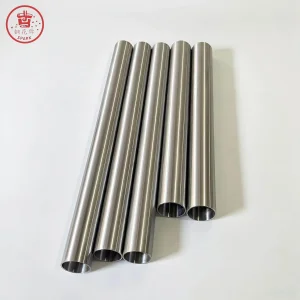
In thermal cracking and chemical synthesis furnaces, high-alloy U-bends and return bends operate under high pressure and elevated temperatures. Utilizing high-performance NiCr (Cr30Ni70) or specialized SGHT steel tube stock ensures resistance to carburization, thermal fatigue, and localized stress cracking.
2. Continuous Heat Treatment Radiant U/W Tubes
Automotive steel stamping, gear carburizing, and wire annealing lines rely on gas-tight electric radiant tubes equipped with internal hairpin bends or heavy ribbon heating elements. SPARK 0Cr25Al5 and 0Cr21Al6Nb bent elements provide uniform temperature distribution across large furnace chambers.
3. Semiconductor & Solar Wafer Processing Kilns
Photovoltaic crystal growth furnaces and semiconductor wafer diffusion tubes demand ultra-pure, particle-free heating environments. SPARK SGHYZ and SGHT powder metallurgy bends prevent particulate flaking while maintaining high dimensional stability during rapid temperature ramp cycles.
4. Industrial Energy Storage & Fluidized Bed Heaters
Thermal energy storage systems and industrial fluidized bed heaters utilize dense banks of bent tubular heating elements. High-density 0Cr23Al5 and Cr20Ni40 alloy bends resist mechanical abrasion, severe thermal cycling, and oxidation over long continuous operations.
Frequently Asked Procurement & Technical Questions
Direct technical insights from Shougang Gitane's metallurgical engineering team.
Explore Additional SPARK Alloy & Tube Solutions
Select from our comprehensive product range for quotes, technical datasheets, and direct factory procurement.