Industrial Appliance Heating Components & Resistance Alloys
Explore our core metallurgical product lines engineered for extreme thermal stability, low creep deformation, and extended service life up to 1425°C.





Appliance Heating Component Engineering & Sourcing Framework
An authoritative guide to resistance heating alloy selection, structural thermodynamics, oxidation kinetics, and wholesale cost optimization for commercial and industrial appliances.
FeCrAl vs NiCr Chemistry
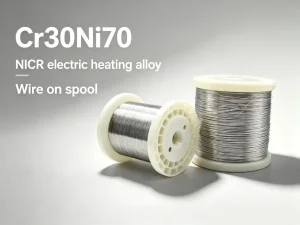
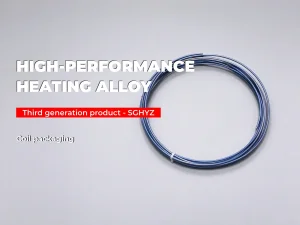
Electric heating alloys rely on the controlled oxidation of surface elements to form a passive ceramic scale. Iron-Chromium-Aluminum (FeCrAl) alloys (such as 0Cr25Al5, 0Cr23Al5, and SGHYZ) form a highly protective alpha-alumina (Al₂O₃) layer, permitting continuous operation up to 1425°C with superior electrical resistivity (up to 1.45 µΩ·m) and lower density than Nickel-Chromium. Conversely, Nickel-Chromium (NiCr) alloys (like Cr20Ni80 and Cr30Ni70) yield a protective chromia (Cr₂O₃) oxide scale, retaining higher hot yield strength, superior ductility after prolonged aging, and excellent cycling stability.
Creep Resistance & Microstructure
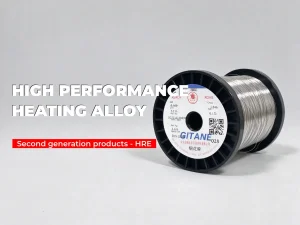
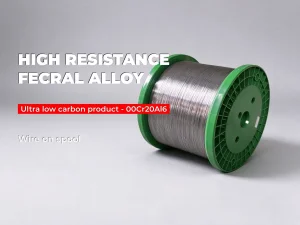
Thermal sag and deformation under constant stress are primary failure mechanisms in horizontal appliance heating elements. High-end FeCrAl alloys undergo rare-earth metal modification (Yttrium, Zirconium, Hafnium additions) to refine grain boundary structure. Ultra-low carbon variants, such as 00Cr20Al6, suppress carbide precipitation at grain boundaries, dramatically mitigating intergranular corrosion and post-yield elongation at elevated temperatures above 1100°C.
Surface Load Density Optimization
When engineering residential and commercial appliance elements (dryers, ovens, water heaters, air handling units), calculating the exact watt density (W/cm²) is crucial. Exceeding recommended surface load thresholds accelerates oxide spallation and shortens element lifetime. Our technical support team assists original equipment manufacturers (OEMs) in balancing element coil pitch, wire diameter, and furnace heat dissipation to maximize MTBF (Mean Time Between Failures).
China Factory Supply Chain Advantages & Shougang Gitane Heritage
Leveraging over 60 years of metallurgical excellence under Shougang Group, delivering uncompromised batch-to-batch consistency from raw melt to finished heating wire.
1. Vertical Melt-to-Wire Integration
Unlike third-party wire drawers who source pre-rolled rod, our manufacturing ecosystem controls the entire metallurgical value chain: Vacuum Induction Melting (VIM), Electro-Slag Remelting (ESR), hot rolling, heavy drawing, intermediate hydrogen annealing, fine wire drawing, and continuous bright annealing. This end-to-end oversight guarantees exact chemical tolerances and tight electrical resistance spreads (±3%).
2. Economies of Scale & Raw Material Security
Direct integration with national steel and alloy supply channels insulates our global partners from severe commodity market volatility. Bulk raw material procurement (high-purity electrolytic nickel, chromium metal, refined iron, rare-earth metals) allows us to offer tier-1 wholesale pricing while maintaining massive production capacity across wire, strip, ribbon, and formed heating coils.
3. Precision Annealing & Surface Finishing
Appliance assembly automation demands straightness, uniform softness, and pristine surface finish. Our advanced continuous hydrogen-atmosphere annealing furnaces eliminate surface carbon residues and oxide scales, yielding bright, clean wires that minimize tool wear during automated spring coiling and stamped ribbon formation.
Global Enterprise Sourcing Specifications & Quality Protocols
Designing procurement pathways for Tier-1 appliance manufacturers, industrial furnace builders, and HVAC component OEMs across North America, Europe, and Asia-Pacific.
Strict Dimensional & Resistance Tolerances
Automated element wrapping and terminal crimping require uniform wire diameters and consistent resistance per meter. SPARK heating wires conform strictly to GB/T 1234-2012 and ASTM international standards, delivering wire diameter tolerances as low as ±0.01mm for fine wires and resistance tolerances within ±3% per spool.
Custom Supply Formats & Packaging
Whether your assembly line uses high-speed automated coilers or manual element insertion, we supply customized packaging formats: DIN spools (DIN 100, DIN 160, DIN 200, DIN 250, DIN 355), heavy carrier coils (up to 500kg), precision-cut straight rods, and cold-rolled slit ribbons on wooden reels.
Traceability & Mill Test Certification (MTC)
Every shipment is accompanied by a full 3.1 Mill Test Certificate detailing spectral chemical analysis, room-temperature tensile strength, elongation percentage, 20°C electrical resistivity, and accelerated high-temperature life testing compliance (Bash-Harsch test data).
| Alloy Grade | Alloy Family | Max Temp (°C) | Resistivity at 20°C (µΩ·m) | Density (g/cm³) | Primary Industrial Application |
|---|---|---|---|---|---|
| SGHYZ | FeCrAl (Creep-Resistant) | 1400°C | 1.45 | 7.10 | High-temp industrial furnaces, ceramic kilns |
| 0Cr25Al5 | FeCrAl High-Resistance | 1250°C | 1.42 | 7.10 | Appliance elements, ovens, radiant heaters |
| 0Cr23Al5 | FeCrAl Commercial | 1250°C | 1.35 | 7.25 | Commercial cooktops, air heating coils |
| 00Cr20Al6 | Ultra-Low Carbon FeCrAl | 1250°C | 1.38 | 7.15 | Low-creep elements, industrial heat treatment |
| Cr20Ni80 | NiCr Nichrome | 1200°C | 1.09 | 8.40 | Precision home appliances, toaster coils, HVAC |
| Cr30Ni70 | NiCr Premium | 1250°C | 1.18 | 8.10 | Industrial furnaces, controlled atmosphere heaters |
| SG140 | Specialty Resistance Alloy | 1300°C | 1.40 | 7.20 | Tempering furnaces, heavy-duty heating spirals |
Localized Application Scenarios & Product Integration
From consumer white goods to heavy industrial thermal processing, discover how targeted alloy selection powers modern appliances.
Domestic Consumer Appliances
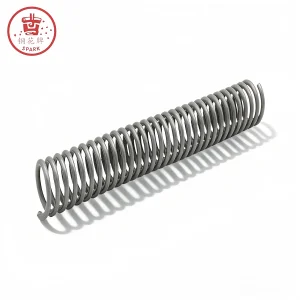
In home appliances like clothes dryers, toaster ovens, electric kettles, and hair dryers, Cr20Ni80 and 0Cr23Al5 open-coil elements provide rapid thermal response, exceptional flexural ductility, and reliable start-stop duty cycle performance without embrittlement.
Commercial Catering & HVAC Systems
Commercial fryers, deck ovens, steam tables, and duct heaters utilize tubular heating elements swaged with magnesium oxide (MgO) powder. High-purity 0Cr25Al5 and Cr30Ni70 wires deliver continuous uniform thermal dispersion and withstand rigorous sheath compaction during tube manufacturing.
Industrial Heat Treatment & Furnaces
In high-temperature tempering, annealing, and sintering furnaces operating between 1100°C and 1400°C, SGHYZ, SGHT, and SG140 heavy-gauge coiled wires and corrugated ribbons provide unexcelled creep strength and oxidation resistance in both air and controlled atmospheres.
Global Compliance & Localized Technical Support
Navigating environmental, safety, and operational standards to ensure seamless international component integration.
International Environmental Compliance
All SPARK resistance alloys and manufactured elements comply strictly with EU RoHS 3 (Directive 2015/863) and REACH SVHC regulations. Heavy metals (Lead, Cadmium, Mercury, Hexavalent Chromium, PBBs, PBDEs) are rigorously excluded during melting to safeguard end-consumer safety.
Appliance Safety Standards (UL & CE)
Our heating wires and elements meet material component criteria for inclusion in appliances certified under UL 1030 (Sheathed Heating Elements), UL 499, and European IEC/EN 60335 safety guidelines, helping OEMs achieve rapid safety approval for export markets.
Worldwide Engineering Logistics
We provide localized engineering consultation, sample prototyping within 5-7 business days, dedicated inventory stocking programs for OEM forecasts, and comprehensive sea, air, and express door-to-door freight support worldwide.
Appliance Heating Industry Trends & Metallurgical Breakthroughs
Key technological shifts driving energy efficiency, decarbonization, and component longevity in global thermal systems.
1. Decarbonization & Electrification
As global industries transition away from fossil-fuel burner systems toward 100% electric thermal processing, high-density resistance alloys capable of delivering elevated kilowatt outputs in compact spatial footprints are rapidly replacing traditional gas firing systems.
2. Powder Metallurgy (PM) FeCrAl Alloys
Advanced powder metallurgy processes (such as those employed in SGHT alloy tubes and wires) yield ultra-fine dispersion of oxide particles (ODS alloys), dramatically increasing high-temperature sag resistance and doubling element life at temperatures exceeding 1350°C.
3. Smart Thermal Control Integration
Modern heating elements are increasingly paired with solid-state relay (SSR) pulse-width modulation (PWM) power controllers. Stable cold-to-hot resistance ratios (Rt/R20) in FeCrAl and NiCr alloys prevent current inrush spikes and protect sensitive electronic control boards.
Frequently Asked Questions (FAQ)
In-depth technical answers for procurement directors, product designers, and metallurgical engineers.
Choose FeCrAl (e.g., 0Cr25Al5, SGHYZ) if your application requires operating temperatures above 1200°C, higher electrical resistivity (enabling thinner or shorter wire), lower material weight/cost, and maximum oxidation life. Choose NiCr (e.g., Cr20Ni80) if your appliance undergoes frequent cold start-stop cycling, requires maximum mechanical ductility after prolonged use, or operates in reducing or humid atmospheres where alumina scale spallation could occur.
Wholesale pricing is determined by three key variables: 1. Alloy Composition: High Nickel alloys (Cr20Ni80) track global LME Nickel market spot prices and carry a higher cost per kg than Iron-based FeCrAl alloys. 2. Gauge & Drawing Complexity: Fine wire gauges (e.g., <0.20mm) require multiple drawing passes and intermediate hydrogen anneals, increasing labor conversion costs relative to raw rod. 3. Fabrication & Packaging: Custom formed coils, crimped terminal pins, and specialized spooling format choices impact the final unit price.
Standard raw wire, strip, and spooled products in common gauges (0.5mm to 6.0mm) ship within 7 to 10 working days from stock. Custom melted heats, non-standard ribbon sizes, or pre-formed OEM heating elements typically require 15 to 21 working days, inclusive of full laboratory testing and Mill Test Certification.
FeCrAl alloys experience grain growth when held at temperatures above 1000°C for extended periods. Upon cooling to room temperature, the enlarged grain structure renders the wire brittle to impact or mechanical bending. To manage this: 1. Design correctly: Ensure elements are fully pre-formed into spirals or ribbons prior to initial energization. 2. Alloy selection: Select modified micro-alloyed grades like SGHYZ or ultra-low carbon 00Cr20Al6, which employ grain-refinement additives to maintain higher post-heating structural integrity.
More Appliance & Industrial Heating Solutions
Complete your procurement specification with our specialized resistance alloy wires, heating tubes, and furnace alloys.