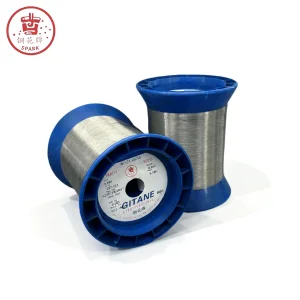
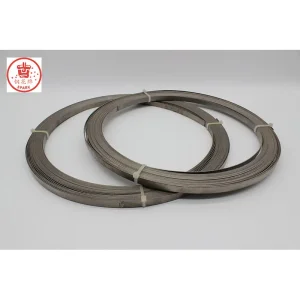
Featured High-Temperature Alloys & Heating Elements (Part I)
Direct factory-sourced electrothermal wire, tube materials, and precision heating coils manufactured under strict metallurgical controls for seamless furnace integration.



1. Macro Industry Ecosystem: Global Demand for Universal Furnace Compatibility
In modern thermal processing, industrial furnace equipment manufacturers and commercial heat treatment plants operate under rigorous performance, energy efficiency, and operational uptime parameters. The strategic deployment of resistance heating alloys—specifically engineered Iron-Chromium-Aluminum (FeCrAl) and Nickel-Chromium (NiCr) variants—serves as the core technological enabler for high-temperature thermal transformation. Modern continuous, batch, and vacuum furnaces require electrothermal elements capable of adapting smoothly to diverse atmospheric chemistries, thermal cycling shocks, and demanding geometry footprints.
As global decarbonization mandates accelerate the electrification of fossil-fueled kiln systems, heat treatment facilities across North America, Europe, and the Asia-Pacific region are standardizing on versatile resistance materials. These materials must deliver extended service life, minimal electrical resistance drift, and superior creep resistance across operating temperatures spanning from 500°C to well over 1425°C.
Core Technical Advantage: Adapting a unified, high-purity heating alloy standard across multiple furnace architectures reduces global spare-part inventory overheads by up to 35%, while eliminating cross-contamination risks during atmosphere transition cycles.
2. Technical Roadmap: Physical Metallurgy, Microstructure, and Alloy Kinetics
Selecting the ideal resistance alloy requires balancing working ambient conditions, electrical load density (W/cm²), thermal expansion coefficients, and surface oxide protective dynamics. High-temperature electrothermal alloys are categorized into two primary crystal families:
Ferritic FeCrAl Alloys (0Cr25Al5, SGHYZ, SGHT)
Body-Centered Cubic (BCC) structure characterized by high electrical resistivity (up to 1.45 μΩ·m), lower specific density (7.10 g/cm³), and exceptional formation of a self-healing Alpha-Alumina (α-Al₂O₃) surface passivation scale. Impervious to oxidizing and sulfurous environments up to 1425°C.
Austenitic NiCr Alloys (Cr20Ni80, Cr15Ni60, Cr20Ni40)
Face-Centered Cubic (FCC) lattice providing outstanding hot structural strength, post-use ductility, non-magnetic properties, and resistance to green rot corrosion. Outstanding resistance to mechanical shock and frequent hot-cold thermal cycling up to 1200°C.
Comprehensive Material Property Comparison Table
| Alloy Family / Grade | Max Temp (°C) | Resistivity 20°C (μΩ·m) | Density (g/cm³) | Melting Point (°C) | Dominant Protective Oxide | Atmospheric Fit |
|---|---|---|---|---|---|---|
| SPARK SGHT (Powder Metallurgy) | 1425 | 1.45 | 7.10 | 1500 | Alpha-Al₂O₃ (Ultra-Dense) | Carburizing, Vacuum, Air |
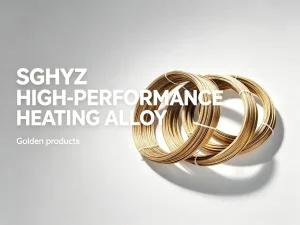
| SPARK SGHYZ (Golden Wire) | 1400 | 1.42 | 7.10 | 1500 | Al₂O₃ + Rare Earth Doping | Oxidizing, Inert, High-Duty |
| 0Cr25Al5 / 0Cr23Al5 (FeCrAl) | 1250 - 1300 | 1.35 - 1.42 | 7.15 | 1500 | Alpha-Al₂O₃ | Sulfurous, Air, Kilns |
| Cr20Ni80 (Nichrome) | 1200 | 1.09 | 8.40 | 1400 | Cr₂O₃ (Chromia Scale) | Nitrogen, Reducing, Cycling |
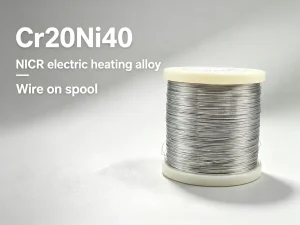
| Cr20Ni40 (NiCr-Fe) | 1100 | 1.04 | 8.20 | 1390 | Cr₂O₃ Complex Oxide | Standard Industrial Heat Treatment |
3. Chinese Supply Chain Resilience, Manufacturing Scale, and Cost Efficiency
With state-of-the-art facilities located in Changping, Beijing, Beijing Shougang Gitane New Materials Co., Ltd. represents over six decades of continuous metallurgical innovation. Operating as a crucial core enterprise under the state-owned Shougang Group, Gitane spans an integrated manufacturing footprint of 88,000 square meters, combining raw material smelting, precision hot rolling, fine wire drawing, and controlled-atmosphere strand annealing under one strict quality protocol.
Upstream Smelting Precision
Vacuum Induction Melting (VIM) coupled with Electro-Slag Remelting (ESR) eliminates micro-inclusions, tramp elements (lead, tin, zinc), and gas porosity, assuring uniform resistance along thousands of continuous wire meters.
Powder Metallurgy (PM) Leadership
Proprietary PM atomization lines produce advanced SGHT grades with ultra-fine grain structures. This technology neutralizes high-temperature sag, elongation, and grain growth that typically degrade standard FeCrAl alloys at temperatures exceeding 1300°C.
Unrivaled Cost Efficiency
Fully integrated domestic supply chains for high-purity electrolytic chromium, nickel, and rare-earth dopants (Yttrium, Zirconium) ensure complete pricing transparency, bypassing speculative distributor markups.
4. Field Integration: Adapting to Specific Furnace Types and Process Atmospheres
Industrial heat processing encompasses diverse thermal profiles and chemical environments. The SPARK series by Shougang Gitane is tailor-engineered for seamless operation across all standard furnace configurations:
1. Continuous Mesh-Belt Carburizing & Quenching Furnaces
Process Demands: High carbon potential, endothermic gas atmospheres, rapid thermal cycles.
Recommended Alloy: Cr20Ni80 or Powder Metallurgy SGHT. Standard FeCrAl alloys can experience carbon pickup and internal carburization at 850°C-950°C if the oxide layer degrades. SPARK PM SGHT forms an ultra-dense scale that prevents carbon ingress, while Cr20Ni80 offers complete immunity to carbon soot short-circuiting.
2. Pit-Type Annealing & Tempering Furnaces
Process Demands: Deep vertical chamber loading, heavy mechanical vibration during charge lowering.
Recommended Alloy: 0Cr25Al5 or 0Cr23Al5 Strip/Ribbon Elements. High electrical resistance enables thicker element cross-sections, preventing mechanical distortion while maximizing radiative surface area (W/cm²).
3. High-Vacuum Sintering & Petrochemical Stress-Relief Retorts
Process Demands: Ultra-high purity, no outgassing, high thermal radiation efficiency in partial pressures.
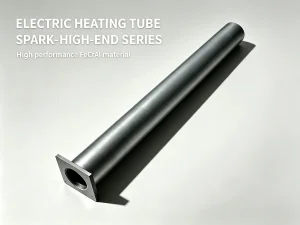
Recommended Alloy: SGHT & SGHYZ Electrothermal Tubes. Engineered to maintain structural integrity up to 1425°C without contaminating sensitive components, powder metal compacts, or specialty alloy tubes.
5. Quality Compliance, Global Standards, and International Support
To assure absolute operational reliability for international plant procurement, all SPARK resistance alloys undergo strict non-destructive and destructive testing in compliance with Chinese National Standards (GB/T) and international equivalents:
- GB/T 1234-2012: High-resistance electrothermal alloys specification governing chemistry tolerances, resistivity variation, and surface finish.
- ASTM B603 / ASTM B344: Standard specification for Iron-Chromium-Aluminum and Nickel-Chromium electrical heating elements.
- DIN 17470 / ISO 9001:2015: International quality management certification encompassing complete traceable mill test certificates (EN 10204 3.1 MTC) for every production heat.
Technical Support Guarantee: Application engineers at Shougang Gitane assist clients globally with custom element calculations (surface loading W/cm², cold resistance calculations, pitch-to-diameter ratios) to maximize life cycles in existing or retrofitted furnace structures.
6. Frequently Asked Questions (FAQ) for Furnace Procurement & Metallurgy
Featured High-Temperature Alloys & Heating Elements (Part II)
Comprehensive pricelist options, customizable wire gauges, ribbon sizes, and pre-formed spiral coils ready for global delivery.