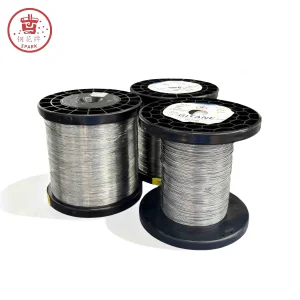
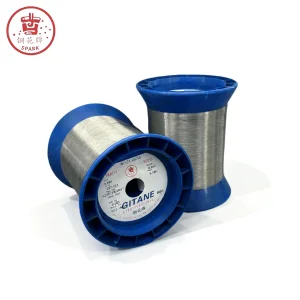
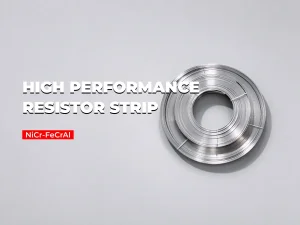
Featured Resistance Alloy Products (Group A)
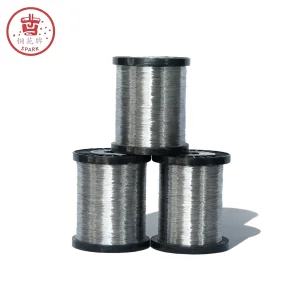
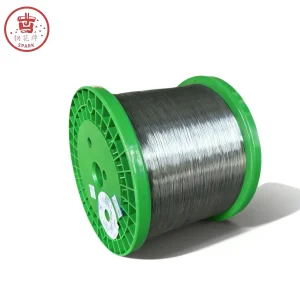
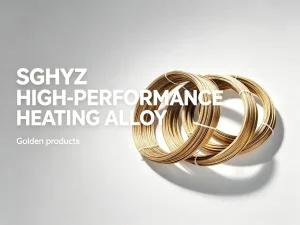
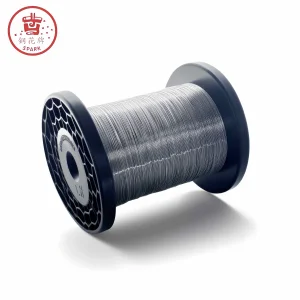
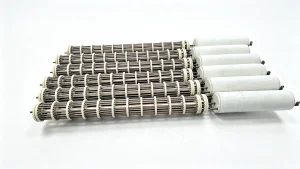
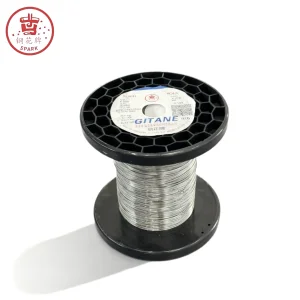
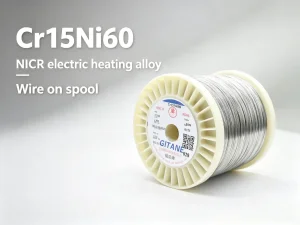
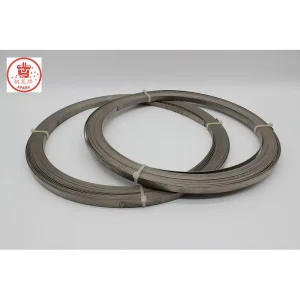
Explore our flagship high-temperature electric resistance heating wire, strip, and pre-formed heating elements designed for demanding industrial furnaces.
Executive Metallurgical White Paper: 131 MPa Tensile Strength at 900°C
A comprehensive analysis of ultra-high-temperature electrothermal alloys combining mechanical resilience, low thermal sag, and exceptional cold workability for heavy industrial applications.
The Engineering Challenge High Temp vs. Formability
Historically, heat-resistant iron-chromium-aluminium (FeCrAl) alloys suffered from a classic metallurgical trade-off: increasing chromium and aluminium content to withstand temperatures above 800°C severely compromised cold workability, resulting in grain boundary embrittlement during coil winding or deep drawing.
When deployed in continuous industrial kilns operating around 900°C to 1250°C, conventional resistance wires experience rapid thermal creep, yielding and structural sagging under their own weight. This deformation shortens heating element operational lifespans and causes circuit shorting against furnace refractory linings.
The SPARK Solution Micro-Alloying Breakthrough
By implementing ultra-pure vacuum induction melting combined with precision rare-earth micro-alloying (Yttrium, Zirconium, Cerium, and Niobium), Beijing Shougang Gitane has re-engineered the grain boundary architecture of high-resistance FeCrAl and NiCr alloys.
This metallurgical refinement yields an unprecedented 131 MPa ultimate tensile strength at 900°C while maintaining an elongation rate $\ge 18\%$ at room temperature. The micro-addition of reactive elements pins grain boundaries against high-temperature sliding, preventing thermal creep without inducing brittle intermetallic phases during cold fabrication.
Mechanical & Thermal Property Engineering Matrix
Quantitative validation of mechanical resilience from ambient conditions to extreme thermal environments (GB/T 1234-2012 certified testing).
| Alloy Grade / Variant | Resistivity @ 20°C (μΩ·m) | Tensile Strength @ 20°C (MPa) | Tensile Strength @ 900°C (MPa) | Elongation @ 20°C (%) | Max Service Temp (°C) | Dominant Protective Oxide Scale |
|---|---|---|---|---|---|---|
| SPARK Ultra-High Temp (SGHYZ / SGHT) | 1.45 ± 0.05 | 750 - 950 | 131 MPa | ≥ 20% | 1400°C - 1425°C | Dense Alpha-Alumina ($\alpha-\text{Al}_2\text{O}_3$) |
| Standard FeCrAl (0Cr25Al5) | 1.42 ± 0.05 | 650 - 800 | 85 - 95 MPa | ≥ 18% | 1250°C | Alpha-Alumina ($\alpha-\text{Al}_2\text{O}_3$) |
| Refinement Grade (0Cr23Al5) | 1.35 ± 0.05 | 630 - 780 | 75 - 90 MPa | ≥ 20% | 1250°C | Alumina-Chromia Scale |
| Modified Nb Grade (0Cr21Al6Nb) | 1.40 ± 0.05 | 700 - 850 | 110 - 120 MPa | ≥ 18% | 1350°C | Nb-doped Alpha-Alumina |
| Nichrome High Temp (Cr20Ni80S) | 1.09 ± 0.04 | 750 - 900 | 105 - 115 MPa | ≥ 25% | 1200°C | Chromium Oxide ($\text{Cr}_2\text{O}_3$) |
Oxidation Kinetics & Scale Adhesion
At temperatures exceeding 800°C, SPARK FeCrAl alloys rapidly build a self-healing, non-porous $\alpha-\text{Al}_2\text{O}_3$ scale. Reactive element additions suppress spallation during rapid thermal cycling, protecting the inner metallic core from further oxidation and volatilization.
Suppression of $475^\circ\text{C}$ Embrittlement
High-chromium ferritic alloys typically suffer from phase separation ($\alpha-\alpha'$) when exposed to intermediate temperatures ($400^\circ\text{C}-500^\circ\text{C}$). Precise chemical balancing eliminates this susceptibility, preserving ductility throughout startup and shutdown cycles.
Elevated Hot Creep Strength
With an unprecedented high-temperature yield point, the 131 MPa tensile performance at 900°C ensures that heavy coil elements maintain their pitch spacing and geometry, eliminating hot-spot formation caused by turns touching.
Global Industrial Market Adoption & Trends
How next-generation thermal processing industries leverage high-mechanical-strength alloys to drive decarbonization, efficiency, and zero-defect manufacturing.
Diffusion & LPCVD Furnaces
Semiconductor wafer manufacturing and solar cell diffusion tubes require cleanroom-compatible heating elements. SPARK FeCrAl wire rated at 131 MPa @ 900°C eliminates particulate shedding while maintaining micro-positioning accuracy during high-temperature thermal oxidation steps up to 1350°C.
- ✓ Low iron-contamination risk
- ✓ Exceptional dimensional stability
Lithium Cathode Sintering Kilns
Continuous roller hearth kilns (RHK) producing NMC and LFP cathode materials operate 24/7 under aggressive lithium vapor environments. Superior hot strength prevents sag in overhead radiant heaters, drastically extending kiln maintenance intervals.
- ✓ Resistant to alkaline corrosion
- ✓ Extended service life > 18 months
Green Steel & Hydrogen Heaters
As heavy industry transitions from fossil fuels to hydrogen direct reduced iron (DRI) electrification, electric heating elements must handle high flow rates of hot gas without mechanical distortion or accelerated erosion.
- ✓ Compatible with dry/wet H2 gas
- ✓ High surface power loadings ($W/cm^2$)
Precision Cold Formability & Fabrication Protocol
Optimizing automated spiral coiling, bending radii, and assembly without stress cracking or tool wear.
Processing & Winding Guidelines
Despite reaching 131 MPa tensile strength at elevated temperatures, SPARK alloys exhibit remarkable ductility during room-temperature fabrication. To achieve optimal coil geometry and avoid micro-fissures during high-speed automated coiling:
-
1
Mandrel Ratio ($D/d$): Maintain a minimum ratio between core mandrel diameter ($D$) and wire diameter ($d$) of $D/d \ge 3.0$ for cold coiling. For fine wires ($d < 1.0\text{ mm}$), $D/d \ge 2.5$ is achievable.
-
2
Controlled Tensioning: Apply uniform back-tension during spiral winding to prevent work-hardening spikes. Back tension should not exceed 15% of ambient yield strength.
-
3
Pre-Heating for Heavy Sections: For thick strip or heavy gauge wire ($d > 6.0\text{ mm}$), preheating the material to $200^\circ\text{C}-300^\circ\text{C}$ significantly reduces bending resistance and springback.
Stress Relief & Pre-Oxidation Parameters
After mechanical forming, internal residual stresses should be relieved before installation in high-stress thermal equipment.
Recommended Stress Relief: Heat pre-formed elements to $650^\circ\text{C} - 750^\circ\text{C}$ for 15-30 minutes, followed by still-air cooling.
Pre-Oxidation Treatment: Run elements in clean air at $1050^\circ\text{C}$ for 2 hours before exposure to reducing or reactive process gases. This establishes a fully developed, defect-free $\alpha-\text{Al}_2\text{O}_3$ barrier layer.
Technology Roadmap & Future Outlook (2025 – 2035)
Pioneering the next horizon of high-temperature alloy metallurgy through powder processing, dispersion strengthening, and digital quality monitoring.
Achieved 131 MPa @ 900°C through optimized RE (Y/Ce/Zr) dispersion and ultra-clean melt technology under ISO 9001:2015 control.
Implementing Oxide Dispersion Strengthened (ODS) manufacturing to push 900°C tensile strength beyond 160 MPa with service up to 1450°C.
Developing laser powder bed fusion (LPBF) alloy powders tailored for 3D printed complex-geometry radiant elements with zero cold-forming stresses.
Integrating embedded thin-film resistance sensors for real-time degradation tracking, creep strain monitoring, and predictive lifecycle analytics.
Macro Industry Turnkey Heating Solutions
End-to-end thermal design, material selection, and fabrication services for plant-wide heating system upgrades.
Heavy Metallurgy Heat Treatment
Complete heating system retrofits for large pit furnaces, bogie hearth furnaces, and continuous bar annealing lines. Tailored element layouts maximize uniform radiation while standing up to high mechanical vibration.
Petrochemical Cracker Pre-Heaters
Custom ribbon and strip heating modules designed to sustain heavy thermal shocks and sulfur-containing atmospheric excursions without premature element fracture.
Glass Tempering & Bending Kilns
High-precision ceramic bundle rods and radiant tubes engineered for zero particle drop, ensuring distortion-free optical clarity in automotive and architectural glass production.
Frequently Asked Engineering Questions (FAQ)
In-depth technical clarifications for furnace design engineers, metallurgists, and industrial buyers.
Why is 131 MPa Tensile Strength at 900°C critical for furnace design? +
How does SPARK maintain cold formability while achieving high hot strength? +
What are the key differences between FeCrAl and NiCr alloys at elevated temperatures? +
What coiling ratios should be followed for high-tensile resistance wire? +
Which testing standards govern Shougang Gitane resistance alloys? +
Featured Resistance Alloy Products (Group B)
Explore our specialized ultra-high temperature series, nickel-chrome strips, and customized resistance element configurations.