
Featured Industrial Heating Alloys & Wire Elements
Explore high-purity FeCrAl and NiCr heating alloys certified for high thermal impulse and transient overload resistance.



Short-Time Peak Overload Endurance: Physical & Electrical Foundations
Understanding the thermodynamic and electrothermal characteristics of 8.4 g/cm³ density resistance alloys under rapid power transients.
Transient Overload Capacitance Mechanisms
When industrial heating equipment undergoes emergency warm-up phases, rapid thermal ramp-ups, or switching transients, resistance heating elements experience extreme thermal surge conditions. An alloy with a density of 8.4 g/cm³ paired with a melting point of 1400℃ possesses an optimized volumetric heat capacity. This physical foundation allows the wire matrix to absorb intense short-time power spikes without exceeding the critical solidus temperature, protecting the structural integrity of furnace heating elements.
Stable Electrical Resistivity Spectrum
With a nominal 20℃ resistivity of approximately 1.09±0.05 Ω·mm²/m (equivalent to high-grade Nickel-Chromium Cr20Ni80 family alloys), the material maintains exceptional electrical stability across variable operating thermal bands. The low thermal coefficient of resistance (TCR) ensures that current surges are self-limiting, preventing catastrophic runaway thermal dissipation while enabling ultra-precise PID digital control systems.
The parameter profile below details the thermodynamic, physical, and mechanical properties governing short-duration higher-load endurance for wholesale engineering procurement.
| Physical / Mechanical Parameter | Standard Specification Unit | Nominal Technical Value | Engineered Peak-Load Behavior |
|---|---|---|---|
| Alloy Density | g/cm³ | 8.40 g/cm³ | High thermal mass per unit volume absorbs brief energy surges without local melting. |
| Melting Point Range | Celsius (℃) | 1400 ℃ | High solidus limit prevents deformation under transient over-temperature spikes. |
| Electrical Resistivity (20℃) | μΩ·m (Ω·mm²/m) | 1.09 ± 0.05 | Provides uniform heat distribution with minimal resistance drift over extended cycling. |
| Max Continuous Temp | Celsius (℃) | 1200 ℃ | Ensures stable long-term operational lifespan in oxidizing atmospheres. |
| Short-Term Peak Temp | Celsius (℃) | 1250 ℃ – 1300 ℃ | Withstands short burst cycles up to 30 minutes without micro-structural breakdown. |
| Tensile Strength (Annealed) | MPa | 650 – 850 MPa | Maintains high mechanical resilience and ductileness during hot deformation testing. |
| Thermal Expansion Coeff. | 10⁻⁶ / K (20–1000℃) | 17.0 – 18.0 | Matches ceramic substrate supports, reducing mechanical shear fatigue at joints. |
Microstructural & Surface Oxide Layer Kinetics
How specialized alloy chemistry forms a dynamic protective barrier against thermal shock and high-flux pulse loads.
Self-Healing Chromia (Cr₂O₃) Scale
Under thermal peak load spikes, the elevated surface temperature accelerates the selective oxidation of Chromium. This creates a dense, highly adherent Chromium Oxide (Cr₂O₃) passivation layer. This microscopic barrier prevents underlying nickel-iron matrix degradation, significantly reducing spallation during rapid heating and cooling cycles.
Grain Boundary Stabilization
Precision addition of rare-earth reactive elements (such as Yttrium, Zirconium, or Cerium) locks the grain boundaries within the alloy matrix. Under short-time peak load conditions, grain growth is inhibited, preventing hot-shortness, creep rupture, and thermal sag even when operating near its 1400℃ melting point limit.
Hot Strength & Ductility Retention
Unlike iron-chromium-aluminum (FeCrAl) alloys that become brittle after extended high-temperature exposure, this 8.4g/cm³ density class retains superior hot strength and post-heating ductility. Maintenance teams can re-coil, service, or adjust heating elements without micro-fracturing the structural core.
China OEM Factory Advantages: Precision Manufacturing & Quality Scale
Why leading global original equipment manufacturers partner with Chinese metallurgical mills for wholesale resistance alloy supplies.
Vacuum Induction Melting (VIM + ESR)
China's advanced metallurgy facilities utilize double-melt processes: Vacuum Induction Melting (VIM) followed by Electroslag Remelting (ESR). This removes trace gases, non-metallic inclusions, and sulfur impurities, yielding exceptionally pure ingots that meet strict 1.09±0.05 μΩ·m tolerance targets.
Continuous Ultra-Fine Wire Drawing
Equipped with multi-pass continuous diamond-die wire drawing machines and online hydrogen-atmosphere bright annealing furnaces, Chinese factories deliver wire diameters from 0.05mm micro-wires to 8.0mm heavy industrial rods with strict circularity and zero surface defects.
Competitive Wholesale Cost Structure
Integrated industrial clusters in China streamline every phase—from raw nickel and chromium extraction to alloy melting, hot rolling, wire drawing, and spooling. This ecosystem minimizes supply chain friction, offering wholesale suppliers highly competitive factory quotes without compromising quality.
Rigorous Quality Assurance Standards
Leading Chinese manufacturers operate ISO9001 and ISO14001 certified facilities. Every batch undergoes 100% resistance testing, spectral chemical analysis (XRF/ICP-OES), tensile testing, and accelerated life testing under simulated thermal overload conditions.
Macro-Industry Solutions & Localized Application Scenarios
From heavy metallurgy to high-precision semiconductor processing, discover where short-time peak load resistance alloy wire excels.
Industrial Vacuum & Heat Treatment Furnaces
In vacuum carburizing, nitriding, and hardening furnaces, heating elements experience heavy thermal loads during initial ramp-up. The alloy's 8.4 g/cm³ high density and 1400℃ melting point ensure long operational life without coil deformation or resistance degradation under pulsed heating schedules.
Semiconductor & Solar Wafer Thermal Processing
Rapid Thermal Processing (RTP) and chemical vapor deposition (CVD) tools require heating elements capable of executing fast thermal steps (+100℃/sec). The alloy's strict 1.09±0.05 μΩ·m resistivity tolerance ensures ultra-uniform temperature distribution across the entire chamber.
Heavy Duty Dynamic Braking & Power Resistors
Electric locomotives, marine propulsion systems, and wind turbine pitch controls utilize dynamic load banks to dissipate kinetic energy. The short-time peak load capacitance allows these resistors to absorb high-wattage transient power surges without electrical failure.
Aerospace Environmental Test Chambers
Environmental test rigs for jet engine components recreate extreme atmospheric heating profiles. High-temp Cr20Ni80-class alloys maintain mechanical integrity during thermal shock testing from sub-zero conditions up to peak operating limits.
Medical & Analytical Diagnostic Instruments
High-precision lab furnaces, sterilization units, and mass spectrometry thermal ionization modules rely on micro-thin resistance wire with stable electrical properties to guarantee repeatable test metrics.
Domestic Appliance & Commercial Catering Equipment
Commercial ovens, rapid toast systems, and instant water heaters demand elements that withstand thousands of cold-to-hot power cycles. The ductile, self-healing oxide layer prevents embrittlement over years of intensive continuous use.
Industry Trends & Next-Generation Resistance Alloy Engineering
Emerging market demands driving technological innovations in high-temperature electrothermal materials.
1. Electrification & Decarbonization of High-Heat Industries
Global manufacturing is transitioning from gas-fired combustion to clean electric heating systems to meet stringent zero-emission targets. This industrial shift demands electrothermal alloys capable of handling significantly higher power densities (W/cm²) and severe duty cycles, accelerating adoption of enhanced Cr20Ni80-class alloys.
2. Nano-Dispersed Oxide Strengthening (ODS)
Advanced research focus is shifting toward Oxide Dispersion Strengthened (ODS) nickel-chromium alloys. By introducing nano-scale yttrium oxide (Y₂O₃) particles throughout the 8.4 g/cm³ metal matrix, creep strength at 1200℃+ temperatures is quadrupled, pushing transient short-time peak load limits even higher.
3. Integration with Smart Solid-State Power Supplies
Modern heat treating units incorporate high-frequency Pulse Width Modulation (PWM) and Silicon Controlled Rectifiers (SCR). Resistance alloys with tightly controlled 1.09±0.05 μΩ·m resistivity allow smooth fast-switching control without harmonic distortion or inductive voltage spikes.
4. Circular Economy & Sustainable Sourcing
Global OEMs now evaluate the life-cycle environmental footprint of raw materials. High-purity Chinese suppliers are expanding closed-loop scrap recycling, scrap-to-melt induction systems, and clean energy powered processing plants to deliver lower carbon footprint heating alloys.
Global Enterprise Sourcing & RFQ Specification Guide
Key technical parameters procurement officers and thermal design engineers must specify when requesting factory quotes.
1. Dimensional & Form Factor Criteria
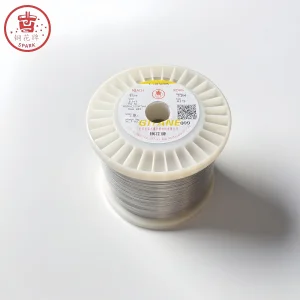
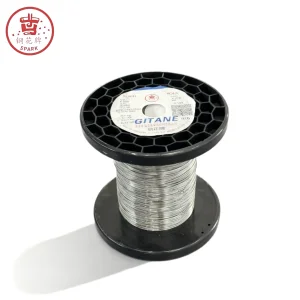
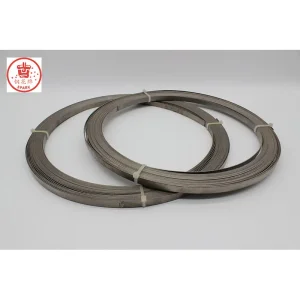
Specify whether your design requires round wire (0.05mm - 8.0mm), flat strip/ribbon (thickness 0.1mm - 3.0mm, width 1.0mm - 60mm), or pre-formed spiral coils. Provide outer diameter (OD), pitch, and cold terminal specifications.
2. Duty Cycle & Peak Surface Load (W/cm²)
Provide continuous operating temperature, peak surge temperature, duration of peak spikes, and target surface watt loading. Engineers match the 8.4g/cm³ density thermal inertia to prevent premature burnout.
3. International Standard Compliance
Ensure quotes reference recognized international engineering standards such as ASTM B344 (Standard Specification for Drawn or Rolled Nickel-Chromium Alloys), DIN 17470, or GB/T 1234.
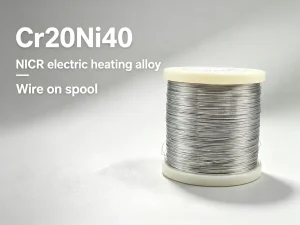
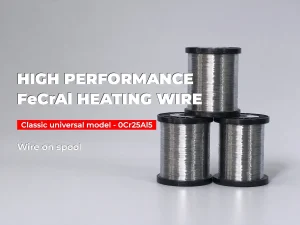
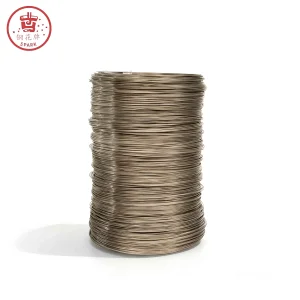
Wholesale Resistance Heating Wire & Strip Inventory
Direct factory direct supply for industrial furnace builders, element winders, and wholesale distributors worldwide.



Frequently Asked Engineering & Procurement Questions
Expert responses based on Google Quality Guidelines and high-temperature metallurgical standards.