
Explore our factory-direct electric resistance heating alloys, bare wires, and custom elements engineered for high-temperature stability up to 1425°C. Certified under ISO 9001:2005 quality benchmarks.

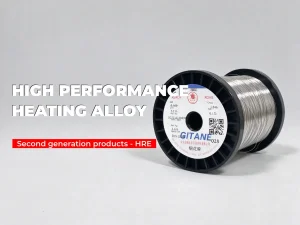
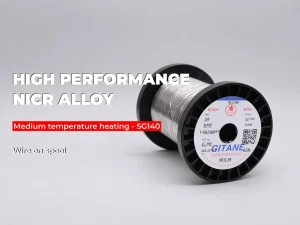
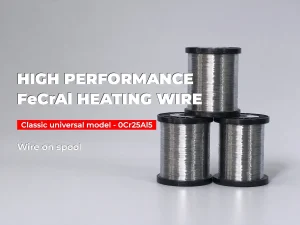
In modern thermochemical processing and thermal engineering, selecting an appropriate resistance heating alloy dictates overall system efficiency, operational lifespan, and thermal uniformity. Among non-ferrous electric heating materials, 2080 Nickel-Chromium alloy (commercially known as NiCr 80/20 or Cr20Ni80) represents the gold standard for applications operating up to 1200°C (2192°F). Consisting nominally of 80% Nickel and 20% Chromium, this austenitic alloy exhibits a rare synergy of high electrical resistivity, superior elevated-temperature mechanical strength, and exceptional hot-corrosion resistance.
When sourcing from direct wholesale 2080 suppliers and factories, procurement specialists and thermal engineers must evaluate technical parameters that transcend raw material costs. The long-term reliability of 2080 wire and strip relies heavily on the metallurgical purity achieved during vacuum melting, exact micro-alloying control (such as rare-earth element additives like Yttrium or Cerium), and precise cold-drawing execution. This whitepaper serves as an authoritative industry guide designed for global buyers, specifying engineers, and industrial furnace OEMs navigating the global 2080 supply chain landscape.
The industrial thermal processing market is undergoing a structural paradigm shift driven by global carbon-neutrality targets and net-zero manufacturing initiatives. Key macro-environmental trends driving demand for wholesale 2080 alloy components include:
Heavy industries including glass tempering, ceramics, steel heat treatment, and petrochemical processing are transitioning from gas burners to clean electric resistance heating systems powered by renewable energy grids.
Photovoltaic silicon wafer diffusion, crystal growth, and semiconductor annealing processes demand non-contaminating, highly stable heating elements capable of operating without particulate flaking.
Emerging commercial medical electronics, 3D printing heating blocks, and micro-tubular heaters require 2080 ultra-fine wire (down to Ø 0.02mm) with uniform cross-sectional resistance and high ductility.
Understanding the physical and metallurgical differences between Nickel-Chromium (NiCr) and Iron-Chromium-Aluminium (FeCrAl) alloys is crucial for specifying the correct resistance material. While FeCrAl alloys offer higher maximum operating temperatures (up to 1425°C), 2080 NiCr demonstrates distinct advantages in mechanical ductility after thermal aging, high-temperature creep strength, and thermal shock resistance during cyclic duty.
| Property / Characteristic | 2080 Alloy (NiCr 80/20) | Cr15Ni60 Alloy | 0Cr25Al5 Alloy (FeCrAl) | HRE / SGHYZ Grade |
|---|---|---|---|---|
| Nominal Composition | 80% Ni, 20% Cr | 60% Ni, 15% Cr, Fe Bal. | 25% Cr, 5% Al, Fe Bal. | High-Purity FeCrAl + RE |
| Max Operating Temperature | 1200°C (2192°F) | 1150°C (2102°F) | 1250°C (2282°F) | 1350°C - 1400°C |
| Electrical Resistivity (20°C) | 1.09 ± 0.05 μΩ·m | 1.12 ± 0.05 μΩ·m | 1.42 ± 0.07 μΩ·m | 1.45 ± 0.07 μΩ·m |
| Density | 8.40 g/cm³ | 8.20 g/cm³ | 7.10 g/cm³ | 7.10 g/cm³ |
| Hot Strength & Sag Resistance | Excellent (Austenitic) | Good | Moderate (Ferritic) | High Creep Resistance |
| Ductility After Long Thermal Use | Retains Flexibility | Retains Flexibility | Becomes Brittle | Slightly Brittle |
| Oxide Film Character | Adherent Cr₂O₃ (Green) | Cr₂O₃ / Fe₂O₃ oxide | Dense Al₂O₃ (White/Grey) | Self-healing Al₂O₃ scale |
| Cyclic Duty Performance | Superior | Very Good | Moderate | Good |
When exposed to oxygen at elevated temperatures (>800°C), 2080 alloy forms a tenacious, thermally matching protective film of Chromium Oxide ($Cr_2O_3$). Unlike iron-oxide scales that spall during cooling cycles, the thermal expansion coefficient of the $Cr_2O_3$ layer aligns closely with the underlying 80/20 matrix. This prevents micro-cracking during rapid heater thermal cycling, preserving underlying material from progressive oxidation.
International buyers sourcing from wholesale 2080 suppliers evaluate total cost of ownership (TCO) beyond initial per-kilogram pricing. Professional enterprise buyers scrutinize several technical indicators during OEM vendor audits:
- Tight Electrical Resistance Tolerances: Batch-to-batch wire resistivity variations must remain within ±3% (or ±1% for precision application ribbon) to ensure uniform wattage across multi-zone industrial furnaces.
- Surface Finish & Cleanness: Free from drawing lubricants, carbonaceous residues, oxidation pits, or slivers. Clean surfaces prevent localized hot-spots and premature burn-outs.
- Consistent Annealing & Elongation: Wire must exhibit consistent mechanical softness (elongation values between 20% to 35%) to facilitate tight coil winding on automatic CNC spiraling equipment without spring-back or snapping.
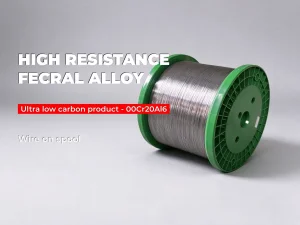
- Packaging Integrity: Spooled wire (DIN125, DIN160, DIN200, DIN250) must be precision-traversed to prevent wire snagging during high-speed automated element production. Heavy gauge wire or strip requires robust coils with anti-corrosion VCI paper wrapping.
China’s advanced metallurgy ecosystem has integrated digital Industry 4.0 infrastructure into the production of high-performance electric resistance alloys. Modern 2080 production facilities leverage complete end-to-end quality integration:
Utilizing ultra-clean Vacuum Induction Melting followed by Electroslag Remelting (ESR) eliminates harmful non-metallic inclusions, dissolved gases (nitrogen/hydrogen), and sulfur impurities, dramatically increasing wire hot ductility.
Automated continuous wire drawing machines with synthetic diamond dies ensure micro-inch dimensional accuracy, seamless diameter transitions, and flawless mirror-smooth surface finishes.
100% real-time non-destructive testing via laser diameter gauges and inline eddy current crack detectors screens out internal micro-voids and surface defects prior to spooling.
The versatile mechanical and thermal properties of 2080 alloy render it indispensable across diverse commercial and industrial sectors:
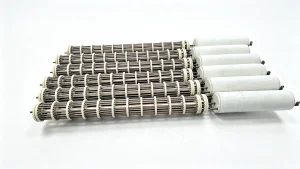
Used as coiled element springs, ceramic bundle rod cores, and heavy ribbon elements in car-bottom furnaces, sealed quench furnaces, and continuous mesh belt conveyor kilns operating between 800°C and 1150°C.
Utilized in analytical laboratory muffles, tube furnaces, and medical sterilization equipment where exact temperature repeatability and zero particle shedding are mandatory.
Standard choice for high-end electric cooktops, toaster elements, industrial air duct heaters, clothes dryers, and heavy-duty sauna heating elements due to its resistance to thermal shock.
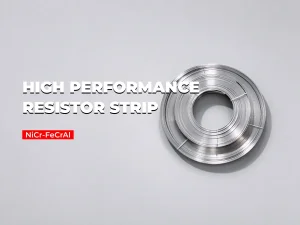
Review our expanded lineup of wholesale FeCrAl, NiCr, and specialized industrial resistance ribbons directly from our Beijing manufacturing plant.

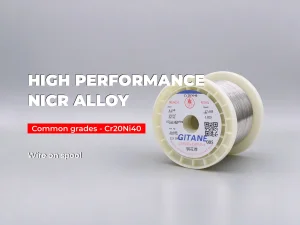

Find expert answers to common engineering questions regarding 2080 resistance alloys, order specifications, and furnace design considerations.
What is the exact chemical composition of 2080 (Cr20Ni80) wire?
2080 alloy (Cr20Ni80 according to GB/T 1234-2012, equivalent to ASTM B344 NiCr 80/20) consists of approximately 78.0%–81.0% Nickel (Ni), 19.0%–21.0% Chromium (Cr), ≤1.0% Iron (Fe), ≤1.5% Silicon (Si), ≤1.0% Manganese (Mn), and ≤0.08% Carbon (C). Micro-alloying elements like Rare Earth (RE) additions are often introduced to enhance thermal oxidation longevity.
Why choose 2080 NiCr over FeCrAl alloys for industrial heat treatment?
While FeCrAl alloys can reach higher maximum temperatures (1400°C+), 2080 NiCr offers far superior mechanical ductility after prolonged elevated-temperature operation. Unlike FeCrAl, which turns brittle upon cooling, 2080 remains ductile, allowing furnace maintenance crews to repair, adjust, or re-shape elements without shattering them. Additionally, 2080 has higher hot strength and resists sagging under heavy thermal loads.
How do I calculate the wire diameter required for my electric heater?
Required wire diameter depends on system power (Watts), line voltage (Volts), operating target temperature, and surface load density ($W/cm^2$). The basic electrical resistance formula is $R = V^2 / P$. Using the material's resistivity ($\rho = 1.09\,\mu\Omega\cdot m$ at 20°C) and adjusting for the temperature correction factor $C_t$, wire length $L$ and diameter $d$ are derived using $R = (\rho \cdot C_t \cdot L) / (\pi \cdot d^2 / 4)$. Our factory application engineers provide complimentary sizing assistance.
What product delivery forms are available from wholesale suppliers?
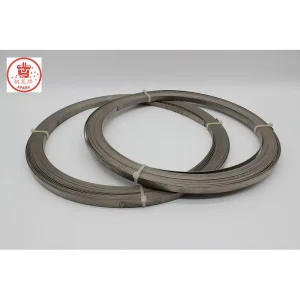
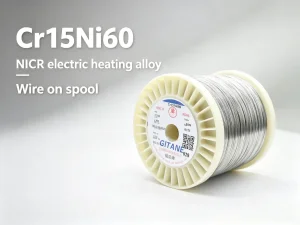
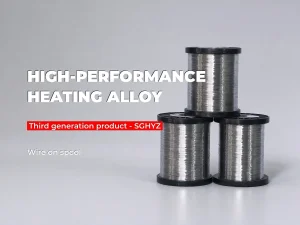
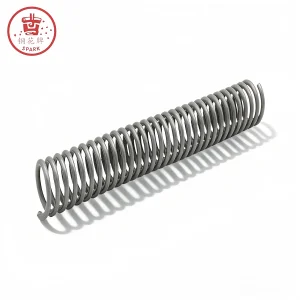
2080 alloy is manufactured in diverse forms: Fine Bare Round Wire (Ø 0.02mm to 1.0mm on plastic spools), Heavy Gauge Wire (Ø 1.0mm to 10.0mm in coils), Cold-Rolled Strip/Ribbon (thickness 0.05mm–3.0mm, width 0.5mm–200mm), and Fully Fabricated Pre-Wound Element Spirals or Wave Ribbons.
Which quality documentation and mill certificates accompany factory orders?
All direct factory shipments include EN 10204 3.1 Certified Mill Test Reports (MTR) detailing chemical heat analysis, room temperature mechanical tensile strength, elongation percentages, electrical resistance testing at 20°C, dimensional tolerances, and ISO 9001 compliance logs.