
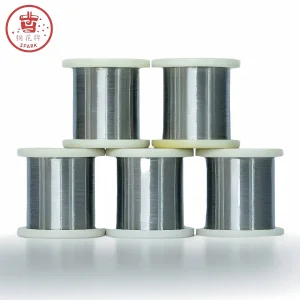
Direct factory wholesale supply from ISO 9001-certified metallurgy facilities in China. Precision-engineered wire, strips, and pre-formed heating coils for extreme atmospheric service.
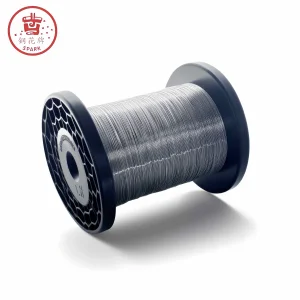
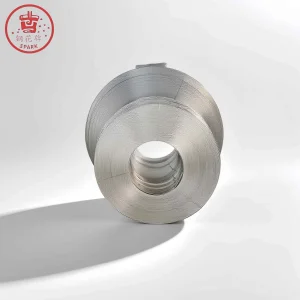
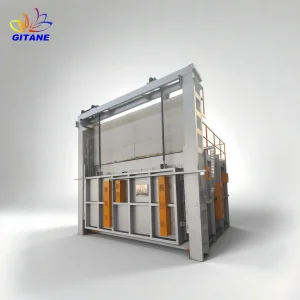
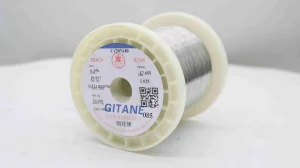
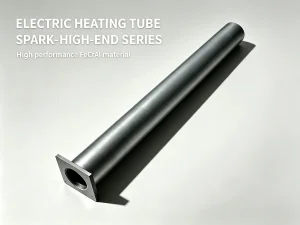
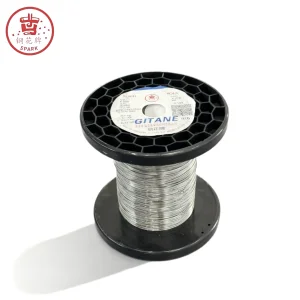
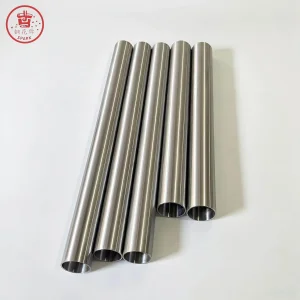
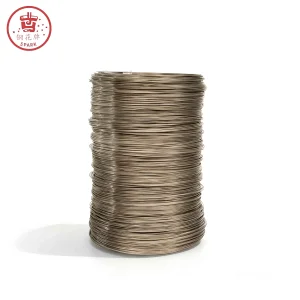
Engineering Superiority: 1350℃ Anti-Carburization FeCrAl Heating Coils in Extreme Industrial Environments
In modern industrial thermal processing, the demand for resistance heating alloys capable of operating under aggressive carbon-rich, endothermic, and hydrocarbon-laden atmospheres has surged exponentially. Industrial furnace builders, automotive heat-treatment engineers, and powder metallurgy operators face a persistent metallurgical challenge: carburization-induced alloy degradation and premature thermal element failure.
Traditional Nickel-Chromium (NiCr) alloys, while displaying high mechanical ductility at ambient temperatures, suffer severe oxidation, carbon pickup, and "green rot" embrittlement when exposed to carburizing gases above 1000°C. Conversely, standard Iron-Chromium-Aluminium (FeCrAl) alloys form an insulating oxide layer, but baseline grades often fail when subjected to severe thermal cycling combined with high carbon potentials ($a_c > 0.8$) at temperatures approaching 1350°C.
This technical whitepaper explores how advanced metallurgical engineering—specifically rare-earth element reactive doping (Yttrium, Zirconium, Hafnium, and Lanthanum), ultra-pure vacuum induction melting (VIM), and controlled grain orientation—has enabled leading Chinese manufacturers to deliver wholesale 1350℃ anti-carburization FeCrAl heating coils that outperform legacy alloys in continuous commercial service.
The Physical Chemistry of Anti-Carburization: $\alpha$-$\text{Al}_2\text{O}_3$ Scale Dynamics
The anti-carburization performance of a 1350°C FeCrAl heating coil depends entirely on the stability, density, and self-healing kinetics of its surface protective oxide scale. When an electrothermal alloy is energized in an industrial atmosphere, chemical thermodynamics dictates which oxides form on the metal substrate.
1. The Thermodynamics of Selective Oxidation
FeCrAl alloys contain iron (Fe balance), chromium (20.0%–24.0%), and aluminium (5.0%–6.5%), supplemented by trace reactive elements (RE). At temperatures exceeding 1000°C, aluminium possesses a significantly higher thermodynamic affinity for oxygen than chromium or iron. The Gibbs free energy of formation ($\Delta G^\circ$) for alpha-alumina ($\alpha\text{-Al}_2\text{O}_3$) is substantially more negative than that of chromia ($\text{Cr}_2\text{O}_3$) or iron oxides ($\text{Fe}_2\text{O}_3$, $\text{Fe}_3\text{O}_4$).
As a result, a continuous, thermodynamically stable, and electrically insulating film of alpha-alumina ($\alpha\text{-Al}_2\text{O}_3$) grows on the outer surface of the wire coil:
2. Why Carbon Penetration Fails Against $\alpha$-$\text{Al}_2\text{O}_3$
In heat treatment processes like gas carburizing, carbonitriding, and bright annealing, the atmosphere contains active carbon species ($\text{CO}$, $\text{CH}_4$, $\text{C}_3\text{H}_8$). Carbon atoms attempt to diffuse into the heating alloy core. If carbon enters the alloy lattice, it reacts with chromium and iron to form brittle chromium carbides ($\text{Cr}_{23}\text{C}_6$, $\text{Cr}_7\text{C}_3$). This process, known as internal carburization, causes three catastrophic failure mechanisms:
- Volume Expansion & Lattice Distortion: Carbide precipitation expands the crystal lattice, causing heavy spallation, cracking, and mechanical breakage under thermal stress.
- Chromium Depletion (Matrix Starvation): Carbide formation strips chromium out of the solid solution, destroying the alloy's intrinsic corrosion resistance.
- Local Melting & Hot Spot Formation: Carburized zones experience a drastically reduced solidus temperature (dropping from 1500°C down to near 1150°C). When localized resistance spikes, the element experiences rapid burnout.
The Anti-Carburization Solution: $\alpha\text{-Al}_2\text{O}_3$ exhibits an extremely low diffusion coefficient for carbon ($D_C < 10^{-16} \text{ cm}^2/\text{s}$ at 1300°C). Unlike chromium oxide, which carbon can penetrate via grain boundary diffusion, a fully developed $\alpha\text{-Al}_2\text{O}_3$ shell functions as a near-impermeable physical and chemical barrier, preventing carbon migration into the bulk alloy matrix even under extreme carbon potential conditions.
| Metallurgical Property / Metric | Standard NiCr 80/20 | Baseline FeCrAl (0Cr25Al5) | 1350℃ Anti-Carburization FeCrAl (SGHYZ/HRE) |
|---|---|---|---|
| Max. Continuous Operating Temp. | 1200°C | 1250°C | 1350°C – 1400°C |
| Primary Oxide Layer Composition | Chromia ($\text{Cr}_2\text{O}_3$) | Alumina ($\alpha\text{-Al}_2\text{O}_3$) | Dense Nanostructured $\alpha\text{-Al}_2\text{O}_3$ + RE Doped |
| Carbon Diffusion Rate at 1200°C | High (Prone to Green Rot) | Moderate | Extremely Low (< 10⁻¹⁶ cm²/s) |
| Resistivity at 20°C (μΩ·m) | 1.09 ± 0.05 | 1.42 ± 0.05 | 1.45 ± 0.04 |
| Creep Resistance at 1300°C | Low (Severe Sagging) | Moderate | High (Dispersion Strengthened) |
| Resistance to Sulfur & Carbon | Poor (Attacked by S and C) | Good | Exceptional (Immune to S, Highly C-Resistant) |
Global Industry Trends: Why Global Procurement is Shifting to 1350°C FeCrAl Coils
Analysis of global energy transition, raw material volatility, and thermal efficiency demands driving enterprise heating specification upgrades.
1. Industrial Decarbonization & Electrification
As global environmental regulations enforce net-zero targets, heavy industrial sectors are rapidly transitioning from gas-fired burner systems to all-electric resistance heating. Electric continuous hardening, carburizing, and sintering furnaces powered by 1350°C FeCrAl coils eliminate scope-1 carbon emissions while delivering precise digital temperature control.
2. Nickel Volatility & Total Cost Optimization
Nickel price swings on the London Metal Exchange (LME) create severe budget uncertainty for furnace OEMs relying on NiCr elements. FeCrAl alloys contain zero nickel, providing cost stability. Furthermore, because FeCrAl is ~15% lighter than NiCr, buyers purchase significantly less metal mass for identical electrical resistance profiles, yielding upfront material savings of up to 35%.
3. Expansion of Advanced Powder Metallurgy & EV Parts
The global surge in Electric Vehicle (EV) drive-module manufacturing requires high-density sintered gears and powder metal components. Sintering furnaces operate at 1280°C–1350°C under synthetic endothermic or cracked-ammonia atmospheres. Only micro-alloyed 1350°C anti-carburization FeCrAl heating coils maintain structural integrity in these production runs.
China Industry 4.0: Supply Chain Resilience, Manufacturing Scale & Precision Quality
China has established itself as the world’s primary hub for advanced electrothermal alloy production, combining raw material access with cutting-edge metallurgical automation. At the forefront of this industrial transformation is Beijing Shougang Gitane New Materials Co., Ltd. (member of the state-owned Shougang Group), leveraging over 60 years of specialized metallurgy experience.
End-to-End Integrated Manufacturing Architecture
The production of wholesale 1350℃ anti-carburization FeCrAl heating coils requires complete process control from liquid steel to the final packaged coil. China’s Industry 4.0 ecosystem integrates four critical stages:
Vacuum Induction Melting (VIM) followed by Electroslag Remelting (ESR) strips out trace impurities (sulfur, phosphorus, dissolved oxygen, nitrogen), ensuring ultra-clean grain structures essential for high-temperature ductility.
Computerized ladle metallurgy precisely introduces rare earth additions (Y, Hf, Zr) in sub-ppm concentrations. This micro-alloying anchors oxide scales, preventing spallation during rapid thermal shock cycles.
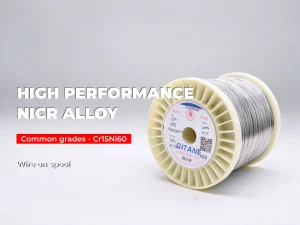
Multi-pass continuous drawing benches fitted with laser micrometers maintain strict wire diameter tolerances (down to ±0.01 mm), guaranteeing uniform electrical resistance per meter across 500 kg master spools.
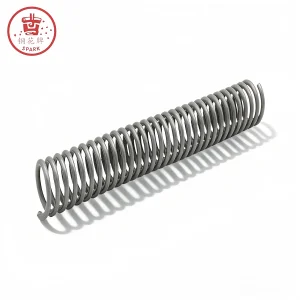
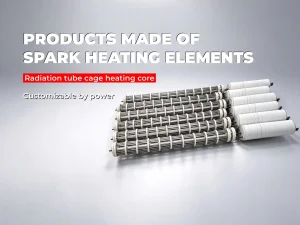
Programmable CNC coiling machines manufacture pre-stretched spiral heating elements, wave-shaped ribbons, and radiant tube cores with precise pitch control, ready for immediate installation in OEM furnaces.
Where 1350°C anti-carburization FeCrAl heating coils deliver measurable uptime and process performance.
Automotive Gear Carburizing Lines
Continuous pit carburizing and batch sealed-quench furnaces utilize 1350°C FeCrAl coils within ceramic radiant tubes. Operating at carbon potentials of $C_{\%}=0.90\%-1.15\%$, these elements resist heavy carbon soot accumulation while delivering high heat flux to transmission components.
Powder Metallurgy Sintering Kilns
Mesh-belt and pusher sintering furnaces operate at 1120°C–1320°C under dissociated ammonia or endothermic gas. FeCrAl elements resist nitriding and carburization, maintaining dimensional stability without sag across multi-meter element spans.
High-Technical Ceramic Sintering
Firing structural ceramics (zirconia, alumina, silicon nitride) at temperatures up to 1350°C in air or inert atmospheres. High-purity FeCrAl coils prevent trace metal vaporization, avoiding specimen contamination during critical sintering phases.
Element Design Calculations: Optimizing Surface Load ($W/cm^2$) for Extended Service Life
The operational lifespan of a 1350°C anti-carburization FeCrAl coil is determined by its surface load ($W$)—defined as the electrical power dissipated per unit surface area of the heating wire ($W/\text{cm}^2$). Designing elements with excessive surface load accelerates oxide scale breakdown and leads to localized thermal runaway.
1. Surface Load Formula
For a round heating wire, surface load ($W$) is calculated using the following engineering formula:
Where:
- P: Total power output of the heating coil (Watts)
- d: Wire diameter (cm)
- L: Total active coiled length of the wire (cm)
2. Recommended Surface Load Limits by Operating Temperature
To maximize anti-carburization performance at 1350°C, engineers must reduce the surface load as element temperature rises. Lowering surface load compensates for reduced thermal conductivity through thicker alumina oxide films.
| Furnace Operating Temp. (°C) | Target Alloy Element Temp. (°C) | Max. Surface Load in Air ($W/\text{cm}^2$) | Max. Surface Load in Carburizing Gas ($W/\text{cm}^2$) |
|---|---|---|---|
| 900°C – 1000°C | 1050°C | 2.5 – 3.2 | 1.8 – 2.2 |
| 1050°C – 1150°C | 1200°C | 1.8 – 2.4 | 1.3 – 1.6 |
| 1200°C – 1280°C | 1320°C | 1.2 – 1.6 | 0.9 – 1.1 |
| 1300°C – 1350°C | 1380°C – 1400°C | 0.6 – 1.0 | 0.4 – 0.7 (Radiant Tube Enclosed) |
Explore our full line of specialized heating alloys, high-purity raw metals, and customized furnace components engineered for worldwide export.
Technical answers for procurement officers, furnace designers, and thermal plant engineers.