Precision High-Temperature Resistance Products (Part I)
Explore our flagship series of certified FeCrAl and NiCr heating elements, resistance wires, and custom industrial electric furnaces manufactured under ISO 9001 standards.
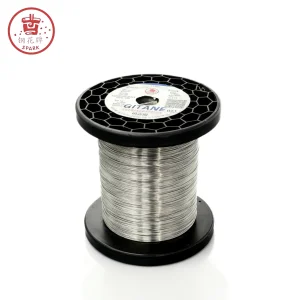
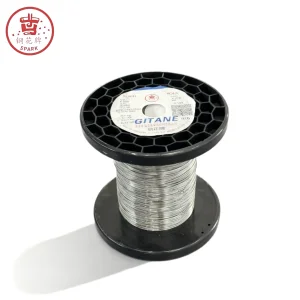



Executive Summary: Global Commercial Demand for 1300℃ Heating Elements
In the era of rapid technological transformation, the global market for ultra-high-temperature electrothermal components has experienced unprecedented growth. Industrial thermal processing applications operating within the critical 1200℃ to 1350℃ thermal threshold demand materials that combine exceptional oxidation kinetics, dimensional stability, creep resistance, and extended operational lifespans. Modern manufacturing sectors—including semiconductor wafer processing, photovoltaic ingot pulling, advanced structural ceramic sintering, lithium-ion battery cathode synthesis, and aerospace vacuum heat treatment—depend directly on the reliability of factory-grade 1300℃ heating elements.
Procurement directors and high-temperature furnace engineers face a complex matrix of operational trade-offs when specifying thermal components. Selecting an optimal heating element involves evaluating chemical purity, electrical resistivity stability across thermal cycles, protective scale adhesion, and total cost of ownership (TCO). As a premier manufacturing division under the Shougang Group, Beijing Shougang Gitane New Materials Co., Ltd. brings over 60 years of metallurgical expertise to the global market, manufacturing state-of-the-art Iron-Chromium-Aluminum (FeCrAl) and Nickel-Chromium (NiCr) alloys rated up to 1425℃ under our proprietary SPARK brand.
Global procurement metrics indicate a decisive shift toward high-efficiency FeCrAl alloy formulations for 1300℃ applications due to their higher electrical resistivity (typically 1.35–1.45 μΩ·m) and lower material density compared to nickel-based alternatives. This technical transition allows enterprise industrial furnace operators to achieve up to a 20% reduction in installed element weight while boosting thermal energy density and lowering overall kilowatt-hour consumption during long-duration sintering runs.
Metallurgical Science: Thermal Mechanics at the 1300°C Limit
Understanding the microstructural phenomena governing alloy degradation, alpha-alumina scale growth, and high-temperature creep prevention in industrial heating elements.
α-Al₂O₃ Oxide Scale Growth
At continuous temperatures of 1300℃, SPARK FeCrAl alloys form a dense, adherent, non-porous alpha-alumina protective oxide scale. This self-healing ceramic layer acts as a diffusion barrier against further hot gas oxidation and carburization.
Reactive Element Micro-Doping
Incorporating trace additions of Yttrium (Y), Zirconium (Zr), and rare-earth elements neutralizes sulfur impurities at grain boundaries, dramatically mitigating oxide scale spallation during thermal cycling.
High-Temperature Creep Resistance
Through precise vacuum induction melting (VIM) and powder metallurgy techniques (as seen in our flagship SGHT series), grain boundary sliding is suppressed, preventing element sag and internal short-circuiting.
FeCrAl vs. NiCr Alloys in Extreme Thermal Environments
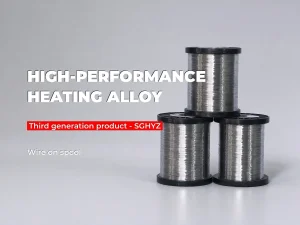
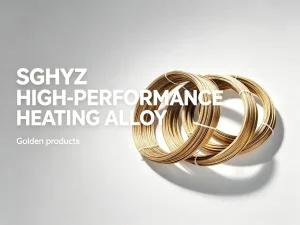
When engineering heating systems operating at or near 1300℃, selecting the proper alloy family is paramount. Standard NiCr formulations (such as Cr20Ni80) provide exceptional mechanical ductility after prolonged thermal exposure and excel in cycling regimes up to 1200℃. However, above 1250℃, the protective chromia scale (Cr₂O₃) formed on NiCr alloys undergoes rapid volatilization, leading to accelerated alloy depletion. Conversely, FeCrAl alloys—such as our SGHYZ (rated to 1400℃) and HRE (rated to 1350℃)—form α-Al₂O₃ scales that remain thermodynamically stable up to 1425℃, rendering them the gold standard for high-temperature wholesale procurement.
Macro-Industry Solutions & Technical Specifications
Engineered solutions optimized for specific furnace atmospheres, power densities, and thermal profiles across major industrial manufacturing sectors.
| Alloy Grade | Material Class | Max Temp (°C) | Resistivity (μΩ·m, 20°C) | Density (g/cm³) | Primary Industrial Applications |
|---|---|---|---|---|---|
| SGHT | FeCrAl (Powder Metallurgy) | 1425°C | 1.45 | 7.10 | Semiconductor diffusion, sapphire growth, high-purity ceramic kilns |
| SGHYZ | FeCrAl (Rare Earth Doped) | 1400°C | 1.42 | 7.10 | Powder metallurgy sintering, high-temperature lab furnaces, heavy industrial kilns |
| HRE | FeCrAl (High-Temp Alloy) | 1350°C | 1.42 | 7.15 | Continuous heat-treatment furnaces, radiant tubes, ceramic tile production |
| 0Cr25Al5 | FeCrAl (Standard Industrial) | 1250°C | 1.42 | 7.10 | Industrial electric furnaces, heat treating, domestic electric heating appliances |
| 0Cr23Al5 | FeCrAl (Commercial Grade) | 1250°C | 1.35 | 7.25 | Industrial heating elements, resistance banks, industrial drying equipment |
| Cr30Ni70 | NiCr (High-Nickel Alloy) | 1250°C | 1.18 | 8.10 | Controlled atmosphere furnaces, chemical reactors, high-reliability heaters |
| Cr20Ni80 | NiCr (Classic Nichrome) | 1200°C | 1.09 | 8.40 | Precision lab heaters, medical sterilization equipment, industrial appliances |
Surface Load (Watt Density) Calculation Guidelines
To maximize the service life of 1300℃ heating elements, managing the surface power load ($W/cm^2$) is critical. Overloading an element accelerates oxide breakdown and local thermal runaway. The maximum permissible surface load is determined by furnace operating temperature, heating element geometry, element spacing, and furnace atmosphere composition:
- Air / Oxidizing Atmosphere: 1.5 to 2.5 $W/cm^2$ at 1300℃ furnace operating temperature.
- Inert / Nitrogen Atmospheres: Reduce surface load by 20–30% due to reduced thermal dissipation rates.
- Vacuum Systems: Radiant heat dissipation dominates; surface load should typically be kept between 1.0 and 1.8 $W/cm^2$.
State-of-the-Art Factory Infrastructure & Quality Control
Backing world-class performance with 60+ years of Shougang Group metallurgical heritage, certified laboratory validation, and strict standard compliance.
Advanced Vacuum Melting
Our Changping, Beijing production base houses multi-stage Vacuum Induction Melting (VIM) and Electroslag Remelting (ESR) equipment, guaranteeing ultra-low interstitial gas levels (N, O, H) and uniform composition.
Full-Cycle Wire & Strip Processing
From hot rolling to precision cold drawing down to 0.05mm micro-wire and continuous bright annealing, our processing lines maintain strict dimensional tolerances (in compliance with GB/T 1234-2012).
Accelerated Life & Spectral Testing
Every production melt undergoes rigorous laboratory testing, including optical emission spectrometry, digital resistance testing, tensile strength evaluation, and ASTM B78 accelerated life testing.
Quality Management & Standard Certifications
Beijing Shougang Gitane New Materials Co., Ltd. secured ISO 9002 certification in 1996 and transitioned to comprehensive ISO 9001 quality management system certification in 2003. All high-temperature heating element products are delivered with certified Mill Test Reports (MTRs) detailing heat chemistry, electrical resistivity, mechanical properties, and batch traceability numbers. This unwavering commitment to metallurgical precision establishes SPARK as a trusted supply partner for Fortune 500 industrial furnace OEMs worldwide.
Technology Roadmap: 2025–2035 Thermal Alloy Engineering
Pioneering tomorrow's high-temperature electrothermal materials through powder metallurgy, dispersion strengthening, and digital thermal field modelling.
Phase 1: Powder Metallurgy Oxide Dispersion Strengthening (ODS)
Scaling manufacturing capacity for our PM-grade SGHT alloys (1425℃ ceiling). By embedding nanoscale Y₂O₃ particles within the FeCrAl matrix, room-temperature workability and high-temperature creep strength are elevated by over 300% compared to ingot metallurgy.
Phase 2: Green Hydrogen Sintering Compatibility
Developing specialized surface pre-oxidation treatments for 1300℃ heating elements deployed in 100% pure hydrogen sintering atmospheres, supporting zero-carbon green steel and ceramic manufacturing initiatives globally.
Phase 3: AI-Assisted Element Geometry & Watt-Density Optimization
Integrating computational fluid dynamics (CFD) and thermal field finite-element modeling (FEM) services for custom wholesale orders, allowing clients to pre-calculate thermal stress profiles and eliminate hot-spot failures prior to coil fabrication.
Wholesale Procurement Strategy & Quotation Framework
Procuring 1300℃ heating elements directly from a primary manufacturer provides distinct commercial and technical advantages. By eliminating intermediary trading markup, industrial clients secure direct access to factory metallurgists, custom coil shaping, precision cold-rolling tolerances, and streamlined bulk pricing structure.
Requesting an Accurate Factory Quote: Essential Technical Parameters
To receive a rapid, tailored quotation for bulk wire, strip, rod, or prefabricated spiral heating elements, procurement teams should furnish the following parameters in their Request for Quotation (RFQ):
- Operating Environment: Target furnace operating temperature (e.g., continuous 1300℃ vs peak 1350℃) and process atmosphere (Air, Vacuum, N₂, H₂, Endothermic gas).
- Alloy Grade Preference: FeCrAl (SGHYZ, HRE, 0Cr25Al5) or NiCr (Cr30Ni70, Cr20Ni80), based on mechanical flexure and duty cycle requirements.
- Product Form & Dimensions: Round wire diameter (mm), flat strip cross-section (thickness x width), coil outer diameter (OD), pitch, or customized furnace element drawings.
- Electrical Specifications: Voltage ($V$), total power rating ($kW$), cold resistance ($\Omega$), and desired element connection topology (Star, Delta, Parallel).
- Order Volume & Delivery Terms: Batch quantity (kg or meters), packaging requirements (spool size, export wooden crates), and preferred Incoterms (FOB, CIF, DDP).
Localized Technical Support & Compliance Guarantee
Ensuring seamless international freight delivery, full environmental compliance, and dedicated technical service across North America, Europe, and Asia-Pacific.
Heavy-Duty Export Packaging
Spools and heavy wire coils are protected against maritime moisture and mechanical impact using vacuum-sealed anti-rust film, moisture-absorbing desiccant packs, and reinforced fumigation-free wooden cases.
RoHS, REACH & Conflict Mineral Free
All SPARK resistance alloys strictly comply with EU Directive 2011/65/EU (RoHS 2.0), REACH SVHC standards, and international regulations banning conflict-derived raw materials.
24/7 Field Engineering Support
Our team of senior thermal design engineers provides virtual and on-site assistance for furnace element retrofits, troubleshooting premature coil burnout, and optimizing zone temperature uniformity.
Technical & Procurement FAQ
Answers to critical questions asked by high-temperature furnace builders, plant engineers, and industrial purchasing directors.
What is the absolute maximum continuous operating temperature of SPARK heating alloys?
Our standard FeCrAl grades (0Cr25Al5, 0Cr23Al5) are rated up to 1250℃. High-performance HRE wire operates continuously up to 1350℃, SGHYZ reaches 1400℃, while our advanced powder metallurgy grade SGHT delivers continuous service up to 1425℃. For NiCr alloys, Cr20Ni80 is rated up to 1200℃ and Cr30Ni70 up to 1250℃.
Why choose FeCrAl over NiCr for 1300℃ industrial furnace heating elements?
FeCrAl alloys offer superior oxidation resistance at temperatures above 1200℃ due to the formation of a dense α-Al₂O₃ protective oxide scale (whereas NiCr forms Cr₂O₃ which volatilizes). Additionally, FeCrAl possesses higher electrical resistivity (+30%) and lower mass density (-15%), allowing industrial furnace builders to save up to 20% in material weight and reduce overall power consumption.
How does pre-oxidation treatment affect 1300℃ element lifespan?
Pre-oxidizing elements prior to production exposure creates an initial uniform alpha-alumina scale layer without process contamination. For 1300℃ duty cycles, we recommend pre-oxidizing elements in dry air at 1050℃–1100℃ for 8 to 12 hours. This process extends total service life by preventing localized pitting and sulfur/carbon attack.
What product delivery forms can Beijing Shougang Gitane supply?
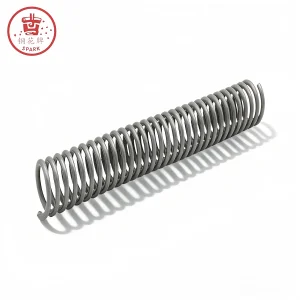
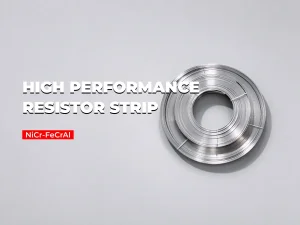
We manufacture round wire (0.05mm to 12.0mm diameter), flat resistance ribbon/strip, cold-rolled strip (thickness 0.1mm–4.0mm, width up to 200mm), straight rods, wound spiral elements, radiant tube inserts, and fully fabricated industrial electric heating furnace elements tailored to customer engineering drawings.
What quality management standards govern SPARK brand production?
Production strictly conforms to national standard GB/T 1234-2012 for electrothermal alloys. Shougang Gitane holds certified ISO 9001 quality management system certification. Every wholesale shipment is accompanied by a certified Mill Test Report (MTR) including chemical analysis, resistivity values, and mechanical properties.
What are the minimum order quantities (MOQ) and lead times for wholesale quotes?
For standard wire diameters and strip sizes in stock, MOQ starts at 50 kg. For custom alloy melts or custom element fabrication, typical MOQ is 200 kg to 500 kg. Standard factory lead time ranges from 14 to 25 business days depending on order complexity, with expedited air freight shipping options available for urgent plant maintenance.
Precision High-Temperature Resistance Products (Part II)
Discover our additional range of high-performance steel tubes, ultra-high-temperature FeCrAl resistance wire, strips, and industrial heating ribbons.