
Featured Industrial Heating Alloys & Resistance Wire Solutions
Engineered for extreme thermal stability, low thermal expansion, and extended operational lifespans under continuous 1200℃–1425℃ conditions.

SPARK 0Cr25Al5 Electric Heating Wire
Request Quote & Spec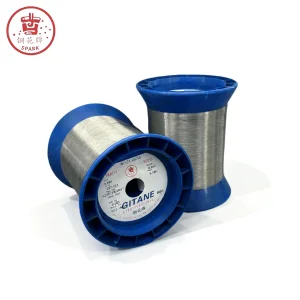
High-Temperature 0Cr21Al6Nb Heating Wire
Request Quote & Spec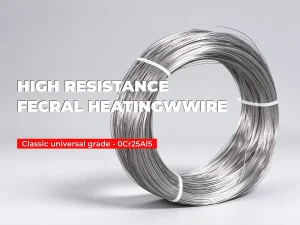
FeCrAl 0Cr25Al5 High Temp Resistance Wire
Request Quote & Spec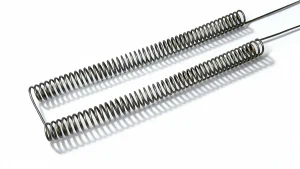
Spiral Electric Heating Element Coils
Request Quote & Spec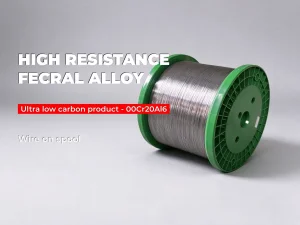
00Cr20Al6 Ultra Low Carbon FeCrAl Alloy Wire
Request Quote & Spec
SGHT Radiant Steel Tubes for Petrochemical
Request Quote & Spec
High-Temperature Cr30Ni70 Nichrome Wire
Request Quote & Spec
Cr15Ni60 Oxidation Resistance Heating Wire
Request Quote & SpecThermodynamic Mechanics & Accelerated Life Test (≥80 Hours at 1200℃) Breakdown
Understanding the metallurgical factors behind high heating energy efficiency, thermal degradation resistance, and microscopic oxide scale adhesion.
The Mechanics of Accelerated Life Testing (ALT)
Accelerated Life Testing (ALT) conducted under modified GB/T 1234-2012 and ASTM B78 standards evaluates electric heating alloys under extreme thermal overload. The alloy wire is mounted in a controlled testing chamber and subjected to direct electrical current, raising its surface temperature to 1200°C under automated cyclic power switching (e.g., 2 minutes ON, 2 minutes OFF).
While conventional commercial FeCrAl wires frequently experience mechanical sagging, rapid aluminum depletion, and spallation failure within 30 to 50 hours, our advanced SPARK SGHT & FeCrAl alloy series achieve an accelerated service life ≥80 hours at 1200°C. This benchmark correlates to over 15,000+ hours of continuous trouble-free operation at normal operating temperatures (800°C–1100°C).
Continuous α-Al₂O₃ Scale Formation & Reactive Doping
The foundational key to achieving higher heating efficiency and exceptional lifespan lies in the thermodynamic behavior of the protective surface film. Upon heating, our specialized FeCrAl chemistry forms a dense, continuous, and thermodynamically stable layer of alpha-alumina (α-Al₂O₃).
By introducing micro-alloying additions of Reactive Elements (REE) such as Yttrium (Y), Zirconium (Zr), and Hafnium (Hf), grain boundary diffusion pathways are effectively locked. This eliminates inner-scale stress, prevents oxide scale peeling (spallation), reduces electrical resistance drift ($\Delta R/R_0 < 2\%$), and maximizes heat transfer via optimal surface thermal emissivity ($\varepsilon \approx 0.70 - 0.85$).
Global Shift to Electric Heating & Industrial Energy Efficiency
Accelerating net-zero carbon mandates across Europe, North America, and Asia are driving a rapid transition from fossil-fuel combustion to precision-controlled electrothermal heating solutions.
Industrial Decarbonization
Heavy industries (steel heat treatment, glass manufacturing, ceramics, petrochemical refining) are replacing gas-fired burners with high-density electric radiant tubes. Electric heating alloy efficiency reaches near 100% direct electrical-to-thermal power conversion, eliminating stack heat losses.
Volumetric Energy Savings
FeCrAl alloys offer a lower density ($7.10 \, \text{g/cm}^3$) compared to conventional Nickel-Chromium alloys ($8.40 \, \text{g/cm}^3$). Using FeCrAl yields up to a 15% reduction in total element weight for equivalent electrical power output, reducing furnace thermal mass and accelerating ramp-up times.
Operational Risk Reduction
Unplanned element burnouts cost manufacturing plants tens of thousands of dollars per hour in down-time. Alloys tested with an ALT score ≥80h at 1200°C provide factory engineers with extended maintenance cycles and predictable preventative replacement schedules.
FeCrAl vs NiCr Technical Comparison Matrix
Direct comparative empirical data per GB/T 1234-2012, ASTM B603, and internal laboratory batch validation tests.
| Alloy Family / Grade | Max Element Temp (℃) | Resistivity @ 20℃ (μΩ·m) | Density (g/cm³) | Accelerated Life (1200℃) | Key Industrial Advantages |
|---|---|---|---|---|---|
| SPARK SGHT (FeCrAl-PM) | 1425 ℃ | 1.45 ± 0.05 | 7.10 | ≥ 100 Hours | Powder Metallurgy structure; superior hot strength & creep resistance. |
| SPARK 0Cr21Al6Nb | 1350 ℃ | 1.45 ± 0.05 | 7.10 | ≥ 85 Hours | Niobium addition refines grain growth; excellent thermal cycle durability. |
| SPARK 0Cr25Al5 | 1250 ℃ | 1.42 ± 0.05 | 7.10 | ≥ 80 Hours | High cost-efficiency, superior surface resistivity, universal furnace choice. |
| SPARK 0Cr23Al5 | 1250 ℃ | 1.35 ± 0.05 | 7.25 | ≥ 65 Hours | Strictly controlled 4.5-5.0% Al range; stable mechanical processing. |
| SPARK Cr30Ni70 | 1250 ℃ | 1.18 ± 0.04 | 8.10 | ≥ 50 Hours | Exceptional ductility post-use; supreme resistance to reducing/carbonizing gas. |
| SPARK Cr20Ni80 | 1200 ℃ | 1.09 ± 0.04 | 8.40 | ≥ 45 Hours | Non-magnetic, highest mechanical flexibility, zero thermal hysteresis deformation. |
Target Industrial Application Integration
Tailored alloy compositions engineered for targeted thermal processing conditions and aggressive furnace atmospheres.
1. Lithium-Ion Battery Cathode Sintering (Roller Hearth Kilns)
In Lithium Battery positive electrode production (LFP, NCM, NCA), continuous roller hearth kilns run 24/7 at temperatures between 800°C and 1150°C. Corrosive vapors containing lithium compounds can severely degrade conventional heating wire. SPARK 0Cr21Al6Nb and SGHT alloys form an inert α-Al₂O₃ barrier that prevents volatile alkaline chemical attacks, guaranteeing prolonged element service life and preventing batch contamination.
2. Semiconductor Diffusion & Solar Wafer Furnaces
Photovoltaic silicon wafer production and semiconductor thermal oxidation diffusion towers demand ultra-pure thermal energy with zero thermal fluctuation. SPARK high-purity ultra-low carbon alloys (such as 00Cr20Al6) feature ultra-low trace impurity levels, preventing particulate flaking and maintaining precise temperature uniformity across large thermal zones (±0.5°C tolerance).
3. Petrochemical Radiant Tubes & Hydrogen Reformers
In hydrocarbon cracking and ammonia synthesis reformers, heating elements are contained within ceramic or metal radiant tubes. The high power density demanded ($W/\text{cm}^2 \approx 1.8 - 2.5$) requires an alloy that will not sag under prolonged thermal stress. SPARK SGHT ceramic radiant tube heating cores offer high creep rupture strength and maximum thermal emissivity.
4. Industrial Vacuum Metallurgy & Automotive Annealing
Automotive gear carburizing, fastener heat treatment, and aerospace alloy vacuum annealing require rapid thermal response and cyclic stability. SPARK Nickel-Chromium alloys (Cr20Ni80, Cr30Ni70) deliver high room-temperature ductility, enabling easy custom coil bending and mechanical maintenance without brittleness risks during re-installation.
Quality Assurance & Global Supply Chain Reliability
Strict adherence to international metallurgical standards backed by traceable batch certification and localized engineering consultation.
ISO 9001:2015 & GB/T 1234
Every melt heats undergoes full spectrographic composition analysis, microstructural grain inspection, and electrical resistance testing. Delivered with official Mill Test Reports (MTR) meeting EN 10204 3.1 standards.
Global Reach & Local Engineering
We provide direct OEM export services to over 60 countries across North America, Europe, Southeast Asia, and the Middle East. Technical guidance is available for surface load calculations ($W/\text{cm}^2$) and atmosphere compatibility.
Custom Packaging & Pre-Oxidation
Supplied as round wire ($\varnothing 0.05\text{mm} - 12.0\text{mm}$), flat strip, wound spiral coils, or prefabricated radiant heating cores. Optional factory pre-oxidation seasoning builds an initial protective scale prior to installation.
Technology Roadmap: Next-Generation Heating Alloy Horizons
Our ongoing metallurgy R&D programs target thermal limits, extended oxidation resistance, and zero-carbon industrial processing.
Phase 1: Oxide Dispersion Strengthened (ODS) PM Alloys
Developing advanced Powder Metallurgy FeCrAl alloys embedded with yttrium oxide ($\text{Y}_2\text{O}_3$) nanoparticles to push maximum continuous operating thresholds beyond 1450°C while completely eliminating high-temperature sag and creep elongation.
Phase 2: Hydrogen-Atmosphere Resilient Chemistry
Optimizing chemical compositions specifically engineered for 100% pure green Hydrogen ($\text{H}_2$) sintering and reduction atmospheres. Special micro-alloying suppresses hydrogen embrittlement and maintains long-term structural elasticity.
Phase 3: Digital Twin Thermal Modeling Integration
Providing clients with predictive finite-element simulation models (FEM) that accurately calculate exact element temperatures, thermal stress gradients, and expected service lifespans under complex duty cycles before physical installation.
Frequently Asked Questions for Engineering Procurement
Expert answers regarding material selection, testing protocols, energy savings, and direct factory pricing.
Optimize Your Furnace Heating Efficiency & Request Custom Quotes
Partner directly with an established metallurgical manufacturer. Send us your element specs, operating temperature, and required coil dimensions for immediate engineering assistance and wholesale pricelists.
Get Wholesale Pricelist & Technical SupportExplore Additional SPARK Heating Alloy Products
Browse our full range of alloy wires, ultra-high temperature grades, and prefabricated heating cores.
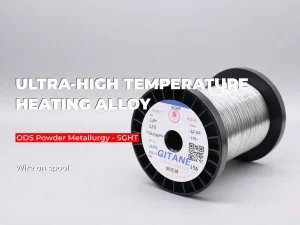
1425°C FeCrAl Alloy SPARK SGHT Grade Wire
Request Quote & Spec
Cr15Ni60 Thermal Stability Electric Heating Wire
Request Quote & Spec
High-Temperature 0Cr23Al5 Electric Heating Wire
Request Quote & Spec
Cr20Ni40 Nickel Chrome Resistance Wire
Request Quote & Spec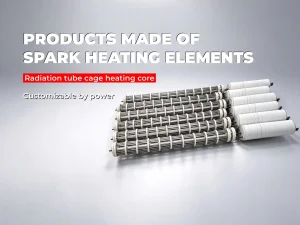
SPARK Ceramic Radiant Tube Heating Core Element
Request Quote & Spec
SPARK 0Cr20Al6 Electric Wire for 1350℃ Apps
Request Quote & Spec
SGHT High Performance Radiant Tube Material
Request Quote & Spec