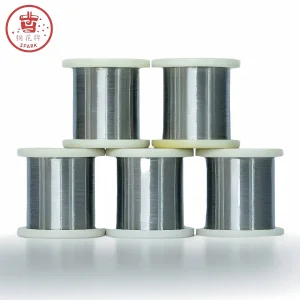
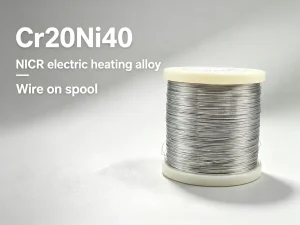
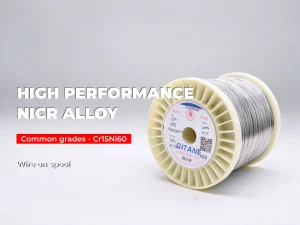
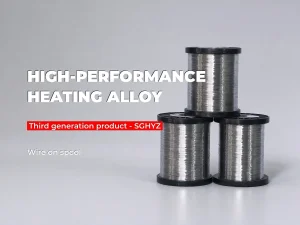
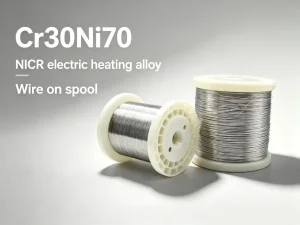
Featured Low Oxidation Rate Heating Alloys & Elements
Verified high-temperature alloy grades engineered for minimum oxide spallation and prolonged service life under extreme operational conditions.
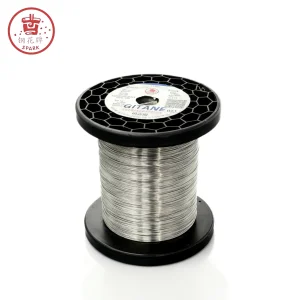
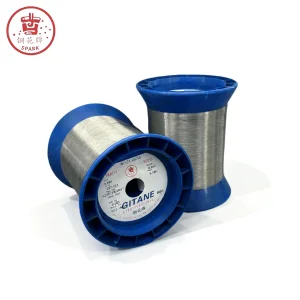
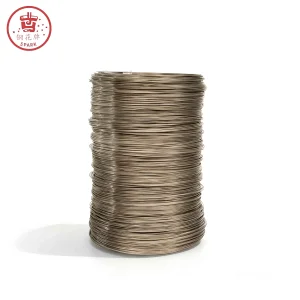
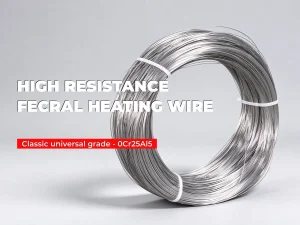
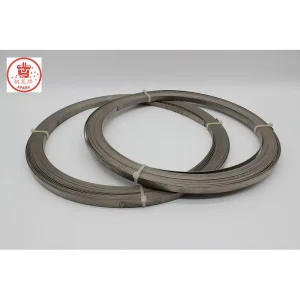
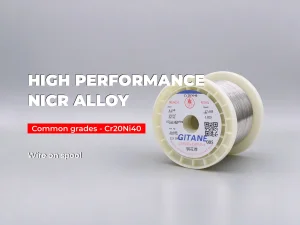
Understanding "Low Oxidation Weight Gain Rate" in High-Temperature Alloys
A deep dive into parabolic oxidation kinetics, passivating film formation, and thermodynamic stability in industrial resistance heating elements.
In high-temperature thermal engineering, the metric known as "Oxidation Weight Gain Rate" (氧化增重速率) serves as the fundamental benchmark for evaluating the operational longevity, structural integrity, and electrical stability of electrothermal resistance alloys. When an iron-chromium-aluminum (FeCrAl) or nickel-chromium (NiCr) heating element operates in oxidizing environments at temperatures ranging from 900°C to 1425°C, oxygen molecules diffuse toward the metal surface, reacting with constituent elements to form a oxide scale layer. The mass increase per unit surface area over time—typically expressed in $\text{g/m}^2 \cdot \text{h}$—defines the alloy's oxidation rate.
A lower oxidation weight gain rate directly correlates with superior alloy performance. Why? Because oxidation is a parabolic process governed by Wagner’s oxidation theory. The kinetic equation is expressed as:
Where $\Delta m / A$ represents the weight gain per unit area, $K_p$ is the parabolic rate constant, and $t$ is exposure time. Alloys exhibiting an exceptionally low $K_p$ value build a dense, slow-growing, highly protective alpha-alumina ($\alpha\text{-Al}_2\text{O}_3$) or chromia ($\text{Cr}_2\text{O}_3$) oxide scale. This scale acts as a diffusion barrier that inhibits further inward transport of oxygen anions and outward migration of metal cations.
The Role of Micro-Alloying and Reactive Elements (RE)
Achieving a ultra-low oxidation weight gain rate requires metallurgical mastery over micro-alloying additives. Leading Chinese manufacturers, such as Beijing Shougang Gitane New Materials Co., Ltd. (SPARK brand), incorporate precisely balanced reactive elements (RE) including Yttrium (Y), Neodymium (Nd), Zirconium (Zr), and Niobium (Nb)—as demonstrated in premium grades like 0Cr21Al6Nb, HRE, and SGHYZ. These reactive elements yield critical metallurgical advantages:
- Pegging Effect (Keying Action): Reactive elements accumulate at the metal-oxide interface, forming oxide "pegs" that mechanically anchor the $\alpha\text{-Al}_2\text{O}_3$ scale to the substrate, preventing scale spallation during rapid thermal cycling.
- Suppression of Void Formation: By altering cation diffusion pathways, RE additions eliminate interfacial Kirkendall voids, ensuring continuous electrical contact and preventing localized hot-spot burnouts.
- Grain Boundary Refinement: Micro-additions of Niobium and Rare Earths retard secondary recrystallization at ultra-high temperatures, maintaining mechanical creep strength alongside low oxidation rates.
Global Industry Trends: The Shift Toward Low-Oxidation Alloys
How industrial electrification, carbon neutrality goals, and advanced semiconductor manufacturing are reshaping the demand for high-performance electric resistance heating wire.
1. Industrial Furnace Electrification
As heavy manufacturing, steelmaking, and glass processing pivot away from fossil-fuel combustion to achieve net-zero carbon targets, high-power industrial electric furnaces are replacing gas burners. Electric heating elements operating in continuous multi-megawatt kilns require alloys with minimal oxidation growth to prevent power drift and maintain uniform heat flux over years of uninterrupted service.
2. Powder Metallurgy (PM) Breakthroughs
Traditional ingot melting techniques face thermodynamic segregation limits when aluminum content exceeds 6-7%. Modern high-end suppliers utilize powder metallurgy processes (such as SPARK SGHT grade) to manufacture FeCrAl alloys with higher aluminum ratios and uniform grain dispersion, driving oxidation weight gain rates down to unprecedented historical lows at 1400°C–1425°C.
3. Semiconductor & Photovoltaic Growth
The fabrication of monocrystalline silicon ingots, solar wafer annealing, and advanced ceramic sintering demands ultra-clean furnace environments. Alloys that shed oxide flakes (spallation) contaminate semiconductor furnaces. Low oxidation rate alloys forming non-spalling $\alpha\text{-Al}_2\text{O}_3$ films are now mandatory across high-tech thermal processing supply chains.
Global Enterprise Procurement Needs & TCO Evaluation
Strategic decision-making frameworks for procurement directors, metallurgical engineers, and industrial furnace OEMs when evaluating Chinese suppliers.
When enterprise procurement teams issue RFQs for electrothermal resistance wire, evaluating unit cost per kilogram alone leads to severe long-term financial inefficiencies. The true measure of economic performance is the Total Cost of Ownership (TCO), which factors in heating element life cycles, furnace downtime, energy loss due to resistance drifting, and maintenance labor costs.
| Alloy Grade | Alloy Type | Max Temp (°C) | Resistivity ($\mu\Omega\cdot\text{m}$, 20°C) | Density ($\text{g/cm}^3$) | Oxidation Weight Gain Characteristics | Primary Application Areas |
|---|---|---|---|---|---|---|
| 0Cr25Al5 | FeCrAl | 1250°C | 1.42 | 7.10 | Low rate; stable $\text{Al}_2\text{O}_3$ scale up to 1200°C | Industrial furnaces, heat treatment, home appliances |
| 0Cr21Al6Nb | FeCrAl + Nb | 1350°C | 1.45 | 7.10 | Ultra-low rate; Nb inhibits high-temp grain boundary oxidation | High-temp industrial kilns, ceramic sintering, radiant tubes |
| HRE | FeCrAl + RE | 1350°C | 1.45 | 7.10 | Extremely low; Rare Earth addition eliminates scale spallation | Powder metallurgy furnaces, diffusion furnaces, heavy industrial kilns |
| SGHYZ | Advanced FeCrAl | 1400°C | 1.50 | 7.10 | Exceptional passivating scale; minimal weight gain at 1380°C | Ultra-high temperature heat treatment, sapphire crystal growth |
| SGHT | PM FeCrAl | 1425°C | 1.53 | 7.10 | Near-zero oxidation growth rate; superior creep & hot strength | Semiconductor processing, high-end laboratory kilns, defense tech |
| Cr20Ni80 | NiCr (Nichrome) | 1200°C | 1.09 | 8.40 | Forms adherent $\text{Cr}_2\text{O}_3$; excellent thermal shock cycling resistance | Precision instruments, medical equipment, nuclear power heating |
Key Procurement Criteria for Foreign Buyers
Overseas procurement specialists sourcing from Chinese factories must demand rigorous verification metrics to ensure delivered batches match theoretical low oxidation rates:
- Mill Test Certificate (MTC) & Chemical Purity: Sulfur (S) and Phosphorus (P) impurities must be strictly limited ($S \le 0.005\%$, $P \le 0.015\%$). High sulfur contents form low-melting-point nickel or iron sulfides that destroy passivating oxide layers, spiking the oxidation weight gain rate.
- Accelerated Life Testing (GB/T 1234 Standard): Request certified 1200°C/1300°C accelerated life cycle data. Premier suppliers like SPARK guarantee non-stop endurance testing exceeding 50 to 100+ hours under rapid heating-cooling cycles without scale breakdown.
- Dimensional & Resistivity Consistency: Wire diameter tolerance must meet $\pm 0.01\text{ mm}$ with uniform electrical resistance along the entire coil. Dimensional variance causes localized current concentration, leading to premature localized oxidation.
Macro Industry Solutions & System Integration
Tailored metallurgical solutions matching specific atmospheric conditions, structural element designs, and thermal profiles.
Solution A: Carburizing & Nitriding Atmospheres
In controlled-atmosphere heat treatment furnaces (e.g., endothermic gas, carburizing gas), standard alloys suffer from "green rot" oxidation or severe carbon buildup. Low oxidation FeCrAl wire featuring high pre-oxidized $\alpha\text{-Al}_2\text{O}_3$ layers acts as a dielectric barrier against carbon penetration, extending element life by over 200% compared to traditional Nichrome in carburizing environments.
Solution B: High-Density Radiant Tubes & Coils
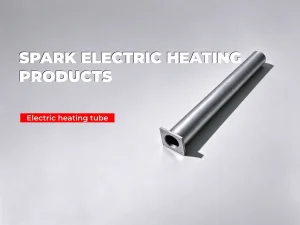
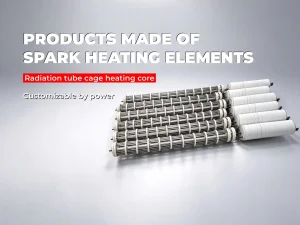
For heavy-duty industrial furnaces where direct flame or gas contact must be avoided, high-precision ceramic radiant tube core assemblies utilizing SPARK SGHT FeCrAl Tubes provide rapid heat transfer, maximum mechanical rigidity against sagging, and virtually zero scale flaking inside the ceramic sheath.
Technical Roadmap & Future Outlook (2025–2035)
Strategic directions in high-temperature material science and next-generation alloy manufacturing.
Nano-ODS Alloy Development
Oxide Dispersion Strengthened (ODS) FeCrAl alloys incorporating nano-scale $Y_2O_3$ particles are entering commercial pilot production. ODS technology boosts high-temperature creep strength by 400%, allowing ultra-thin wire geometries to operate at 1450°C without sagging while preserving near-zero oxidation rates.
AI-Assisted Vacuum Melt Refining
Machine learning algorithms are now integrated into Vacuum Induction Melting (VIM) and Electroslag Remelting (ESR) lines. Real-time optical emission spectroscopy feedback optimizes trace RE additions on a millisecond scale, ensuring absolute heat-to-heat chemical uniformity.
Self-Healing Surface Coatings
Pre-passivated micro-structured surface coatings are being engineered to instantly form $\alpha\text{-Al}_2\text{O}_3$ scales upon initial electrical commissioning, reducing initial oxidation weight gain during furnace startup from hours to minutes.
Localization Support & Compliance Assurance
Seamless international logistics, global standards compliance, and technical engineering support for enterprise buyers.
Global Standards Compliance
Beijing Shougang Gitane New Materials Co., Ltd. produces resistance heating alloys conforming strictly to international metallurgical standards:
- Chinese National Standard: GB/T 1234-2012 (High Resistance Alloys for Electric Heating)
- International Quality Management: ISO 9001:2015, ISO 14001:2015, ISO 45001:2018
- Environmental & Safety Directives: Full compliance with EU RoHS 2.0 and REACH environmental regulations regarding heavy metals and hazardous substances.
Worldwide Export & Custom Packaging
To preserve pristine wire surfaces and prevent humidity oxidation during oceanic transit, all products undergo rigorous multi-stage packaging:
- Spool & Coil Specifications: Precision winding on DIN160, DIN200, DIN250, or plastic spools wrapped in sealed anti-rust VCI film.
- Heavy Strip & Rod Packaging: Bundled in moisture-proof plastic wrapping secured within fumigated seaworthy wooden crates.
- Rapid Engineering Support: Direct access to senior metallurgical engineers for grade selection, element cold-resistance calculation, and surface load (W/cm²) design optimization.
Frequently Asked Questions (FAQ) & Technical Reference
Expert answers regarding oxidation weight gain rates, alloy selection, installation practices, and quotation procedures.
Oxidation Weight Gain Rate measures the mass of oxygen reacting with alloy elements per unit area over time ($\text{g/m}^2 \cdot \text{h}$). A lower rate indicates that the alloy quickly forms a passive, protective oxide film ($\alpha\text{-Al}_2\text{O}_3$ or $\text{Cr}_2\text{O}_3$) that drastically slows further oxygen penetration. Lower weight gain prevents alloy depletion, delays resistance drift, and avoids spallation, resulting in significantly extended element service life.
FeCrAl alloys form an alpha-alumina ($\alpha\text{-Al}_2\text{O}_3$) scale, which offers a much lower oxidation weight gain rate at ultra-high temperatures (1200°C–1425°C) than the chromia scale ($\text{Cr}_2\text{O}_3$) formed by NiCr alloys (limited to ~1200°C). Furthermore, FeCrAl features lower density (7.10 $\text{g/cm}^3$ vs 8.40 $\text{g/cm}^3$ for NiCr) and higher electrical resistivity, yielding substantial raw material weight savings. However, NiCr provides superior hot strength, creep resistance, and ductility after high-temperature exposure.
Rare Earth elements perform "pegging action" at the grain boundaries, pinning the protective oxide scale to the metallic substrate. This prevents scale cracking and flaking during rapid thermal cycling. RE additions also eliminate interfacial void accumulation, effectively lowering the oxidation rate and preventing premature element burnouts.
For continuous operation at 1350°C, we recommend HRE or 0Cr21Al6Nb. For maximum operational margin, extended cycle life, or severe carbon-trace conditions, SGHYZ (1400°C) or powder metallurgy SGHT (1425°C) represent the ultimate solutions with industry-leading low oxidation weight gain performance.
Higher surface loads ($W/cm^2$) increase the core wire temperature relative to the ambient furnace atmosphere. Excessively high surface loading accelerates oxygen diffusion, increasing the oxidation weight gain rate exponentially. Proper design balances element diameter, power rating, and surface load to keep element temperatures within the safe passive-film stability zone.
In vacuum or pure hydrogen/reducing atmospheres, the protective alumina scale cannot form naturally due to the absence of free oxygen. In such cases, elements must be pre-oxidized in air at 1050°C–1100°C for 2–4 hours prior to service to establish a thick, dense $\alpha\text{-Al}_2\text{O}_3$ layer before exposure to reducing conditions.
Every commercial shipment from Beijing Shougang Gitane includes an official Mill Test Certificate (MTC) stating precise chemical heat analysis, room-temperature electrical resistance ($\Omega/m$), tensile strength, elongation percentage, wire diameter tolerances, and GB/T 1234-2012 quality stamp.
Buyers can submit technical specifications (wire diameter, ribbon dimensions, operating temperature, voltage, power rating, or CAD coil drawings) via our online product portals. Our technical engineering team provides calculated electrical parameters, alloy recommendations, and formal commercial quotes within 24 business hours.
Additional High-Performance Resistance Alloys & Furnace Components
Explore our extended catalog of low oxidation rate wires, custom tempering elements, and high-temperature nickel-chrome formulations.