Primary Electrothermal Materials & Heating Elements
Directly engineered and manufactured by Beijing Shougang Gitane New Materials Co., Ltd. for extreme thermal endurance and exact electrical specifications.






Global Procurement Intent & Sourcing Demand in Electrothermal Engineering
An in-depth analysis of key decision drivers for EPC contractors, original equipment manufacturers (OEMs), and high-temperature thermal system operators worldwide.
As energy transitions accelerate across Europe, North America, and the Asia-Pacific region, heavy industrial manufacturing is undergoing a paradigm shift from fossil fuel combustion heating to zero-carbon electric heating. In this macro environment, procurement strategies for high-temperature electrothermal resistance materials—specifically Iron-Chromium-Aluminum (FeCrAl) and Nickel-Chromium (NiCr) alloys—have evolved beyond basic price-per-kilogram metrics. Global thermal engineers and procurement officers now evaluate suppliers on comprehensive parameters: total cost of ownership (TCO), thermal stability limits, creep resistance under prolonged cycling, oxidation scale integrity, and supply chain transparency.
Information Gain Insight: Modern high-temperature furnace designs running at continuous operational thresholds above 1200°C require heating alloys engineered with active rare-earth additions (Yttrium, Zirconium, Hafnium). These micro-elements alter the transport mechanism of aluminum ions, preventing destructive oxide scale spallation and dramatically increasing element lifespan by up to 250% compared to standard commercial wire grades.
Key Procurement Intent Vectors in Modern High-Thermal Applications
Global buyer search intent reveals five distinct technical demands when sourcing high-grade heating materials from top China suppliers and OEM manufacturing facilities:
Maximum Temperature Thresholds
Procurement teams require verified continuous service temperatures up to 1425°C for powder metallurgy FeCrAl (SGHT grade) and up to 1250°C for high-purity NiCr alloys without structural sagging or localized burnouts.
Dimensional & Resistance Consistency
Strict electrical resistance tolerances (±3% to ±1%) across entire production spools ensure uniform heating power distribution, eliminating hot spots in industrial continuous mesh-belt or radiant tube kilns.
Thermal Cycling Endurance
Resistance to thermal fatigue during high-frequency heating-cooling cycles, vital for batch furnaces, automotive glass tempering units, and semiconductor rapid thermal processing (RTP) equipment.
Beijing Shougang Gitane New Materials: The Gold Standard in Electrothermal Alloys
Backed by over six decades of metallurgical innovation, operating as a core enterprise of the state-owned Shougang Group.
Beijing Shougang Gitane New Materials Co., Ltd. (known globally as SG-GITANE and owner of the flagship SPARK brand) represents the highest caliber of Chinese metallurgical engineering. Located in the Changping District of Beijing, the manufacturing footprint covers 88,000 m² with over 39,000 m² of dedicated heavy industrial workshops. Employing more than 500 personnel—over 30% of whom are specialized metallurgical scientists, senior quality controllers, and electrothermal process engineers—Gitane has pioneered high-resistance electrothermal alloy production since the 1960s.
Full-Process Manufacturing Control: From Liquid Steel to Precision Wire
Unlike secondary wire drawers or re-packagers, Shougang Gitane maintains absolute quality custody over the entire production value chain:
1. Vacuum Induction & VOD Refining
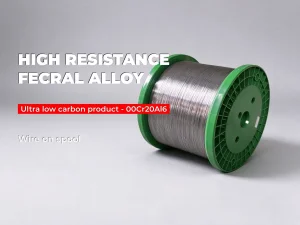
Raw elemental melting utilizing Vacuum Induction Melting (VIM) and Vacuum Oxygen Decarburization (VOD) to maintain carbon content below 0.02% (Ultra-Low Carbon 00Cr20Al6), dramatically minimizing grain boundary corrosion.
2. Powder Metallurgy (PM) Processing
Proprietary hot isostatic pressing (HIP) and powder metallurgy techniques for advanced grades like SGHT, ensuring fine, dispersed intermetallic phases that prevent high-temperature grain growth and sagging.
3. Hydrogen Bright Annealing & Cold Drawing
Multi-pass cold wire drawing combined with continuous pure-hydrogen bright annealing lines to deliver pristine, oxide-free wire surfaces, perfectly prepared for tight-radius coil winding.
Macro Industry Solutions: Engineering Precision Heat Across Critical Sectors
Delivering tailored alloy compositions, elements, and customized industrial furnaces optimized for harsh operational environments.
Electrothermal materials serve as the core energy-conversion heart in diverse global manufacturing operations. Shougang Gitane's SPARK series alloys are engineered to match the specific chemical, mechanical, and thermal stresses encountered across key high-tech industries:
1. Petrochemical & Energy Transformation
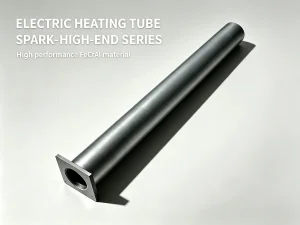
High-performance SGHT Steel Tubes and heavy-gauge radiant heating elements provide extreme corrosion resistance against carburization and sulfur vapor in hydrocracking units, gas reforming systems, and green hydrogen synthesis reactors operating continuously at high pressure.
2. Semiconductor & Photovoltaic Wafer Growth
Ultra-pure FeCrAl alloys (SGHYZ and SGHT grades) deliver non-contaminating thermal zones in monocrystalline silicon crystal pullers (CZ furnaces) and photovoltaic diffusion furnaces, where trace metal contamination must be kept under sub-ppm levels.
3. Glass Tempering & Advanced Ceramics
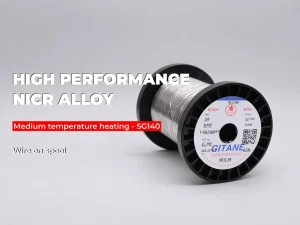
SG140 Heating Wire and high-density Alumina Ceramic Fiber Resistance Plates deliver instantaneous thermal response and precise localized zone control, preventing optical distortion in automotive display glass and solar panel tempering lines.
Technical Alloy Roadmap & Grade Comparison Guide
Comprehensive physical and electrical parameter reference compliant with GB/T 1234-2012 and international electrothermal material benchmarks.
| Alloy Grade | Family Class | Max Service Temp (°C) | Resistivity @20°C (μΩ·m) | Density (g/cm³) | Primary Industrial Application |
|---|---|---|---|---|---|
| SPARK SGHT | FeCrAl (PM) | 1425°C | 1.45 ± 0.05 | 7.10 | Powder metallurgy kilns, semiconductor thermal diffusion |
| SPARK SGHYZ | FeCrAl Rare-Earth | 1400°C | 1.42 ± 0.05 | 7.10 | Ultra-high-temp industrial furnaces, ceramic sintering |
| SPARK HRE | FeCrAl High-Temp | 1350°C | 1.42 ± 0.05 | 7.15 | Heavy industrial heat-treatment furnaces, radiant tubes |
| 0Cr25Al5 / 0Cr23Al5 | FeCrAl Standard | 1250°C | 1.42 / 1.35 | 7.25 | Industrial resistance heaters, industrial kilns, dryers |
| 00Cr20Al6 | FeCrAl Ultra-Low Carbon | 1300°C | 1.38 ± 0.04 | 7.20 | Catalytic converters, rapid thermal processing elements |
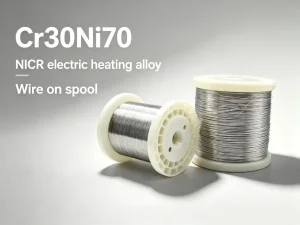
| SPARK Cr30Ni70 | NiCr Premium | 1250°C | 1.18 ± 0.04 | 8.10 | High-end electric furnaces, nitrogen/reducing atmospheres |
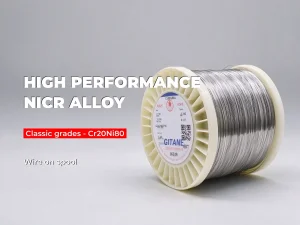
| SPARK Cr20Ni80 | NiCr Standard | 1200°C | 1.09 ± 0.04 | 8.40 | Precision appliances, medical heaters, plastic machinery |
| Cr20Ni40 | NiCr Economy | 1100°C | 1.04 ± 0.03 | 8.60 | Medium temperature industrial heating elements & resistors |
The Protective Oxide Mechanics: FeCrAl vs. NiCr Metallurgical Physics
Understanding the fundamental oxidation mechanics is essential for choosing the optimal material for your high-temperature environment:
FeCrAl Alloys ($\alpha-Al_2O_3$ Protective Film): Upon heating in air, FeCrAl alloys selectively oxidize to form an extraordinarily thin, dense, and electrically insulating layer of alpha-alumina ($\alpha-Al_2O_3$). This alumina scale acts as a near-impenetrable barrier against further oxygen diffusion, allowing FeCrAl to achieve operating temperatures up to 1425°C. Furthermore, FeCrAl possesses a lower specific density (~7.1 g/cm³) compared to NiCr (~8.4 g/cm³), yielding approximately 15-18% more wire length per kilogram for equivalent diameters—providing significant material cost savings.
NiCr Alloys ($Cr_2O_3$ Protective Film): Nickel-Chromium alloys form a tenacious chromium oxide ($Cr_2O_3$) layer. While limited in maximum temperature (1200-1250°C) due to chromium volatility at elevated temperatures, NiCr offers superior hot strength, excellent ductility after long heating periods (does not become brittle upon cooling), and exceptional corrosion resistance in moist air or protective ammonia-dissociated atmospheres.
Global Supply Chain, Compliance Assurance & Technical OEM Co-Development
Ensuring frictionless international procurement, complete material traceability, and tailored engineering support.
ISO Quality Certification
Certified to ISO 9002 in 1996 and updated to ISO 9001:2015. Every dispatch is accompanied by a certified 3.1 Mill Test Report detailing exact heat chemical analysis and room-temperature electrical resistivity.
Flexible Delivery Formats
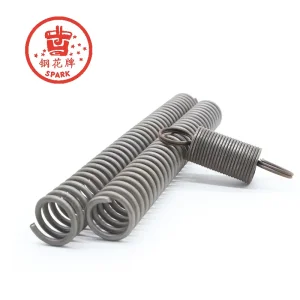
Supplied as precision round wire (0.05mm to 10.0mm), flat wire, strip/ribbon (thickness 0.1mm–4.0mm, width 5mm–200mm), pre-wound spiral coils, or fully assembled custom industrial furnace elements.
Engineering Consultative Support
Our technical team provides precise element surface load calculations ($W/cm^2$), pitch-to-diameter ratio design, and refractory support recommendations to optimize service lifespan and prevent premature sagging.
Frequently Asked Questions: Technical Sourcing & Engineering Guidance
Direct answers to technical queries encountered by furnace builders, thermal engineers, and international procurement specialists.
What is the maximum operating temperature capability of SPARK brand electrothermal alloys?
Operating temperature ratings depend strictly on alloy composition and microstructure. Standard FeCrAl grades (such as 0Cr25Al5 and 0Cr23Al5) are rated up to 1250°C. Advanced micro-alloyed FeCrAl grades such as SPARK HRE reach 1350°C, and SPARK SGHYZ operates up to 1400°C. The top-tier powder metallurgy grade SPARK SGHT achieves continuous service temperatures up to 1425°C. For Nickel-Chromium alloys, SPARK Cr20Ni80 is rated up to 1200°C, while SPARK Cr30Ni70 operates reliably up to 1250°C in favorable atmospheres.
How do I choose between FeCrAl and NiCr heating alloys for my furnace design?
Choose FeCrAl if your application requires high operating temperatures (1200°C to 1425°C), higher electrical resistivity, lower material density (weight savings), and long life in oxidizing or sulfur-containing atmospheres. FeCrAl is the standard for industrial kilns, ceramic sintering, and radiant heating tubes.
Choose NiCr if your thermal system undergoes frequent, severe thermal cycling, requires high post-use ductility (allowing maintenance coiling without breakage), or operates in nitriding, carburizing, or protective reducing atmospheres. NiCr is widely specified for heat-treating furnaces, precision heating appliances, and sealed industrial elements.
Why is Powder Metallurgy (PM) SGHT alloy superior to conventional ingot-cast FeCrAl alloys?
Conventional ingot-cast FeCrAl alloys undergo significant grain coarsening (grain growth) at temperatures above 1200°C, leading to thermal sagging, low creep strength, and mechanical brittleness. SPARK SGHT is manufactured using advanced powder metallurgy, which embeds ultra-fine, thermally stable dispersion particles throughout the matrix. This micro-structure restricts grain boundary sliding, providing exceptional hot creep strength, resistance to sagging, and extended operational life under heavy surface loads ($W/cm^2$).
What mill certifications and quality compliance documents are provided with export shipments?
Every shipment from Beijing Shougang Gitane is issued with an official Mill Test Certificate (MTC) conforming to EN 10204 3.1 standards. This includes full heat chemical composition breakdown, 20°C electrical resistance measurements, tensile strength testing, dimensional tolerance verification, and proof of compliance with GB/T 1234-2012, ISO 9001:2015, RoHS, and REACH international environmental directives.
Can Shougang Gitane customize coil dimensions, resistance values, and furnace elements to OEM drawing?
Yes. In addition to delivering spooled round wire and slit strip, Gitane specializes in custom fabrication of ready-to-install electrothermal elements. Our engineering department calculates wire gauge, spiral pitch, outer diameter (OD), and cold leg terminations based on your target voltage, wattage rating, and furnace zone dimensions. We supply coiled spirals, meander strips, ceramic tube-mounted elements, and complete radiant tube assemblies tailored to exact OEM technical blueprints.
Specialized Alloy Wires, Plates & High-Temp Element Solutions
Explore our extended series of ultra-low carbon alloys, glass tempering furnace wires, and ceramic fiber integrated heating components.