High-Performance Spiral Heating Elements & Resistance Wires
Explore our engineering-grade electrothermal alloy materials, pre-formed spiral heating elements, and ultra-high-temperature wires directly supplied from premier manufacturing lines.


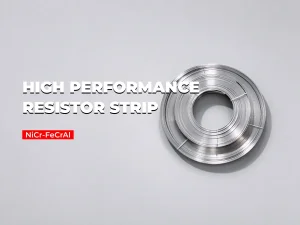
The Global Business & Industrial Reality of Resistance Heating
Decarbonization, electrification of thermal processing, and high-efficiency material synthesis are driving an unprecedented global demand for engineered spiral heating elements.
Industrial thermal processing stands at a critical technological inflection point. Global imperatives to reduce carbon footprints, phase out fossil-fuel combustion, and enhance energy transformation efficiency have accelerated the migration toward all-electric heating systems across primary manufacturing sectors. Central to this electrification transition is the continuous development of high-reliability, electrothermal resistance alloys formatted as spiral heating elements.
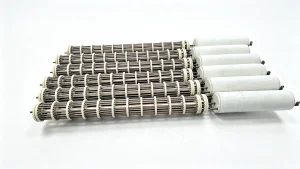
In modern industrial equipment—ranging from mega-watt scale heat-treatment furnaces to precision semiconductor diffusion chambers—spiral heating elements serve as the core thermal engine. Their helical design maximizes electrical wire density within constrained furnace volume, delivering optimized radiant surface areas, exceptional thermal transfer rates, and precise zone control. Today's global procurement officers and thermal engineering managers demand elements capable of operating near their thermodynamic limits while enduring aggressive chemical atmospheres, rapid thermal cycling, and mechanical stress without failure.
Technical Information Gain: Spiral heating elements fabricated from advanced FeCrAl (Iron-Chromium-Aluminum) and NiCr (Nickel-Chromium) alloys exhibit a non-linear relationship between wire surface loading ($W/\text{cm}^2$), pitch-to-diameter ratio ($S/D$), and operational longevity. Optimizing these parameters prevents localized hot-spots and prevents premature element burnouts caused by inter-turn thermal shielding.
Thermal Electrification
Transition from gas combustion to electric radiant tube and open-coil heating systems to achieve zero-carbon operational mandates in steel, automotive, and glass manufacturing.
Powder Metallurgy Revolution
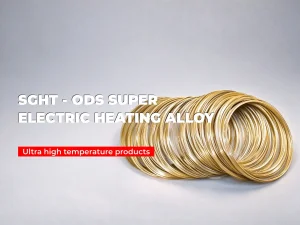
Adoption of powder-metallurgy FeCrAl grades (e.g., SGHT) engineered with rare-earth oxide dispersions to eliminate high-temperature sag and yield exceptional creep strength up to 1425°C.
Smart Atmosphere Compatibility
Increased requirement for resistance alloys chemically tuned to resist green rot in nitrogen/hydrogen atmospheres, carburizing conditions, and severe vacuum environments.
FeCrAl vs. NiCr Metallurgical Engineering Matrix
Selecting the optimal electrothermal alloy requires a precise technical balancing of maximum temperature ratings, electrical resistivity, mechanical ductility, and atmospheric oxidation dynamics.
| Alloy Family / Grade | Primary Composition | Max. Temp (°C) | Resistivity at 20°C ($\mu\Omega\cdot\text{m}$) | Density ($\text{g/cm}^3$) | Key Thermodynamic Advantage |
|---|---|---|---|---|---|
| SGHT (Powder Metallurgy) | Fe-Cr-Al + Rare Earth (PM) | 1425°C | 1.45 | 7.10 | Zero high-temp sag; ultra-dense $\alpha-\mathrm{Al_2O_3}$ protective oxide scale. |
| SGHYZ / HRE Grade | Fe-Cr-Al + Yttrium Doping | 1400°C / 1350°C | 1.42 | 7.15 | Superior creep resistance; extended thermal cycle life in ceramic kilns. |
| 0Cr25Al5 / 0Cr23Al5 | Fe + 23-25% Cr + 5% Al | 1250°C | 1.35 - 1.42 | 7.25 | High electrical resistivity; low material density yields cost/weight advantage. |
| Cr20Ni80 (Nichrome) | 80% Ni + 20% Cr | 1200°C | 1.09 | 8.40 | Excellent hot strength; post-use ductility; resists green rot in cycling. |
| Cr30Ni70 (High Cr NiCr) | 70% Ni + 30% Cr | 1250°C | 1.18 | 8.10 | Enhanced sulfur and nitrogen corrosion resistance compared to 80/20 NiCr. |
Oxidation Dynamics & Oxide Scale Formation Mechanics
The operational longevity of a spiral heating element hinges entirely on its ability to form a self-passivating, thermodynamically stable oxide layer upon initial thermal commissioning. For Iron-Chromium-Aluminum (FeCrAl) alloys, heating above 1000°C causes aluminum atoms to migrate preferentially to the element surface, forming an adherent film of alpha-alumina ($\alpha-\mathrm{Al_2O_3}$). This oxide layer is electrical insulating, highly dense, and possesses extremely low oxygen permeability, effectively shielding the inner metallic core from continuous degradation.
Conversely, Nickel-Chromium (NiCr) alloys form a protective chromia ($\mathrm{Cr_2O_3}$) surface layer. While chromia exhibits outstanding mechanical flexibility and resistance to spallation during rapid thermal shock, it vaporizes progressively at operating temperatures exceeding 1200°C in oxidizing conditions. Thus, for continuous ultra-high-temperature duty (1300°C–1425°C), FeCrAl PM alloys like SGHT represent the undisputed engineering gold standard.
China Industry 4.0: Modern Manufacturing & Supply Chain Resilience
How state-of-the-art metallurgical processing, vertical integration, and rigorous quality control establish Chinese factories as premier partners for global buyers.
Vertical Metallurgical Integration
From Vacuum Induction Melting (VIM) and Argon Oxygen Decarburization (AOD) refining to wire rod drawing and continuous hydrogen annealing, full internal control ensures total heat-to-heat chemical consistency.
Automated Coiling Technology
CNC spiral coiling centers maintain sub-millimeter tolerances on outer coil diameter ($D_o$), pitch ($S$), and leg length, preventing uneven surface loading and localized hot-spot stress points.
Comprehensive Quality Assurance
Every product shipment is certified with complete Mill Test Certificates (MTC) detailing chemical composition analysis, cold resistance values, elongation profiles, and accelerated life testing results.
Global Procurement Demands: Total Cost of Ownership (TCO) Optimization
In global B2B procurement, direct material price represents only a fraction of total thermal infrastructure cost. Experienced procurement managers evaluate suppliers on the basis of Total Cost of Ownership (TCO), which incorporates energy conversion efficiency, element replacement frequency, production line downtime costs, and emergency freight overheads.
By partnering with specialized Chinese suppliers such as Beijing Shougang Gitane New Materials Co., Ltd., international industrial original equipment manufacturers (OEMs) achieve substantial strategic advantages. Backed by 60+ years of metallurgical enterprise heritage and massive production capacity, modern Chinese suppliers offer guaranteed batch uniformity, custom alloy formulation options, and flexible delivery cycles that dramatically de-risk global supply chains.
Localized Application Scenarios & Field Engineering Notes
Spiral heating elements are customized to deliver precise temperature profiles across diverse thermal processing environments.
Photovoltaic & Solar Cell Manufacturing
Utilized in high-temperature silicon ingot diffusion furnaces and PECVD wafer processing systems where zero-particulate contamination and thermal uniformity within ±1°C are critical.
Lithium Battery Cathode Calcination Kilns
Heavily deployed in continuous roller hearth kilns (RHK) processing LFP and NCM precursor powders under corrosive alkaline and oxidative high-heat environments.
Industrial Heat-Treatment & Metallurgy
Essential elements inside pit-type furnaces, box muffles, and continuous mesh-belt furnaces for carburizing, hardening, tempering, and bright annealing of precision steel parts.
Advanced Technical Ceramics & Dental Sintering
Pre-formed heavy-gage spiral elements integrated into vacuum muffles for high-density zirconia sintering and structural alumina component firing up to 1400°C.
Engineering Calculations for Spiral Heating Element Optimization
A rigorous step-by-step mathematical guide to dimensioning, pitch selection, surface loading, and electrical parameter balancing.
1. Surface Load Density Calculation ($W$)
Surface load density defines the electrical power emitted per square centimeter of wire surface ($W/\text{cm}^2$). Exceeding maximum recommended surface loads severely shortens element lifespan due to localized thermal breakdown.
$$\text{Surface Load } W = \frac{P}{\pi \cdot d \cdot L_h} \quad (\text{W/cm}^2)$$
Where: P = Power per element (Watts), d = Wire diameter (cm), Lh = Active heated length of wire (cm).
2. Recommended Pitch-to-Diameter Ratio ($S/D$)
When coiling round resistance wire into a helix, the space between adjacent turns (pitch $S$) relative to wire diameter ($d$) must be carefully maintained:
- Standard Open-Coil Support: Recommended pitch $S = (2 \text{ to } 3) \times d$.
- Dense Ceramic Tube Support: Recommended pitch $S = (1.5 \text{ to } 2) \times d$.
- Rule of Thumb: If pitch $S < 1.5 \times d$, adjacent turns radiate heat directly into one another, resulting in severe local overheating and thermal sagging.
3. Cold vs. Hot Electrical Resistance ($R_T / R_{20}$)
The electrical resistance of metallic alloys increases at elevated temperatures. Design engineers must calculate the operating hot resistance ($R_T$) to determine correct power consumption at steady state:
$$R_T = R_{20} \cdot C_t$$
Where: R20 = Resistance at 20°C, Ct = Temperature correction factor (typically 1.02–1.06 for FeCrAl and 1.01–1.08 for NiCr depending on operational temperature).
Frequently Asked Questions (FAQ) for Procurement & Thermal Engineers
Detailed answers to high-intent engineering, sourcing, and material operational questions.
What is the maximum operating temperature limit for FeCrAl vs NiCr spiral heating elements?
Why is FeCrAl preferred over NiCr for large-scale industrial electric furnaces?
How does furnace atmosphere impact the life expectancy of spiral resistance wire?
What causes "green rot" in Nichrome (NiCr) spiral heating elements?
What parameters should be supplied when requesting a custom spiral heating element quote?
How does Beijing Shougang Gitane ensure heat-to-heat quality consistency?
Additional Industrial Alloys & Custom Radiant Cores
Browse our extended range of ultra-high-temperature powder metallurgy wires, radiant tube heating cores, and low-carbon industrial ribbons.