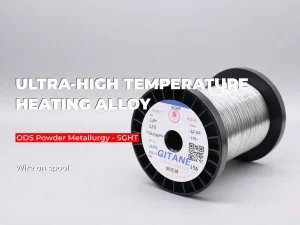
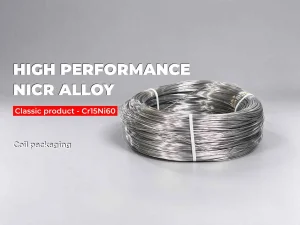
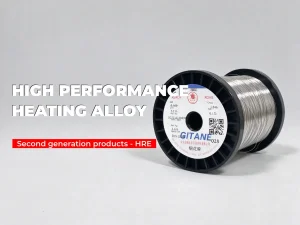
Featured High-Temperature Heating Wire & Element Solutions
Direct factory solutions engineered for superior oxidation resistance, extended lifecycle, and precision electrothermal efficiency.


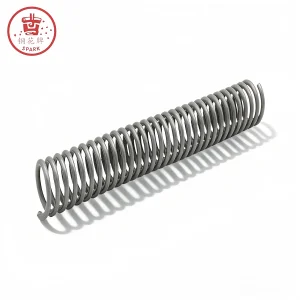
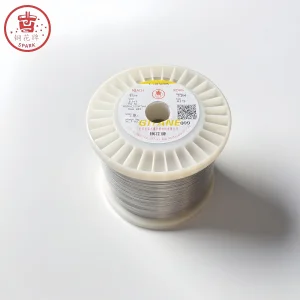
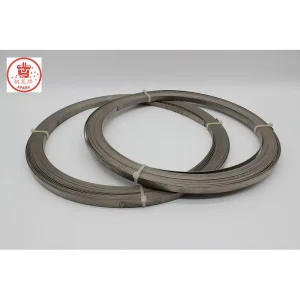

Executive Summary: SG140 Resistance Wire in Global Industrial Electrothermal Applications
In the modern thermal engineering landscape, the transition toward high-efficiency, zero-emission electrical heating systems requires specialized materials capable of operating continuously at extreme temperatures without thermal degradation, structural sagging, or catastrophic oxidation. Among iron-chromium-aluminum (FeCrAl) alloys, SG140 heating wire stands out as a flagship grade produced by leading China manufacturers to meet rigorous global standards.
As industrial processes—ranging from automotive tempering and semiconductor wafer annealing to advanced glass tempering and ceramic firing—shift away from fossil fuel combustion, electric resistance heating elements face unmatched performance expectations. The SG140 grade is specifically engineered to bridge the performance gap between standard commercial FeCrAl wires (such as 0Cr23Al5 or 0Cr25Al5) and premium ultra-high-temperature powder metallurgy alloys.
Information Gain Insight: The SG140 formulation incorporates optimized rare-earth micro-alloying (Yttrium and Zirconium additions) paired with a controlled cold-drawing and bright-annealing sequence. This metallurgical synergy results in an adhesive, self-healing alpha-alumina (α-Al₂O₃) surface film that drops thermal oxidation rates by up to 35% compared to conventional 0Cr23Al5 alloys, dramatically extending component service lifespans in continuous industrial furnace operations up to 1400°C.
Global Market Dynamics & The Role of Chinese Manufacturing
Historically, high-temperature industrial heating elements were dominated by European and North American suppliers. However, over the past two decades, integrated Chinese manufacturers—exemplified by Shougang Gitane and specialized industrial alloy mills—have revolutionized the supply chain. Through massive capital investment in vacuum induction melting (VIM), electroslag remelting (ESR), and high-precision continuous wire drawing lines, Chinese factories now deliver SG140 heating wire with ultra-tight dimensional tolerances, exceptional electrical resistance uniformity, and competitive factory-direct pricing.
Today, global original equipment manufacturers (OEMs) and furnace engineering firms rely on China's SG140 supply chain to mitigate raw material price volatility, shrink procurement lead times, and guarantee robust thermal performance in demanding continuous production environments.
Metallurgical Engineering & Technical Specifications of SG140
The superior performance of SG140 heating wire relies directly on its balanced chemical composition and refined microstructural characteristics. The alloy belongs to the ferrite FeCrAl family, optimized with specific proportions of Chromium and Aluminum, stabilized by trace reactive elements.
Alumina Scale Mechanics
Upon initial heating in an oxygen-containing atmosphere, SG140 rapidly generates a dense, continuous layer of alpha-alumina (α-Al₂O₃). This passivation layer acts as an impermeable barrier against oxygen diffusion, preventing internal oxidation and alloy depletion.
Reactive Element Effect (RE)
Micro-doping with Yttrium (Y) and Rare Earth elements improves oxide scale adhesion. This prevents oxide spallation during rapid thermal cycling, a common failure mode in lower-grade heating wires subject to intermittent furnace power modulation.
Hot Strength & Creep Deflection
While traditional FeCrAl alloys exhibit lower hot strength than Nickel-Chromium (NiCr) alternatives, SG140's grain refinement process increases resistance to creep deformation and coil sagging, maintaining geometric stability across long horizontal element spans.
Comparative Alloy Performance Matrix
To assist thermal engineers and procurement professionals in selecting the optimum resistance material, the table below highlights key physical, electrical, and thermal properties of SG140 in comparison to standard commercial alternatives produced in China and internationally.
| Property Parameter | SG140 Alloy Wire | 0Cr25Al5 (FeCrAl) | 0Cr23Al5 (FeCrAl) | Cr20Ni80 (Nichrome) |
|---|---|---|---|---|
| Max Operating Temperature (°C) | 1380°C - 1400°C | 1250°C - 1300°C | 1200°C - 1250°C | 1200°C |
| Resistivity at 20°C (μΩ·m) | 1.45 ± 0.05 | 1.42 ± 0.05 | 1.35 ± 0.05 | 1.09 ± 0.05 |
| Density (g/cm³) | 7.10 | 7.10 | 7.25 | 8.40 |
| Thermal Expansion Coeff. (10&supmin;&sup6;/K) | 14.7 (20-1000°C) | 15.0 (20-1000°C) | 15.4 (20-1000°C) | 18.0 (20-1000°C) |
| Elongation % (Bright Annealed) | > 16% | > 12% | > 15% | > 20% |
| Relative Service Life Index | 180% - 220% | 100% (Baseline) | 75% | 120% (Low temp cycling) |
*Data compiled from China National Standard GB/T 1234-2012 and factory mill test performance benchmarks.
Localized Application Scenarios & Industrial Implementation
The operational versatility of SG140 heating wire allows seamless integration across diverse industrial heating equipment. Below are primary field-tested application environments where SG140 consistently delivers superior ROI and operational reliability.
1. Glass Tempering & Bending Furnaces
In flat and curved glass tempering lines, heating wire must maintain absolute temperature uniformity across zones to eliminate optical distortion. SG140's consistent electrical resistance prevents hot-spots, ensuring uniform radiation output across large furnace chambers.
2. Steel Tempering & Heat Treating Kilns
Automotive and heavy machinery parts require precise hardening and tempering heat cycles. SG140 heating elements, fabricated as heavy-gauge coiled wires or wave-shaped ribbons, withstand rigorous thermal cycling without structural cracking or premature embrittlement.
3. Ceramic & Structural Sintering
High-performance ceramics (Zirconia, Alumina, Silicon Nitride) demand ultra-clean heating environments up to 1350°C. The inert alpha-alumina coating on SG140 prevents metallic flaking or spallation, protecting sensitive ceramic products from heavy-metal ion contamination.
4. Photovoltaic Wafer & Solar Cell Production
In diffusion furnaces used for solar cell doping, precision thermal profiles are vital for photovoltaic conversion efficiency. SG140 provides stable electrical load characteristics over months of uninterrupted high-temperature processing.
5. High-Temperature Laboratory Muffle Furnaces
Research institutes and university laboratories require fast heat-up rates and compact element footprints. Fine-gauge SG140 wire (0.5mm to 2.0mm) offers high electrical resistance per linear meter, enabling compact heating element configurations.
Technology Roadmap & Future Metallurgy Outlook
As industries move toward carbon neutrality, electro-thermal processing efficiency must continuously advance. Leading Chinese manufacturers are driving three key innovation pillars for SG140 and next-generation heating alloys:
1. Powder Metallurgy (PM) Synthesis Integration
By shifting from conventional ingot casting to advanced gas-atomized powder metallurgy processing, future iterations of SG140 achieve zero grain boundary segregation. This increases creep resistance at 1400°C by an additional 40%, virtually eliminating element sag.
2. Nanoscale Grain Pinning Technology
Incorporating nanoscale Yttrium-Hafnium oxide dispersions directly into the alloy matrix inhibits coarsening of ferrite grains during extended high-temperature holding, preserving room-temperature mechanical ductility during routine maintenance.
3. Zero-Carbon Green Manufacturing
China's top alloy plants are transitioning to 100% green hydrogen reduction melting and closed-loop electricity sourcing, reducing the embedded carbon footprint of exported SG140 wire to meet strict European ESG purchasing criteria.
China Factory Supply Chain Resilience & Cost Advantages
Choosing an established Chinese manufacturer for SG140 heating wire provides distinct commercial and operational benefits for global buyers:
- Full Vertical Integration: Raw material sourcing (Fe, Cr, Al, Y), vacuum induction melting, hot rolling, multi-pass cold drawing, and automated spooling occur within unified manufacturing hubs, ensuring 100% quality traceability.
- Unrivaled Cost Efficiency: China's industrial scale, domestic raw material supply chains, and optimized energy infrastructure provide factory-direct pricing 30% to 50% lower than equivalent western brand alloys without sacrificing purity.
- Flexible Customization: Factory lines support custom wire diameters ranging from 0.05mm ultra-fine wire up to 10.0mm heavy industrial rods, alongside flattened ribbons, strip materials, and custom pre-wound spiral elements.
- Rapid International Logistics: Strategic proximity to major international shipping ports (Tianjin, Shanghai, Ningbo) guarantees fast export clearance, anti-corrosion ocean packaging, and reliable express air-freight fulfillment.
Global Compliance, Quality Control & Technical Support
To ensure total reliability in international markets, China's leading SG140 manufacturers operate under strict quality management frameworks and offer extensive technical localization support.
ISO 9001:2015 Certification
Every heat lot undergoes rigorous spectral chemical analysis (OES), tensile strength tests, continuous resistance testing per meter, and microscopic grain boundary evaluations prior to shipment.
RoHS & REACH Compliance
SG140 heating alloys are fully compliant with EU REACH regulations and RoHS environmental directives, containing zero restricted hazardous substances or uncertified heavy metals.
Tailored Engineering Support
Application engineering teams provide full assistance with thermal power calculations, surface load design (W/cm² optimization), element spacing, and furnace retrofitting consultation.
Frequently Asked Questions (Q&A)
Expert answers to common engineering, procurement, and technical queries regarding SG140 heating wire.
High-Performance Resistance Alloys & Heating Elements (Part II)
Explore additional specialized alloy grades, ultra-high temperature series, and custom industrial heating components.