

Navigating EU RoHS & REACH Compliance in High-Temperature Resistance Alloy Sourcing
In the evolving landscape of global industrial manufacturing, international procurement directors and OEM thermal design engineers face stringent regulatory parameters when importing electrical resistance heating wires, strips, and custom furnace components into the European Union. Standard 2011/65/EU (RoHS 3, including Directive 2015/863) and Regulation (EC) No 1907/2006 (REACH) represent mandatory eco-compliance barriers designed to eliminate hazardous heavy metals, restricted phthalates, and Substances of Very High Concern (SVHC) from entering the EU industrial single market.
Decoupling Compliance Risks in High-Performance Metallurgy
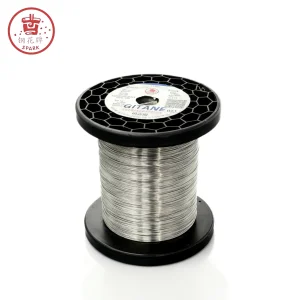
For high-density electric heating elements—such as Iron-Chromium-Aluminum (FeCrAl) and Nickel-Chromium (NiCr) alloys—achieving total environmental compliance requires advanced metallurgical purity control from the initial smelting phase. Traditional alloy production often risks unintentional contamination through recycled scrap containing Lead (Pb), Cadmium (Cd), Hexavalent Chromium ($Cr^{6+}$), or trace Mercury (Hg).
As an authoritative leader in Chinese metallurgical innovation, our manufacturing methodology integrates strict Vacuum Induction Melting (VIM), Electroslag Remelting (ESR), and real-time Spectrometric Quality Control. This guarantees that every batch of Cr20Ni80, 0Cr25Al5, or SGHYZ wire strictly adheres to the heavy metal threshold limits (e.g., Lead < 1000 ppm, Cadmium < 100 ppm) mandated by European regulatory bodies.
The Executive Regulatory Checklist
- Directive 2011/65/EU (RoHS 3): Complete restriction of 10 primary hazardous substances.
- REACH SVHC Candidate List: Zero presence of 240+ candidate substances above 0.1% w/w threshold.
- ISO/IEC 17025 Third-Party Testing: Verified via SGS, TÜV Rheinland, and Intertek chemical analytics.
- EN 10204 3.1 Traceability: Certified Mill Test Reports accompanying every raw material melt batch.
Deep-Dive Technical Breakdown: RoHS 3 & REACH Standards for Heat-Resistant Alloys
Understanding the exact chemical boundaries defined by European chemical authorities (ECHA) is vital for industrial procurement engineers sourcing heating elements for OEM appliances, heat treatment furnaces, and semiconductor manufacturing lines.
RoHS 3 Substance Restrictions
RoHS restricts 10 key hazardous agents. In resistance alloys, heavy metal limits are critical. While Chromium ($Cr$) is an essential alloying element for oxidation resistance, RoHS restricts Hexavalent Chromium ($Cr^{6+}$). In solid metallic state (FeCrAl/NiCr), chromium exists as zero-valent metal ($Cr^0$), which is completely exempt and safe. However, process lubricants and surface oxide scale must be thoroughly cleaned to prevent $Cr^{6+}$ formation during drawing.
REACH & SVHC Compliance
Under REACH Regulation (EC No 1907/2006), articles made of resistance wire (coils, ribbons, straight drawn elements) must not release SVHCs under normal operating conditions. Furthermore, non-metallic coatings, lubricants, or temporary anti-corrosion oils used during coiling must be 100% free of halogenated organic compounds, polycyclic aromatic hydrocarbons (PAHs), and banned phthalates (DEHP, BBP, DBP, DIBP).
Halogen-Free & Eco-Degreasing
Modern automated heating element manufacturing requires ultra-clean wire surfaces. Residual drawing dies containing chlorinated paraffin lubricants can corrode element surfaces during high-temperature activation and generate hazardous toxic fumes. Our China 4.0 factories utilize continuous ultrasonic solvent-free degreasing to ensure pristine surface cleanliness.
Key Technical Insight for Material Engineers: Achieving full RoHS/REACH compliance does not compromise high-temperature tensile strength, creep resistance, or lifespan. By utilizing ultra-pure raw nickel (99.99% purity) and refined iron-aluminum master alloys, our materials form a dense, adherent, self-healing oxide film ($\alpha-Al_2O_3$ or $Cr_2O_3$) that elevates service life up to 1425°C while remaining 100% eco-compliant.
Global Sourcing Trends: Environmental Compliance as a Strategic Procurement Priority
The global shift toward decarbonization, green heating, and circular economy initiatives has redefined industrial sourcing criteria. Tier-1 enterprise buyers in Germany, France, the Nordic region, and North America no longer evaluate alloy manufacturers solely on price per kilogram. Environmental compliance, ESG audit ratings, and life-cycle reliability are now critical procurement metrics.
1. Risk Mitigation in International Supply Chains
Importing non-compliant heating materials into the EU market carries severe financial and brand risks, including customs seizures, substantial administrative fines, mandatory product recalls, and severe disruption to production lines. By selecting a verified Chinese manufacturer with comprehensive RoHS and REACH documentation, procurement managers hedge against costly regulatory bottlenecks.
2. Total Cost of Ownership (TCO) & Carbon Neutrality
Eco-compliant, high-purity resistance wires demonstrate lower electrical resistivity drift over thousands of operational hours. High thermal energy efficiency reduces furnace energy consumption, directly aligning with global Scope 1 and Scope 2 carbon emission reduction goals. Premium FeCrAl alloys (such as 0Cr25Al5 and SGHYZ) feature lower material density than NiCr alloys, delivering up to 15-20% weight savings per linear meter of furnace element.
Compliance & Procurement Comparison Matrix
| Compliance Metric | Standard Sourcing | Certified China Supplier |
|---|---|---|
| Heavy Metal Screening | Random Sampling | 100% XRF Batch Screened |
| Phthalates & Oils | Unmonitored | Solvent-Free Ultrasonic Cleaning |
| Material Traceability | Batch Level | Melt-Heat Level (EN 10204 3.1) |
| EU Customs Clearance | Medium Risk | Zero Customs Hold Guarantee |
China's Manufacturing Evolution: Supply Chain Resilience & Technological Superiority
China's industrial heating alloy manufacturing sector has undergone a radical transformation. Moving beyond volume-based production, top-tier Chinese manufacturers now integrate advanced Industry 4.0 automation, smart metallurgy, and digital supply chain architecture to deliver high-precision resistance alloys to global markets.
Smart Smelting & Precise Chemistry
Automated vacuum induction melting coupled with computer-controlled ladle refining allows precise elemental targeting. Trace elements such as Yttrium (Y), Zirconium (Zr), and Titanium (Ti) are introduced with micro-gram accuracy to refine grain structures and maximize oxide scale adhesion at ultra-high temperatures.
Integrated Supply Chain Synergy
From electrolytic nickel refining to continuous wire drawing, bright annealing, and coiling, China’s fully integrated industrial ecosystem eliminates middleman markups and shipping delays. This end-to-end integration ensures agile lead times and cost-competitive pricing for overseas enterprise buyers.
Global Logistics & Compliance Packaging
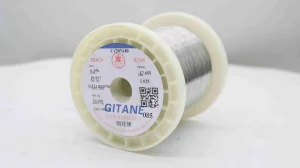
Finished goods are packed in heavy-duty, moisture-proof, export-grade packaging labeled with QR code batch tracking. Digital documentation, including RoHS testing, REACH certificates, and chemical analysis, is transmitted ahead of shipment for effortless customs clearance.
High-Precision Applications: Where Compliance Meets Performance
ROHS and REACH compliant resistance heating alloys are engineered to power demanding industrial applications across various clean-tech sectors.
Automotive & Electric Vehicles (EV)
Critical heating elements for EV battery thermal conditioning systems, cabin heating modules (PTC heaters), and exhaust post-treatment catalyst pre-heaters require strict chemical purity to prevent outgassing and short-circuits under extreme vibration and cycling.
Semiconductor & Microelectronics
Wafer processing, diffusion furnaces, and epitaxial growth systems operating above 1200°C demand ultra-clean heating elements. Trace lead or sulfur contamination can destroy entire semiconductor yield runs. Our vacuum-refined alloys guarantee zero volatile metallic impurities.
Medical Equipment & Cleanrooms
Surgical instrument sterilizers, autoclave systems, and laboratory analytical instruments require non-corroding, halogen-free, non-toxic resistance wire (such as Cr20Ni80) to maintain sterile conditions without emitting harmful vapor particles.
High-Efficiency Home & Commercial Appliances
From eco-design compliant coffee makers and air fryers to commercial oven heating tubes, eco-certified resistance wires allow European appliance brands to display CE, RoHS, and green product certifications with total confidence.
Comprehensive Technical Specification & Compliance Matrix
Compare key chemical, physical, and environmental parameters of primary Chinese resistance heating alloy grades.
| Alloy Grade | Alloy Family | Max Working Temp | Electrical Resistivity (20°C) | RoHS / REACH Status | Primary Industrial Application |
|---|---|---|---|---|---|
| Cr20Ni80 | Ni-Cr Alloy | 1200°C | 1.09 μΩ·m | Fully Compliant | Precision Appliances, Medical, Industrial Furnaces |
| Cr30Ni70 | Ni-Cr Alloy | 1250°C | 1.18 μΩ·m | Fully Compliant | Corrosive Atmosphere Heat Treatment, Heavy OEM |
| Cr15Ni60 | Ni-Cr Alloy | 1150°C | 1.11 μΩ·m | Fully Compliant | Domestic Heating Elements, Resistors, Rheostats |
| 0Cr25Al5 | Fe-Cr-Al Alloy | 1250°C | 1.42 μΩ·m | Fully Compliant | Industrial Kilns, Ceramic Sintering, Radiant Heaters |
| 0Cr23Al5 | Fe-Cr-Al Alloy | 1250°C | 1.35 μΩ·m | Fully Compliant | High-Temperature Industrial Furnaces, Heat Treating |
| HRE / SGHYZ | Advanced FeCrAl | 1350°C – 1400°C | 1.45 μΩ·m | Fully Compliant | Semiconductor Furnaces, Powder Metallurgy, Kilns |
Frequently Asked Questions (FAQ) – Sourcing & Compliance
Direct answers from our metallurgical quality assurance team regarding eco-compliance, custom manufacturing, and global shipping.
How do you verify that every batch of heating wire complies with EU RoHS and REACH standards?
Every heat batch undergoes rigorous chemical analysis using Inductively Coupled Plasma Optical Emission Spectrometry (ICP-OES) and X-Ray Fluorescence (XRF) testing in our ISO/IEC 17025 accredited laboratory. We test for heavy metals (Lead, Mercury, Cadmium, Hexavalent Chromium) and verify that no SVHC candidate chemicals are introduced during processing. Each order is delivered with a certified EN 10204 3.1 Mill Test Certificate and official RoHS/REACH compliance test reports from SGS or TÜV.
Are Nickel-Chromium (NiCr) alloys safe under REACH regulations regarding nickel restrictions?
Yes. REACH Entry 27 restricts nickel release only in articles intended to come into direct and prolonged contact with human skin (e.g., jewelry). Industrial heating elements, furnace wires, and sealed internal appliance coils are exempt from skin contact release limits. However, workers handling bare wire are protected by our solvent-free manufacturing processes, and all finished materials comply with standard REACH chemical declarations.
Can you supply customized wire dimensions, ribbons, or pre-formed spiral coils?
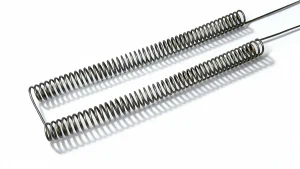
Absolutely. We manufacture round wires from 0.05mm up to 12.0mm in diameter, flat ribbon/strips in custom widths and thicknesses, as well as custom-wound spiral heating elements according to your specific wattage, voltage, and dimensional engineering drawings.
What is the lead time for export orders to European and global destinations?
Standard raw alloy wire inventory is typically dispatched within 7–10 business days. Custom alloy melting or specialized drawing sizes take approximately 15–20 days. We offer flexible FOB, CIF, DDP, and DAP air/sea freight shipping arrangements complete with streamlined customs clearance documentation.
Why choose FeCrAl over NiCr alloy for eco-compliant heating applications?
FeCrAl alloys (like 0Cr25Al5 and SGHYZ) offer higher maximum operating temperatures (up to 1400°C+), higher electrical resistivity, longer service life, and lower material density compared to NiCr alloys. Lower density translates to approximately 15% to 20% weight savings, reducing total material usage, shipping costs, and environmental carbon footprint.