
RoHS Compliant Heating Elements & Precision Alloy Wires
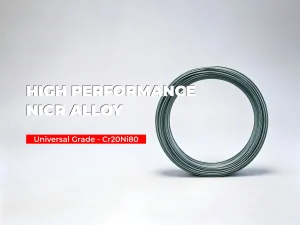
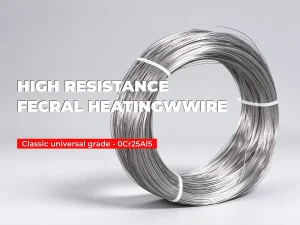
Direct factory supply of certified 0Cr25Al5, Cr20Ni80, Cr30Ni70, and SGHT ultra-high temperature resistance heating materials.




China RoHS Compliance in High-Temperature Resistance Alloys
An in-depth metallurgical analysis on regulatory alignment, heavy metal restrictions, and high-purity vacuum induction refining for global electrical appliances and industrial furnaces.
In the modern globalized manufacturing landscape, environmental regulatory compliance serves as a non-negotiable benchmark for international B2B procurement. Specifically, China RoHS (officially known as the Management Methods for the Restriction of the Use of Hazardous Substances in Electrical and Electronic Products, governed by the Ministry of Industry and Information Technology - MIIT Order No. 32) aligns strictly with international standards like EU RoHS 2.0 (Directive 2011/65/EU and amendment Directive 2015/863).
For engineering teams specifying resistance heating wire, strip, and spiral furnace elements, strict adherence to RoHS parameters is essential. High-temperature alloys containing Iron-Chromium-Aluminum (FeCrAl) or Nickel-Chromium (NiCr) operate in environment-critical thermal equipment ranging from semiconductor diffusion tubes to domestic smart appliances. Any trace presence of restricted heavy metals—such as Lead (Pb), Cadmium (Cd), Mercury (Hg), Hexavalent Chromium ($Cr^{6+}$), Polybrominated Biphenyls (PBB), or Polybrominated Diphenyl Ethers (PBDE)—invalidates global commercialization and introduces significant liability risks.
Chemical Composition & Trace Metal Threshold Control
Beijing Shougang Gitane New Materials Co., Ltd. executes rigorous, mill-level chemical composition controls across all electric heating alloy heats. Utilizing Advanced Argon-Oxygen Decarburization (AOD) and Vacuum Induction Melting (VIM), our processing limits hazardous trace contaminants far below statutory maximum allowable concentrations (MCVs):
| Restricted Substance | China RoHS / EU RoHS MCV Limit | SPARK Alloy Guaranteed Batch Target | Detection / Analytical Method |
|---|---|---|---|
| Lead (Pb) | ≤ 1000 ppm (0.1%) | < 50 ppm (< 0.005%) | ICP-OES / X-ray Fluorescence (XRF) |
| Cadmium (Cd) | ≤ 100 ppm (0.01%) | < 10 ppm (< 0.001%) | Inductively Coupled Plasma Mass Spectrometry |
| Mercury (Hg) | ≤ 1000 ppm (0.1%) | < 5 ppm (< 0.0005%) | Cold Vapor Atomic Absorption (CVAAS) |
| Hexavalent Chromium ($Cr^{6+}$) | ≤ 1000 ppm (0.1%) | Zero (Pure Metallic Cr state only) | UV-Vis Spectrophotometry / Alkaline Digestion |
| PBBs & PBDEs | ≤ 1000 ppm (0.1%) | Completely Absent (Metallic Matrix) | GC-MS Analysis |
Because resistance wires operate under continuous high thermal strain, high-purity melt refining not only guarantees China RoHS compliance, but also dramatically improves the physical properties of the wire. Lowering trace lead and sulfur impurity levels prevents grain boundary embrittlement at temperatures exceeding 1000°C, thereby enhancing creep resistance and extend lifetime operational hours.
Unrivaled Strategic Advantages of China's Alloy Supply Chain
How full industrial vertical integration from raw material smelting to precision wire drawing empowers global OEM procurement with cost efficiency and quality stability.
Vertical Mineral & Smelting Integration
Backed by Shougang Group's vast metallurgical infrastructure, our supply chain integrates upstream refined ferrochrome, high-purity electrolytic nickel, and primary aluminum ingots. This complete upstream control insulates global buyers from volatile spot-market fluctuations and guarantees batch-to-batch chemical homogeneity.
Advanced Precision Wire Drawing & Rolling
Our Beijing manufacturing facility spans 88,000 square meters, featuring automated continuous wire drawing machines, hydrogen bright annealing furnaces, and cold-rolling ribbon mills. We produce round wires down to 0.05mm and wide cold-rolled strips with razor-thin dimensional tolerances (±0.002mm).
Rigorous Quality Assurance Architecture
Operating strictly under ISO 9001:2015 quality management and GB/T 1234-2012 technical standards, every master coil undergoes 100% electrical resistivity testing, surface defect eddy-current inspection, and continuous temperature-coefficient verification prior to dispatch.
Global Corporate B2B Sourcing Demands & Technical Audit Compliance
Navigating technical specification matching, mill test certification, and lifecycle evaluation for international procurement directors.
When enterprise procurement leaders in Europe, North America, and East Asia evaluate China resistance alloy suppliers, their audit criteria extend far beyond per-kilogram pricing. Strategic sourcing decisions depend on total cost of ownership (TCO), metallurgical predictability, and rigorous documentation compliance.
Key Technical Sourcing Criteria for Resistance Alloys
- EN 10204 3.1 Mill Test Certification (MTC): Every shipment must be accompanied by certified laboratory analysis detailing heat numbers, actual chemical composition, tensile strength, elongation percentage, and room-temperature electrical resistivity ($\mu\Omega\cdot m$).
- Accelerated Life Testing (ASTM B78 / GB/T 1234): Quantifying element longevity via standardized continuous burn testing. Alloys like SPARK SGHT and Cr30Ni70 undergo accelerated thermal oxidation cycles to verify micro-structural scale stability over extended service life.
- Dimensional & Spooling Uniformity: Uniform wire diameter ensures consistent resistance per meter ($\Omega/m$), preventing localized hot-spots that lead to premature coil burnout in industrial furnaces. Spooling tension must prevent wire crossing, tangling, or surface scratching during high-speed automated element winding.
- Compliance Declaration Packages: Full access to China RoHS testing reports, REACH SVHC compliance lists, Conflict Minerals (CMRT) disclosures, and Proposition 65 documentation.
Global Industry Development Trends in High-Temperature Alloys
Emerging metallurgical innovations driving next-generation thermal processing, energy efficiency, and high-temperature performance.
1. Dispersion-Strengthened Powder Metallurgy (PM)
Traditional cast FeCrAl alloys face sag and creep deformation at temperatures above 1300°C due to rapid grain growth. The industry is rapidly shifting toward powder metallurgy (such as SPARK SGHT grade). PM technology incorporates rare-earth oxide dispersions (Yttrium/Zirconium), yielding exceptional high-temperature mechanical strength, resistance to sagging, and extended service life up to 1425°C.
2. Decarbonization & Electrification of Heavy Industry
As global environmental regulations push steelmaking, glass manufacturing, and ceramic kilns away from fossil fuel combustion, industrial electric heating is experiencing exponential expansion. Super-alloy heating wires operating at high surface loads ($W/cm^2$) are key enablers of zero-emission industrial heat transition.
3. Nanometer-Thick Self-Healing Oxide Scale Chemistry
Next-generation FeCrAl alloys feature optimized Reactive Element Addition (REA) chemistry. Upon heating, the alloy selectively outward-diffuses aluminum to form an ultra-dense, adherent alpha-alumina ($\alpha-Al_2O_3$) surface oxide scale. This self-healing scale acts as an impermeable barrier against sulfurization, carburization, and high-temperature oxidation.
4. Rapid Prototyping & Custom Element Geometry
Standard off-the-shelf wire sizes are being replaced by co-engineered heating element geometries. Thermal designers now utilize finite element analysis (FEA) to order custom-pitched spiral coils, meander ribbons, and tubular elements optimized for specific furnace chamber thermal distributions.
Localized Application Scenarios & Sector Case Analyses
Real-world thermal engineering deployment across critical industrial, high-tech, and commercial sectors.
Scenario A: High-Temperature Industrial Kilns & Metal Heat Treatment
In large continuous annealing, tempering, and carburizing furnaces, SPARK 0Cr25Al5 and 0Cr23Al5 FeCrAl alloys serve as the primary heating elements. Their high electrical resistivity ($1.42 \mu\Omega\cdot m$) and lower density ($7.10 g/cm^3$) compared to NiCr alloys deliver up to 15% material weight savings. Installed as heavy-gauge corrugated strip ribbons or thick spiral elements supported on ceramic tubes, these alloys operate reliably in air atmospheres up to 1250°C.
Scenario B: Semiconductor Wafer Diffusion & Photovoltaic Solar Processing
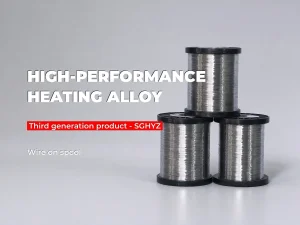
Semiconductor thermal oxidation and solar silicon wafer processing require extreme thermal uniformity and near-zero particle contamination. SPARK SGHT and SGHYZ powder-metallurgy wires are deployed in vertical and horizontal diffusion furnaces. Capable of maintaining structural integrity at 1350°C - 1400°C without sag, these high-purity alloys eliminate furnace downtime and prevent trace metal contamination of sensitive silicon wafers.
Scenario C: Automotive & EV Battery Thermal Test Chambers
The rapid expansion of electric vehicle manufacturing demands precise thermal simulation chambers for battery cell testing and heat-treatment of aluminum alloy chassis components. SPARK Cr20Ni80 (80/20 Nichrome) wire is preferred for these fast-cycling environments. Its high ductility post-heating, non-magnetic properties, and resistance to thermal shock make it ideal for rapid ramp-up heating modules.
Scenario D: RoHS-Compliant Domestic & Commercial Smart Appliances
From commercial convection ovens and coffee makers to precision air heaters and hair dryers, modern appliances require compact, safe, and fully certified heating coils. Utilizing SPARK fine wire sizes (0.10mm - 0.80mm), appliance OEMs obtain guaranteed China RoHS & EU RoHS compliance, rapid thermal response, and prolonged duty-cycle lifetime.
Localized Engineering Support & Sourcing Security Assurance
Empowering global customers with custom technical design, rapid sampling, localized warehousing, and comprehensive regulatory guarantees.
Co-Engineering & Element Design
Our engineering team assists client procurement and R&D departments with surface load calculations ($W/cm^2$), pitch-to-diameter ratio optimizations, and alloy grade selection tailored to specific operating atmospheres (Air, $N_2$, $H_2$, Vacuum).
48-Hour Rapid Prototyping & Express Samples
We maintain extensive stock of standard wire diameters (0.1mm to 10.0mm) and cold-rolled strips. Sample spools for customer testing and RoHS verification can be dispatched via international air express within 48 hours.
Comprehensive Legal & Audit Compliance Guarantee
Every shipment comes backed by a 100% full-refund warranty regarding regulatory non-compliance. Customers receive full audit access to our Beijing testing facility and third-party SGS/TÜV test reports.
High-Performance Resistance Alloys, Tubes & Custom Furnaces
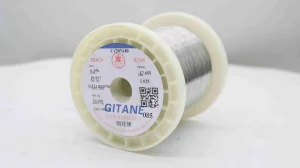
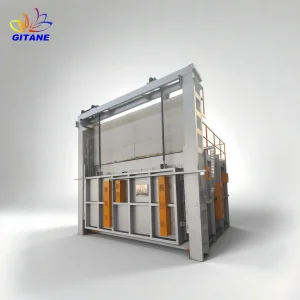
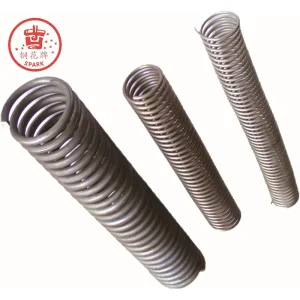
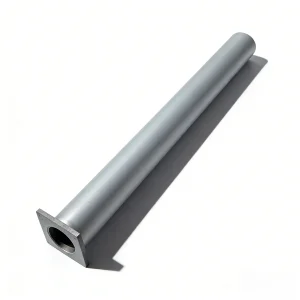
Complete product catalog including specialized Cr20Ni40 wire, industrial furnace assemblies, seamless boiler tubes, and HRE heating wires.


Frequently Asked Questions & Technical Procurement Queries
Detailed technical answers addressing compliance, material selection, surface loading, and logistics.
How does Beijing Shougang Gitane guarantee China RoHS compliance on heating alloys?
Compliance is ensured starting at the liquid metal stage. Using high-purity raw materials in Vacuum Induction Melting (VIM) and AOD refining, we restrict lead, cadmium, mercury, and hexavalent chromium far below regulatory limits. Every batch undergoes Inductively Coupled Plasma Mass Spectrometry (ICP-MS) and X-ray Fluorescence (XRF) testing, accompanied by an EN 10204 3.1 Mill Test Certificate and RoHS compliance declaration.
What are the key differences between FeCrAl (0Cr25Al5) and NiCr (Cr20Ni80) alloys?
FeCrAl alloys offer higher maximum operating temperatures (up to 1425°C with SGHT), higher electrical resistivity ($1.42 \mu\Omega\cdot m$), and lower density ($7.10 g/cm^3$), making them lightweight and highly cost-effective for static industrial furnace elements. NiCr alloys (like Cr20Ni80) feature higher mechanical strength at elevated temperatures, retain excellent post-use ductility, are non-magnetic, and perform exceptionally well in frequent thermal cycling and rapid heating/cooling applications.
How do I calculate the maximum allowable surface load ($W/cm^2$) for furnace wire?
Surface load ($p = \frac{P}{\pi \cdot d \cdot L}$) depends on furnace operating temperature, heating element geometry, element diameter, and atmospheric environment. For instance, in an air atmosphere at 1000°C, a 0Cr25Al5 FeCrAl wire typically operates between $1.8 \text{ to } 2.5 W/cm^2$. Our application engineering team provides customized thermal load calculations to ensure long lifetime without premature scale breakdown.
Why is powder metallurgy (SGHT / SGHYZ) superior for temperatures above 1350°C?
Standard cast FeCrAl alloys undergo rapid grain coarsening above 1300°C, leading to thermal sag, structural distortion, and fragility. Powder metallurgy (PM) alloys incorporate finely dispersed rare-earth oxide particles (like Yttria) that lock grain boundaries, providing exceptional high-temperature yield strength, creep resistance, and structural stability up to 1425°C.
What product delivery forms and wire packaging choices are available?
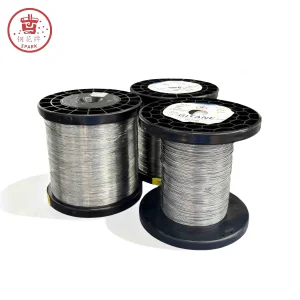
We supply materials as round wire (0.05mm to 10.0mm), flat wire, cold-rolled strip (thickness 0.05mm–4.0mm, width 5mm–200mm), pre-wound spiral coils, and completely fabricated furnace elements. Packaging includes plastic spools (DIN125, DIN200, DIN250), cardboard drums, or steel coils with protective plastic wrapping and seaworthy wooden cases.
What lead times can global B2B buyers expect for custom mill orders?
Standard in-stock wire sizes ship within 3 to 5 business days. Custom alloy melting, precise cold drawing, or custom strip rolling orders typically require 14 to 21 calendar days. Express air shipment is available for sample validation, and sea freight containers are handled via Tianjin or Qingdao ports.
Core Industry Technical Keyword Taxonomy
High-value semantic terms search-indexed for precision electric heating wire procurement.