
Primary High-Temperature Alloy & Materials Catalog
Explore precision-engineered electric heating wires, resistance alloys, and raw metal materials engineered specifically for resistance heating, thermal processing, and advanced industrial joining.
Executive Summary: The Convergence of Resistance Alloys & Precision Joining Technologies
In modern advanced manufacturing, joining technology—specifically Resistance Welding (RW) and Laser Beam Welding (LBW)—serves as the critical backbone for structural integrity, electrical conductivity, and thermal performance across high-stress industrial applications. From electric vehicle battery module busbars and aerospace turbine heat shields to micro-electronic assemblies and heavy industrial furnaces, selecting the correct joining methodology and raw material alloy grade directly dictates production efficiency, operational lifecycle, and total cost of ownership (TCO).
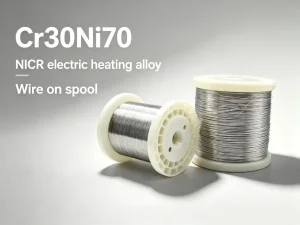
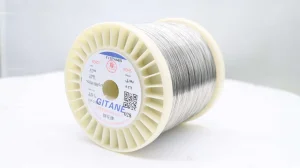
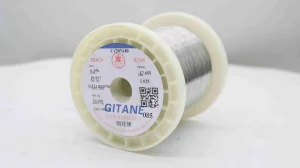
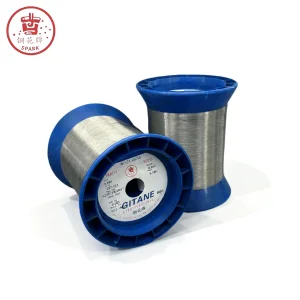
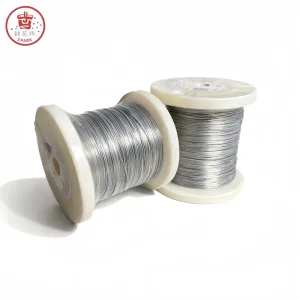
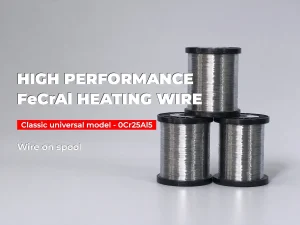
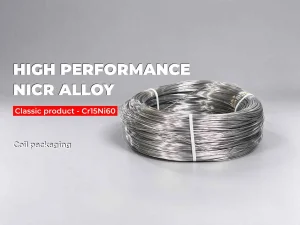
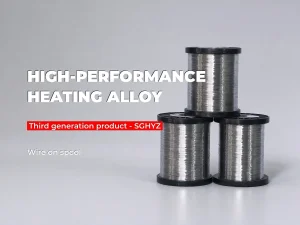
As a global powerhouse in metallurgical engineering and industrial manufacturing, China’s ecosystem for resistance wire production, precision alloy formulation, and laser system integration has matured into an indispensable supply chain node. Premium alloys, such as high-purity Nickel (99.99% Ni cakes), FeCrAl formulations (0Cr25Al5, 0Cr21Al6Nb, SGHYZ), and Nichrome alloys (Cr20Ni80, Cr30Ni70), play a dual role: they act both as the functional heating elements within heat-treatment kilns and as specialized filler/electrode materials essential for advanced resistance and laser welding operations.
Engineering Physics: Resistance Welding vs. Laser Beam Welding
Understanding the underlying thermal physics and microstructural dynamics of resistance welding and laser beam welding is paramount when selecting processing equipment, obtaining supplier quotes, and setting quality assurance baselines.
Resistance Spot & Seam Welding (RSW/RSEW)
Resistance welding operates on the principle of Joule Heating ($Q = I^2 R t$), where electrical current ($I$) passes through contact surfaces under mechanical pressure. The contact interface resistance ($R$) between substrate metals (or alloy wires) creates localized melting to form a solid weld nugget upon cooling.
- Key Advantage: Excellent for conductive sheet metal stacks, zero shielding gas required, low equipment capital cost.
- Challenge: Higher Heat-Affected Zone (HAZ), electrode tip wear over time, limited accessibility for complex 3D geometries.
Laser Beam Welding & Micro-Laser Fusion (LBW)
Laser welding utilizes high-power-density coherent light beams (Fiber, Disk, or Blue Diodes) to create deep-penetration "keyhole" welds or conduction welds. Photonic energy instantly vaporizes substrate surfaces, forming a stable vapor cavity surrounded by molten metal.
- Key Advantage: Minimal HAZ, ultra-fast pulse speeds, non-contact process, seamless joining of dissimilar highly reflective metals (Copper to Aluminum).
- Challenge: Stringent joint gap tolerances (< 10% sheet thickness), higher capital expenditure for optical systems.
Technical Matrix: Process Parameter Benchmarking
| Performance Metric | Resistance Spot Welding (RSW) | Fiber / Disk Laser Welding | Blue Diode Laser Welding (450nm) |
|---|---|---|---|
| Energy Efficiency Ratio | 60% - 75% (Direct Joule transfer) | 30% - 45% (Plug-to-optical conversion) | 40% - 50% (High absorption on Cu/Au) |
| Heat-Affected Zone (HAZ) | Moderate to Large (1.5mm - 4.0mm) | Ultra-Narrow (0.1mm - 0.5mm) | Minimal / Controlled Thermal Profile |
| Joining Dissimilar Metals | Fair (Requires custom pulse profiles) | Good (Requires wobbling optics) | Excellent (Spatter-free Copper-to-Al) |
| Process Cycle Speed | 0.2s - 1.0s per point | Up to 100mm/s continuous seam | Up to 120mm/s continuous seam |
| Consumables Maintenance | High (Copper electrode dressing) | Ultra-Low (Protective cover slide replacement) | Ultra-Low (Solid-state optics) |
China Industry 4.0: Supply Chain Resilience & Manufacturing Synergy
The global competitive advantage offered by Chinese resistance and laser welding suppliers stems from deep vertical supply chain integration. Rather than operating as isolated machining shops, Chinese industrial clusters combine upstream metallurgy—such as precision alloy melting (FeCrAl, NiCr, Pure Nickel), wire drawing, and annealing—with downstream automated machine building and AI-driven quality inspection.
Upstream Metallurgical Control
Direct access to high-purity nickel buckled cake (99.99% Ni) and custom rare-earth modified iron-chromium-aluminum alloys (such as 0Cr21Al6Nb and SGHYZ) ensures that wire and filler feedstocks maintain tight resistance tolerances ($\pm 1.5\%$) and consistent thermal expansion coefficients.
Smart Automated Production
Modern factories in Beijing, Jiangsu, and Guangdong deploy multi-axis robotic laser cell integration with real-time optical coherence tomography (OCT) gap tracking and closed-loop melt-pool pyrometry, eliminating manual assembly defects.
TCO & Economical Scalability
High volume raw material procurement combined with localized component manufacturing reduces capital expenditure for laser/resistance welding machinery by 30% to 50% compared to Western OEMs, without compromising process reliability or ISO compliance.
Macro Industry Solutions & Sector-Specific Integration
How customized resistance and laser welding setups deliver critical engineering breakthroughs across mission-critical sectors.
1. EV Battery & Energy Storage Systems
Joining copper busbars to nickel-plated steel cylindrical cells (18650/21700/4680) or aluminum pouch tab terminals requires zero-spatter, low-heat input joins.
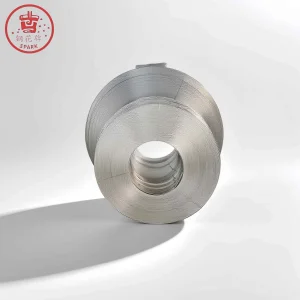
Solution: Dual-pulse micro-resistance spot welding or high-frequency wobbling laser welding using pure nickel strip feedstocks. Prevents thermal shock to internal battery electrolytes while guaranteeing sub-milliohm electrical contact resistance.
2. Industrial Heating & Heat-Treatment Kilns
Kiln design demands seamless joints between heavy-gauge FeCrAl (e.g., 0Cr25Al5, SG140) and Nichrome (Cr20Ni80) heating element coils and power terminal lead-in rods.
Solution: High-energy flash butt resistance welding or pulsed TIG/laser keyhole welding using matched Cr30Ni70 alloy filler wire to withstand continuous operating temperatures up to 1400°C without oxidation failure.
3. Automotive Body-in-White & Powertrain
Simultaneous joining of ultra-high-strength hot-stamped boron steels (Usibor 1500) and lightweight aluminum alloys in vehicle frames.
Solution: Medium Frequency Direct Current (MFDC) resistance spot welding with adaptive servo-electric guns, complemented by remote galvo-scanner laser seam welding for tight enclosure sealing.
4. Medical Devices & Surgical Instruments
Ultra-fine micro-joining of Nitinol shape memory alloys, titanium implants, and stainless steel endoscopes with hermetic seal integrity.
Solution: Micro-laser spot welding featuring beam shaping optics to prevent grain coarsening, maintaining biocompatibility and extreme tensile fatigue strength.
5. Consumer Micro-Electronics
High-density PCB interconnects, miniature relay contacts, sensor housings, and fine lead-wire terminations.
Solution: Automated parallel-gap resistance welding and compact pulsed fiber laser welding stations with sub-pixel CCD visual positioning systems.
Technology Roadmap & Future Outlook (2025–2030)
The next decade of industrial joining will be defined by intelligent photonics, real-time dynamic feedback algorithms, and sustainable alloy formulations. Chinese research institutes and equipment manufacturers are driving key innovations across four technical frontiers:
Multi-Wavelength Hybrid Laser Systems
Combining short-wavelength Blue (450nm) or Green (532nm) laser diodes with high-power Near-Infrared (1064nm) fiber lasers. Blue light initiates spatter-free surface absorption on reflective metals like pure Copper and Gold, while the infrared beam supplies deep penetration energy, reducing overall energy consumption by up to 40%.
AI Neural Network In-Line Quality Control
Replacing post-weld destructive testing with edge-AI inference engine analysis. Sensor fusion collecting acoustic emissions, infrared thermal maps, and dynamic electrical impedance ($Z=V/I$) predicts internal nugget flaws, porosity, and cracks in real time with over 99.8% diagnostic accuracy.
Nanocrystalline Resistance Electrodes
Development of dispersion-strengthened copper-alumina ($Al_2O_3-Cu$) and tungsten-copper nanocrystalline electrode tips for resistance welding lines. These materials resist tip mushrooming and pickup during zinc-coated steel welding, extending electrode redressing cycles by 300%.
Ultra-High-Temp Powder Metallurgy FeCrAl Wires
Next-generation FeCrAl alloys synthesized via dispersion-strengthened powder metallurgy (such as SGHT and HRE grades), capable of enduring continuous 1425°C thermal stress without sagging or embrittlement, ideal for high-temperature laser clad coatings and heat element construction.
Global Procurement, Quality Assurance & Compliance Framework
When international enterprises source resistance wire materials, alloy stock, or automated laser welding equipment from Chinese suppliers, ensuring strict compliance with international manufacturing standards and rigorous non-destructive testing (NDT) protocol is mandatory.
Certifications & Standards
Top-tier Chinese suppliers adhere strictly to ISO 9001:2015 (Quality Management), IATF 16949 (Automotive Quality Management Systems), ISO 14001 (Environmental Management), and CE/UL safety certifications for automated equipment. Raw materials comply with EU RoHS and REACH environmental mandates.
Comprehensive NDT Inspection
Quality control protocols include X-Ray Computed Tomography (CT) scanning for internal pore detection, Eddy Current testing for surface micro-cracks on alloy wires, Ultrasonic Testing (UT) for weld penetration, and 50-hour high-temperature oxidation lifetime testing.
Global Logistics & Service
Leading vendors provide overseas engineering dispatch, localized spare parts warehousing across Europe, North America, and Southeast Asia, and remote cloud diagnostic support for rapid equipment commissioning and operational troubleshooting.
Secondary High-Performance Alloys & Furnace Elements
Explore additional specialized grade wires, high-temp elements, and raw material quotes designed for extreme thermal stability and precision resistance welding applications.
Frequently Asked Questions (FAQ)
Technical guidance and procurement answers directly from senior welding engineers and metallurgical experts.
How do I choose between FeCrAl and NiCr alloys for furnace welding elements?
What key variables affect quotes for China resistance and laser welding systems?
- Laser Source & Power: Fiber laser wattage (1kW to 12kW) or specialized Blue Diode wavelength options.
- Automation Integration: Manual workstation vs. multi-axis CNC or 6-axis robotic arm with visual seam tracking.
- Quality Monitoring: Addition of OCT gap monitoring, thermal pyrometry, or acoustic sensor fusion.
- Material Specifications: Substrate sheet thickness, metal reflectivity, and required cycle times per joint.