Featured Industrial Resistance Heating Wires & Elements
Direct factory supply of precision-drawn FeCrAl, NiCr alloys, spiral heating elements, and customized furnace components rated up to 1425°C.


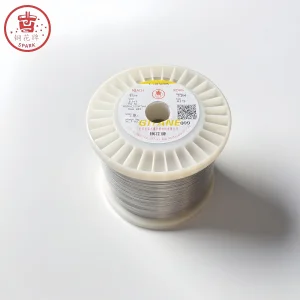
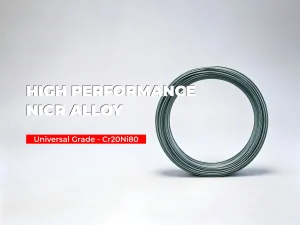

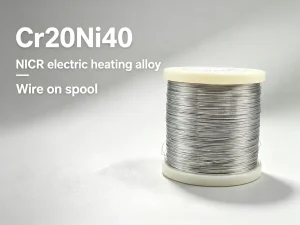

Executive Summary: The Metallurgical Science of Resistance Heating Alloys
Understanding oxide scale thermodynamics, grain boundary stabilization, and electrical resistivity drift in modern industrial heating applications.
In the realm of industrial thermal processing—ranging from semiconductor wafer crystal growth to heavy-duty metal heat treatment—electric resistance heating alloys form the primary thermal energy engine. Selecting an optimal electric heating wire manufacturer is not merely a commercial purchasing choice; it is an critical engineering decision that dictates operational uptime, thermal efficiency, and overall equipment life-cycle cost.
As China’s premier state-backed metallurgical enterprise under the historic Shougang Group, Beijing Shougang Gitane New Materials Co., Ltd. (SG-GITANE) has spearheaded resistance alloy innovation for over six decades. Operating from a fully integrated 88,000 m² facility in Shahe, Beijing, our SPARK brand represents the pinnacle of high-purity melting, ultra-fine wire drawing, and controlled-atmosphere annealing.
FeCrAl Alloys (Iron-Chromium-Aluminum)
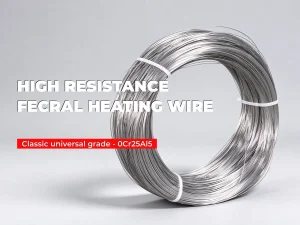
Characterized by ultra-high operating temperatures (up to 1425°C), higher electrical resistivity (1.25–1.45 μΩ·m), and a lower density (6.7–7.1 g/cm³) compared to NiCr. FeCrAl forms a protective, self-healing α-Al₂O₃ (Alpha-Alumina) surface scale that provides outstanding resistance to oxidation, carburization, and sulfur contamination.
NiCr Alloys (Nickel-Chromium)
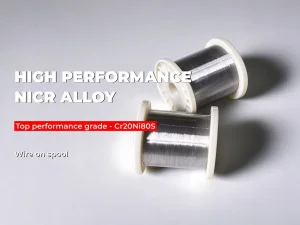
Renowned for superior hot strength, high ductility after prolonged high-temperature exposure, and excellent non-magnetic properties. Forming a tenacious Cr₂O₃ (Chromia) protective scale, NiCr alloys (such as Cr20Ni80) excel in high-frequency thermal cycling environments and humid or reducing atmospheres up to 1200°C.
Core Information Gain: Oxide Scale Kinetic Dynamics
The breakdown of heating elements rarely stems from bulk melting; it is driven by local oxide scale spallation. Under cyclic thermal stress, mismatched Thermal Expansion Coefficients (CTE) between the metallic matrix and oxide film cause micro-cracking. SPARK FeCrAl alloys utilize active Rare Earth (RE) micro-alloying (Y, Zr, Ce, La) to lock the α-Al₂O₃ scale onto the grain boundaries, extending element service life by 30% to 50% under rapid thermal power ramping.
High-Temperature Alloy Roadmap: Breakthroughs in 1400°C–1425°C Domains
From conventional vacuum induction melting to advanced powder metallurgy (PM) dispersion-strengthened alloys.
As industrial processes demand higher energy density, faster cycle times, and carbon-neutral electric heating transitions, standard melted FeCrAl alloys face mechanical limits: namely, high-temperature creep (sagging) and thermal grain growth. SPARK’s R&D division has established a definitive technology roadmap to overcome these physical constraints.
1. Powder Metallurgy (PM) Dispersion Strengthening (SGHT Grade)
Traditional casting results in coarse grains at temperatures exceeding 1300°C. SPARK’s ultra-high-temperature grade, SGHT (1425°C rating), leverages gas atomization powder metallurgy combined with mechanical alloying. Fine oxide dispersions (Y₂O₃) are uniformly distributed throughout the metallic matrix. These nano-scale oxide dispersoids pin grain boundaries, drastically reducing high-temperature creep rates and enabling free-hanging or heavy-coil configurations without mechanical collapse.
2. Next-Generation Rare-Earth Optimization (SGHYZ 1400°C Grade)
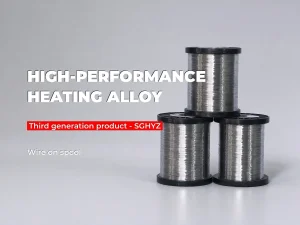
Positioned between standard HRE (1350°C) and PM alloys, SPARK SGHYZ utilizes a balanced micro-addition of Zr, Y, and Nb. This chemical architecture promotes preferential aluminum diffusion to the wire surface, forming a dense, pore-free scale even under hostile chemical atmospheres, such as low-oxygen partial pressure environments or fast nitrogen-purge cycles.
| Alloy Grade | Alloy Family | Max Continuous Temp | Resistivity @ 20°C (μΩ·m) | Density (g/cm³) | Primary Application Domain |
|---|---|---|---|---|---|
| SGHT | FeCrAl (PM) | 1425°C | 1.45 ± 0.05 | 7.10 | Semiconductor diffusion, ceramic sintering kilns |
| SGHYZ | FeCrAl (Advanced) | 1400°C | 1.42 ± 0.05 | 7.10 | High-temperature laboratory furnaces, industrial kilns |
| 0Cr21Al6Nb | FeCrAl | 1350°C | 1.45 ± 0.05 | 7.10 | Heavy-duty heat treatment, industrial furnace spirals |
| 0Cr25Al5 | FeCrAl | 1250°C | 1.42 ± 0.05 | 7.10 | Industrial heating, kilns, radiant tube heaters |
| 0Cr23Al5 | FeCrAl | 1250°C | 1.35 ± 0.05 | 7.15 | General industrial furnaces, domestic appliances |
| Cr20Ni80 / Cr20Ni80S | NiCr (80/20) | 1200°C | 1.09 ± 0.05 | 8.40 | Precision appliances, HVAC, medical, cyclic heaters |
| Cr15Ni60 | NiCr (60/15) | 1150°C | 1.12 ± 0.05 | 8.20 | Toasters, flexible heaters, industrial rheostats |
Macro-Industry Engineering Solutions
Tailored resistance heating formulations designed to solve process-specific thermal degradation challenges.
1. Photovoltaic & Semiconductor Crystal Growth
Single-crystal silicon ingot pulling (Czochralski process) and MOCVD reactors demand non-contaminating, highly stable thermal zones. SPARK SGHT and SGHYZ wire strips deliver ultra-low outgassing and uniform surface heat distribution (±1°C thermal gradient control), eliminating crystallographic slip defects in silicon and sapphire production.
2. Heavy Industrial Metallurgy & Heat Treatment
Carburizing, nitriding, and annealing furnaces present chemically aggressive gaseous environments. SPARK 0Cr21Al6Nb wire coils with high niobium additions form specialized intermetallic precipitates that prevent carbon atom ingress, inhibiting 'green rot' oxidation and severe embrittlement in carburizing atmospheres.
3. Advanced Technical Ceramics & Kilns
Sintering zirconia, alumina, and electronic ceramic components requires sustained temperatures between 1250°C and 1380°C over multi-day firing runs. SPARK heavy-gauge ribbon and pre-formed meander elements provide high surface watt density while retaining dimensional stability across thousands of thermal firing cycles.
China Plant 4.0: Metallurgical Precision & Supply Chain Resilience
How end-to-end processing—from vacuum induction melting to automated laser diameter verification—guarantees batch-to-batch consistency.
A key weakness in lower-tier resistance wire procurement is tolerance drift: variations in electrical resistance along a coil that lead to localized hot-spots and premature failure. At SPARK’s Beijing production headquarters, Industry 4.0 automation guarantees strict adherence to international standard specifications (GB/T 1234-2012, ASTM B603, DIN 17470).
VIM & ESR Refining
Vacuum Induction Melting (VIM) followed by Electroslag Remelting (ESR) strips non-metallic oxides, sulfur, and gaseous impurities down to sub-ppm levels, ensuring homogeneous chemical distribution.
In-Line Laser Micrometry
Dual-axis laser micrometers continually measure wire diameter during multi-pass cold drawing, keeping diameter tolerances within ±0.002 mm across multi-kilometer wire spools.
Continuous Bright Annealing
Hydrogen-atmosphere horizontal bright annealing furnaces deliver a completely clean, oxide-free surface finish with perfectly calibrated mechanical tensile strength and elongation.
Global Procurement Guide: RFQ Engineering Checklist
Streamlining the procurement process for international furnace OEMs, distributors, and engineering procurement contractors (EPC).
To receive an accurate commercial quote and technical verification from SPARK engineering teams, procurement managers should specify key mechanical and operational variables. Use the technical checklist below when submitting RFQs:
| Procurement Metric | Engineering Input Required | SPARK Design Optimization |
|---|---|---|
| Operating Temperature | Continuous & maximum furnace chamber temp (°C) | Selects FeCrAl vs NiCr grade base and oxide thickness allowance |
| Atmosphere Type | Air, Hydrogen, Nitrogen, Vacuum, Carburizing, Ammonia | Determines RE micro-alloying and pre-oxidation protocol |
| Form Factor & Dimensions | Round Wire (mm), Flat Strip (mm), or Wound Spiral Coils | Matches mill drawing dies to minimize cold-work hardening |
| Surface Watt Density (W/cm²) | Power rating (kW) per element surface area | Calculates wire gauge to keep surface load within safety limit |
| Delivery Packaging | Plastic spools, coils, wooden crates, export vacuum packing | Ensures zero mechanical deformation during ocean or air transit |
Localized Technical Support & Compliance Assurance
Comprehensive global logistics, Mill Test Certificates (MTC), and metallurgical failure analysis services.
Full Regulatory Traceability
Every shipment includes 3.1 Mill Test Certificates (EN 10204) featuring chemical heat analysis, room-temperature tensile properties, and electrical resistance verification. Compliant with RoHS, REACH, and ISO 9001:2015 frameworks.
OEM Element Customization
Beyond raw wire spools, our fabrication workshops produce fully formed spiral heating elements, ceramic rod-mounted assemblies, and radiant tube cores tailored to furnace builder engineering schematics.
Metallurgical Consulting
Our senior engineers provide remote and on-site element life calculation, failure mode analysis (SEM/EDX oxide diagnosis), and wire design optimization to prevent premature thermal fatigue.
In-Depth Technical & Sourcing FAQ
Answers to fundamental metallurgical and purchasing queries for resistance heating alloy buyers.
How do I choose between FeCrAl and NiCr heating wire for my furnace design?
What causes resistance heating wire to sag or deform at high temperatures?
How does surface watt density (W/cm²) impact heating element lifespan?
Can FeCrAl electric heating wire be used in vacuum or hydrogen atmospheres?
What is the typical factory lead time and minimum order quantity (MOQ) for SPARK alloys?
Explore Additional SPARK Alloys & Furnaces
High-temp specialty alloys, Raman spectrometers, custom industrial furnaces, and spiral element assemblies.