
Precision Thermal Engineering & High-Temperature Resistance Alloys
In modern industrial thermal processing, precision electric heating elements serve as the core driver for advanced thermal transformation. Whether in semiconductor diffusion tubes, photovoltaic crystal growth furnaces, medical sterilization equipment, or heavy industrial heat-treatment kilns, the continuous thermodynamic stability of electric resistance heating wire directly dictates process repeatability, thermal efficiency, and operational lifespan. Beijing Shougang Gitane New Materials Co., Ltd. (operating under the global brand SPARK) stands as a metallurgical powerhouse with over six decades of dedicated research, vacuum melting, precision drawing, and custom element fabrication.
This comprehensive technical whitepaper provides an exhaustive procurement and engineering analysis for global original equipment manufacturers (OEMs), furnace builders, and plant managers seeking high-reliability China precision heating elements. By synthesizing microstructural oxidation kinetics, comparative alloy grade matrixes (FeCrAl vs. NiCr), surface load ($W/cm^2$) calculations, and transparent factory pricelist drivers, this document offers complete technical authority to optimize your high-temperature thermal architectures.
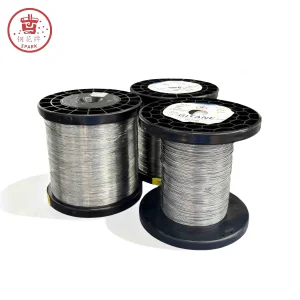
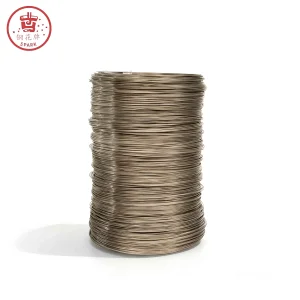
Featured Precision Heating Elements & Alloys (Part I)
Direct factory-supplied precision wires, ribbons, and custom-formed heating elements optimized for extreme environments.





Metallurgical Chemistry & High-Temperature Kinetics
Understanding the fundamental material science separating Iron-Chromium-Aluminum (FeCrAl) and Nickel-Chromium (NiCr) alloys is necessary for making informed thermal engineering decisions.
FeCrAl Alloys: High-Temperature Oxidation Kinetics
FeCrAl alloys (such as 0Cr25Al5, 0Cr21Al6Nb, HRE, SGHYZ, and SGHT) derive their exceptional temperature resistance from the formation of a dense, thermally grown, adherent alpha-alumina ($\alpha\text{-Al}_2\text{O}_3$) scale on the wire surface when exposed to air above 1000°C. This passivation layer possesses an extremely low oxygen diffusion coefficient, protecting the internal alloy matrix from rapid thermal degradation up to 1425°C.
- Higher Resistivity: Typically $1.25 - 1.45\,\mu\Omega\cdot\text{m}$, allowing smaller cross-sectional wire mass for equivalent electrical resistance.
- Lower Density: $\approx 7.10\,\text{g/cm}^3$, reducing physical element weight by 13-17% compared to NiCr wire.
- Higher Operating Limits: Standard grades reach 1250°C, while powder metallurgy variants (SGHT) safely reach 1425°C.
NiCr Alloys: Mechanical Ductility & Cyclic Stability
NiCr alloys (including Cr20Ni80, Cr15Ni60, Cr30Ni70, and Cr20Ni80S) rely on a chromium oxide ($\text{Cr}_2\text{O}_3$) protective scale. While their upper temperature limit is lower (typically 1200°C max), NiCr exhibits superior mechanical strength at hot operating states and retains its cold ductility after extended aging, making maintenance coiling and mechanical manipulation far simpler.
- Post-Service Ductility: Does not suffer from severe grain growth embrittlement upon cooling, preventing brittle cracking.
- Superior Wet Atmosphere Resistance: Performs well in moist air, reducing spalling during frequent thermal cycling.
- Non-Magnetic Character: Excellent for precision electronic components and high-frequency induction-shielded systems.
SPARK Resistance Heating Alloy Engineering Specifications
The table below synthesizes key physical, thermal, and electrical metrics defined in accordance with Chinese National Standard GB/T 1234-2012 and ISO 9001 factory production control standards.
| Alloy Grade | Alloy Family | Max Temp (°C) | Resistivity at 20°C ($\mu\Omega\cdot\text{m}$) | Density ($\text{g/cm}^3$) | Melting Point (°C) | Primary Industrial Application |
|---|---|---|---|---|---|---|
| SGHT | FeCrAl (PM) | 1425°C | 1.45 ± 0.05 | 7.10 | 1500 | Semiconductor, ceramic sintering, high-temp kilns |
| SGHYZ | FeCrAl Rare-Earth | 1400°C | 1.42 ± 0.04 | 7.10 | 1500 | Continuous industrial furnaces, diffusion tubes |
| HRE | FeCrAl High-Temp | 1350°C | 1.42 ± 0.04 | 7.10 | 1500 | Powder metallurgy, fast-firing shuttle kilns |
| 0Cr25Al5 | FeCrAl Standard | 1250°C | 1.42 ± 0.04 | 7.10 | 1500 | Industrial furnaces, heat treatment, duct heaters |
| 0Cr23Al5 | FeCrAl Standard | 1250°C | 1.35 ± 0.04 | 7.25 | 1500 | Domestic heating, industrial resistor banks |
| Cr20Ni80 | NiCr Premium | 1200°C | 1.09 ± 0.03 | 8.40 | 1400 | Medical appliances, precision heaters, laboratory kilns |
| Cr30Ni70 | NiCr High-Cr | 1250°C | 1.18 ± 0.03 | 8.10 | 1380 | Carburizing-resistant furnaces, heavy industrial elements |
| Cr15Ni60 | NiCr Economy | 1150°C | 1.11 ± 0.03 | 8.20 | 1390 | Commercial appliances, defrost heaters, braking resistors |
Localized Application Scenarios & Industry Integrations
Precision heating elements are engineered to meet specific localized operating constraints across global high-tech industries.
1. Semiconductor & Microelectronics Processing
In silicon wafer diffusion, oxidation, and LPCVD processing, zero particulate contamination and thermal uniformity within $\pm 0.5^\circ\text{C}$ across multi-zone heating cassettes are required. SPARK's powder-metallurgy SGHT grade prevents sagging and trace metal vapor emission at 1200°C–1350°C, extending diffusion furnace cartridge life.
2. Photovoltaic Ingot & Wafer Manufacturing
Monocrystalline silicon Czochralski (CZ) pullers and polysilicon directional solidification furnaces demand high radiant power density. SPARK heavy-gauge coiled elements (up to $10\text{mm}$ wire diameter) or heavy ribbon elements deliver continuous mega-watt thermal output without hot-spot formation.
3. Medical Diagnostic & Sterilization Equipment
Autoclaves, fluid warmers, and analytical mass spectrometers demand highly compact, vibration-resistant, non-magnetic heating elements. Precision drawn Cr20Ni80 ultra-fine wire ($0.05\text{mm} - 0.30\text{mm}$) delivers fast thermal response and tight electrical resistance tolerances.
4. Automotive Heat Treatment & Battery Production
From lithium-ion battery cathode sintering kilns (PHEV/EV) to automotive gear carburizing lines, high throughput thermal processing relies on SPARK 0Cr25Al5 and SGHYZ spiral elements supported on ceramic tubes or embedded in vacuum-formed ceramic fiber modules.
5. Green Hydrogen & Clean Energy Systems
High-temperature solid oxide electrolyzer cells (SOEC) require preheating gas streams to 700°C–850°C. SPARK low-maintenance, high-efficiency heating elements integrate with heat exchangers to maximize green hydrogen conversion efficiency.
6. Advanced Laboratory & Analytical Furnaces
Research institutions and material test labs require fast heating rates ($>30^\circ\text{C/min}$) without element deformation. Fast-response SPARK muffle furnace elements ensure reliable thermal cycling for materials testing.
Technology Roadmap & Future Innovation Matrix
How SPARK advances material science to meet next-generation industrial requirements.
Phase 1 Powder Metallurgy & ODS Processing
Traditional ingot metallurgy suffers from coarse grain growth above 1200°C, causing sagging and creep rupture. SPARK's powder metallurgy route introduces Oxide Dispersion Strengthening (ODS) using nano-scale $\text{Y}_2\text{O}_3$ (Yttria) particles. This locks grain boundaries, increasing high-temperature creep strength by up to 400% in SGHT alloys.
Phase 2 Reactive Rare-Earth Tuning
By micro-alloying precise ratios of Zirconium (Zr), Hafnium (Hf), and Cerium (Ce), SPARK engineers modify the growth interface of the oxide film. The resulting oxide scale features mechanical "pegging" into the alloy matrix, preventing scale spalling even under aggressive thermal shock conditions.
Phase 3 Digital Twin & Smart Thermal Modeling
Integrating finite-element thermodynamic modeling allows direct prediction of element thermal distribution, hot-spot formation, and expected service life based on localized atmosphere ($N_2, H_2, Ar$, Vacuum, or Carburizing). Customers receive custom element design optimizations prior to physical manufacturing.
China Factory Supply Chain Resilience & Efficiency Advantages
Why sourcing directly from Beijing Shougang Gitane New Materials delivers reliable quality, rapid delivery, and cost advantages.
1. Complete Vertical Industrial Integration
As a key member of the state-owned Shougang Group, Gitane manages an integrated production workflow from raw material smelting to final inspection. Our 88,000 m² site in Shahe, Changping, Beijing incorporates electric arc furnace (EAF) melting, AOD refining, vacuum induction melting (VIM), hot rolling, precision cold drawing, hydrogen bright annealing, and automated spiral winding.
This complete vertical integration eliminates external billet dependencies, ensuring strict metallurgical consistency from heat to heat and complete material traceability.
2. Quality Control & Testing Rigor
Certified to ISO 9002 (1996) and ISO 9001 (2003), every production lot undergoes rigorous laboratory verification prior to export dispatch:
- Spectrometric Chemical Analysis: Verifying tight elemental tolerances for Cr, Al, Ni, Fe, and trace rare earths.
- Accelerated Life Testing (GB/T 1234): Continuous cyclic burn-in testing to verify hours-to-failure metrics.
- Laser Micro-Diameter Measurement: Continuous optical monitoring ensuring roundness and wire diameter precision within $\pm 0.002\,\text{mm}$.
- Electrical Resistance Measurement: $100\%$ spool testing to ensure resistance per meter ($\Omega/\text{m}$) remains within $\pm 1.5\%$ of design target.
China Precision Heating Element Pricelist Benchmark & Commercial Structure
A guide to procurement pricing mechanics, volume tiers, and material selection economics.
Precision heating element procurement pricing is determined by four key technical variables: Material Alloy Chemistry (LME Nickel index sensitivity for NiCr vs. FeCrAl stability), Wire/Ribbon Dimensions (fine drawing below $0.20\text{mm}$ requires additional annealing passes), Delivery Form (raw coil spools vs. custom coiled element fabrication), and Order Quantity Tiers. Below is an indicative commercial factory benchmark for standard wholesale orders.
| Alloy Grade | Standard Form Factor | Diameter / Thickness Range | MOQ | Wholesale Price Range (USD/kg) | Lead Time (Days) |
|---|---|---|---|---|---|
| 0Cr25Al5 / 0Cr23Al5 | Round Wire Spools | $1.00\text{mm} - 6.00\text{mm}$ | 100 kg | $8.50 - $14.20 / kg | 7 - 12 Days |
| 0Cr25Al5 | Precision Strip / Ribbon | $0.20\text{mm} - 2.50\text{mm}$ thickness | 100 kg | $10.20 - $16.80 / kg | 10 - 15 Days |
| Cr20Ni80 | Round Wire Spools | $0.50\text{mm} - 5.00\text{mm}$ | 50 kg | $28.50 - $39.00 / kg | 10 - 14 Days |
| Cr20Ni80 | Ultra-Fine Wire | $0.05\text{mm} - 0.30\text{mm}$ | 20 kg | $45.00 - $85.00 / kg | 14 - 20 Days |
| HRE / SGHYZ | High-Temp Wire / Strip | $1.50\text{mm} - 8.00\text{mm}$ | 100 kg | $16.50 - $26.00 / kg | 12 - 18 Days |
| SGHT (PM Grade) | Powder Metallurgy Rod/Wire | $2.00\text{mm} - 10.00\text{mm}$ | 50 kg | $38.00 - $62.00 / kg | 18 - 25 Days |
| Custom Spiral Elements | Wound Spirals / Wave Forms | Per Engineering Drawing | 50 pcs | Quotation per Drawing | 10 - 18 Days |
* Note: Prices above represent baseline FOB China factory pricing. Actual contract rates vary based on real-time London Metal Exchange (LME) nickel/chromium raw material indices and dimensional tolerance requirements. Request a formal engineering quote for binding pricing.
Global Compliance, Technical Support & Localized Logistics
Supporting international OEM integration with regulatory compliance and technical consultation.
RoHS, REACH & Environmental Compliance
All SPARK resistance alloys and custom fabricated elements fully comply with EU RoHS 3 (Directive 2015/863/EU) and REACH (EC 1907/2006) regulations, containing zero restricted heavy metals or toxic lubricants.
Mill Test Reports & Traceability
Every shipment includes an official EN 10204 3.1 Certified Mill Test Report (MTR) detailing exact heat numbers, chemical composition, electrical resistivity, tensile strength, and elongation test data.
Custom Export Packaging & Rapid Air/Sea Freight
Spools are vacuum-sealed with desiccant in moisture-proof foil and reinforced plastic reels, then packed into export-grade wooden cases to prevent oxidation or mechanical damage during sea or air transit.
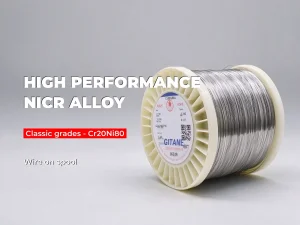
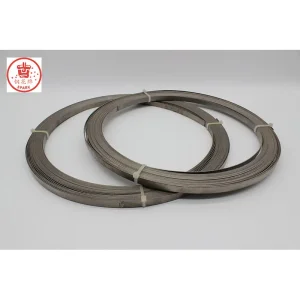
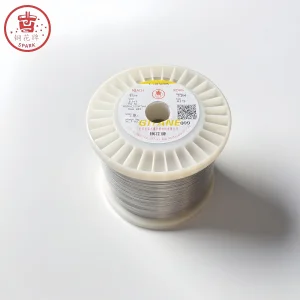
Featured Precision Heating Elements & Alloys (Part II)
Explore specialized alloy formulations, furnace solutions, and custom heating elements.




Frequently Asked Technical & Procurement Questions
Expert responses addressing engineering parameters, surface load calculations, lead times, and factory order specifications.
How do I determine whether to specify FeCrAl (e.g., 0Cr25Al5, SGHT) or NiCr (Cr20Ni80) for my furnace build?
Selection depends on three operational parameters: Maximum Operating Temperature, Atmosphere, and Thermal Cycling Frequency.
If your operating temperature exceeds 1200°C (up to 1425°C), FeCrAl grades (specifically HRE, SGHYZ, or powder-metallurgy SGHT) are required due to their continuous alpha-alumina oxide layer. FeCrAl also offers higher electrical resistivity and lower material density, reducing element weight and cost.
If your process involves frequent on/off thermal cycling below 1200°C, mechanical vibration, or nitrogen/carburizing atmospheres, NiCr (Cr20Ni80 or Cr30Ni70) is preferred. NiCr retains excellent room-temperature ductility after aging, preventing element breakage during maintenance, whereas FeCrAl becomes brittle when cooled after exposure to temperatures above 1000°C.
What surface load (W/cm²) should be used when designing spiral wire heating elements?
Surface load ($w = \frac{P}{\pi \cdot d \cdot L}$, where $P$ is power in Watts, $d$ is wire diameter in cm, and $L$ is wire length in cm) directly impacts element service life. Higher operating temperatures require lower design surface loads to prevent thermal runaway:
- 800°C – 1000°C: $2.5 - 4.0\text{ W/cm}^2$ (FeCrAl) / $3.0 - 5.0\text{ W/cm}^2$ (NiCr)
- 1000°C – 1200°C: $1.5 - 2.5\text{ W/cm}^2$ (FeCrAl) / $1.5 - 2.2\text{ W/cm}^2$ (NiCr)
- 1200°C – 1350°C: $0.8 - 1.4\text{ W/cm}^2$ (HRE / SGHYZ)
- 1350°C – 1425°C: $0.5 - 1.0\text{ W/cm}^2$ (SGHT Powder Metallurgy)
What parameters are required to receive an exact factory quotation and pricelist?
To generate an itemized quote, provide the following specifications to our engineering team:
- Alloy Grade: (e.g., 0Cr25Al5, Cr20Ni80, SGHT, SGHYZ).
- Dimensional Form: Round wire diameter ($\text{mm}$), strip thickness $\times$ width ($\text{mm}$), or custom spiral coil drawings (outer diameter, arbor size, coiled length, tail leads).
- Quantity: Kilograms or unit count for fabricated elements.
- Target Operating Environment: Maximum temperature, furnace power rating ($\text{kW}$), voltage supply ($V$), and furnace atmosphere ($Air, N_2, H_2, Vacuum$).
What is the typical factory production lead time for wholesale exports?
Standard raw wire spools ($1.00\text{mm} - 6.00\text{mm}$ 0Cr25Al5 or Cr20Ni80) are maintained in billet stock and ship within 7 to 12 business days. Specialized drawn sizes below $0.20\text{mm}$, custom rolled strip, or fabricated wave/spiral heating elements typically require 12 to 18 business days. Emergency replacement stock for plant shutdowns can be prioritized upon request.
How does SGHT powder metallurgy alloy differ from standard 0Cr25Al5?
Standard 0Cr25Al5 is produced via conventional melting and hot rolling, limiting its continuous operation to 1250°C due to high-temperature grain growth and thermal creep deformation (sagging). SGHT is produced via powder metallurgy and Oxide Dispersion Strengthening (ODS). This process refines the microstructural grain size and uniformly disperses high-stability nano-oxides throughout the matrix, raising the continuous operating limit to 1425°C while offering superior creep resistance and longer service life.
Does Shougang Gitane provide technical support for element drawing and re-engineering?
Yes. Our engineering staff (comprising ~30% of our 500+ workforce) provides complimentary element design verification. If you are experiencing premature element failure, hot spots, or sagging in an existing furnace design, our team can analyze your operational parameters and recommend improved alloy selection, revised coil ratios, or optimized terminal connection leads.
Optimize Your High-Temperature Thermal Systems
Partner with Beijing Shougang Gitane New Materials Co., Ltd. for direct factory pricing, certified metallurgical consistency, and engineering support for your precision electric heating element applications.
Request Custom Technical Quotation & Pricelist