High-Purity PV Resistance Heating Materials
Explore our certified electrothermal alloys, customized industrial furnaces, and pre-formed heating elements optimized for zero-contamination solar silicon manufacturing.




Photovoltaic Heating Wire: Metallurgy & Solar Thermal Processing
A comprehensive engineering breakdown of electrothermal alloy wires utilized in solar wafer thermal equipment, CVD reactors, and high-temperature ingot growth hot zones.
The global transition toward green energy has accelerated solar photovoltaic (PV) manufacturing technologies to unprecedented levels of efficiency. At the thermal core of every solar cell manufacturing chain—from ultra-pure polysilicon ingot crystallization (Czochralski CZ process) to diffusive emitter formation, PECVD coating, and automated tabbing/soldering—lies high-performance resistance heating wire. Known collectively as Photovoltaic Heating Wire, these specialized electrothermal alloys are engineered to maintain thermal uniformity, mechanical integrity, and chemical inertness under continuous operation up to 1425°C.
Information Gain Insight: Standard industrial heating wire often fails prematurely in solar thermal applications due to micro-grain growth, heavy metal vapor contamination, and thermal creep. Premium China Photovoltaic Heating Wire utilizes rare-earth reactive element addition (RE technology including Yttrium, Zirconium, and Niobium) to form a self-healing, impermeable $\text{Al}_2\text{O}_3$ (Alumina) oxide scale that blocks trace contaminant diffusion into high-purity silicon melts.
Core Requirements for Thermal Equipment in PV Manufacturing
Photovoltaic heating environments present severe operating challenges that demand rigid metallurgical standards:
- Ultra-High Thermal Uniformity ($\pm 1^{\circ}\text{C}$): In monocrystalline ingot pullers, precise temperature distribution directly determines silicon crystal dislocation density, oxygen content, and overall wafer yield.
- Zero Heavy Metal Outgassing: Any volatile oxide evaporation from nickel or iron wires can contaminate solar-grade silicon (SoG-Si), drastically reducing carrier lifetime and cell efficiency.
- High Resistance to Thermal Cycling & Sagging: Horizontal furnace heaters and vertical diffusion tubes experience hundreds of rapid heat-up and cool-down ramps per campaign, requiring exceptional hot-yield strength and low creep rate.
- Controlled Electrical Resistivity: Consistent cross-sectional dimensions ($\pm 0.01\text{mm}$) ensure stable power output across multi-zone furnace control loops.
China PV Heating Alloy Grade Comparison
A detailed technical comparison of iron-chromium-aluminum (FeCrAl) and nickel-chromium (NiCr) alloy grades widely specified by global furnace builders and solar wafer manufacturers.
| Alloy Grade | Material Family | Max Temp (°C) | Resistivity (μΩ·m, 20°C) | Density (g/cm³) | Oxide Scale Type | Primary PV Thermal Application |
|---|---|---|---|---|---|---|
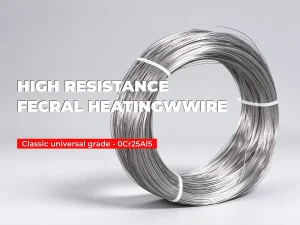
| 0Cr25Al5 | FeCrAl Base | 1250°C | 1.42 ± 0.07 | 7.10 | $\alpha-\text{Al}_2\text{O}_3$ | Silicon ingot annealing & quartz tube external heaters |
| 0Cr21Al6Nb | FeCrAl + Niobium | 1350°C | 1.45 ± 0.07 | 7.10 | $\alpha-\text{Al}_2\text{O}_3$ + NbC | Diffusion furnace heaters & high-temp firing kilns |
| 0Cr23Al5 | FeCrAl Standard | 1250°C | 1.35 ± 0.06 | 7.25 | $\text{Al}_2\text{O}_3$ Dense | Industrial heat treatment & solar glass processing |
| 0Cr20Al6 | FeCrAl High-Al | 1350°C | 1.40 ± 0.07 | 7.15 | $\text{Al}_2\text{O}_3$ Protective | Continuous sintering & ceramic substrate kilns |
| Cr20Ni80 | NiCr Premium | 1200°C | 1.09 ± 0.05 | 8.40 | $\text{Cr}_2\text{O}_3$ Ductile | Solar ribbon soldering guns & high-cycle heating |
| Cr15Ni60 | NiCr Economy | 1150°C | 1.11 ± 0.05 | 8.20 | $\text{Cr}_2\text{O}_3$ Adherent | Moderate temperature PV module lamination tables |
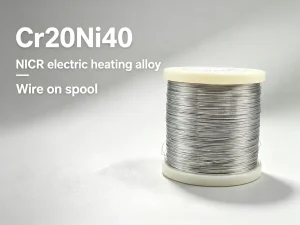
| Cr20Ni40 | NiCr-Fe Alloy | 1100°C | 1.00 ± 0.05 | 8.05 | Mixed Oxide | Auxiliary pre-heating elements & bake-out ovens |
| SGHYZ / SGHT | Powder Metallurgy FeCrAl | 1400°C - 1425°C | 1.48 ± 0.08 | 7.10 | Ultra-pure $\text{Al}_2\text{O}_3$ | CZ monocrystalline silicon hot zone main heaters |
FeCrAl vs. NiCr Alloys: Selecting the Optimal PV Hot Zone Wire
Choosing between Iron-Chromium-Aluminum (FeCrAl) and Nickel-Chromium (NiCr) alloys depends on the specific atmosphere, temperature zone, and mechanical stress profiles of the furnace:
1. Why FeCrAl Dominates High-Temperature PV Thermal Zones: FeCrAl alloys (such as 0Cr25Al5 and 0Cr21Al6Nb) feature a higher resistivity ($1.35 - 1.48\,\mu\Omega\cdot\text{m}$) and lower material density ($7.10\,\text{g/cm}^3$) compared to NiCr. This translates directly to a 15% to 20% weight saving in raw alloy material for an equivalent power rating. Crucially, the growth of a dense alpha-alumina ($\alpha-\text{Al}_2\text{O}_3$) scale at temperatures above 1000°C provides superior protection against sulfur and carbon atmospheres while preventing trace nickel vaporization into silicon wafers.
2. Where NiCr Alloys Excel in Solar Equipment: While NiCr alloys (e.g., Cr20Ni80) have lower maximum operating temperatures, they retain high ductility after prolonged heating. Unlike FeCrAl—which becomes embrittled after exposure to temperatures above 950°C due to grain coarsening—NiCr wire can be easily unwound, serviced, or re-formed during furnace maintenance. NiCr is therefore the premier choice for PV ribbon soldering equipment, dynamic hot air blower guns, and high-frequency heating elements.
Why Sourcing PV Heating Wire from China Factories Provides a Strategic Edge
China has established an integrated supply chain ecosystem for solar technology, delivering advanced metallurgy, massive production scale, and unmatched cost-performance advantages.
Full In-House Metallurgical Control
From Vacuum Induction Melting (VIM) and Electroslag Remelting (ESR) to hot rolling and precision wire drawing, leading Chinese suppliers control the entire refining cycle. This prevents interstitial gas contamination (O, N, H) and ensures uniform grain structures.
Golden Surface Treatment & Pre-Oxidation
Advanced factories supply resistance wires with pre-conditioned golden surface oxidation. This factory-applied oxide film accelerates element burn-in time, stabilizes emissivity ($\epsilon \approx 0.70$), and eliminates initial thermal sag in furnace hot zones.
Scale Economies & Direct Factory Pricing
Driven by the world's largest domestic solar manufacturing base, Chinese suppliers achieve unprecedented manufacturing scale. Global buyers gain access to wholesale factory pricing without sacrificing ISO 9001 quality compliance or mill certification integrity.
Macro Trends Shaping Solar PV Thermal Technology
As the solar sector transitions to next-generation N-type TOPCon, HJT (Heterojunction), and Perovskite-Tandem architectures, thermal equipment specifications are undergoing major technological shifts.
1. Shift Toward Larger Silicon Ingot Charge Weights (Giga-Fab Scale)
Monocrystalline CZ growers have expanded crucible diameters from 24–28 inches to 32–36 inches, yielding silicon ingots exceeding 300–500 kg. This scale requires hot-zone heating elements capable of delivering up to 150 kW of uniform thermal output per furnace. Photovoltaic heating wires must possess enhanced hot-creep resistance (achieved via Rare Earth Yttrium micro-alloying) to prevent heater deformation during extended multi-day growth runs.
2. Extreme Atmosphere Purity for TOPCon LPCVD Boron Diffusion
N-type TOPCon solar cells require precise LPCVD boron doping at high temperatures (950°C - 1050°C) inside quartz or silicon carbide reaction tubes. Heating wires mounted around these tubes operate in oxidative ambient conditions while enduring thermal shock during rapid wafer loading. Powder metallurgy FeCrAl alloys (such as SGHT) are replacing traditional melted wire because their zero-porosity, ultra-fine microstructure resists surface spallation and chemical attack from halogen gas residues.
3. Micro-Ribbon Zero-Gap Module Interconnection
The solar module manufacturing sector is transitioning toward ultra-thin round ribbon (0.25mm diameter) soldering and Shingled cell packaging. Automated soldering heads utilize miniature coiled NiCr electrothermal wires running at tight resistance tolerances ($\pm 1\%$) to provide immediate, localized heat without micro-cracking thin silicon wafers (down to 110 μm thickness).
Localized PV Manufacturing Application Scenarios
From raw quartz processing to finished solar panel assembly, explore how specialized heating wires power critical thermal steps.
CZ Monocrystalline Silicon Puller Hot Zone
Main side heaters and bottom heaters constructed from heavy-gauge 0Cr25Al5 or SGHYZ strip (5mm × 50mm) provide steady-state radiant heating to the graphite crucible holding liquid silicon at 1420°C.
POCl3 & BBr3 Quartz Tube Diffusion Furnaces
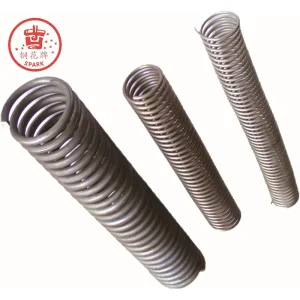
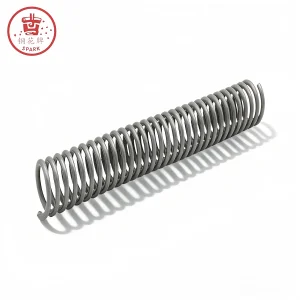
Spiral-wound 0Cr21Al6Nb resistance wires embedded inside vacuum-formed ceramic fiber insulation modules deliver precise 3-zone or 5-zone thermal profiles for emitter diffusion on raw silicon wafers.
Solar Glass Tempering & Annealing Lehr Furnaces
Continuous mesh-belt furnaces utilizing 0Cr23Al5 ribbon heaters bake anti-reflective coatings onto ultra-clear pattern glass sheets, improving solar light transmittance to over 94%.
China PV Heating Wire Wholesale Pricelist Matrix
Benchmark wholesale price estimates for factory-direct procurement. Actual quotes vary according to London Metal Exchange (LME) nickel/chromium indexes, wire gauge, and custom coil fabrication requirements.
Standard FeCrAl Wire
- Grades: 0Cr25Al5, 0Cr23Al5
- Diameter: 1.0mm - 10.0mm
- Surface: Bright drawn or oxidized
- MOQ: 100 kg per size
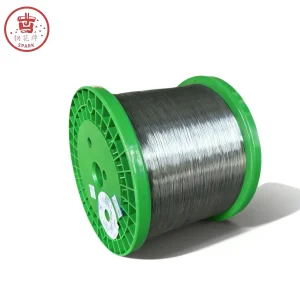
- Delivery: Spool or coil packaging
High-Temp FeCrAl + Nb Wire
- Grades: 0Cr21Al6Nb, 0Cr20Al6
- Temp Rating: Up to 1350°C
- Surface: Pre-oxidized Golden finish
- Low Thermal Creep & High Yield
- Full Mill Test Certificate (MTC)
Premium Nichrome Wire
- Grades: Cr20Ni80, Cr15Ni60
- Fine Wire: 0.05mm - 0.8mm
- High Ductility Post-Thermal Cycle
- Excellent for Ribbon Soldering
- Standard DIN plastic spooling
Frequently Asked Questions by PV Equipment Engineers
Expert answers addressing alloy selection, surface watt density calculations, thermal creep prevention, and supply chain logistics.
What is the maximum continuous service temperature of China FeCrAl heating wire in solar diffusion furnaces?
How does wire diameter and surface load (Watt Density, W/cm²) affect heating element longevity?
Why is factory pre-oxidation (Golden Surface finish) recommended for PV hot zone elements?
What delivery forms are available for wholesale heating wire orders from China suppliers?
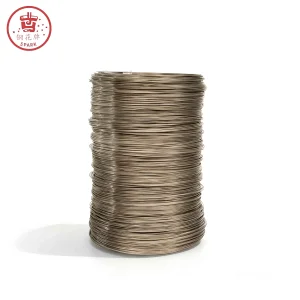
- Round Wire: Diameter from 0.05mm to 12.0mm on plastic spools (DIN 125, DIN 200, DIN 250) or heavy coils.
- Flat Wire & Ribbon: Thickness 0.1mm - 3.0mm, width 0.5mm - 40mm.
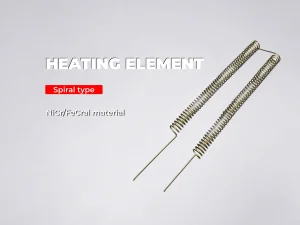
- Pre-formed Elements: Spiral wound coils, meander/wave shaped elements, and ceramic-supported rod heating assemblies customized to OEM engineering drawings.
How do China suppliers verify metallurgical quality and dimensional tolerances?
Additional Factory-Direct Resistance Wires & Alloy Products
Browse our expanded portfolio of high-temperature alloy wires, seamless steel heat exchanger tubes, and heavy-duty industrial heating coils.