
High-Performance Resistance Alloys & Custom Industrial Heating Cores
Directly sourced from premier manufacturing facilities in China. Verified specifications for high reliability, stable phase structures, and high temperature service.
-
 China 0Cr25Al5 Electric Heating Wire - Top Suppliers & Factory for High-Performance Resistance WireView Details & Quotes
-
 Wholesale Custom Industrial Furnaces by Gitane: Leading China Suppliers & Factory for Energy-Efficient SolutionsView Details & Quotes
-
 China Cr20Ni40 Nickel Chrome Heating Wire - High Temp Resistance Alloy from China Suppliers and FactoryView Details & Quotes
-
China Gitane: Professional Customized Industrial Furnaces by China Suppliers & Factory for Efficient SolutionsView Details & Quotes
-
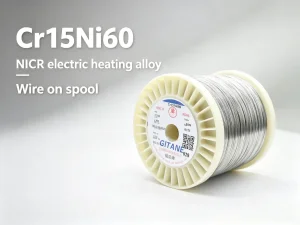 Wholesale High-Quality Cr15Ni60 Heating Wire & Alloy Strip from China Suppliers | Durable Electric Heating ElementsView Details & Quotes
-
 China SG140 Alloy Heating Wire for Tempering Furnace - High Performance China Suppliers and Factory QuotesView Details & Quotes
-
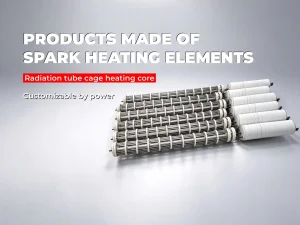 China SPARK Ceramic Bundle Rod Radiant Tube Heating Core | Industrial Furnace Heating Element Factory PricelistView Details & Quotes
-
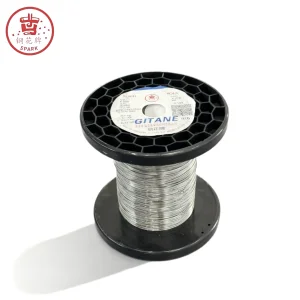 Wholesale High Temperature Electric Heating Wire SGHYZ 1400℃ - Premium Resistance Wire from China FactoryView Details & Quotes
How Ultra-Low Phosphorus & Trace Impurity Control Guarantees a Single-Phase Austenitic Structure
Analyzing micro-segregation dynamics, thermodynamic equilibrium, and phase stability in high-end nickel-chromium (Ni-Cr) and specialized heat-resistant resistance alloys.
In high-precision electrothermal alloys and specialty stainless steels, achieving a stable single-phase austenitic structure ($\gamma$-phase) at room temperature is the cornerstone for predictable mechanical ductility, corrosion resistance, and total non-magnetic behavior. Phosphorus ($P$), alongside tramp trace elements such as sulfur ($S$), lead ($Pb$), bismuth ($Bi$), antimony ($Sb$), and tin ($Sn$), exhibits extreme tendency toward intergranular segregation during solidification and thermal processing. When phosphorus content exceeds strict thresholds (typically $> 0.015\%$), it dramatically lowers the local solidus temperature, promoting micro-segregation at grain boundaries and facilitating the precipitation of brittle secondary phosphide phases or localized ferrite pockets.
From the perspective of phase diagram thermodynamics, austenite stability relies heavily on balancing the Nickel Equivalent ($Ni_{eq}$) against the Chromium Equivalent ($Cr_{eq}$). The generalized nickel equivalent formula, expressed as:
demonstrates that tramp elements and interstitial impurities alter local chemical potential. Phosphorus segregates into intercellular liquid regions during casting, which strips austenite-stabilizing elements from adjacent matrix regions. This localized depletion reduces the local $Ni_{eq}$, raising the Martensite Start ($M_s$) and Martensite Deformation ($M_d$) temperatures. Under ambient handling, thermal stress, or cold drawing, such destabilized regions undergo localized martensitic transformation ($\gamma \rightarrow \alpha'$), introducing ferromagnetic phases into an otherwise non-magnetic matrix.
Grain Boundary Integrity
Ultra-low phosphorus suppresses grain boundary liquation cracking during high-temperature forging and rolling, ensuring crack-free continuous wire drawing to sub-millimeter gauges.
Suppressed $M_d$ Temperature
By refining trace impurities, the deformation-induced martensite temperature ($M_{d30}$) is pushed far below $-100^\circ\text{C}$, keeping the alloy 100% non-magnetic even after 80% cold deformation.
Homogeneous Electrical Resistivity
Single-phase homogeneous microstructure prevents localized hot-spot formation, providing stable electrical resistance across thousands of heating cycles.
Achieving Absolute Non-Magnetic Performance ($\mu_r \le 1.005$) at Room Temperature
Why zero-ferromagnetism is imperative for advanced industrial heaters, semiconductor processing chambers, medical MRI equipment, and precision electronic components.
In high-tech industrial applications, magnetic permeability ($\mu_r$) must be held as close to unity ($\mu_r \approx 1.000$) as possible. Ferromagnetic inclusion or partial phase transformation from Face-Centered Cubic (FCC) austenite to Body-Centered Cubic (BCC) ferrite or Body-Centered Tetragonal (BCT) $\alpha'$-martensite creates stray magnetic fields when electrical currents pass through heating elements. In electron beam welding furnaces, semiconductor wafer processing, and MRI cryogenic thermal management, these stray fields induce electromagnetic interference (EMI) and spatial distortion.
The table below summarizes how controlled impurity removal in Chinese specialized metallurgy directly governs phase purity and room-temperature magnetic properties:
| Element / Impurity Standard | Standard Grade Threshold | SPARK High-Purity Refined Grade | Metallurgical Effect on Phase Structure | Impact on Room Temp Permeability ($\mu_r$) |
|---|---|---|---|---|
| Phosphorus ($P$) | $\le 0.030\%$ | $\le 0.008\%$ | Eliminates grain boundary $Fe_3P / Cr_3P$ phosphide eutectic segregation | Prevents local ferrite nucleation ($\mu_r \le 1.002$) |
| Sulfur ($S$) | $\le 0.020\%$ | $\le 0.003\%$ | Prevents low-melting $Ni_3S_2$ liquid films; reduces inclusions | Ensures clean matrix without magnetic phase nucleation sites |
| Nitrogen ($N$) & Carbon ($C$) | Uncontrolled | Tight Balanced Band | Stabilizes FCC lattice without forming coarse magnetic $Cr_{23}C_6$ carbides | Maintains non-magnetic behavior even after severe cold working |
| Tramps ($Pb, Bi, Sn, Sb, As$) | $\le 0.010\%$ combined | $\le 0.002\%$ total | Prevents hot shortness; ensures 100% single-phase austenite solubility | Guarantees long-term stability under thermal cycling ($\mu_r \le 1.005$) |
By enforcing closed-loop quality control—starting from high-purity electrolytic nickel and chromium raw materials to vacuum degassing—our China manufacturing facilities deliver resistance wire, strips, and fabricated heating bundles that maintain non-magnetic stability even after repeated thermal shock up to $1200^\circ\text{C}$.
China's Integrated Metallurgical Ecosystem & Factory Cost Advantages
Combining capital-intensive secondary refining technology, domestic raw material availability, and scalable manufacturing power to deliver world-class alloy pricing and consistency.
Vertical Smelting Integration
From raw ore refining and electrolytic nickel processing to VIM (Vacuum Induction Melting), ESR (Electroslag Remelting), and continuous hot rolling, complete in-house ownership eliminates middleman markups and controls every impurity PPM.
Advanced Impurity Extraction Tech
Utilizing argon-oxygen decarburization (AOD) and synthetic slag refining techniques enables unprecedented extraction of phosphorus and sulfur down to sub-50 PPM levels, rivaling top European and Japanese specialty steel mills.
Agile Global Order Fulfillment
Our fully automated drawing and bright annealing lines support rapid scaling, from small-batch custom wire prototypes (MOQ starting at 25kg) to multi-ton bulk container shipments with guaranteed 14-day lead times.
Global Procurement Needs: Localization Support, Testing & Regulatory Compliance
How we simplify international sourcing for OEM furnace builders, defense contractors, and industrial heating engineers through rigorous documentation and local technical alignment.
Global procurement teams face increasing pressure to balance aggressive Total Cost of Ownership (TCO) targets with strict risk mitigation. Sourcing electrothermal alloys from China requires transparent validation that every coil of wire or strip adheres to international standards such as ASTM B344, DIN 17470, GB/T 1234-2012, and ISO 9001 quality management benchmarks.
Full Traceability & MTR
Every shipment is accompanied by EN 10204 3.1 Certified Mill Test Reports detailing heat chemistry (including $P, S, C, N$), mechanical yield strength, elongation, and exact electrical resistance per meter.
RoHS & REACH Compliance
Our single-phase non-magnetic alloys strictly meet EU Directive 2011/65/EU (RoHS) and REACH SVHC restrictions, eliminating hazardous heavy metals like lead, cadmium, and mercury.
Custom Mechanical & Spooling
Supplied in customer-specified packaging—din spools, wooden reels, or custom coil weights—with uniform tensile strength for high-speed automated element coiling machines.
Furthermore, our localized technical support team provides direct engineering consultation. Whether you require cross-referencing European grades (e.g., Nikrothal 80, Rescal, Brightray C) or calculating surface watt loading ($W/cm^2$) for complex radiant tube designs, our metallurgists offer tailor-made quote packages within 24 hours.
Localized Application Scenarios: Where Non-Magnetic Single-Phase Alloys Excel
From semiconductor fabrication plants to high-vacuum research chambers, ultra-pure non-magnetic electrothermal materials deliver unmatched performance.
Semiconductor Processing
Used in crystal growth diffusion furnaces and wafer baking heaters where magnetic field interference must be strictly zero ($\mu_r \le 1.002$) to prevent electron beam trajectory shifts.
Medical & MRI Equipment
Non-magnetic heating elements and thermal compensation coils installed in close proximity to superconducting MRI magnets, maintaining zero distortion under multi-Tesla fields.
High-Vacuum Annealing
Industrial furnaces operating under $10^{-5}\text{ mbar}$ vacuum. Stable single-phase structure prevents element warping, grain growth, and outgassing during long heating cycles.
Defense & Precision Aerospace
Specially engineered non-magnetic resistors and de-icing elements for aircraft navigation systems sensitive to stray magnetic signatures.
Future Trends: Ultra-Clean Smelting, Green Electrification & Zero-Magnetic Requirements
How next-generation metallurgical innovations are shaping the future of global electrothermal material supply chains.
The global transition toward industrial decarbonization is accelerating the adoption of electric heat treatment furnaces in place of gas-fired systems. This macro shift demands electrothermal alloys with significantly extended operational life, higher watt density limits, and total mechanical stability. Three primary technological trajectories are redefining industry standards:
1. Sub-PPM Impurity Refining
Next-generation VIM-ESR combined refining technologies are targeting phosphorus and sulfur levels below $20\text{ PPM}$ ($0.002\%$), unlocking unprecedented creep strength and hot-ductility above $1200^\circ\text{C}$.
2. Powder Metallurgy (PM) Alloys
Dispersed-oxide-strengthened (ODS) and powder metallurgy manufacturing routes eliminate ingot segregation completely, guaranteeing uniform single-phase structures from coil center to edge.
3. High Entropy & Micro-Alloying
Adding controlled micro-additions of rare earth elements (Yttrium, Cerium, Zirconium) to low-phosphorus austenitic matrices enhances protective oxide scale adhesion ($Cr_2O_3$), preventing spallation.
Frequently Asked Questions by Metallurgists & Procurement Directors
In-depth answers addressing chemical composition, magnetic permeability testing, factory lead times, and quote requests.
Why does phosphorus ($P$) cause magnetic permeability ($\mu_r$) to increase in nickel-chromium alloys?
How do Chinese factories verify that an electrothermal wire is non-magnetic at room temperature?
What is the maximum continuous service temperature for SPARK single-phase austenitic resistance wire?
Can I request custom wire diameters, ribbon dimensions, or pre-wound furnace coils?
What is the typical factory quotation lead time and shipping turnaround?
How do SPARK alloys compare with traditional European and American alloy brands?
Explore Additional Premium Resistance Alloys & Heating Tubes
Direct factory quotes, certified mill test reports, and custom dimensional packaging available upon request.
-
 Wholesale High-Quality Cr30Ni70 High-Temperature Alloy Wire from China Factory - Durable with 50 Hours LifeView Details & Quotes
-
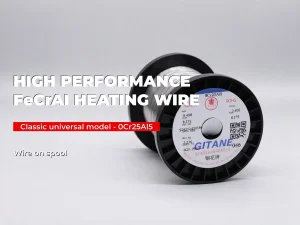 Wholesale 0Cr23Al5 General-Purpose Fe-Cr-Al Electric Heating Alloy | 1250°C Grade for Industrial HeatingView Details & Quotes
-
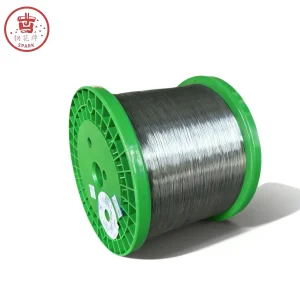 China High-Performance SPARK 0Cr20Al6 Electric Heating Wire 1350℃ - China Suppliers & Factory ManufacturerView Details & Quotes
-
Wholesale High-Quality SPARK 0Cr25Al5 Electric Heating Wire - China Suppliers and Factory for Efficient HeatingView Details & Quotes
-
 China China Cr20Ni80 Electric Heating Wire - Reliable Suppliers & Factory for High-Temperature Resistance WireView Details & Quotes
-
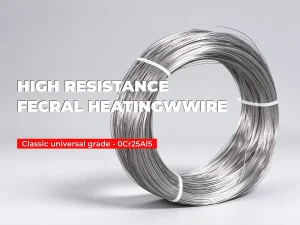 China High-Temperature 0Cr25Al5 FeCrAl Heating Wire from China Factory - 1300°C Max Service TempView Details & Quotes
-
 China High-Quality Electric Heating Tubes from China Suppliers - Efficient Heating Solutions Supplier PricelistView Details & Quotes
-
Wholesale High-Quality SPARK 0Cr25Al5 Electric Heating Wire from China Factory - Premium Resistance Wire SupplierView Details & Quotes