
High-Performance Resistance Alloys & Heating Elements
Directly sourced from leading Chinese certified manufacturing facilities engineered for extreme thermal conditions up to 1425°C.

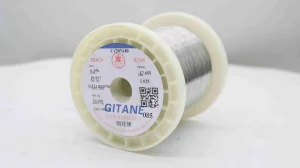
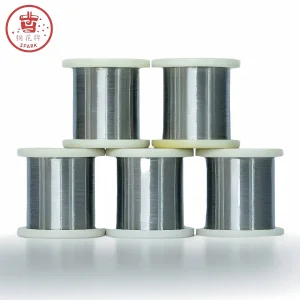
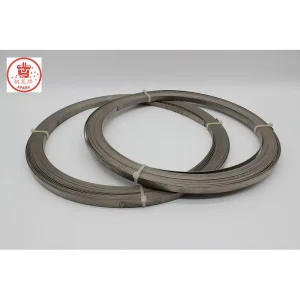
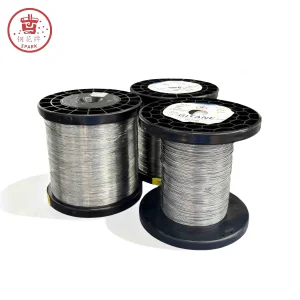

Global Industrial Landscape of Oxidation Resistant Heating Wire
Analyzing thermodynamic degradation, scale passivation, and global market dynamics driving demand for next-generation electric thermal processing elements.
Thermal Passivation Mechanics
Industrial resistance heating operates under extreme thermal stress. The lifetime of oxidation-resistant heating wires (such as FeCrAl and NiCr) relies directly on their capability to form an adherent, thermodynamically stable, and self-healing oxide passivation layer (Al₂O₃ or Cr₂O₃) that impedes inward oxygen transport.
Global Decarbonization Mandates
As global industries transition from fossil-fuel-fired burners to zero-emission electrification, demand for ultra-high-temperature electric heating alloys has surged. Steel annealing, glass melting, and lithium-battery cathode calcination facilities require continuous thermal processing above 1200°C.
Pilling-Bedworth Ratio (PBR)
The structural longevity of protective oxide films is governed by the Pilling-Bedworth Ratio. FeCrAl alloys form alpha-Al₂O₃ with a favorable PBR near 1.28, ensuring minimal compressive stress, excellent scale adhesion, and resistance to high-temperature spallation during rapid thermal cycling.
Comparative Metallurgy: FeCrAl vs. NiCr Alloys
Understanding element chemistry, oxide scale growth kinetics, phase stability, and operational boundary conditions.
Technical Insight: Selecting between Iron-Chromium-Aluminum (FeCrAl) and Nickel-Chromium (NiCr) depends on operating temperature, mechanical atmosphere requirements, and electrical resistivity targets. FeCrAl alloys offer higher maximum operating temperatures and higher electrical resistivity, whereas NiCr alloys provide superior wet-corrosion resistance, hot strength, and ductility post-operation.
| Alloy Grade Family | Major Chemical Composition (%) | Max Temp in Air (°C) | Resistivity at 20°C (μΩ·m) | Density (g/cm³) | Primary Passivation Oxide |
|---|---|---|---|---|---|
| SGHT / SGHYZ (Powder Met FeCrAl) | Fe-Bal, Cr 22-26, Al 5.5-7.5 + RE (Y, Zr, Hf) | 1400°C - 1425°C | 1.45 | 7.10 | Dense α-Al₂O₃ Scale |
| 0Cr25Al5 / HRE (FeCrAl) | Fe-Bal, Cr 23-26, Al 4.5-6.5, RE micro-alloyed | 1250°C - 1350°C | 1.42 | 7.10 | α-Al₂O₃ Scale |
| 0Cr23Al5 (FeCrAl) | Fe-Bal, Cr 21-23, Al 4.5-5.3 | 1250°C | 1.35 | 7.25 | α-Al₂O₃ Scale |
| Cr20Ni80 (NiCr Nichrome) | Ni ~80, Cr 20-23, Fe < 1.0, Si 1.0-1.5 | 1200°C | 1.09 | 8.40 | Cr₂O₃ / NiCr₂O₄ Spinel |
| Cr15Ni60 (NiCr) | Ni 55-61, Cr 15-18, Fe-Bal | 1150°C | 1.11 | 8.20 | Cr₂O₃ Oxide Film |
| Cr20Ni40 (NiCr-Fe) | Ni 38-42, Cr 18-21, Fe-Bal | 1100°C | 1.04 | 8.10 | Complex Chrome-Iron Oxide |
The FeCrAl Advantage (Alumina-Formers)
Iron-Chromium-Aluminum alloys form a pure, highly protective, non-porous alpha-alumina (α-Al₂O₃) surface film above 900°C. Alumina acts as an electrical insulator and oxygen barrier. Due to FeCrAl's lower density (7.10 g/cm³) compared to NiCr (8.40 g/cm³), purchasing FeCrAl results in approximately 15% to 20% weight savings for equivalent element volumes, delivering significant raw material cost advantages for high-volume furnace builders.
The NiCr Advantage (Chromia-Formers)
Nickel-Chromium alloys form a chromium oxide (Cr₂O₃) protective film. While capped at lower continuous operating temperatures (1200°C) due to Cr₂O₃ volatilization (forming volatile CrO₃ above 1000°C in moist air), NiCr alloys maintain exceptional hot ductility. Unlike FeCrAl, which undergoes grain growth and becomes embrittled after exposure to temperatures above 1000°C, NiCr elements remain ductile when cooled, allowing post-service element handling and maintenance without fracture.
China Manufacturing Efficiency & Value Chain Synergy
How Chinese manufacturers like Shougang Gitane leverage vertical integration, vacuum metallurgy, and advanced wire-drawing technology to supply world-class heating alloys.
1. End-to-End Vertical Processing
Chinese direct manufacturers maintain complete control over the metallurgical value chain: from Vacuum Induction Melting (VIM) and Electroslag Remelting (ESR), to hot rolling, continuous hydrogen bright annealing, cold drawing, and automated spooling. This integrated model ensures microstructural purity and trace-element control.
2. Rare Earth Micro-Alloying
Leading Chinese plants utilize proprietary Rare Earth (RE) micro-doping technology (Yttrium, Cerium, Zirconium, Hafnium). Adding reactive elements pins oxide scale grain boundaries, preventing spallation during aggressive thermal shock cycling and dramatically extending element lifespan by 30-50%.
3. Precision Wire Drawing & Tolerances
Through state-of-the-art diamond wire-drawing dies and laser micrometer online feedback systems, Chinese suppliers produce heating wires ranging from fine diameters (0.05 mm) up to heavy industrial rods (12.0 mm) with strict dimensional tolerances within ±0.01 mm and electrical resistance stability within ±3%.
Localized Application Scenarios & Engineering Case Deployment
Custom-engineered heating wire deployment across key global high-temperature industries.
Semiconductor & Photovoltaic Wafer Processing
Diffusion furnaces, PECVD equipment, and silicon ingot growing systems require ultra-clean thermal zones operating at 1100°C–1350°C. Powder-metallurgy SGHT and SGHYZ wire coils eliminate particle shedding, preventing heavy metal contamination of silicon wafers while maintaining precise temperature uniformity across large thermal chambers.
Automotive Heat-Treatment & Carburizing Lines
Continuous mesh-belt annealing furnaces and batch carburizing kilns use 0Cr25Al5 and HRE flat ribbon elements. In atmospheres containing carbon monoxide or hydrocarbons, specialized oxide pre-passivation treatments applied by Chinese manufacturers prevent carburization and catastrophic internal oxidation ("green rot").
Lithium-Ion Battery Cathode Material Sintering
Roller hearth kilns (RHK) for manufacturing NCM/LFP cathode powders operate continuously under corrosive, alkaline lithium vapor conditions. Heavy gauge FeCrAl wire elements (5.0mm–9.0mm coil spirals) are specified due to their superior chemical resistance against aggressive lithium oxides.
Industrial Ceramics & Glass Tempering
Advanced ceramic sintering (Zirconia, Alumina, Silicon Nitride) and glass tempering furnaces use high-density ceramic tube heaters equipped with pre-coiled Cr20Ni80 or 0Cr23Al5 elements, maximizing radiant heat transfer without sagging or hot-spot formation.
Global Buyer's Quality Verification Framework
Standard operating procedures for evaluating, testing, and specifying high-temperature resistance wire orders.
1. Resistance & Metric Tolerances
Ensure incoming inspection verifies electrical resistance per meter (Ω/m) according to GB/T 1234-2012 / ASTM B78 standards. Resistance tolerances should not exceed ±3% for standard wire and ±5% for ultra-fine gauges.
2. Accelerated Life Testing (Bash Test)
Request mill test certificates verifying accelerated life test hours. High-quality Cr20Ni80 wire should withstand over 80 hours of rapid thermal cycling test at 1200°C without electrical burnout or oxide scale degradation.
3. Surface Load (W/cm²) Calculation
Calculate element surface load prior to furnace design. For FeCrAl in industrial air furnaces, target 1.5–2.5 W/cm² to prevent overheating. In contrast, NiCr can safely sustain 2.0–3.5 W/cm² under similar conditions.
Wire Surface Load Calculation Formula
p = P / (π · d · L)
Where: p = Surface Load (W/cm²), P = Element Power Rating (Watts), d = Wire Diameter (cm), L = Total Hot Length of Wire (cm).
Industry Trends & Technological Innovations (2025–2035)
Next-generation metallurgical developments reshaping the thermal processing industry over the coming decade.
Powder Metallurgy (ODS)
Oxide Dispersion Strengthened (ODS) FeCrAl alloys incorporating nano-scale Y₂O₃ particles yield unmatched creep strength at 1400°C+. This technology eliminates high-temperature sagging and structural deformation in vertical furnace elements.
Pre-Oxidation Coatings
Factory-applied pre-passivation heat treatments establish a pristine, uniform 2–5 micron α-Al₂O₃ layer prior to customer installation. This eliminates early-stage transient oxidation spikes during commissioning, maximizing total service life.
Hydrogen Atmosphere Compatibility
As green hydrogen replaces natural gas in industrial metallurgy, advanced FeCrAl and NiCr heating elements are optimized to resist hydrogen embrittlement and steam oxidation at 1300°C in high-moisture H₂ environments.
Frequently Asked Questions (FAQ)
Addressing essential technical, chemical, and commercial questions for procurement managers and thermal design engineers.
What is the thermodynamic difference between Al₂O₃ scale on FeCrAl and Cr₂O₃ scale on NiCr?
FeCrAl alloys form an alpha-alumina (α-Al₂O₃) oxide scale which is thermodynamically more stable, denser, and operates up to 1425°C. α-Al₂O₃ acts as a strong electrical insulator and resists oxygen penetration exceptionally well. NiCr alloys form a chromia (Cr₂O₃) scale, which offers superior hot strength and flexibility up to 1200°C, but begins to volatilize into volatile chromium oxide gases (CrO₃) in oxygenated atmospheres above 1050°C, limiting its maximum service temperature.
Why do Chinese FeCrAl alloys offer significant cost savings for furnace OEMs?
Chinese manufacturers benefit from fully integrated supply chains—from raw material mining and smelting in state-owned enterprises (such as Shougang Group) to automated wire drawing and annealing facilities. Furthermore, FeCrAl has a lower density (7.10 g/cm³) than NiCr (8.40 g/cm³), meaning 15-20% less metal weight is needed for equivalent element dimensions, resulting in major cost efficiencies for large furnace projects.
What causes "green rot" in nickel-chromium heating elements and how can it be prevented?
"Green rot" is a form of severe internal oxidation and carburization that affects NiCr alloys in reducing or carbon-rich atmospheres between 800°C and 1050°C. Chromium selectively precipitates as chromium carbide at grain boundaries, depleting matrix corrosion resistance and causing a greenish fracture appearance. It can be prevented by switching to high-aluminum FeCrAl alloys (such as 0Cr25Al5 or SGHT), increasing silicon content, or applying pre-oxidized protective coatings.
How does ambient temperature affect the electrical resistivity of FeCrAl vs. NiCr?
FeCrAl alloys have a low temperature coefficient of electrical resistance (Ct factor), meaning their electrical resistance remains relatively constant as furnace temperature increases from 20°C to 1300°C (increasing by only 2-5%). In contrast, NiCr alloys exhibit a higher temperature coefficient, with resistance increasing by up to 10-14% at maximum operating temperatures. Furnace electrical controls must account for these Ct resistance variations during cold startup.
What packaging and moisture-proofing standards apply to international heating wire shipments?
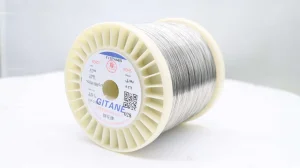
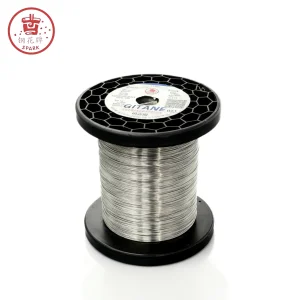
Export-grade heating wire from China is wound onto standard DIN spools (DIN 200, DIN 250, or Z3) or wrapped in tight coils. Individual spools are vacuum-sealed in plastic film with desiccant packs, wrapped in protective bubble sheet, and packed into reinforced, ISPM-15 compliant fumigated wooden cases or heavy-duty corrugated cartons to prevent ocean freight corrosion and physical bending during transit.
Which alloy grade is recommended for high-frequency thermal cycling environments?
For applications with rapid on/off thermal cycling (such as domestic appliances, fast-response industrial heaters, or sealing equipment), NiCr alloy Cr20Ni80 is highly recommended due to its superior high-temperature mechanical ductility and adherence of the Cr₂O₃ oxide layer under thermal stress. For ultra-high temperature cycling above 1250°C, Rare-Earth micro-alloyed FeCrAl grades (such as SGHYZ or HRE) are required to prevent scale spallation.
What compliance certifications should buyers require from Chinese suppliers?
Global buyers should verify that suppliers hold valid ISO 9001:2015 Quality Management Systems and ISO 14001 Environmental Management Systems certifications. In addition, raw materials and finished wires should comply with EU RoHS and REACH environmental directive standards, supplied alongside certified Mill Test Certificates (MTC) detailing melt heat numbers, chemical composition analysis, mechanical elongation, and cold resistance values.
How does wire diameter selection influence overall heating element service life?
Thicker wire diameters provide a lower surface-to-volume ratio, which significantly slows down the rate of aluminum or chromium depletion caused by ongoing oxide scale repair. Selecting the thickest practical wire gauge for a given power design increases overall element lifetime exponentially. For long-life industrial kilns, wire diameters equal to or greater than 3.0mm are preferred.
Explore Additional Industrial Resistance Alloys & Elements
Factory-direct heating wire, strips, coils, and furnace systems available for global delivery.

Need Customized Heating Alloy Wire Specifications?
Consult with our Senior Metallurgical Engineers for material grade selection, element design calculations, or direct factory pricing for bulk orders.