
Featured High-Temperature Alloys (Top Tier)
Direct factory supply of certified FeCrAl and NiCr electric resistance heating wires, precision-engineered for prolonged operation in high-temperature industrial environments.
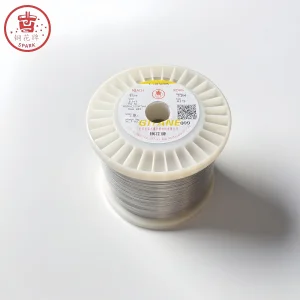
China High-Performance Cr20Ni80S Electric Heating Alloy from China - Reliable Supplier & Factory for Thermal Environments

China China Cr15Ni60 High Temp Electric Heating Wire - Quality Suppliers & Factory for Industrial Heating Solutions

China China Suppliers Factory Price 2.00mm 0Cr25Al5 16 Heating Elements Wholesale - ISO9001:2005 Certified

China High-Temperature 0Cr21Al6Nb Electric Heating Wire - China Suppliers & Factory for Superior Heat Resistance
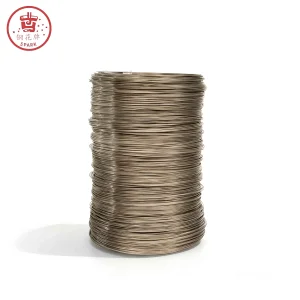
Wholesale High-Quality SPARK Electric Heating Wire - Golden Finished Products from Leading China Suppliers

Wholesale High-Quality NiCr & FeCrAl Electric Heating Elements from China Suppliers | Shougang Gitane Factory
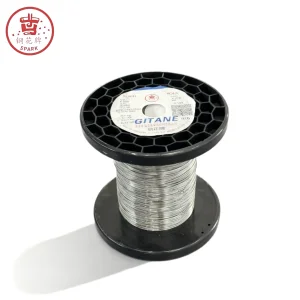
Wholesale SPARK SGHYZ 1400℃ High Temperature Electric Heating Wire | China Suppliers & Factory
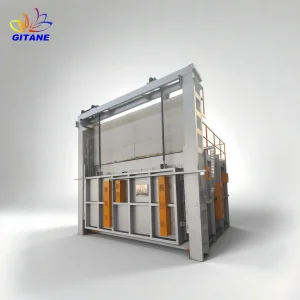
Wholesale Gitane: Leading China Suppliers of Customized Industrial Furnaces from a Trusted Factory
Oxidation Resistance Kinetics in High-Temperature Resistance Alloys
Understanding the thermodynamics of self-healing oxide scale growth ($\alpha\text{-Al}_2\text{O}_3$ and $\text{Cr}_2\text{O}_3$), reactive element doping, and intergranular degradation resistance under thermal cycling.
In thermal processing engineering, the selection of resistance heating wire determines furnace reliability, thermal efficiency, and overall operational lifecycle costs. Oxidation-resistant heater wire designed and manufactured in China has evolved from basic electrical conduits into complex, alloyed metallics optimized for extreme thermal environments. As a leading manufacturer, Beijing Shougang Gitane New Materials Co., Ltd. (SPARK brand) leverages over six decades of metallurgical innovation to engineer FeCrAl (Iron-Chromium-Aluminum) and NiCr (Nickel-Chromium) wire systems capable of surviving up to 1425°C.
1. Thermodynamics of Protective Oxide Scale Formation
The core mechanism behind oxidation resistance lies in the selective oxidation of alloy constituents at elevated temperatures. When an alloy wire is energized in an oxygen-containing atmosphere, its reactive components selectively oxidize to form a continuous, thermodynamically stable passivation film on the surface:
- Alpha-Alumina ($\alpha\text{-Al}_2\text{O}_3$) Scale on FeCrAl Alloys: At temperatures above 1000°C, high-grade FeCrAl alloys (such as 0Cr25Al5, 0Cr21Al6Nb, and SGHYZ) selectively diffuse aluminum to the wire surface. Here, it reacts with ambient oxygen to form a dense, electrically insulating alpha-alumina layer ($\alpha\text{-Al}_2\text{O}_3$). This scale possesses an extremely low ionic diffusion coefficient, effectively blocking further transport of oxygen inward and iron/chromium outward.
- Chromia ($\text{Cr}_2\text{O}_3$) Scale on NiCr Alloys: Nickel-chromium alloys (such as Cr20Ni80 and Cr15Ni60) rely on the growth of a tenacious chromia oxide scale. While chromia exhibits excellent mechanical ductility and adhesion under frequent thermal cycling, it is limited to maximum continuous service temperatures of approximately 1200°C. Above 1200°C, $\text{Cr}_2\text{O}_3$ reacts further to form volatile chromium trioxide gas ($\text{CrO}_3$), causing rapid scale depletion and accelerated wire breakdown.
2. The Reactive Element Effect (REE) and Micro-Alloying Chemistry
A persistent failure mode in industrial resistance heating elements is oxide scale spallation caused by thermal expansion mismatch between the metallic substrate and the outer oxide crust during rapid temperature fluctuations. To overcome this, Shougang Gitane incorporates precise additions of Reactive Elements (REE) such as Yttrium (Y), Zirconium (Zr), Niobium (Nb), and Hafnium (Hf) into grades like 0Cr21Al6Nb and SGHYZ 1400°C.
REE micro-alloying modifies the scale-metal interface through the "reactive element effect":
- Pegging Effect: Reactive element oxide "pegs" anchor the $\alpha\text{-Al}_2\text{O}_3$ scale deeply into the metallic substrate grains, mechanically preventing scale detachment during cyclic thermal stress.
- Void Elimination: REE ions act as sinks for vacancy defects that usually coalesce at the metal-scale interface, suppressing interfacial void formation and delamination.
- Grain Boundary Stabilization: Micro-alloying elements prevent rapid grain growth in the underlying alloy matrix at temperatures above 1100°C, suppressing high-temperature creep deformation and wire sagging.
Dense $\alpha\text{-Al}_2\text{O}_3$ Barrier
Ultra-low oxygen permeability prevents inner alloy oxidation, ensuring thousands of hours of uninterrupted service at temperatures up to 1400°C.
Micro-Alloyed REE Adhesion
Controlled Yttrium, Niobium, and Zirconium additions prevent scale spallation during rapid thermal shock and power cycling.
Superior Creep Resistance
Refined microstructures and dispersion-strengthened phases hold dimensional tolerance in heavy coil and wave-element layouts.
FeCrAl vs NiCr: Material Selection Engineering
A comparative technical analysis helping furnace design engineers select the optimal material candidate based on thermal rating, electrical resistivity, mechanical ductility, and cost dynamics.
| Alloy Grade | Material Family | Max Temp (°C) | Resistivity @20°C (μΩ·m) | Density (g/cm³) | Melting Point (°C) | Key Characteristic & Application |
|---|---|---|---|---|---|---|
| SGHT (PM) | FeCrAl (PM) | 1425°C | 1.45 | 7.10 | 1500 | Powder metallurgy synthesized; ultimate creep resistance for semiconductor & ceramic kilns. |
| SGHYZ | FeCrAl | 1400°C | 1.45 | 7.10 | 1500 | REE doped ultra-high temperature alloy; ideal replacement for silicon carbide rods in select kilns. |
| 0Cr21Al6Nb | FeCrAl | 1350°C | 1.45 | 7.10 | 1500 | Niobium-added grade; enhanced hot strength and resistance to mechanical sagging. |
| 0Cr25Al5 | FeCrAl | 1250°C | 1.42 | 7.10 | 1500 | Global workhorse grade; exceptional electrical resistivity and cost efficiency for industrial furnaces. |
| Cr20Ni80S | NiCr | 1200°C | 1.09 | 8.40 | 1400 | High nickel content; outstanding ductility post-use, no embrittlement, ideal for rapid cycling. |
| Cr15Ni60 | NiCr | 1150°C | 1.12 | 8.20 | 1390 | Highly reliable alloy for household appliances, immersion heaters, and low-temperature industrial ovens. |
Strategic Trade-Off Analysis: FeCrAl vs NiCr Wires
When specifying oxidation resistant heater wire, buyers must balance performance demands with operational economics:
- Higher Operating Temperature: FeCrAl alloys achieve up to 1425°C, significantly exceeding NiCr’s 1200°C threshold. This makes FeCrAl mandatory for high-temperature sintering, heat-treating, and diffusion applications.
- Weight & Cost Advantages: FeCrAl possesses a lower density (7.10 g/cm³) compared to NiCr (8.40 g/cm³). Combined with higher electrical resistivity, FeCrAl requires up to 20-30% less raw material weight to produce equivalent electrical resistance, dramatically reducing material acquisition cost.
- Ductility and Cycling Endurance: NiCr alloys retain superior ductility after prolonged thermal exposure. When cooled to room temperature, NiCr wire can be easily repaired, re-coiled, or serviced without snapping. Conversely, FeCrAl alloys experience grain growth and become brittle cold, requiring pre-heating before major mechanical adjustments once aged.
Global Procurement Specifications: Surface Loading & Standards
Ensuring element longevity through precise surface watt loading ($\text{W/cm}^2$) calculation, atmosphere compatibility management, and strict international quality compliance.
1. Surface Watt Density ($\text{W/cm}^2$) Engineering
A critical engineering parameter for procurement officers and furnace builders is the Surface Watt Density ($w$), defined as the power emitted per unit area of wire surface:
w = P / (π · d · L) [W/cm²]
Where P is total element power (Watts), d is wire diameter (cm), and L is active wire length (cm). Operating above recommended surface load thresholds causes premature wire burnout, localized overheating, and oxide scale breakdown.
Recommended maximum surface watt loadings for China oxidation resistant heater wire in clean air environments:
- At 800°C - 1000°C: 2.5 to 4.0 W/cm² (FeCrAl), 2.0 to 3.0 W/cm² (NiCr)
- At 1000°C - 1200°C: 1.5 to 2.5 W/cm² (FeCrAl), 1.0 to 1.8 W/cm² (NiCr)
- At 1200°C - 1350°C: 0.8 to 1.5 W/cm² (High-Grade FeCrAl SGHYZ/0Cr21Al6Nb)
2. Atmosphere Compatibility Matrix
Industrial furnaces rarely operate in pure air. Procurement specifications must account for process gas interactions:
- Carburizing Atmospheres (Endothermic Gas / Hydrocarbons): Carbon black penetrates porous oxides, forming chromium carbides at grain boundaries ("green rot" in NiCr). FeCrAl wire forms a tightly bound $\alpha\text{-Al}_2\text{O}_3$ film that resists carbon ingress far better than NiCr.
- Nitriding & Ammonia Atmospheres: Nitrogen reacts with chromium at temperatures above 900°C, forming brittle chromium nitrides. Pre-oxidizing FeCrAl wire to establish a robust alumina oxide film is mandatory prior to exposure.
- Sulfur-Bearing Atmospheres: Sulfur rapidly attacks Nickel, forming low-melting-point nickel sulfide phases ($Ni-Ni_3S_2$ eutectic at 645°C) that destroy NiCr wire. FeCrAl alloys are highly resistant to sulfurous gases due to the absence of nickel.
3. International Quality Compliance & Testing
Beijing Shougang Gitane enforces complete quality control compliant with global specifications. Every batch of oxidation resistant heater wire undergoes:
- GB/T 1234-2012: China National Standard for High-Resistance Electric Heating Alloys.
- ASTM B603 & ASTM B344 Equivalency: Standard specifications for iron-chromium-aluminum and nickel-chromium electrical heating alloys.
- EN 10204 3.1 Mill Test Certification: Full chemical composition heat reports, room-temperature tensile strength tests, continuous resistance variance testing, and accelerated high-temperature lifecycle verification.
Macro Industry Solutions & Decarbonization Systems
Deploying advanced resistance heating wire across global manufacturing industries driving green electrification, high-yield energy transition, and thermal processing innovation.
Photovoltaic & Semiconductor Wafer Furnaces
Ultra-pure SGHT and SGHYZ wire coils used in diffusion, oxidation, and annealing furnaces requiring pinpoint micro-zone thermal stability up to 1350°C without particulate contamination.
Lithium-Ion Battery Cathode Sintering
Roller hearth kilns calcining NCM/LFP cathode materials rely on pre-oxidized 0Cr21Al6Nb elements to withstand corrosive lithium vapor off-gassing and thermal continuous duty.
Green Heavy Industrial Electrification
Replacing fossil gas burner systems with megawatt-scale electric duct heaters and ceramic bobbin elements made of FeCrAl wire, reducing factory carbon footprints to zero.
Technical Roadmap: Next-Generation Heating Alloy Horizons
Pioneering the future of resistance alloys through powder metallurgy, nanostructured grain stabilization, and high-entropy alloy chemistry.
Powder Metallurgy Commercialization
Scaling PM-synthesized SGHT alloys rated to 1425°C with zero macro-segregation and unprecedented hot-yield strength for heavy industrial loads.
Sub-Micron Self-Healing Oxide Layers
Engineered nano-doping of Cerium and Hafnium to accelerate dynamic alumina re-passivation following surface mechanical damage.
High-Entropy Heating Wires (HEAs)
Developing multi-principal element alloys (Fe-Ni-Cr-Al-Ti-Nb) targeting continuous operations up to 1480°C in aggressive atmosphere environments.
Smart Thermal Element Coils
Integrating embedded thin-film resistance sensors within heater structures for real-time temperature and degradation telemetry.
Frequently Asked Questions (Procurement & Engineering)
Detailed answers to technical queries raised by global furnace builders, OEMs, and procurement specialists.
What makes Shougang Gitane oxidation resistant heater wire superior to standard commercial grades? ▼
How do I determine whether to choose FeCrAl or NiCr wire for my kiln project? ▼
What wire delivery forms and physical dimensions are supplied by Chinese factories? ▼
- Round Wire: Diameters ranging from 0.05 mm (fine wire) up to 12.0 mm (heavy gauge wire).
- Flat Wire / Ribbon: Thicknesses from 0.1 mm to 4.0 mm, widths from 0.5 mm to 12.0 mm.
- Cold-Rolled Strip: Thicknesses from 0.2 mm to 4.0 mm, widths from 10 mm to 200 mm.
- Pre-Wound Elements: Spiral coils, corrugated wave elements, and bobbin assemblies fabricated to customer technical drawings.
What pre-oxidation procedure is recommended before placing new elements into heavy service? ▼
How does surface watt loading affect the operational lifespan of resistance wires? ▼
Are mill test certificates (MTC) and quality compliance documentation provided with shipments? ▼
Additional Resistance Heating Products & Structural Components
Explore our comprehensive array of SGHYZ, 0Cr25Al5 bare wire, specialized electric tubes, and industrial high-temperature components.
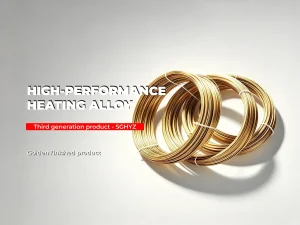
Wholesale SGHYZ FeCrAl Heating Wire | 1400°C Golden High Temperature Resistance Alloy Factory
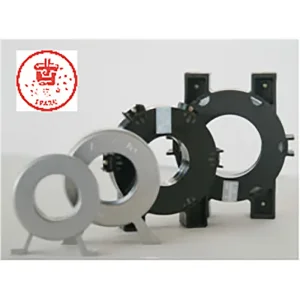
Wholesale Special Price for China Choke Coil/Power Line Inductors/Surface Mount Chip Inductors
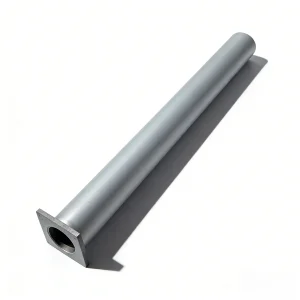
Wholesale High-Quality Electric Heating Tubes from China Suppliers - Efficient Heating Solutions
Wholesale High Temperature Electric Heating Wire SGHYZ 1400℃ - Premium Resistance Wire from China Suppliers
China SPARK Electric Heating Wire - High-Quality Golden Finished Products from China Suppliers and Factory
China China Suppliers High Quality 2.00mm 0Cr25Al5 Bare Heating Wire - Wholesale Factory Price ISO9001:2005
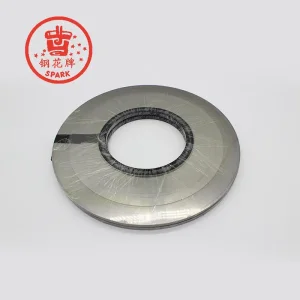
Wholesale OEM Factory for China High Speed and Accuracy Raman CCD Spectrometer Factories
