
Featured Electric Heating Alloys & Furnaces
Direct factory sourcing from Shougang Gitane - Premium grade Cr20Ni80, FeCrAl alloys, and customized high-temperature thermal elements.
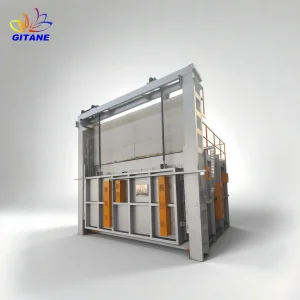


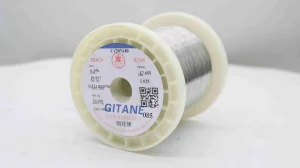


1. Macro-Industrial Landscape & Global Demand for Ni80Cr20
In the era of global industrial decarbonization and precision thermal processing, Ni80Cr20 (Nichrome 80/20) resistance alloy remains the undisputed benchmark material for high-reliability electric heating applications up to 1200°C (2190°F). Composed nominally of 80% Nickel and 20% Chromium, Ni80Cr20 represents the pinnacle of non-magnetic, solid-solution austenitic alloys designed specifically to resist thermal fatigue, structural sagging, and high-temperature oxidation.
As global manufacturers transition from fossil-fuel combustion to precision electrification in heat treatment, semiconductor thermal processing, aerospace component production, and advanced consumer electronics, the demand for verified, ultra-pure Ni80Cr20 resistance wire from certified tier-1 manufacturers has accelerated exponentially. China's metallurgical sector—anchored by specialized leaders like Beijing Shougang Gitane New Materials Co., Ltd.—has evolved from volume production to high-entropy micro-alloying and vacuum-induction melting (VIM) techniques. This transition provides international engineering procurement teams with technical parity against traditional European or American suppliers, supported by unmatched supply-chain elasticity and competitive factory pricing.
Information Gain Insight: Oxide Scale Kinetics
Unlike Iron-Chromium-Aluminum (FeCrAl) alloys that form brittle alpha-alumina ($\alpha\text{-Al}_2\text{O}_3$) scales requiring high-temperature pre-oxidation, Ni80Cr20 develops a highly adherent, ductile Chromium Oxide ($\text{Cr}_2\text{O}_3$) protective scale. This scale exhibits self-healing characteristics during thermal cycling, preventing spallation and protecting the underlying core matrix against green-rot micro-carburization in reduced or controlled furnace atmospheres.
2. Metallurgical Properties & Comprehensive Engineering Specifications
The performance of Ni80Cr20 resistance wire is dictated by strict controls on residual trace elements (such as Carbon, Silicon, Manganese, and Rare Earth additives like Cerium/Yttrium). Controlled rare-earth additions enhance oxide scale adhesion through a "keying" mechanism at grain boundaries, dramatically increasing lifespan under accelerated life testing according to ASTM B78 guidelines.
| Property Parameter | Standard Unit | Ni80Cr20 (Cr20Ni80) Value | Technical Relevance / Standard |
|---|---|---|---|
| Nominal Composition | % (Mass Fraction) | 78.0-81.0% Ni, 19.0-21.0% Cr | GB/T 1234-2012 / ASTM B344 |
| Electrical Resistivity (20°C) | μΩ·m (ohm·mm²/m) | 1.09 ± 0.05 | High specific electrical resistance |
| Max Operating Temperature | °C (°F) | 1200°C (2190°F) | In air/oxidizing environments |
| Density | g/cm³ | 8.40 | High mechanical mass stability |
| Thermal Conductivity (100°C) | W/(m·K) | 15.0 | Uniform heat dissemination |
| Melting Point | °C | 1400°C | High thermal safety margin |
| Coefficient of Thermal Expansion | 10⁻⁶/K (20-1000°C) | 18.0 | Predictable elongation design |
| Tensile Strength (Annealed) | MPa | 650 - 850 | Excellent cold-coiling ductility |
| Yield Strength | MPa | 300 - 400 | Resists deformation under stress |
| Elongation at Break | % | ≥ 20% | Prevents cracking during forming |
| Microstructure Phase | AUB Phase | Non-magnetic Austenite | Zero electromagnetic inductance |
Temperature Correction Factor of Electrical Resistance ($C_t$)
Design engineers must account for the increase in resistance as Ni80Cr20 wire ascends from ambient temperature to elevated operating temperatures. The resistance at operating temperature ($R_t$) is determined by multiplying the cold resistance at 20°C ($R_{20}$) by the thermal resistivity correction factor ($C_t$):
R_t = R_20 × C_t
| Temperature (°C) | 20 | 200 | 400 | 600 | 800 | 1000 | 1200 |
|---|---|---|---|---|---|---|---|
| Correction Factor ($C_t$) | 1.000 | 1.013 | 1.031 | 1.047 | 1.041 | 1.052 | 1.070 |
3. Feature Architecture & Structural Superiority
Ductility Post-Extended Heating
Unlike FeCrAl alloys which undergo grain growth and embrittlement after prolonged exposure above 900°C, Ni80Cr20 retains significant room-temperature ductility. Elements can be inspected, repaired, or reshaped without cracking.
Superior Creep Resistance
The high nickel face-centered cubic (FCC) crystal lattice imparts high hot-strength. Heating coils resist sag, warping, and physical displacement across horizontal or vertical hanging ceramic fiber tubes.
Non-Magnetic Behavior
Ni80Cr20 remains completely non-magnetic down to low ambient temperatures. This makes it essential for inductive-free precision heating elements, medical equipment, and high-frequency electronic devices.
4. Surface Load Optimization & Lifetime Calculation Engineering Formulas
Maximizing the operating life of Ni80Cr20 resistance wire requires a delicate balance between total electrical power input, operating ambient atmosphere, and the element's surface watt density ($w$) measured in $\text{W/cm}^2$.
Surface Load Formula ($w$)
The surface load is defined as the total electrical power dissipated per unit area of the wire's active heating surface:
w = P / (π · d · L)
Where: P = Total Power (Watts), d = Wire Diameter (cm), L = Total Wire Length (cm), w = Surface Watt Density ($\text{W/cm}^2$).
Recommended Maximum Surface Loads for Ni80Cr20
- Industrial Heat Treating Furnaces (900°C - 1150°C): $1.5 - 2.5 \text{ W/cm}^2$
- Embedded/Tubular Heating Elements (Sheathed): $3.0 - 6.0 \text{ W/cm}^2$
- Open Air Household Heating Elements (Radiant Toasters/Heaters): $4.0 - 8.0 \text{ W/cm}^2$
- Plastic Injection & Hot Runner Nozzles: $3.5 - 5.5 \text{ W/cm}^2$
5. Global Application Scenarios & Industry Alignment
Through metallurgical refinements, Beijing Shougang Gitane exports Ni80Cr20 wire to over 60 countries across critical industrial verticals:
A. Semiconductor & Solar Photovoltaic Processing
Diffusion furnaces and crystal growth reactors operating under cleanroom conditions require low-outgassing heating elements. SPARK Ni80Cr20 wire undergoes ultra-clean surface pickling and electro-polishing to remove wire-drawing lubricants, preventing trace heavy-metal contamination during silicon wafer heating cycles.
B. Aerospace Thermal Anti-Icing & Component Heat Treatment
Used in aircraft wing anti-icing mats, pitot tube heaters, and specialized vacuum brazing furnaces for jet engine turbine blades. Ni80Cr20's predictable thermal coefficient of resistance ensures precise PLC closed-loop PID thermal management.
C. High-Precision Laboratory & Dental Sintering Furnaces
Customized high-density coiled elements are implemented in muffle furnaces, tube furnaces, and dental zirconia sintering systems up to 1200°C, maintaining thermal uniformity within $\pm 1^\circ\text{C}$.
6. Quality Assurance, Compliance Standards & Localization Support
As a subsidiary of the state-owned Shougang Group, Shougang Gitane operates under stringent quality management protocols certified to ISO 9001:2015, ISO 14001:2015, and ISO 45001:2018. Every batch of Ni80Cr20 resistance wire is delivered with complete 3.1 Mill Test Reports (MTR) according to EN 10204.
Compliance & Testing Validation Protocols:
- Chemical Composition Verification: Optical Emission Spectrometry (OES) and Inductively Coupled Plasma (ICP) analysis conforming strictly to GB/T 1234-2012 and ASTM B344.
- Electrical Resistance Tolerances: Precision double-bridge resistance testing guaranteeing $\pm 3\%$ (standard) or $\pm 1\%$ (precision) tolerances.
- Surface Perfection: Eddy Current NDT testing for micro-cracks, seams, and drawing imperfections along 100% of the wire length.
- Environmental Safeguards: Fully compliant with EU RoHS 3 (Directive 2015/863) and REACH regulations regarding heavy metal restrictions.
7. Technical Roadmap & Future Outlook (2025–2035)
Looking toward the next decade of advanced thermal material processing, Shougang Gitane is pioneering three next-generation development vectors for Ni80Cr20 alloys:
- Nanocrystalline Micro-Alloying: Integrating controlled fractions of Hafnium (Hf) and Zirconium (Zr) to suppress high-temperature grain boundary sliding, pushing creep resistance up to 1250°C.
- Additive Manufacturing Powders: Atomizing high-purity Ni80Cr20 alloy powders specifically optimized for Selective Laser Melting (SLM) and 3D printing of complex internal conformal heating channels.
- Hydrogen-Atmosphere Compatibility: Engineering specialized pre-oxidation surface treatments that withstand direct exposure to 100% pure Hydrogen ($H_2$) atmospheres in zero-carbon green steel annealing plants.
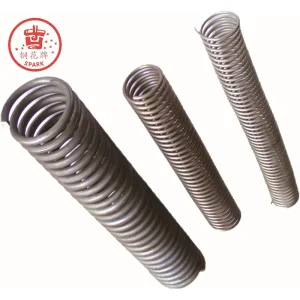
Comprehensive Heating Alloy Product Catalog
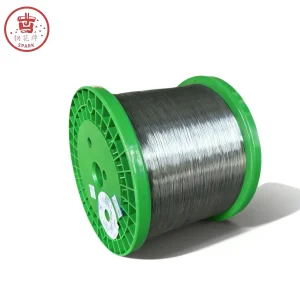
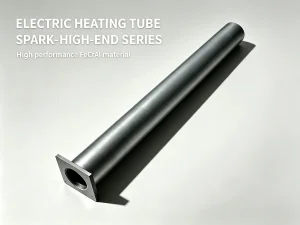
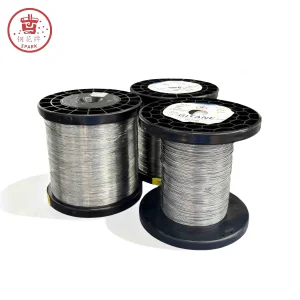
Explore our full range of FeCrAl heating wires, seamless steel tubing, inductors, and specialized high-temperature resistance solutions.
Technical & Sourcing FAQ (Frequently Asked Questions)
Expert answers to critical engineering, procurement, and alloy selection queries for Ni80Cr20 resistance wire.