
High-Performance Resistance Alloy Products (Batch I)

China High-Temperature Cr30Ni70 Alloy Wire from China Factory - Durable & Long-Lasting
Request Factory Quote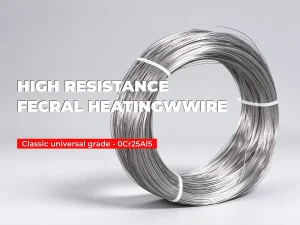
China 0Cr25Al5 FeCrAl Heating Wire Suppliers | High Temp Resistance Wire from Reliable Factory
Request Factory Quote
Wholesale High Quality 2.00mm 0Cr25Al5 Heating Wire from China Factory - Reliable Suppliers
Request Factory Quote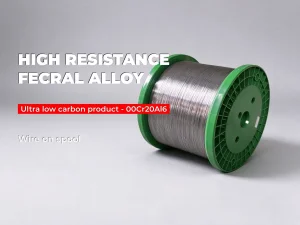
China Ultra Low Carbon 00Cr20Al6 FeCrAl Heating Alloy | China Suppliers & Factory for High-Performance
Request Factory Quote
China High-Performance 0Cr23Al5 Alloy Wire from China Suppliers - Oxidation Resistant
Request Factory Quote
Wholesale China 0Cr25Al5 Electric Heating Wire - High-Performance Resistance Wire
Request Factory Quote
Wholesale Super Purchasing for High-purity Ni Flower With Sulfur Metal Material Nickel Cake 99.99%
Request Factory Quote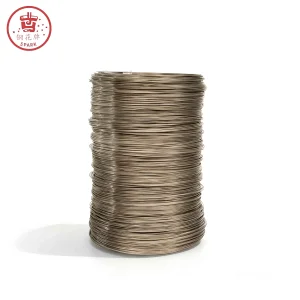
China Golden Finished SPARK Electric Heating Wire - High-Quality Alloy from China Factory
Request Factory QuoteAdvanced Metallurgical Failure Mitigation: Eliminating Virtual Welding, Cold Joints, and Unsoldering Under Extreme Thermal Load
In high-temperature thermal processing systems operating between 1000°C and 1425°C, thermal failure of heating elements remains one of the primary drivers of unplanned industrial downtime. Among these degradation vectors, joint failure modes—specifically virtual welding (虚焊), desoldering/un-brazing (脱焊), intergranular fatigue cracking, and localized hot-spot burnouts—pose severe risks to processing continuity. Resolving these catastrophic failure modes requires a comprehensive re-engineering of metallurgical compositions, physical microstructures, and joint interface physics.
Microstructural Causes of Terminal and Joint Disconnection
When conventional Iron-Chromium-Aluminum (FeCrAl) or Nickel-Chromium (NiCr) alloy elements are subjected to prolonged thermal cycling, significant grain growth occurs. As recrystallization alters the crystal lattice, grain boundaries become pathways for oxidation and vacancy accumulation. Under operational loads, three distinct thermodynamic phenomena cause joint detachment:
- Differential Thermal Expansion (DTE) Mismatch: Joints between the resistance heating wire and terminal lead-out rods experience localized thermal stresses due to divergent Coefficients of Thermal Expansion (CTE). Standard joints degrade as repetitive thermal cycling shearing forces break the metallurgical bond.
- Kirkendall Effect & Vacancy Aggregation: At elevated temperatures, interdiffusional fluxes between disparate metals create microscopic void formations (Kirkendall voids). These voids coalesce near the weld zone, forming structural brittleness that manifests as "virtual welding" where electrical continuity fails despite superficial contact.
- Precipitation of Low-Melting Phases: Impurities such as sulfur, phosphorus, and excess carbon migrate toward terminal connection zones, forming eutectic structures with melting points significantly lower than the bulk alloy. This causes premature melting and desoldering under rated thermal loads.
The Shougang Gitane Metallurgical Solution
Through state-of-the-art vacuum induction melting (VIM) paired with electroslag remelting (ESR), SPARK alloys—manufactured by Beijing Shougang Gitane New Materials Co., Ltd.—overcome structural degradation at the molecular level. By adding reactive rare-earth elements (Yttrium, Zirconium, Hafnium, and Cerium), our FeCrAl (such as 0Cr25Al5, SGHYZ, and SGHT) and NiCr alloys (Cr20Ni80, Cr30Ni70) achieve optimal grain boundary pinning. This process inhibits anomalous grain growth, suppresses Kirkendall void accumulation, and ensures exceptionally robust weld integrity that prevents joint detachment even under continuous cycling up to 1425°C.
Broad-Spectrum Industrial Atmosphere Adaptability & Corrosion Limits
Industrial furnaces rarely operate in pure air. Modern heat treatment, powder metallurgy sintering, electronic glass sealing, and semiconductor processing demand complex gaseous environments. Electric heating alloys must maintain structural stability and electrical consistency across diverse chemical atmospheres without undergoing accelerated chemical degradation.
Passivation Mechanics Across Operational Atmospheres
The operational resilience of SPARK FeCrAl alloys relies on the rapid formation of a self-healing, thermodynamically stable Alpha-Alumina (α-Al₂O₃) protective oxide scale. For NiCr alloys, protective surface integrity is maintained via a dense Chromium Oxide (Cr₂O₃) matrix. These oxide films act as atomic diffusion barriers against chemical attack in multiple atmospheres:
Oxidizing Atmospheres (Air, Oxygen)
Provides optimal operating longevity. α-Al₂O₃ scales continuously regenerate, enabling continuous service temperatures up to 1425°C for specialized PM grades.
Reducing Atmospheres (H₂, Dissociated NH₃)
FeCrAl exhibits high resistance to hydrogen embrittlement. Pre-oxidation in air to establish the α-Al₂O₃ layer prevents hydrogen diffusion and element erosion.
Carburizing Atmospheres (CO, Endothermic Gas)
Resists "Green Rot" attack. While NiCr alloys are vulnerable to internal carburization and chromium depletion, FeCrAl alloys remain immune due to alumina scale impermeability.
Inert & Vacuum Processing
Stable under deep vacuum and high-purity Argon/Nitrogen atmospheres. Prevents element vaporization through optimized vapor pressure alloy formulation.
Explicit Exclusions: Severe Corrosion Boundaries
While SPARK heating alloys feature exceptional atmospheric versatility, operational limits exist in highly aggressive, chemically reactive atmospheres:
- Sulfur-Bearing Atmospheres (H₂S, SO₂): Sulfur compounds react aggressively with Nickel to form low-melting-point Nickel Sulfide (Ni-Ni₃S₂) eutectics at temperatures as low as 635°C, causing rapid catastrophic melting ("sulfidation"). Although FeCrAl handles sulfur significantly better than NiCr, high concentration sulfur environments accelerate oxide scale breakdown.
- Halogen-Rich Atmospheres (Chlorine, Fluorine, Bromine): Halogen gases react directly with chromium and aluminum to produce volatile metal halides (e.g., AlCl₃, CrCl₂). This prevents protective scale formation, resulting in rapid wire necking and short-circuit wire failure.
Comprehensive Technical Specification Matrix: FeCrAl vs. NiCr Series
The selection matrix below highlights physical, electrical, and thermal attributes engineered into Beijing Shougang Gitane resistance heating products per GB/T 1234-2012 and international standards.
| Alloy Grade | Alloy Type | Max Service Temp (°C) | Resistivity (μΩ·m, 20°C) | Density (g/cm³) | Melting Point (°C) | Key Performance Advantage |
|---|---|---|---|---|---|---|
| SGHT | PM FeCrAl | 1425°C | 1.45 ± 0.07 | 7.10 | 1500 | Powder metallurgy; superior creep resistance; zero sag at 1400°C |
| SGHYZ | Advanced FeCrAl | 1400°C | 1.42 ± 0.07 | 7.10 | 1500 | Ultra-pure rare-earth micro-alloying; extended thermal cycling life |
| 0Cr25Al5 | Standard FeCrAl | 1250°C | 1.42 ± 0.07 | 7.10 | 1500 | High cost-efficiency; optimal resistivity for industrial furnaces |
| 0Cr23Al5 | Standard FeCrAl | 1250°C | 1.35 ± 0.06 | 7.25 | 1500 | Balanced ductility and oxidation resistance for woven mesh/elements |
| Cr30Ni70 | Premium NiCr | 1250°C | 1.18 ± 0.05 | 8.10 | 1380 | Non-magnetic; exceptional hot strength; superior in carburizing gas |
| Cr20Ni80 | Standard NiCr | 1200°C | 1.09 ± 0.05 | 8.40 | 1400 | Maximum room-temperature ductility; zero embrittlement after use |
China Supply Chain Ecosystem & Shougang Gitane Efficiency Superiority
Global original equipment manufacturers (OEMs) and industrial engineering procurement firms face tightening delivery timelines, rigorous quality requirements, and volatile cost pressures. Partnering with a fully integrated Chinese alloy manufacturer offers significant structural advantages in technical execution, cost control, and procurement scalability.
Full-Process Vertical Integration
Beijing Shougang Gitane New Materials Co., Ltd.—as a core enterprise within the state-owned Shougang Group—operates an end-to-end manufacturing complex across 88,000 square meters in Changping, Beijing. Unlike secondary wire drawers who purchase external wire rod billets, Shougang Gitane controls every step of production:
- Vacuum Melting & Refining: Precision metallurgical chemistry control via high-vacuum induction melting (VIM) and electroslag remelting (ESR), reducing residual tramp elements (P, S, Pb, Bi) to trace levels.
- Hot Rolling & Forging: Advanced hot rolling mills process billets under precise thermal windows to prevent micro-cracking and ensure uniform phase distribution.
- Precision Cold Drawing & Rolling: In-house multi-pass continuous wire drawing and strip cold-rolling achieve dimensional tolerances as fine as ±0.01 mm across ultra-fine wire and heavy strip profiles.
- Continuous Hydrogen Strand Annealing: Bright annealing furnaces operate under pure hydrogen atmospheres to deliver mirror-like surface finishes free of carbon contamination and surface oxides.
Economies of Scale & Rapid Procurement Logistics
With annual production capacity exceeding thousands of metric tons, our facility leverages significant scale efficiencies in raw material acquisition (high-purity nickel, chromium, aluminum, and rare earths). This integrated model enables us to offer global procurement partners factory-direct quotes with a 20% to 35% cost advantage over European or North American alloy mills without compromising metallurgical standards.
Global Market Demand & Localized Industrial Application Scenarios
Photovoltaic & Solar Cell Sintering
Monocrystalline silicon ingot growth furnaces and solar cell contact metallization belt furnaces require extreme thermal uniformity. SPARK SGHYZ wire eliminates temperature hot-spots, ensuring uniform cell efficiency and zero carbon contamination.
Automotive & EV Battery Manufacturing
Drive-shaft carburizing kilns and lithium-ion battery cathode sintering furnaces rely on SPARK Cr30Ni70 strip and 0Cr25Al5 elements to survive harsh thermal cycling and corrosive off-gassing from battery precursor materials.
Semiconductor Wafer Processing
Diffusion and oxidation furnaces operating above 1350°C utilize our powder-metallurgy SGHT grade. The material's exceptional creep strength prevents coil deformation and particle flaking inside cleanroom environments.
Advanced Technical Ceramics
Zirconia and alumina ceramic sintering kilns require elements capable of operating without oxidation flaking. SPARK FeCrAl wire maintains a smooth, adherent α-Al₂O₃ scale, keeping technical ceramic parts stain-free.
Frequently Asked Technical & Purchasing Questions
How does Shougang Gitane prevent virtual welding (虚焊) and desoldering (脱焊) at terminal lead-outs?
What are the key operational differences between FeCrAl and NiCr heating alloys?
Why should sulfur and halogen gas exposures be limited or monitored?
What delivery forms and dimension ranges are available from your China factory?
Which mill certifications and quality verification reports are included with quotes?
High-Performance Resistance Alloy Products (Batch II)
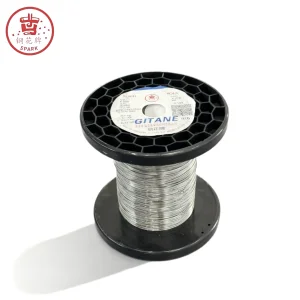
China High-Quality SGHYZ 1400℃ Electric Heating Wire from China Suppliers | Reliable Factory
Request Factory Quote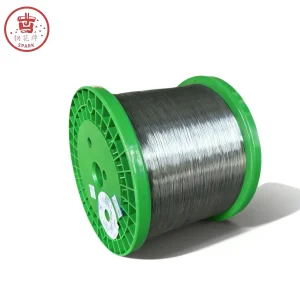
Wholesale High-Quality SPARK 0Cr20Al6 Electric Heating Wire Suppliers in China - High Performance Up to 1350℃
Request Factory Quote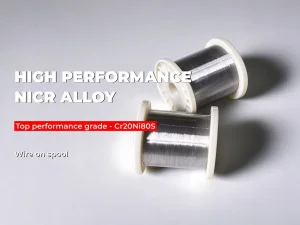
China Cr20Ni80S Nickel Chromium Heating Wire | 1200°C High-Performance Resistance Heating Alloy
Request Factory Quote
China High Performance SGHT Steel Tube Material from China Suppliers for Energy & Petrochemical
Request Factory Quote
China SPARK Electric Heating Wire - High-Quality Golden Finished Products from China Suppliers
Request Factory Quote
Wholesale China Suppliers Factory Price Wholesale 2.00mm 0Cr25Al5 Heating Wire ISO9001:2005
Request Factory Quote
China China Cr20Ni80 Electric Heating Wire Suppliers | High-Quality Resistance Wire from Factory
Request Factory Quote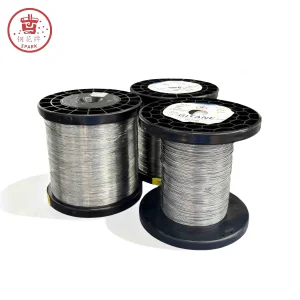
Wholesale Ultra-High Temperature Electric Heating Wire SGHT from China Suppliers | Premium Factory
Request Factory Quote