
In modern rail transportation—spanning heavy-haul freight, high-speed passenger express (HSR), metro systems, and diesel-electric locomotives—dynamic braking resistance units serve as the primary line of defense for non-friction kinetic energy dissipation. By converting electromagnetic energy generated by traction motors acting as generators into intense thermal energy, braking resistor banks ensure safe speed control on downhill gradients and rapid deceleration during emergency stops.
As global rail networks transition toward higher axle loads (exceeding 30 metric tons per axle for heavy freight) and faster operating velocities (300 km/h to 350+ km/h), the demands placed on braking resistance manufacturers have scaled exponentially. Industrial buyers and rolling stock original equipment manufacturers (OEMs) no longer look for basic electrical components; they demand metallurgically advanced, low-inductance, thermally robust grid resistors capable of withstanding repetitive peak thermal shocks up to 1000°C without mechanical warping, dielectric breakdown, or resistance drift.
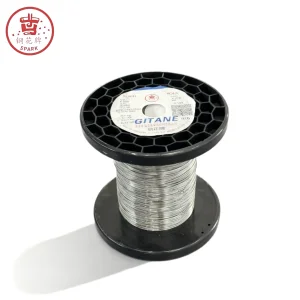
The raw material foundation of locomotive dynamic braking resistors relies heavily on specialized electrothermal alloys. Below are 8 key alloy and heating element solutions manufactured in China, serving as the high-resistance material core for dynamic braking grids and industrial heating units:



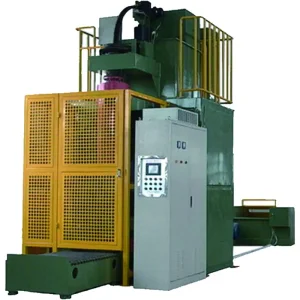

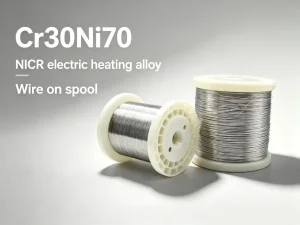

The locomotive braking industry is undergoing a structural paradigm shift driven by decarbonization, electrification, and high-frequency traction control. Leading Chinese braking resistance manufacturers are pioneering several key technological innovations:
1. SiC Chopper Integration
Silicon Carbide (SiC) power electronics allow brake choppers to switch at frequencies exceeding 20 kHz (compared to legacy 1-2 kHz IGBT choppers). This high-speed switching eliminates low-frequency current ripples in dynamic braking grids, drastically reducing electromagnetic noise and mechanical strain on stainless steel alloy ribbon grids.
2. Regenerative-Rheostatic Hybrids
Modern EMU trains prioritize returning energy back to the catenary. However, when grid receptivity drops, dynamic braking resistor banks must engage within milliseconds. Chinese manufacturers are deploying smart dynamic resistor banks equipped with instantaneous voltage sensing to smoothly balance regenerative and rheostatic dissipation seamlessly.
3. Lightweight Ribbon Geometry
By replacing solid cast-iron resistor grids with expanded stainless steel ribbons (AISI 304, AISI 310S, FeCrAl alloys), weight reductions of up to 45% are achieved. Enhanced surface area-to-volume ratios enable superior forced-air cooling efficiency and compact rooftop installation profiles.
| Technology Generation | Resistor Element Alloy | Switching Topology | Specific Heat Dissipation | Weight per Megawatt |
|---|---|---|---|---|
| Gen 1 (Legacy Cast Iron) | Grey Cast Iron / Ni-Resist | Electromechanical Contactors | 120 W/cm² | ~850 kg/MW |
| Gen 2 (Grid Ribbon Standard) | AISI 304 / Cr15Ni60 Stainless | Hard-Switched IGBT Chopper | 280 W/cm² | ~420 kg/MW |
| Gen 3 (High-Temp FeCrAl) | FeCrAl (0Cr25Al5 / SGHT Grade) | Soft-Switched SiC Chopper | 450 W/cm² | ~260 kg/MW |
| Gen 4 (Next-Gen Intelligent) | Powder Metallurgy Fe-Cr-Al-RE | Adaptive Matrix Chopper | > 600 W/cm² | < 180 kg/MW |
Different rolling stock segments require vastly different braking resistor architectures. China’s leading manufacturers deliver tailored engineering configurations matching stringent operating profiles across five major rail sectors:
Heavy-Haul Freight Locomotives
Operating on lines like the Datong-Qinhuangdao railway or Australia's iron ore corridors, heavy-haul trains (20,000+ tons) demand continuous dynamic braking power for long mountain descents. Solutions utilize high-mass, forced-air-cooled FeCrAl grid resistor banks capable of absorbing 5 MW to 10 MW continuously for periods exceeding 45 minutes without thermal degradation.
High-Speed Rail (HSR & EMUs)
Aerodynamic, underfloor, or roof-mounted braking units on high-speed trains (e.g., Fuxing CR400) require ultralight stainless steel element frames. They feature low aerodynamic resistance noise, ceramic vibration isolators conforming to EN 61373 Class 1B, and ultra-fast thermal response times.
Urban Mass Transit (Metro & LRV)
Metros require highly reliable emergency rheostatic braking when third-rail or overhead line voltage spikes during acceleration/deceleration cycles. Natural-convection or low-noise forced-draft roof resistor boxes are encapsulated to IP20-IP23 ratings to resist environmental pollution and heavy rainfall.
Mining & Industrial Locomotives
Exposed to extreme dust, conductive coal dirt, moisture, and aggressive shock/vibration. Industrial braking resistors utilize heavy-gauge edge-wound resistor coils or mica-insulated stainless steel grid elements enclosed in heavy-duty stainless steel (AISI 316L) flameproof outer casings.
Hydrogen & Hybrid Locomotives
Next-generation zero-emission hydrogen locomotives use dynamic braking resistors as dump loads to manage fuel cell purge pulses and excess energy absorption during battery state-of-charge (SoC) saturation. High-resistivity Cr20Ni80 alloys ensure zero resistance shift across wide temperature sweeps.
Entering international rail markets (Europe, North America, Middle East, Southeast Asia) requires absolute adherence to internationally recognized railway safety standards. Premier Chinese manufacturers provide comprehensive local support, technical documentation, and compliance testing guarantees:
IEC 60322 Compliance
Electric Equipment for Rolling Stock - Rules for Power Resistors: All resistor elements undergo mandatory thermal cycle validation, overload tests (up to 10x rated power short-time burst), creepage and clearance verification, and dielectric breakdown testing up to 5 kV AC.
EN 61373 Shock & Vibration
Dynamic braking grids installed on bogies or roofs endure intense operational vibrations. Modules are tested against Category 1 Class B and Category 2 body-mounted random vibration profiles to guarantee zero weld fracturing or ceramic element cracking over 30-year operational life cycles.
IRIS / ISO/TS 22163 Certified
The International Railway Industry Standard (IRIS) ensures end-to-end traceability from raw melt ingot casting to final resistor bank assembly. Every batch comes with full 3.1 chemical analysis certificates and physical property test records.
RAMS & LCC Optimization
Reliability, Availability, Maintainability, and Safety (RAMS) calculations guarantee Mean Time Between Failures (MTBF) exceeding 100,000 hours, drastically reducing Life Cycle Costs (LCC) for railway operators.
What gives Chinese locomotive braking resistance manufacturers a decisive edge in the global marketplace? It is the total vertical integration of the metallurgical supply chain combined with advanced Industry 4.0 manufacturing automation.
1. Vacuum Melting to Precision Ribbon Rolling
Unlike assemblers who purchase third-party resistance wire, leading Chinese manufacturers operate in-house Vacuum Induction Melting (VIM) and Electroslag Remelting (ESR) furnaces. Controlling raw elemental purity (Ni, Cr, Al, Fe, and rare earths like Yttrium and Zirconium) ensures identical resistivity coefficients ($\pm 2\%$) across thousands of production meters.
2. Robotic Laser Welding & Stamping Lines
Automated high-speed stamping presses produce wave-shaped grid elements with sub-millimeter precision. Multi-axis robotic fiber laser welding stations join resistor grid tabs without introducing heat-affected zone (HAZ) embrittlement, preventing fracture points under vibration.
3. Scale Advantage & Rapid Prototype Delivery
Leveraging massive domestic high-speed rail deployment experience, Chinese factories maintain substantial raw material buffers. Customized prototype dynamic braking resistor banks can be engineered, simulated via Finite Element Analysis (FEA) thermal software, manufactured, and shipped within 3 to 4 weeks.
For procurement officers and locomotive fleet directors, evaluating dynamic braking resistance suppliers involves assessing Total Cost of Ownership (TCO) rather than upfront unit price alone. Here is the evaluation matrix utilized by global Tier-1 integrators:
Thermal Shock Resistance
Inferior alloy grades suffer from intergranular corrosion and grain coarsening when cycled repeatedly from 20°C to 700°C. High-performance FeCrAl (such as SGHT grade) forms a self-healing, adherent $\text{Al}_2\text{O}_3$ protective oxide layer, extending physical element life by more than 300%.
Dielectric Insulation System
Brackets, ceramic rod insulators, and mica support plates must maintain high insulation resistance ($> 100\text{ M}\Omega$) under 95% relative humidity and heavy dust accumulation. Steatite and high-alumina ceramics are non-negotiable standards.
Logistics & Modular Maintenance
Modular drawer-style resistor frame designs allow maintenance technicians to replace individual damaged grid cassettes within 15 minutes during depot service, eliminating prolonged locomotive downtime.
Explore additional specialized alloy wires, tubes, and high-temperature furnace alloys manufactured by our China facility to support railway electrical grids and heavy industrial thermal applications:

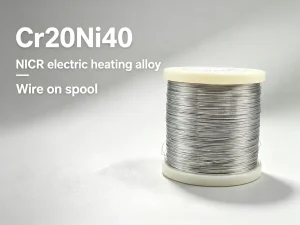


Key insights addressing common technical inquiries regarding China locomotive braking resistance manufacturers, alloy selection, and system design:
Q1: What is the main function of a locomotive braking resistor bank?
A locomotive dynamic braking resistor converts the electrical energy generated by traction motors during dynamic braking into thermal energy, which is then dissipated into the atmosphere. This system slows down heavy-haul or high-speed trains without wearing out mechanical wheel brake shoes.
Q2: Why choose FeCrAl (Iron-Chromium-Aluminum) over traditional cast iron grids?
FeCrAl alloys (such as 0Cr25Al5 or specialized SGHT grades) offer significantly higher electrical resistivity, higher maximum continuous operating temperatures (up to 1400°C), and approximately 40-50% lower weight than traditional cast iron. They also form a protective aluminum oxide coating that prevents deep structural oxidation under severe thermal shock.
Q3: How do Chinese factories comply with international railway standards like IEC 60322 and EN 50155?
Leading Chinese manufacturers operate IRIS-certified (ISO/TS 22163) quality control facilities. Dynamic braking resistor banks undergo third-party laboratory verification for dielectric insulation strength, thermal overload endurance, temperature rise limits per IEC 60322, and random shock/vibration testing per EN 61373.
Q4: What cooling options are available for locomotive braking resistor units?
Resistor units are available in natural convection cooling (ideal for low-power urban trams or rooftop metro installation) and forced-air cooling (utilizing high-efficiency axial or centrifugal blowers for heavy-haul diesel-electric and electric freight locomotives requiring several megawatts of continuous heat transfer).
Q5: Can Chinese braking resistor manufacturers provide customized dimensions for locomotive retrofits?
Yes. Factories offer full reverse engineering, FEA thermal simulation, and custom mechanical fabrication. Whether replacing legacy grid banks on EMD, GE, Alstom, or Siemens locomotives, custom frame mounting centers, terminal post locations, and resistance values can be manufactured to match existing bolt patterns and cooling duct geometries.
Q6: What is the typical lead time for custom locomotive dynamic braking resistor orders?
Because Chinese suppliers maintain vertically integrated alloy melting, strip rolling, and automated laser stamping processes, initial prototype units are typically completed within 3 to 4 weeks. Full production orders (50+ resistor banks) are routinely delivered within 6 to 8 weeks.
Partner with China's Premier Braking Resistance Specialists
Looking for certified high-capacity dynamic braking resistor banks, expanded stainless alloy grids, or high-temperature resistance wire? Contact our engineering team for technical datasheets, CAD drawings, and factory direct quotations.
Request Engineering Consultation