Featured China Electrothermal Alloys & High-Temp Resistance Wires
Explore top-grade, factory-direct resistance alloys engineered as direct physical and electrical alternatives to international standards (including Kanthal A1, APM, APMT, and Nikrothal series). Tested for high structural durability, consistent thermal resistivity, and long-term cyclic oxidation resistance.


Executive Technical Overview: The Evolution of Chinese Resistance Alloys as Kanthal Alternatives
In global industrial thermal processing, electric element engineering is undergoing a fundamental structural transition. For decades, Western engineering standards defaulted to premium Swedish and European brands such as Kanthal for high-temperature Iron-Chromium-Aluminum (FeCrAl) and Nickel-Chromium (NiCr) electrothermal alloys. However, advanced state-of-the-art Chinese metallurgical facilities—exemplified by enterprise manufacturers like Beijing Shougang Gitane New Materials Co., Ltd. (SPARK brand)—have successfully closed the metallurgical gap through sophisticated secondary vacuum refining, powder metallurgy (PM), and trace rare-earth (RE) elemental modification.
When global original equipment manufacturers (OEMs), kiln builders, and industrial processing plants evaluate a China Kanthal alternative resistance alloy, the primary objective extends beyond purchase price reductions. The real evaluation focuses on Information Gain regarding high-temperature creep strength, parabolic oxidation constants, life-cycle longevity, resistance stability over thermal cycling, and exact elemental composition parity.
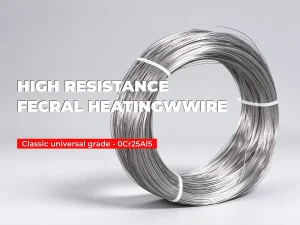
Modern Chinese FeCrAl alloys (such as 0Cr25Al5, 0Cr21Al6Nb, HRE, SGHYZ, and SGHT) and NiCr alloys (Cr20Ni80, Cr30Ni70) utilize high-purity Vacuum Induction Melting (VIM) coupled with Electroslag Remelting (ESR). By micro-alloying precise stoichiometric fractions of Yttrium (Y), Zirconium (Zr), Hafnium (Hf), and Titanium (Ti), Chinese manufacturers produce alloys capable of generating dense, highly adherent, self-healing alpha-alumina ($\alpha\text{-Al}_2\text{O}_3$) or chromia ($\text{Cr}_2\text{O}_3$) oxide surface scales. These protective oxide barriers match the performance metrics of Kanthal A1, Kanthal APM, APMT, Alkrothal, and Nikrothal across demanding industrial applications.
Comprehensive Technical Equivalent & Performance Matrix
The following engineering matrix compares standard Chinese electrothermal grades directly with traditional global benchmarks. Thermal resistivity, maximum continuous operating temperature, density, and oxide dynamics are measured in alignment with GB/T 1234-2012 standards and international ISO tests.
| Chinese Standard Grade | Kanthal Equivalent Benchmark | Alloy Family / Microstructure | Max Temp (°C) | Resistivity at 20°C ($\mu\Omega\cdot\text{m}$) | Density ($\text{g/cm}^3$) | Primary Industrial Applications |
|---|---|---|---|---|---|---|
| SGHT (Powder Metallurgy) | Kanthal APMT / APM | PM FeCrAl + Oxide Dispersion | 1425°C | 1.45 | 7.10 | Diffusion furnaces, semiconductor processing, severe high-temp kilns |
| SGHYZ / HRE | Kanthal A1 | Advanced FeCrAl + Y/Zr Doped | 1350°C - 1400°C | 1.45 | 7.10 | Industrial heat treatment, powder metallurgy sintering, ceramic kilns |
| 0Cr25Al5 | Kanthal D / Alkrothal | Standard High-Temp FeCrAl | 1250°C | 1.42 | 7.10 | Radiant tube heaters, industrial furnaces, braking resistors |
| 0Cr23Al5 | Kanthal AF / Kanthal D | Commercial FeCrAl Wire/Strip | 1250°C | 1.35 | 7.25 | Domestic appliances, industrial heating coils, tempering furnaces |
| Cr30Ni70 | Nikrothal 70 | Austenitic Ni-Cr Alloy | 1250°C | 1.18 | 8.10 | Industrial furnaces with cycling duty, chemical processing, medical heaters |
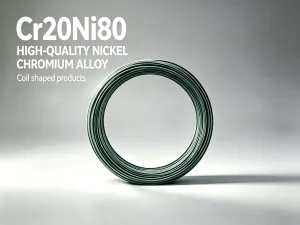
| Cr20Ni80 / Cr20Ni80S | Nikrothal 80 | Classic Nichrome Alloy | 1200°C | 1.09 | 8.40 | Precision elements, plastic sealing, consumer appliances, air heaters |
Metallurgical & Supply Chain Advantages of Modern Chinese Resistance Alloy Factories
Global sourcing directors and furnace engineering specialists choose Chinese manufacturers not merely for unit cost optimization, but for integrated technical advantages that enhance supply chain resilience:
1. Fully Integrated Vertical Manufacturing
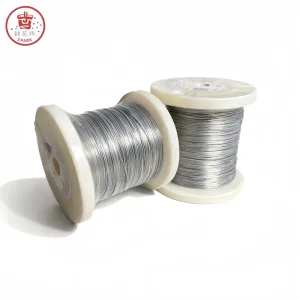
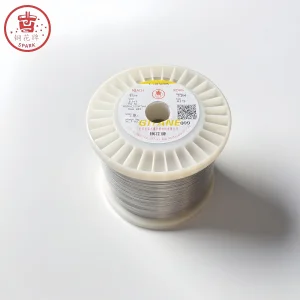
Unlike secondary re-drawers or standard wire processors, leading Chinese factories manage the complete production sequence internally: raw material melting (high-purity Nickel, Electrolytic Chromium, Refined Aluminum), vacuum induction melting (VIM), electroslag remelting (ESR), hot rolling, cold wire drawing, tape/strip rolling, continuous hydrogen annealing, and automated spooling. This vertical integration guarantees batch-to-batch chemical homogeneity and strict control over residual trace elements.
2. Rare-Earth (RE) Micro-Alloying Technology
The primary breakdown mechanism of standard FeCrAl alloys in continuous operation is internal oxidation and scale spallation caused by oxide film growth stresses. Chinese metallurgical research institutions have perfected the addition of Reactive Elements (Y, Ce, La, Zr). These elements lock grid dislocations, eliminate intergranular sulfur impurities, and transform scale growth mechanisms to yield tight, non-spalling $\alpha\text{-Al}_2\text{O}_3$ skins that resist severe cyclic thermal shock.
3. Advanced Powder Metallurgy (PM) Capacities
For high-stress applications above 1350°C where conventional wrought FeCrAl suffers from structural sagging and rapid grain growth, top Chinese producers utilize gas-atomized powder metallurgy (SGHT grade). Powder metallurgy creates uniform oxide dispersion strengthening (ODS), delivering high creep-rupture strength and dimensional stability equal to premium imported dispersion-strengthened alloys.
Macro Industry Trends Driving Electric Thermal Upgrades Global Market Transformation
The global market for electrical resistance wire and heating elements is experiencing unprecedented growth driven by macro decarbonization trends and advanced technology adoption:
1. Industrial Heat Process Electrification (Net-Zero Decarbonization): Heavily polluting fossil-fuel combustion furnaces (natural gas, heavy fuel oil) in steel tempering, glass annealing, and ceramic processing are rapidly transitioning to clean electric heating powered by renewable energy grids. High-power electrothermal alloys capable of handling large cross-sectional power loads are essential to execute this thermal transition.
2. Semiconductor & Photovoltaic Wafer Manufacturing: Single-crystal silicon ingot growth (Czochralski process) and high-temperature wafer diffusion processes require ultraclean, non-contaminating thermal zones operating continuously between 1300°C and 1400°C. SGHT powder-metallurgy FeCrAl alloys eliminate heavy metal evaporation and offer exceptional long-term stability in cleanroom furnace builds.
3. Lithium-Ion Battery Cathode Material Sintering: Roller hearth kilns for calcining Lithium Iron Phosphate (LFP) and Nickel-Manganese-Cobalt (NMC) cathode materials require specialized heating elements that resist corrosive chemical atmospheres and lithium vapor attack. Customized FeCrAl wire coils and strip elements provide ideal corrosion resistance in oxygen-enriched or controlled calcination atmospheres.
Engineering Guide: Selecting and Designing Kanthal Alternative Heating Elements
Proper alloy selection requires analyzing operating temperature, surface load watt density ($W/\text{cm}^2$), wire diameter, and process furnace atmosphere. Below are key engineering equations and guidelines used by element designers:
Surface Load Calculation ($w$):
The surface watt density determines the temperature differential between the heating wire core and the surrounding ambient furnace atmosphere:
Where P is total power (Watts), d is wire diameter (cm), and L is total active wire length (cm). For FeCrAl alloys operating at 1200°C in air, target surface load generally ranges between $1.5 \text{ and } 2.5 W/\text{cm}^2$ for long life. NiCr alloys in cycling domestic appliances can sustain up to $5.0 - 8.0 W/\text{cm}^2$.
Atmospheric Compatibility Considerations:
- Air / Oxidizing Atmospheres: FeCrAl alloys perform best due to the continuous formation of an $\alpha\text{-Al}_2\text{O}_3$ protective layer.
- Nitrogen / Ammonia ($N_2 / NH_3$): FeCrAl alloys can suffer from nitridation at temperatures above 1000°C (forming brittle Aluminum Nitride, AlN). NiCr alloys (e.g., Cr20Ni80) are strongly recommended for nitrogen-rich nitriding gas streams.
- Carburizing / Carbon Monoxide ($CO$): NiCr alloys are vulnerable to "Green Rot" internal oxidation caused by chromium carbide precipitation at high carbon activity. Specialized FeCrAl or modified high-silicon NiCr alloys must be used.
- Vacuum: Nickel evaporates at high temperature under hard vacuum; FeCrAl is preferred up to vacuum limits.
Frequently Asked Questions (FAQ) for Global Procurement & Engineering Teams
Find technical answers regarding direct equivalence, quality control, shipping formats, mill test certificates, and sample testing procedures.
Additional High-Temperature Alloys, Heating Elements & Material Options
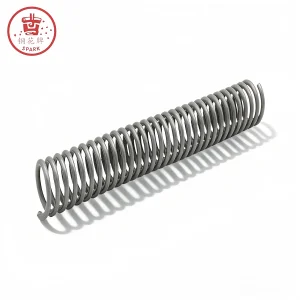
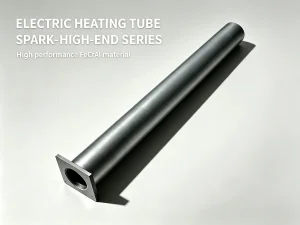
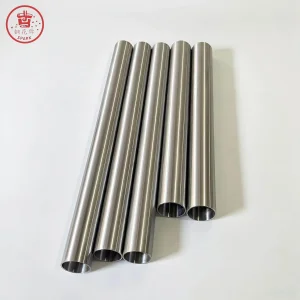
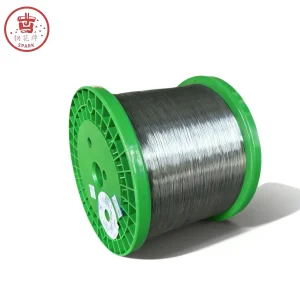
Browse our complete product catalog featuring specialized Nickel, NiCr, and FeCrAl resistance wires, heating tubes, raw nickel inputs, and precision heating coils built for demanding thermal processing environments.