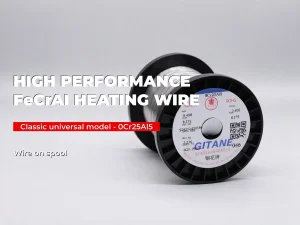
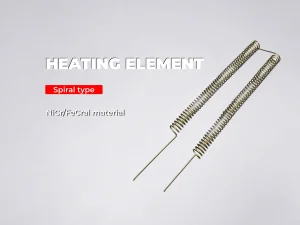
High-Grade Industrial Heating Alloys & Wire Solutions
Direct factory supply of precision-drawn FeCrAl and NiCr heating elements, resistance wire, and alloy tubes manufactured under strict ISO 9001 quality controls.
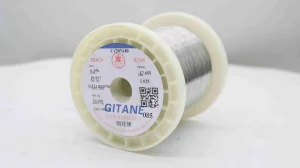
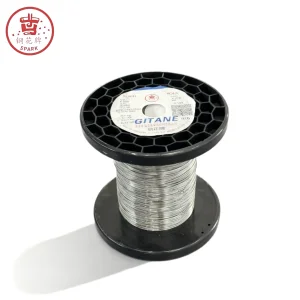


Metallurgical Analysis: Kanthal A1 Equivalent FeCrAl Alloys
Understanding the elemental physics, phase chemistry, and high-temperature oxidation mechanisms of Chinese-manufactured premium FeCrAl resistance heating wire.
Alloy Composition & Phase Stability
Kanthal A1 equivalent FeCrAl heating alloys (internationally designated under grade standards such as 0Cr27Al7Mo2, 0Cr25Al5, or specialized brand formulations like SPARK SGHYZ and HRE) are ferritic iron-chromium-aluminium alloys engineered specifically for extreme electrothermal environments. By maintaining a high chromium content (~20.0% to 24.5%) and elevated aluminium concentration (~5.0% to 7.0%), micro-alloyed with Reactive Elements (RE) such as Yttrium (Y), Zirconium (Zr), and Hafnium (Hf), these alloys maintain single-phase ferritic structures from room temperature up to their melting threshold (~1500°C).
Self-Healing Protective Scale ($\alpha$-$\text{Al}_2\text{O}_3$)
The primary advantage of premium FeCrAl over conventional Nickel-Chromium (NiCr) alloys lies in the preferential thermal oxidation dynamics. Upon initial heating in air above 900°C, aluminium migrates to the wire surface to form a highly adherent, non-porous, thermally insulating layer of Alpha-Alumina ($\alpha$-$\text{Al}_2\text{O}_3$). This ceramic surface layer exhibits exceptional electrical resistivity and acts as an impenetrable kinetic barrier against further atmospheric oxygen diffusion, chemical corrosion, and sulfur contamination at continuous temperatures up to 1425°C.
| Property / Parameter | Kanthal A1 Standard | SPARK 0Cr27Al7Mo2 / SGHYZ | SPARK 0Cr25Al5 Standard | Technical Advantage & Value |
|---|---|---|---|---|
| Nominal Chemistry | Cr 22%, Al 5.8%, Fe Bal. | Cr 25–27%, Al 6.5–7.5%, Mo 2%, RE | Cr 23–25%, Al 4.5–5.5%, Fe Bal. | Higher Al & Mo enhances creep resistance and scale density. |
| Max Continuous Temp (Air) | 1400°C (2550°F) | 1400°C – 1425°C | 1250°C (2280°F) | Direct drop-in equivalent for high-temp industrial kilns. |
| Resistivity at 20°C ($\Omega \cdot \text{mm}^2/\text{m}$) | 1.45 | 1.45 - 1.53 | 1.35 - 1.42 | High specific resistivity allows smaller wire cross-sections. |
| Density ($\text{g/cm}^3$) | 7.10 | 7.10 | 7.25 | ~15% lighter than NiCr 80/20, yielding more meters per kg. |
| Melting Point Approx. | 1500°C | 1500°C - 1520°C | 1500°C | Robust thermal margin against accidental over-temperature. |
| Yield Strength at 1000°C | ~12-15 MPa | ~18-22 MPa (Mo-Doped) | ~8-10 MPa | Molybdenum micro-alloying suppresses element sag and deformation. |
Key Information Gain for Procurement Engineers
While traditional FeCrAl alloys historically suffered from grain growth and thermal sag at temperatures exceeding 1200°C, Chinese metallurgical breakthroughs—specifically vacuum induction melting (VIM) combined with electroslag remelting (ESR) and rare-earth element (Y/Zr) micro-doping—have bridged the performance gap. Our Kanthal A1 equivalent products offer identical electrical resistance temperature coefficients ($C_t$) and superior creep life at a 30% to 45% reduced total procurement cost.
Global Enterprise Procurement Trends & FeCrAl Demand Drivers
Why Tier-1 industrial furnace manufacturers and global heating system integrators are diversifying their supply chains toward certified Chinese FeCrAl heating wire manufacturers.
Decarbonization & Kiln Electrification
Global environmental regulations and net-zero industrial mandates are driving a massive shift from gas-fired combustion heating to high-efficiency electric thermal processing across steel heat treatment, ceramic sintering, and glass manufacturing. FeCrAl resistance wire serves as the core heating element in clean-energy electric kilns, offering 98%+ electrothermal conversion efficiency without localized carbon dioxide emissions.
Dual-Sourcing & Supply Resilience
Sole-source reliance on legacy Western alloy producers creates severe supply chain vulnerabilities, extended lead times (often 24–36 weeks), and inflated raw material premiums. Procurement executives at OEMs are actively qualifying direct-factory China suppliers who provide equivalent technical specifications, MTC (Mill Test Certificates per EN 10204 3.1), and guaranteed delivery cycles under 4 weeks.
Total Cost of Ownership (TCO) Optimization
The total cost of high-temperature heating systems includes material acquisition, replacement frequency, energy utilization, and maintenance downtime. FeCrAl's lower density (15% lighter than NiCr) combined with competitive Chinese manufacturing overhead allows plant operators to cut annual element replacement budgets by up to 40% while preserving furnace output quality.
Tailored Heating Alloy Solutions Across Industrial Sectors
Engineered resistance wire compositions designed to withstand specific chemical atmospheres, rapid thermal cycling, and mechanical stresses.
1. Heat Treatment & Metallurgy Furnaces
Used extensively in annealing, hardening, stress-relieving, and carburizing batch furnaces. For environments with potential carbon loading, our specialized pre-oxidized SGHYZ wire establishes an impenetrable $\alpha$-$\text{Al}_2\text{O}_3$ scale that prevents green rot and internal carburization at operating temperatures up to 1350°C.
2. Advanced Ceramics & Structural Materials
Technical ceramic sintering (Zirconia, Alumina, Silicon Nitride) requires clean heating environments free of metal vapor emission. SPARK FeCrAl wire elements operate without flaking or particle shedding, preserving ceramic purity during high-temperature air sintering up to 1400°C.
3. Semiconductor & Photovoltaic Processing
Diffusion furnaces, crystal growth reactors, and solar silicon ingot annealing equipment demand ultra-precise temperature uniformity. Our cold-drawn, high-purity Kanthal A1 equivalent wire guarantees tight resistance tolerances ($\pm 3\%$) and uniform heat flux across multi-zone heating modules.
4. Petrochemical & High-Temp Fluid Heaters
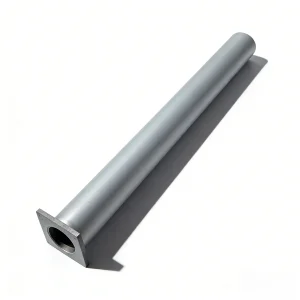
Incorporated into immersion heater bundles, process gas superheaters, and catalyst regeneration units. Paired with high-performance SGHT steel tubing, these resistance elements handle severe thermal shocks and aggressive gas flow velocities without mechanical fatigue.
5. Precision Laboratory & Dental Kilns
Muffle furnaces and high-speed porcelain sintering kilns require rapid heat-up rates and compact element geometry. Fine gauge FeCrAl wire (0.1mm to 1.0mm) offers excellent spoolability and formability for pre-formed spiral coils and ceramic fiber embedded modules.
6. Industrial Drying & Household Appliances
General-purpose 0Cr23Al5 and 0Cr25Al5 grades provide an economical, highly reliable power-to-heat solution for hot air blowers, radiant heaters, toaster ovens, and commercial catering equipment operating up to 1100°C.
Rigorous Metallurgical Testing & Global Compliance
Every master coil is subjected to strict non-destructive, metallurgical, and electrical verification before international export.
Full EN 10204 3.1 Traceability
Every shipment of Kanthal A1 equivalent FeCrAl wire is accompanied by an official Mill Test Certificate (MTC) detailing chemical composition (via Optical Emission Spectrometry), 20°C electrical resistivity, tensile strength, elongation percentage, dimensional wire tolerances, and accelerated life test results per GB/T 1234-2012 and international ISO standards.
Global Environmental Compliance
All heating alloy products strictly conform to EU REACH (Registration, Evaluation, Authorisation and Restriction of Chemicals) and RoHS (Restriction of Hazardous Substances) directives. Products are free of heavy metals, lead, cadmium, and SVHCs, ensuring seamless integration into eco-conscious global OEM manufacturing lines.
Technology Roadmap: Next-Generation Electrothermal Alloys
Continuous metallurgical innovation aimed at pushing operating boundaries beyond conventional physical limits.
Oxide Dispersion Strengthening (ODS)
By incorporating nano-scale Yttrium Oxide ($\text{Y}_2\text{O}_3$) particles throughout the ferritic matrix via mechanical alloying, our next-gen ODS FeCrAl series (SGHT) achieves unprecedented creep resistance at 1425°C+, virtually eliminating wire sag in unsupported horizontal element layouts.
Ultra-Fine Precision Wire Drawing
Expanding capabilities in sub-0.05mm micro-wire drawing for miniature heating sensors, medical cauterizing devices, aerospace micro-thruster heaters, and flexible textile heating elements with tight electrical resistance stability.
Pre-Oxidized Surface Engineering
Developing factory-applied pre-oxidation coatings that form an optimized 2-micron alpha-alumina shell prior to spooling, eliminating the need for complex multi-stage conditioning runs by end-users during initial installation.
Frequently Asked Questions (Q&A)
Expert engineering answers regarding drop-in replacement, surface load calculations, atmospheric life expectancy, and installation best practices.
Is Chinese 0Cr27Al7Mo2 or SGHYZ wire a true direct replacement for Kanthal A1?
How do I calculate the maximum allowable surface load ($\text{W/cm}^2$) for FeCrAl wire?
What furnace atmospheres degrade FeCrAl heating elements?
Why does FeCrAl wire become brittle after initial heating, and how should it be handled?
What delivery forms and dimensions are available from your factory?
- Round Wire: Diameter range from 0.05mm (50 microns) up to 10.0mm on DIN spools, coils, or cut straight lengths.
- Flat Ribbon / Strip: Thickness from 0.1mm to 4.0mm, width from 0.5mm to 120mm.
- Pre-Wound Elements: Custom-wound spiral coils, wave-shaped elements, and ceramic fiber embedded heating modules fabricated directly to customer engineering drawings.
What is the standard lead time and Minimum Order Quantity (MOQ) for custom alloy specifications?
Explore Additional Factory Supply Resistance Wire & Elements
Select from our certified range of FeCrAl, NiCr, and specialized industrial furnace wire grades.