High-Performance Heating Alloys & Resistance Wires (Part I)
Direct factory supply featuring ISO9001:2005 certified FeCrAl and NiCr heating elements engineered for severe thermal operating environments up to 1425°C.
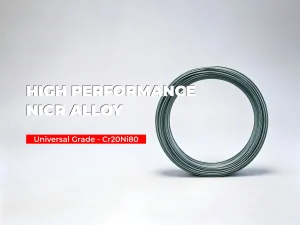
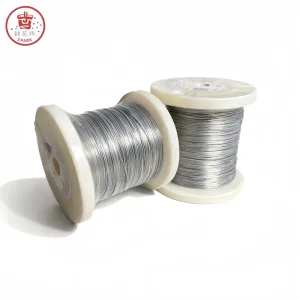
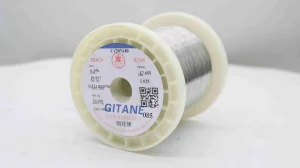
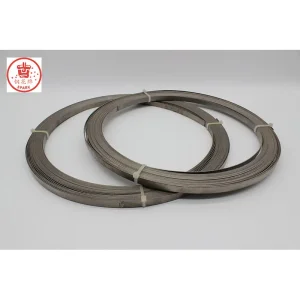
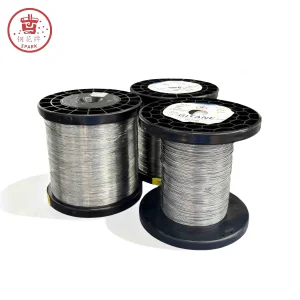
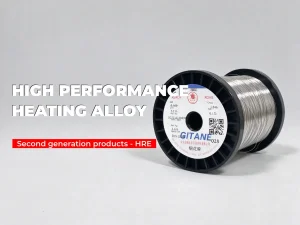
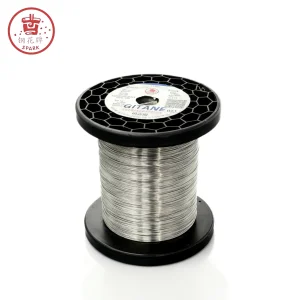
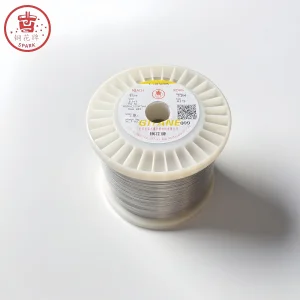
Executive Summary & Global Market Dynamics
Analyzing the global transition toward high-purity Chinese electric heating alloys as premier international brands face supply chain bottlenecks and inflationary pressures.
The Global Thermal Shift: Why China Alloys Are Industry Benchmarks
In the contemporary thermal engineering sector, electric resistance alloys form the core backbone of high-temperature operations ranging from industrial furnaces, semiconductor manufacturing, and photovoltaic crystal growth to precision domestic heating appliances. For decades, Western engineering conglomerates held a virtual monopoly on premium heating alloy formulations, particularly Iron-Chromium-Aluminum (FeCrAl) and Nickel-Chromium (NiCr) chemistry. Brands such as Kanthal, NIKROTHAL, and Rescal established early standards that commanded substantial market premiums.
However, over the past decade, a major structural paradigm shift has taken place across global procurement networks. China's advanced vacuum induction melting (VIM), electro-slag remelting (ESR), and continuous cold-drawing metallurgical infrastructure—led by market pioneers like Beijing Shougang Gitane New Materials Co., Ltd. (SPARK brand)—has elevated Chinese high-temperature alloys to absolute parity with premium European and American counterparts. Today, specifying high-temperature Chinese FeCrAl and NiCr alloys is no longer a temporary compromise; it is a long-term strategic imperative for industrial furnace OEMs and industrial heating plant operators seeking operational resilience and cost optimization.
Key Insight for Procurement Directors: By adopting Chinese specialized heating alloys like SPARK SGHT and SGHYZ, international thermal equipment manufacturers achieve direct equivalency in electrical resistivity ($\mu\Omega\cdot\text{m}$), oxide scale adhesion, and creep strength while shortening procurement lead times from 16–24 weeks down to 3–5 weeks.
Cross-Brand Technical Benchmark Matrix
Comprehensive chemical composition, thermal limit, and physical property comparison between SPARK alloys and premium international equivalents.
| Alloy Grade (China SPARK) | International Equivalent Benchmark | Alloy Type | Max Temp (°C) | Resistivity @20°C ($\mu\Omega\cdot\text{m}$) | Density ($\text{g/cm}^3$) | Primary Industrial Applications |
|---|---|---|---|---|---|---|
| SGHT (Powder Metallurgy) | Kanthal APM / APME | FeCrAl (PM) | 1425°C | 1.45 | 7.10 | Semiconductor diffusion furnaces, ceramic sintering, high-temp kilns |
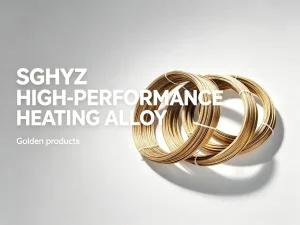
| SGHYZ | Kanthal A1 / Alkrothal 720 | FeCrAl + Rare Earth | 1400°C | 1.45 | 7.10 | Industrial heat-treating furnaces, heavy kilns, radiant tubes |
| HRE (1350) | Kanthal AF / Aluchrom O | FeCrAl + Yttrium | 1350°C | 1.42 | 7.15 | Powder metallurgy, glass melters, high-temperature lab furnaces |
| 0Cr25Al5 | Kanthal D / Aluchrom I | FeCrAl Standard | 1250°C | 1.42 | 7.25 | Industrial heating elements, brake resistors, hot plates |
| Cr20Ni80 | NIKROTHAL 80 / Chromel A | NiCr (80/20) | 1200°C | 1.09 | 8.40 | Precision medical devices, plastic sealing, commercial appliances |
| Cr30Ni70 | NIKROTHAL 70 / Rescal 70 | NiCr (70/30) | 1250°C | 1.18 | 8.10 | Controlled atmosphere furnaces, nitriding/carburizing kilns |
Alpha-Alumina Oxide Scale Dynamics
SPARK FeCrAl alloys form an exceptionally dense, non-porous $\alpha\text{-Al}_2\text{O}_3$ surface protective oxide layer above 1000°C. This self-healing scale acts as a formidable barrier against thermal oxidation and electrical shorting.
Rare Earth Grain Refinement
Micro-alloying with controlled concentrations of Yttrium (Y), Zirconium (Zr), and Reactive Elements (RE) prevents grain growth at continuous high temperatures, substantially extending element life under high thermal stress.
Formability & Coilability
Through ultra-low carbon control and specialized annealing cycles, SPARK NiCr and FeCrAl resistance wires demonstrate superior room-temperature cold ductility, ensuring zero snapping during automated element winding.
Procurement Demand, Sourcing Strategy & Total Cost of Ownership (TCO)
How global industrial buyers leverage Chinese manufacturing agility to mitigate supply line risks and eliminate brand premium markups.
Strategic Sourcing Requirements for Global EPCs and OEMs
In an increasingly competitive industrial machinery sector, procurement directors are constantly tasked with balancing strict engineering specifications against margin pressures. Premium European alloy suppliers have traditionally operated with rigid pricing structures, high minimum order quantities (MOQs), and unpredictable delivery schedules caused by energy fluctuations in Western Europe. This creates vulnerabilities for global furnace builders and industrial heat-treatment operations.
Transitioning to Chinese reliable heating alloy alternatives resolves these critical bottlenecks. Chinese major manufacturers operate fully integrated supply chains—from raw iron ore, electrolytic nickel, and chromium sourcing down to vacuum induction melting, intermediate rolling, wire drawing, and final spooling. This end-to-end industrial autonomy ensures exceptional price stability and reliable delivery timelines.
40%–60% Direct Cost Reduction
Eliminate inflated brand equity surcharges without lowering metallurgical quality or thermal lifespan. Save significantly on capital expenses for large furnace projects.
Flexible MoQs & Fast Turnaround
Standard wire sizes (e.g., 0.1mm to 10.0mm) and ribbon dimensions are dispatched from stock or produced within accelerated 10-to-14-day production windows.
Tailored Technical Assistance
In-house metallurgical engineering teams provide personalized surface load ($W/\text{cm}^2$) calculations, element geometry design, and furnace atmosphere compatibility advice.
Macro Heavy-Industry Application Engineering
From automotive heat treatment to semiconductor wafer processing, discover how China heating alloys excel across rigorous industrial thermal environments.
Semiconductor & Photovoltaic Furnaces
Ultra-high temperature PM alloys like SGHT (1425°C) provide superior sag resistance and zero deformation during prolonged continuous silicon wafer diffusion, crystal pulling, and solar ingot growth processes.
Automotive Heat Treating & Carburizing
Controlled-atmosphere continuous furnaces demand high green-rot resistance. SPARK Cr30Ni70 and Cr20Ni80 alloys deliver superior chemical stability under carburizing, nitriding, and reducing gas atmospheres.
Ceramic, Glass & Powder Metallurgy
Industrial ceramic kilns requiring operating temperatures between 1250°C and 1350°C benefit directly from HRE 1350°C and SGHYZ 1400°C FeCrAl alloys, delivering exceptional thermal shock immunity.
Quality Assurance, Testing & Global Compliance
Strict adherence to international metallurgical standards backed by traceable Mill Test Certificates (EN 10204 3.1) and rigorous laboratory verification.
Comprehensive Quality Control Protocols
Every single heat of SPARK heating alloy produced by Beijing Shougang Gitane undergoes rigorous multi-stage quality gate evaluations. Production complies strictly with the national standard GB/T 1234-2012 (High-resistance electric heating alloys) as well as international testing norms including ASTM B603, DIN 17470, and JIS C2520.
Our state-of-the-art testing facility performs 100% verification across all critical quality indices prior to packing and export shipping:
Chemical Spectroscopy
Direct-reading optical emission spectrometry ensures precise elemental stoichiometry (Cr, Al, Ni, Fe, and micro RE additions).
Accelerated Life Testing
Rapid high-temperature life tests (50-hour continuous accelerated thermal cycling) verify oxide integrity and resistance stability.
Dimensional & Electrical Check
Laser micrometer gauging guarantees exact wire diameter tolerances ($\pm 0.01\text{mm}$) and uniform electrical resistance per meter ($\Omega/\text{m}$).
Compliance Documentation: All shipments include Mill Test Certificates according to EN 10204 3.1, along with full RoHS and REACH environmental safety compliance certification for smooth customs clearance worldwide.
Technological Roadmap & Next-Gen Innovations
Pioneering the next generation of powder metallurgy FeCrAl alloys and carbon-neutral heating solutions for modern green metallurgy.
Powder Metallurgy Maturation
Expanding industrial production of SGHT (1425°C) PM alloys to eliminate creep sag in horizontal industrial furnace elements.
Hydrogen Environment Alloys
Developing specialized FeCrAl formulations engineered specifically to resist embrittlement in 100% green hydrogen sintering atmospheres.
Nanostructure Oxide Dispersion
Integrating nano-scale Y2O3 oxide dispersion strengthening (ODS) to push maximum continuous operating temperatures beyond 1450°C.
Smart Thermal Diagnostics
Co-developing intelligent resistance heating elements with integrated electrical resistance feedback for real-time element health monitoring.
Frequently Asked Questions for Procurement & Design Engineers
Detailed technical answers to common engineering questions regarding alternative heating alloy specification, surface loading, and operational life.
High-grade Chinese FeCrAl alloys such as SPARK SGHYZ and HRE 1350 match Kanthal A1 in fundamental chemical composition, density ($7.10\,\text{g/cm}^3$), and electrical resistivity ($1.45\,\mu\Omega\cdot\text{m}$). Under standardized 50-hour accelerated continuous high-temperature life testing at 1350°C, SPARK SGHYZ exhibits equivalent oxide scale adherence and electrical resistance stability, delivering virtually identical service life when installed under identical surface load ($W/\text{cm}^2$) parameters.
FeCrAl is superior for higher continuous operating temperatures (up to 1425°C), higher electrical resistivity, lower density (saving up to 15% material weight), and cost efficiency. However, NiCr (Cr20Ni80 / Cr30Ni70) is preferred when the heating element requires high hot strength, structural ductility after prolonged exposure (it does not become brittle upon cooling), non-magnetic properties, and superior performance in frequent thermal cycling or humid/reducing atmospheres.
Recommended surface loading depends heavily on furnace operating temperature, element geometry, and atmosphere. For industrial furnace air atmospheres operating at 1000°C, a surface load of $2.5 \text{ to } 3.0 \, W/\text{cm}^2$ is typical. At extreme temperatures of 1300°C–1400°C using SGHYZ or SGHT wire, surface load should be reduced to $1.0 \text{ to } 1.5 \, W/\text{cm}^2$ to prevent localized overheating and maximize element longevity.
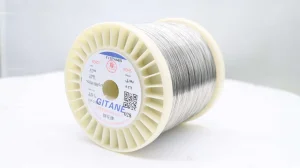
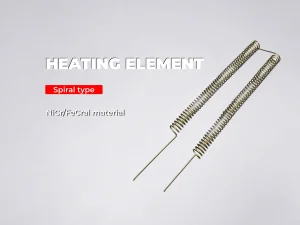
SPARK heating alloys are supplied in a comprehensive range of physical forms: Round Wire (0.05mm to 12.0mm diameter), Flat Wire / Ribbon (thickness 0.1mm to 4.0mm, width 0.5mm to 12.0mm), Cold-Rolled Strip (thickness 0.2mm to 4.0mm, width up to 200mm), Pre-Wound Spiral Elements, and custom-engineered heavy industrial furnace elements tailored to customer drawings.
You can request instant custom quotes and certified pricelists by clicking the product inquiry buttons on this whitepaper page or emailing our sales engineering department directly. Quotes are provided within 24 hours based on order volume, alloy grade, wire gauge, and packaging specifications (e.g., DIN plastic spools or wooden cases).
High-Performance Heating Alloys & Resistance Wires (Part II)
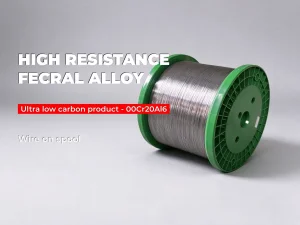
Explore our full line of specialized furnace alloys, ultra-low carbon FeCrAl materials, and custom spiral heating element solutions.