
High-Performance Resistance Alloys & Industrial Heating Elements
Explore our top-tier industrial heating materials engineered for thermal uniformity, high creep strength, and extended operation up to 1425°C.




Why China's Electric Heating Alloys Dominate Global Industrial Furnaces
In modern thermal processing, resistance heating alloys act as the core energy conversion heart. Chinese manufacturing ecosystems have evolved from basic alloy drawing to advanced powder metallurgy and rare-earth doping technology.
Iron-Chromium-Aluminum (FeCrAl) Alloys
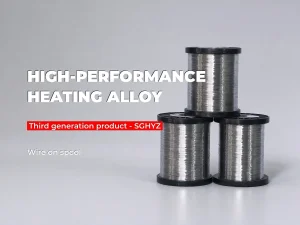
FeCrAl alloys (including 0Cr25Al5, 0Cr23Al5, 0Cr21Al6Nb, SGHYZ, and SGHT) are engineered for extreme thermal environments ranging from 1100°C up to 1425°C. Upon initial heating in an oxidizing atmosphere, FeCrAl forms a continuous, highly adherent layer of alpha-alumina (α-Al2O3). This passive oxide film acts as a formidable diffusion barrier against further hot corrosion and thermal oxidation. With a higher electrical resistivity (up to 1.45 μΩ·m) and a 15% lower density compared to Nickel-Chromium alternatives, FeCrAl allows industrial furnace builders to achieve higher power ratings while using significantly less material mass.
Nickel-Chromium (NiCr) Alloys
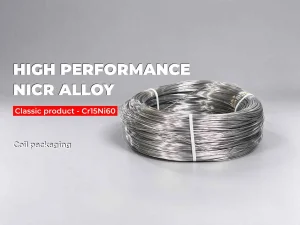
Nickel-Chromium alloys, such as Cr20Ni80, Cr15Ni60, and Cr30Ni70, provide superior hot mechanical strength, excellent post-heating ductility, and outstanding stability under thermal cycling conditions. Forming a protective chromia (Cr2O3) scale, NiCr alloys operate up to 1250°C without suffering from embrittlement. They remain non-magnetic and are less susceptible to green rot under specific atmospheric conditions, making them indispensable for precision heating elements, industrial furnaces with intense mechanical vibrations, and continuous heat-treatment belt conveyors.
Powder Metallurgy & Rare-Earth Micro-Alloying
The transition toward powder metallurgy (PM) in Chinese alloy production—exemplified by SPARK's flagship SGHT grade—represents a landmark breakthrough in high-temperature metallurgy. By incorporating precisely calculated reactive rare-earth elements such as Yttrium (Y), Zirconium (Zr), Hafnium (Hf), and Cerium (Ce), Chinese manufacturers effectively lock grain boundaries. This prevents high-temperature grain growth, dramatically reduces sagging at 1400°C+, and extends service life up to 400% compared to standard melt-cast alloys.
FeCrAl & NiCr Alloy Grade Performance Matrix
Compare physical, electrical, and thermal parameters across primary Chinese standard (GB/T 1234-2012) resistance heating alloy grades.
| Alloy Grade | Alloy Family | Max Temp (°C) | Resistivity at 20°C (μΩ·m) | Density (g/cm³) | Melting Point (°C) | Primary Furnace Applications |
|---|---|---|---|---|---|---|
| SGHT | FeCrAl (Powder Met) | 1425°C | 1.45 | 7.10 | 1500 | Semiconductor diffusion, ceramic sintering, crystal growth |
| SGHYZ | FeCrAl (Rare Earth Doped) | 1400°C | 1.42 | 7.10 | 1500 | Ultra-high temp heat treatment, laboratory muffles, kilns |
| SPARK HRE | FeCrAl (High Resistance) | 1350°C | 1.42 | 7.10 | 1500 | Powder metallurgy sintering, continuous mesh belt furnaces |
| 0Cr25Al5 | FeCrAl Alloy | 1250°C | 1.42 | 7.10 | 1500 | Industrial furnaces, radiant tubes, ceramic kiln elements |
| 0Cr23Al5 | FeCrAl Alloy | 1250°C | 1.35 | 7.25 | 1500 | General industrial heating, domestic heaters, band heaters |
| 0Cr20Al6 | FeCrAl Alloy | 1350°C | 1.38 | 7.15 | 1500 | High temperature industrial kilns, heavy-duty furnace coils |
| Cr20Ni80 | NiCr Nichrome | 1200°C | 1.09 | 8.40 | 1400 | Precision heat-treatment, vacuum furnaces, chemical heaters |
| Cr15Ni60 | NiCrFe Alloy | 1150°C | 1.11 | 8.20 | 1390 | Baking appliances, continuous annealing lines, rheostats |
Supply Chain Synergy & Macro Industry Transformation
Understanding why global furnace original equipment manufacturers (OEMs) consolidate their heating element procurement in China.
1. Complete Vertical Metallurgical Integration
China maintains the world's most integrated rare earth, nickel, chromium, and refined iron upstream supply chains. Leading manufacturers like Beijing Shougang Gitane New Materials control the entire lifecycle—from Vacuum Induction Melting (VIM) and Electro-Slag Remelting (ESR) to hot rolling, cold drawing, and bright annealing. This upstream control eliminates raw material contamination, guarantees consistent electrical resistivity tolerance (±3%), and dramatically lowers production lead times for large-scale industrial projects.
2. Decarbonization & Industrial Electrification
Global net-zero mandates are forcing steel, glass, ceramic, and petrochemical plants to replace natural gas burner systems with zero-emission electric resistance heating. Industrial furnaces operating on green electricity require heavy-gauge wire, heavy ribbon elements, and radiant tubes capable of delivering megawatt-level heat output. Chinese element producers have led this transition, developing customized high-watt-density heating elements capable of operating seamlessly under harsh industrial gas atmospheres (N2, H2, Ar, Endothermic gas).
3. High-Speed Automation & Precision Drawing
Modern Chinese factories utilize multi-pass continuous wire drawing machinery equipped with real-time laser micrometer inspection systems. Whether producing fine resistance wire down to 0.05 mm or heavy cold-rolled strip up to 6.0 mm thickness, automated tensioning and atmosphere-controlled bright annealing ensure clean, pit-free golden or bright surfaces with uniform oxide growth characteristics during furnace commissioning.
4. AI-Enhanced Thermal Profile Engineering
By leveraging advanced finite element analysis (FEA) and thermal simulation tools, Chinese element engineers help buyers optimize element geometry, wave pitch, and rod support spacing. This prevents localized hot spots, minimizes thermal stress, and extends component lifespan in high-throughput continuous heat-treating furnaces.
Tailored Thermal Solutions Across Key Industrial Sectors
From semiconductor crystal growth to continuous automotive gear heat treatment, discover how custom heating elements empower modern engineering.
Semiconductor & Photovoltaics
Polysilicon reduction, ingot growth, and wafer oxidation furnaces demand particle-free heating zones. SGHT powder metallurgy elements eliminate metallic contamination while providing exceptional dimensional stability at temperatures exceeding 1350°C under thermal ramp rates up to 30°C/min.
Lithium Battery Cathode Sintering
Roller hearth kilns (RHK) producing NCM and LFP battery cathode materials operate continuously in aggressive corrosive gas environments. Customized spiral heating elements made from 0Cr25Al5 and SGHYZ resist alkali corrosion and deliver long-term uniform thermal distribution.
Automotive Carburizing & Nitriding
Heavy-duty pit furnaces and continuous carburizing lines rely on high-power radiant tube heating inserts. Cr20Ni80 and 0Cr21Al6Nb alloys offer excellent carbonization resistance, preventing element short circuits caused by soot deposition.
E-E-A-T Technical Audit Protocol for Overseas Buyers
Ensure supply chain security, trace material heat numbers, and eliminate counterfeit alloy risks with standard verification protocols.
1. Spectrographic Heat Analysis
Every batch of SPARK heating wire must accompany an official Mill Test Certificate (MTC) in accordance with EN 10204 3.1. Optical Emission Spectrometry (OES) verifies exact Chromium, Aluminum, Nickel, and rare-earth elemental percentages down to parts per million (PPM), guaranteeing strict adherence to GB/T 1234-2012 and ASTM B603 standards.
2. Accelerated Oxidation Testing
Sample coils undergo cyclic high-temperature testing (Bash Testing) at 1200°C–1400°C for up to 100 consecutive hours. This measures weight gain/loss kinetics, verifying scale adhesion and confirming that the alloy will not suffer premature scale spallation during rapid industrial heating cycles.
3. Dimensional & Resistivity Uniformity
Continuous micro-ohmmeter testing checks wire resistance along the entire length of every spool. Uniform linear resistance ensures that multi-phase furnace element circuits maintain perfectly balanced power draw without phase unbalance or localized overheating.
Factory Direct Heating Wires, Strips & Specialized Components
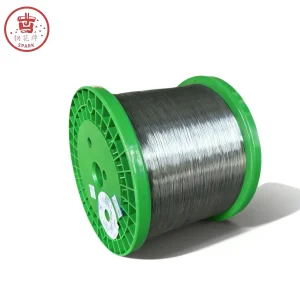
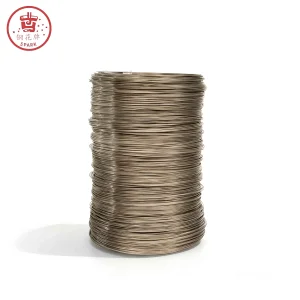
Select from our certified range of high-resistance alloy spools, wound spiral elements, and custom tubular solutions.



Frequently Asked Questions by Industrial Furnace Engineers
Expert answers regarding material selection, surface watt density calculations, oxidation physics, and furnace element troubleshooting.
What fundamental factors govern the selection between FeCrAl and NiCr heating wire?
Selection depends on maximum operating temperature, furnace atmosphere, physical weight considerations, and thermal cycling frequency. FeCrAl is selected for higher temperatures (up to 1425°C), higher electrical resistivity (1.35–1.45 μΩ·m), and lower material density, resulting in lighter elements and superior energy efficiency. NiCr is chosen when post-heating ductility is essential, when the element undergoes intense mechanical vibrations, or when operating in carbonaceous/reducing atmospheres where chromia (Cr2O3) provides better stability than alumina (Al2O3).
How does surface watt density (W/cm²) impact the service life of industrial furnace elements?
Surface watt density defines the power dissipated per square centimeter of element surface area. If the surface watt density is too high, the element's core temperature will drastically exceed the ambient furnace temperature, accelerating oxide breakdown, creep deformation, and burnout. For example, while 0Cr25Al5 can withstand 2.5 to 3.0 W/cm² in clean oxidizing conditions at 1000°C, the maximum allowable load drops below 1.2 W/cm² at 1250°C to ensure multi-year continuous operation.
Why is powder metallurgy (SGHT grade) superior to conventional melt-cast alloys at 1400°C+?
Conventional casting results in coarse grain structures at extreme temperatures, causing elements to stretch, sag, and fail under their own weight (low creep strength). Powder metallurgy (PM) produces an ultra-fine, homogeneous micro-structure with dispersed rare-earth oxide inclusions. This pinches grain boundaries (Zener pinning), preventing high-temperature grain growth and granting SGHT exceptional sag resistance, superior thermal shock resistance, and up to four times longer life in continuous sintering kilns.
What causes "green rot" in Nickel-Chromium alloys and how can it be prevented?
Green rot is a severe form of intergranular attack occurring in NiCr alloys exposed to carburizing atmospheres with low oxygen partial pressure between 800°C and 1050°C. Chromium preferentially precipitates as chromium carbide along grain boundaries, leaving a nickel-rich matrix that undergoes rapid oxidation (forming green nickel oxide). It can be prevented by switching to high-iron alloys, adding silicon, utilizing FeCrAl grades (which form protective alumina scales impervious to carbon penetration), or increasing oxygen levels during furnace idling.
How should custom spiral element coils be pre-oxidized prior to full production loading?
Pre-oxidation creates a thick, resilient, uncompromised passive scale layer before exposing elements to aggressive operational conditions. Coils should be heated in a clean, dry, oil-free atmospheric furnace to approximately 1050°C–1100°C for 8 to 12 hours, then allowed to cool slowly. This establishes a uniform alpha-alumina or chromia coating that seals micro-fissures and substantially enhances resistance to chemical corrosion during production runs.