Featured Industrial Resistance Wire & Heating Elements
Precision-engineered FeCrAl and NiCr heating elements rated for continuous industrial service up to 1425°C.
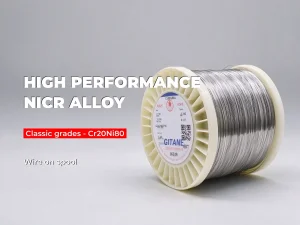
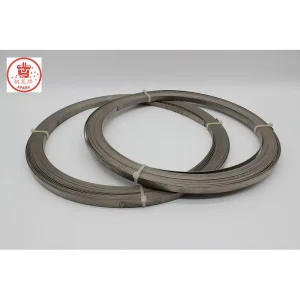
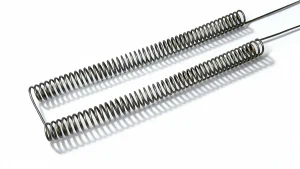
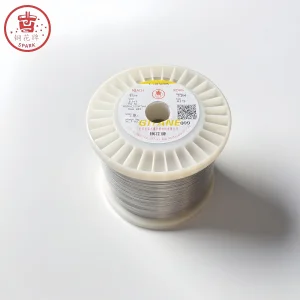
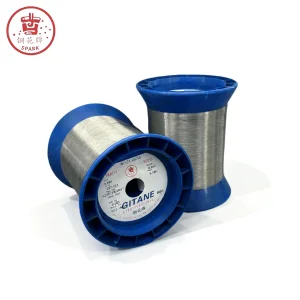
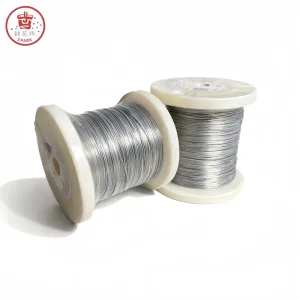
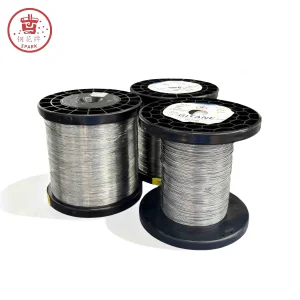
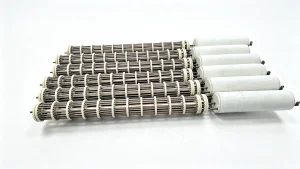
1. Technical Metallurgy & Alloy Classification Architecture
In high-temperature thermal engineering, industrial electric heating wires represent the primary mechanism for electrical-to-thermal energy conversion. Modern industrial heating system procurement demands an in-depth evaluation of solid-state phase dynamics, chemical stability, oxide film formation dynamics, and high-temperature creep resistance. China's leading manufacturing ecosystems—spearheaded by state-grade metallurgical complexes such as Beijing Shougang Gitane New Materials Co., Ltd. (SPARK)—utilize two fundamental alloy families: Ferritic Iron-Chromium-Aluminum (FeCrAl) and Austenitic Nickel-Chromium (NiCr).
1.1 FeCrAl Alloys: Thermodynamics & High-Temperature Passivation
FeCrAl alloys (such as 0Cr25Al5, 0Cr23Al5, 0Cr21Al6Nb, HRE, and SGHYZ) feature a ferritic body-centered cubic (BCC) crystal matrix. The fundamental mechanism enabling FeCrAl alloys to operate at temperatures up to 1425°C is the preferential thermal oxidation of aluminum at the alloy interface. At temperatures exceeding 1000°C, aluminum diffuses rapidly outward to form an ultra-dense, thermodynamically stable, single-phase alpha-alumina (α-Al₂O₃) oxide scale.
This microscopic α-Al₂O₃ protective film acts as a formidable electrical insulator and chemical diffusion barrier, drastically suppressing thermal oxidation rates and resisting sulfur-containing gas erosion. Furthermore, addition of rare-earth elements (Reactive Element Effect - REE) such as Yttrium (Y), Neodymium (Nd), and Zirconium (Zr), alongside Niobium (Nb) micro-alloying in grades like 0Cr21Al6Nb, prevents grain growth at elevated temperatures, anchoring the oxide scale and eliminating spallation during thermal cycling.
1.2 NiCr Alloys: Mechanical Ductility & Cyclic Stability
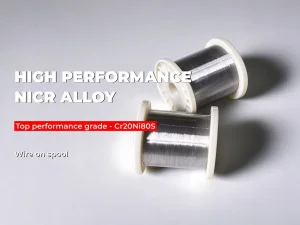
NiCr alloys (such as Cr20Ni80, Cr15Ni60, and Cr30Ni70) possess a face-centered cubic (FCC) austenitic microstructure. The superior operational advantage of NiCr lies in its hot ductility and mechanical integrity post-heating. Unlike FeCrAl alloys, which undergo room-temperature embrittlement following prolonged exposure to temperatures above 950°C due to grain coarsening, NiCr alloys remain ductile throughout their lifecycle.
The surface passivation of NiCr relies on a protective Chromium Oxide (Cr₂O₃) layer mixed with Nickel Oxide (NiO). This oxide film offers excellent resistance to mechanical shock, vibration, and thermal fatigue, making NiCr the ideal technical choice for rapidly cycling heating elements, industrial appliances, and nitrogen/carburizing gas atmospheres.
| Metallurgical Characteristic | FeCrAl Alloys (e.g., 0Cr25Al5, SGHT) | NiCr Alloys (e.g., Cr20Ni80, Cr30Ni70) |
|---|---|---|
| Maximum Service Temp | 1250°C to 1425°C (Ultra-High Temp) | 1150°C to 1250°C |
| Electrical Resistivity (20°C) | 1.35 - 1.45 μΩ·m (Higher thermal efficiency) | 1.09 - 1.18 μΩ·m |
| Alloy Density | 7.10 - 7.25 g/cm³ (~15% lighter weight) | 8.30 - 8.40 g/cm³ |
| Protective Oxide Scale | Alpha-Alumina (α-Al₂O₃) - White/Light Grey | Chromium Oxide (Cr₂O₃) - Dark Green/Black |
| Hot Strength & Creep Resistance | Lower relative creep strength at >1100°C | Superior creep strength & hot yield strength |
| Atmosphere Compatibility | Excellent in Oxidizing, Sulfurous & Carburizing | Excellent in Nitrogen, Ammonia, Reducing & Vacuum |
| Ductility Post-Service | Brittle when cold (Requires care during maintenance) | Highly ductile (Easily re-coiled or repaired) |
2. Metallurgical Technology Roadmap & Next-Gen Outlook
As global industries transition toward carbon-neutral heating, electrical heat treatment processes are replacing fossil-fuel combustion across steel processing, advanced ceramics, microelectronics, and green hydrogen synthesis. This macroeconomic shift places rigorous performance requirements on electric resistance alloys. The tech roadmap for China's premium heating wire sector focuses on three technological breakthroughs:
Powder Metallurgy (PM) Dispersion Strengthening
Traditional ingot melting often suffers from macro-segregation of alloying elements. SPARK's advanced SGHT and SGHYZ ultra-high-temperature series utilize gas atomization powder metallurgy (PM) combined with hot isostatic pressing (HIP). This process creates a nano-dispersion of Yttrium oxide ($Y_2O_3$) and Hafnium carbide ($HfC$) throughout the matrix, increasing high-temperature creep rupture strength by over 300% at 1300°C–1425°C compared to conventional melt wire.
Pre-Oxidation Surface Engineering
Future manufacturing protocols integrate factory-controlled pre-oxidation conditioning. Electric heating wires are exposed to a highly regulated oxygen-partial-pressure atmosphere at 1150°C before packaging. This generates a flawless, pre-formed 2–3 $\mu m$ $\alpha-Al_2O_3$ film. End-users benefit from instant thermal equilibrium, zero outgassing, and protection against early-stage contamination during furnace commissioning.
Sub-Micron Precision Cold Drawing & Tension Control
Next-generation wire drawing machines utilize polycrystalline diamond (PCD) dies coupled with continuous laser micrometers and digital tension feedback. Diameter tolerances are constrained within $\pm 0.005$ mm for fine wires. This ultra-uniform cross-section eliminates local high-resistance hot spots, extending element operational life in high-power industrial furnaces.
3. Macro-Industry Engineering Solutions
Every industrial thermal application features distinct thermodynamic constraints, furnace atmosphere chemistry, and mechanical stress profiles. Custom alloy selection and structural geometry are vital to maximizing energy efficiency and heater longevity.
Semiconductor & Photovoltaic (PV) Crystal Growth
Monocrystalline silicon ingot growth (Czochralski process) and wafer diffusion furnaces require non-contaminating, ultra-pure heating zones operating between 1300°C and 1400°C. SPARK SGHT Powder Metallurgy FeCrAl alloys and 0Cr21Al6Nb are widely specified for radiant heat cores and ceramic bundle rods. Their high oxidation purity prevents trace metal vapor deposition on silicon wafers.
Lithium-Ion Battery Cathode Material Sintering
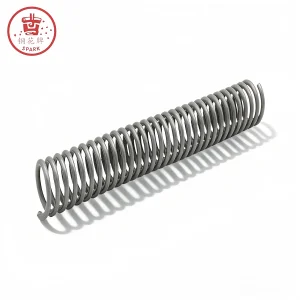
Roller hearth kilns (RHK) for manufacturing Lithium Iron Phosphate (LFP) and Nickel-Manganese-Cobalt (NMC) cathode materials operate under continuous corrosive atmospheres. SPARK HRE and 0Cr25Al5 spiral heating elements resist aggressive lithium outgassing and alkaline vapors, ensuring uniform heat zones across multi-meter kiln channels.
Heavy Metallurgical Heat Treatment & Automotive Forging
Large-scale pit furnaces, continuous carburizing lines, and aluminum melting installations demand heavy-gauge resistance ribbon and meander elements. High-grade Cr20Ni80 and Cr30Ni70 strip and wire maintain structural ductility under severe mechanical loads, enabling easy maintenance and fast turnaround times.
4. China Industry 4.0: Supply Chain Resilience & Shougang Gitane Advantage
Navigating the global industrial procurement landscape requires supply chain reliability, raw material purity control, and rapid order fulfillment. As a core enterprise under the state-owned Shougang Group, Beijing Shougang Gitane New Materials Co., Ltd. operates an integrated 88,000 square-meter production complex in Changping, Beijing, setting the benchmark for industrial alloy supply chain security.
100% Fully Integrated Metallurgy
From vacuum induction melting (VIM) and electro-slag remelting (ESR) to hot rolling, heavy drawing, fine wire drawing, and final spooling—every process step occurs in-house. This zero-outsourcing production model prevents cross-contamination of metals and guarantees absolute batch-to-batch chemical heat stability.
Industry 4.0 Digital Quality Control
Our 39,268 square-meter modern manufacturing workshops feature automated online eddy-current flaw detection, continuous resistance mapping, and real-time laser gauge adjustments. Over 30% of our 500+ workforce consists of dedicated metallurgical engineers and senior technical specialists adhering to digital MES traceability.
Strategic Raw Material Buffer
Backed by Shougang Group’s global supply network, Gitane maintains strategic reserves of high-purity electrolytic nickel, chromium, and rare-earth additions. This buffers global customers against commodity price volatility and guarantees stable factory price quotes with fast production lead times.
5. Global Enterprise Procurement Requirements & Compliance Standards
International original equipment manufacturers (OEMs) and furnace engineering contractors require strict compliance documentation, international testing verification, and customized product packaging. SPARK products comply with both Chinese national standards (GB/T 1234-2012) and international equivalents (ASTM B603, DIN 17470, JIS C2520).
Quality System Certifications
Operating under continuous quality management since obtaining ISO 9002 in 1996 and ISO 9001 in 2003, Gitane products comply with European Union RoHS 2.0 and REACH environmental directives. Every shipment includes comprehensive 3.1 Mill Test Certificates (MTC) stating chemical heat analysis, room-temperature tensile strength, and electrical resistance at 20°C.
Custom Product Forms & Delivery Logistics
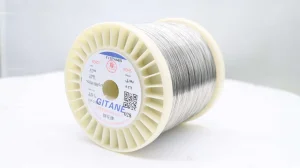
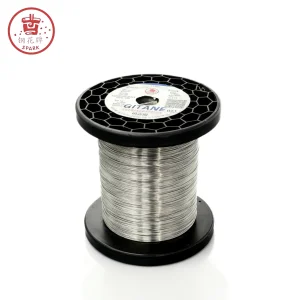
Alloys are delivered across a comprehensive spectrum of form factors: round wire ($\phi 0.05 \text{ mm}$ to $\phi 10.0 \text{ mm}$), cold-rolled ribbon/strip (thickness $0.1 \text{ mm}$ to $4.0 \text{ mm}$, width $5 \text{ mm}$ to $200 \text{ mm}$), pre-wound spiral coils, radiant tube cores, and customized industrial furnace element assemblies. Custom plastic spools, wooden crates, and vacuum-sealed anti-tarnish packaging ensure zero oxidation during ocean freight.
6. Technical FAQ: Sourcing & Engineering Decisions
Direct answers from SPARK metallurgical engineers regarding material selection, quotes, and furnace design optimization.
Complete Product Catalog & Custom Heating Wire Solutions
Explore our complete range of factory-direct resistance wires, strips, furnace heating elements, and industrial furnaces.