
Featured High-Resistivity FeCrAl Ignition Alloy Products
Explore our factory-engineered heating and ignition alloy wires manufactured under strict ISO 9001 quality controls, providing high thermal stability up to 1425°C for global industrial kiln applications.



Metallurgical Architecture: High Resistivity FeCrAl Ignition Alloys for Kilns
Understanding the solid-state chemistry, oxidation dynamics, and electrothermal mechanics that power modern industrial ceramic, glass, and metallurgical kiln ignition systems.
High Electrical Resistivity
FeCrAl alloys exhibit exceptional electrical resistivity ranging from 1.25 to 1.45 μΩ·m at room temperature. This enables rapid thermal conversion during spark ignition cycles, reducing energy consumption while achieving target flash ignition temperatures in milliseconds.
Adherent Al2O3 Oxide Barrier
Upon exposure to high temperatures (>1000°C), FeCrAl forms a self-healing, thermally stable alpha-alumina ($\alpha\text{-Al}_2\text{O}_3$) surface layer. This passive oxide film protects the underlying wire matrix against sulfur attack, carburization, and thermal degradation.
Superior Thermal Limit (1425°C)
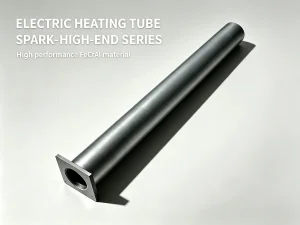
Unlike conventional Nickel-Chromium (NiCr) alloys constrained to ~1200°C service limits, advanced FeCrAl grades such as SGHYZ and SGHT operate reliably at continuous temperatures up to 1400°C–1425°C in continuous tunnel kilns.
Information Gain Analysis: Why Kiln Ignition Requires FeCrAl Over NiCr
In industrial kiln applications, ignition elements are subjected to hostile atmosphere cycling, rapid thermal shocks, and aggressive voltage pulses. Nickel-Chromium alloys tend to form nickel oxides that are susceptible to sulfur poisoning in gas-fired kilns. FeCrAl alloys, engineered with precise additions of Rare Earth (RE) elements like Yttrium (Y), Zirconium (Zr), and Cerium (Ce), lock the alumina scale to the substrate, preventing spallation and extending ignition element service life by up to 300% in heavy-duty kiln combustion chambers.
FeCrAl Alloys vs. Alternative Electrothermal Grade Matrix
Technical comparison parameters governing material selection for industrial kiln ignition systems, resistance heating elements, and high-temperature burner components per GB/T 1234-2012 and international standards.
| Alloy Grade | Chemical Family | Max Temp (°C) | Resistivity (μΩ·m, 20°C) | Density (g/cm³) | Key Ignition Application |
|---|---|---|---|---|---|
| SGHT (Powder Met) | FeCrAl + RE (PM) | 1425°C | 1.45 | 7.10 | Ultra-high temp ceramic kiln igniters & sintering |
| SGHYZ / HRE | FeCrAl + Rare Earth | 1350°C - 1400°C | 1.42 | 7.10 | Heavy industrial furnace coils & burner spark rods |
| 0Cr25Al5 | FeCrAl Standard | 1250°C | 1.42 | 7.10 | General kiln ignition coils, heating elements |
| 0Cr21Al6Nb | FeCrAl + Niobium | 1300°C | 1.45 | 7.15 | High hot-strength kiln ignition wires & pins |
| Cr20Ni80 | NiCr (Nichrome) | 1200°C | 1.09 | 8.40 | Precision low-temp igniter leads, domestic heating |
| Cr30Ni70 | NiCr High Cr | 1250°C | 1.18 | 8.10 | Corrosive atmosphere ignition & heating ribbons |
* Note: Mechanical and electrical values are measured according to standardized laboratory testing protocol GB/T 1234-2012. Custom wire sizes are drawn from 0.05mm to 10.0mm depending on kiln ignition rod specs.
China Factory Engineering Excellence & Production Scale
How Beijing Shougang Gitane New Materials Co., Ltd. leverages state-owned metallurgical background, end-to-end processing, and automated cold-drawing to deliver cost-effective ignition alloy wires globally.
Full-Chain Metallurgical Control
From Vacuum Induction Melting (VIM) and electroslag remelting to hot rolling, hydrogen-protected bright annealing, and ultra-fine diamond wire drawing, every stage occurs under one integrated 88,000 m² facility.
Precise Resistance Tolerances
Automated continuous resistance testing ensures diameter uniformity within ±0.01 mm and resistivity variation below ±3%. This stability prevents localized hot spots that lead to premature ignition pin failure in kilns.
Competitive Pricelist Economics
By integrating primary iron ore refining with alloy processing, Chinese manufacturing delivers up to 35-40% cost efficiency compared to European or domestic US sourcing, without compromising metallurgical purity.
Localized Application Scenarios & Global Sourcing Trends
High Resistivity FeCrAl Ignition Alloys are critical across diverse high-temperature thermal processing industries worldwide.
1. Industrial Ceramic & Porcelain Tunnel Kilns
Continuous ceramic kilns rely on automated gas burners fitted with FeCrAl spark ignition rods. The alloy's resistance to thermal shock prevents cracking during automated firing sequences, maintaining continuous production cycles in major ceramic manufacturing hubs across Asia, Europe, and Latin America.
2. Glass Tempering & Annealing Lehr Systems
Glass lehrs demand precise thermal control and rapid burner ignition without flaking oxide particles that could ruin optical glass surfaces. Bright-annealed 0Cr25Al5 and 0Cr21Al6Nb wires provide clean, spall-free ignition spark performance.
3. Petrochemical & Industrial Gas Flare Igniters
In hazardous environments requiring guaranteed ignition reliability, high-resistivity FeCrAl rods withstand aggressive sulfurized waste gases while delivering instant arc ignition across wide operating ambient ranges.
4. Powder Metallurgy & Lithium Battery Sintering
As global energy transitions drive lithium-ion cathode sintering, ultra-high temperature SGHT and SGHYZ alloys power advanced roller hearth kilns, providing reliable spark and continuous heating up to 1425°C under reducing atmospheres.
Global Procurement Strategy: Pricelist Factors & Technical RFQs
Key considerations for international procurement directors, furnace OEM engineers, and industrial supply managers evaluating China FeCrAl suppliers.
Custom Dimensions & Delivery Forms
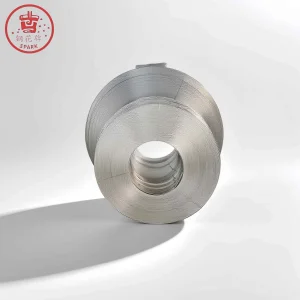
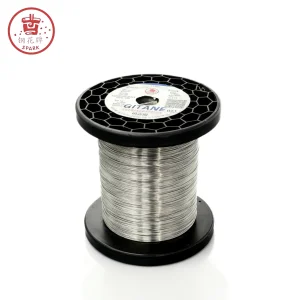
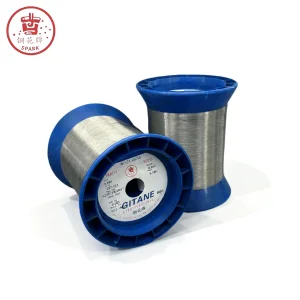
Supplied as round wire (0.05mm - 10mm), flat wire, coiled ribbons, spooled wire (DIN100 to DIN355 spools), or pre-formed ignition spirals ready for burner assembly integration.
Chemical Verification & MTR Compliance
Every shipment includes certified Mill Test Reports (MTR) detailing exact spectrographic elemental percentages, tensile strength, elongation, and 20°C electrical resistance measurements.
Pricelist Transparency & Dynamics
Prices are determined by base metal market indices (Chromium, Aluminum), wire diameter complexity (ultra-fine wire requires multiple drawing passes), heat treatment state, and order volume scale.
Additional Electrothermal & Resistance Alloy Range
Explore our broader portfolio of electrothermal resistance wires, high-temperature NiCr alloys, and industrial kiln heating solutions direct from the manufacturer.




Frequently Asked Questions: Technical & Procurement Intelligence
Addressing technical engineering questions, ordering procedures, quality assurances, and factory pricelist calculations for industrial buyers.
Why is high electrical resistivity essential for industrial kiln ignition alloys?
What is the functional difference between 0Cr25Al5 and 0Cr21Al6Nb for kiln ignition?
How does FeCrAl compare to Nichrome (NiCr) in high-temperature kiln ignition systems?
What factors dictate the direct factory pricelist for FeCrAl ignition alloy wires?
How does Beijing Shougang Gitane ensure consistent resistance along long wire spools?
What certifications and quality documents accompany direct factory shipments?
Can FeCrAl ignition alloys withstand reducing or carbonizing atmospheres in kilns?
Request Engineering Catalog & Direct Factory Quotes
Partner with Beijing Shougang Gitane New Materials Co., Ltd. for reliable FeCrAl ignition wires, custom alloy ribbon sizes, and specialized industrial furnace elements. Contact our technical engineering department for detailed datasheets, custom coil drawings, and tiered OEM pricelists.