Featured Industrial Resistance Wire & Alloys (Catalog 1)
Explore our top-tier precision resistance wires, high-pressure tubes, ceramic fiber plates, and customized industrial heating furnaces engineered for extreme thermal environments up to 1425°C.





Global Market Status & High Resistivity Alloy Demand
As industrial processing pivots toward green electrification, zero-carbon thermal processing, and high-precision thermal management, high resistivity alloy wire stands as the core enabling material across global manufacturing.
Electrification of Industrial Thermal Processes
Global decarbonization mandates are accelerating the replacement of gas-fired burner systems with advanced electric heating elements. Iron-Chromium-Aluminium (FeCrAl) and Nickel-Chromium (NiCr) alloys provide direct Joule heating efficiency approaching 99.5%, offering unmatched temperature control precision up to 1425°C in continuous operation.
Emerging Sector Application Growth
From semiconductor crystal growth furnaces and solar wafer sintering to lithium-ion battery cathode annealing lines, modern high-tech industries rely on specialized high resistivity alloy wire with tight chemical tolerances, exceptionally low creep, and zero contamination risk during high-temperature thermal cycling.
Information Gain & Purchasing Optimization
Procurement managers and thermal design engineers frequently face ambiguity in alloy selection. By matching operating atmospheres, electrical resistivity ($\mu\Omega\cdot\text{m}$), maximum element temperature, and mechanical elongation, buyers can cut thermal element replacement frequency by up to 40% while lowering initial procurement costs.
Metallurgical Classification: FeCrAl vs. NiCr Alloy Families
Detailed comparison of chemical formulations, thermal characteristics, oxide film mechanics, and application suitability per GB/T 1234-2012, ASTM B603, and ASTM B344 standards.
| Alloy Grade | Family Type | Nominal Chemical Composition | Max Element Temp (°C) | Resistivity at 20°C ($\mu\Omega\cdot\text{m}$) | Density ($\text{g/cm}^3$) | Primary Industrial Application |
|---|---|---|---|---|---|---|
| SGHT Powder Metallurgy | FeCrAl + RE | Fe-Balance, Cr 24-26%, Al 6.0-7.5% + Rare Earth | 1425°C | 1.45 | 7.10 | Semiconductor, ceramics sintering, diffusion furnaces |
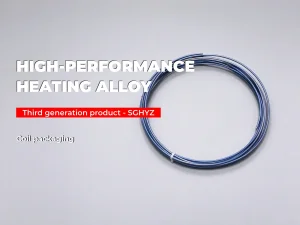
| SPARK SGHYZ | FeCrAl + Nb | Fe-Balance, Cr 21-23%, Al 5.5-6.5% + Niobium | 1400°C | 1.42 | 7.15 | Ultra-high-temp powder metallurgy & industrial kilns |
| 0Cr21Al6Nb | FeCrAl | Fe-Balance, Cr 21-23%, Al 5.0-6.0%, Nb 0.5% | 1350°C | 1.40 | 7.20 | Industrial heating elements, ceramic fiber heaters |
| 0Cr25Al5 | FeCrAl | Fe-Balance, Cr 23-26%, Al 4.5-5.5% | 1250°C | 1.42 | 7.25 | General industrial furnaces, duct heaters, appliances |
| 0Cr23Al5 | FeCrAl | Fe-Balance, Cr 22-24%, Al 4.2-5.2% | 1250°C | 1.35 | 7.25 | Braking resistors, thermal treatment elements |
| Cr20Ni80 / Cr20Ni80S | NiCr | Ni 77-80%, Cr 20-23%, Fe ≤ 1.0% | 1200°C | 1.09 | 8.40 | Medical equipment, precision devices, cycling heaters |
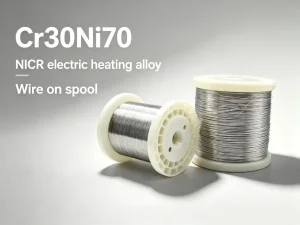
| Cr30Ni70 | NiCr | Ni 67-71%, Cr 28-31%, Fe ≤ 1.0% | 1250°C | 1.18 | 8.10 | Corrosive chemical thermal units, high-performance elements |
| Cr15Ni60 | NiCr | Ni 55-61%, Cr 15-18%, Fe Balance | 1150°C | 1.11 | 8.20 | Domestic appliances, industrial control rheostats |
| Cr20Ni40 | NiCr-Fe | Ni 34-37%, Cr 18-21%, Fe Balance | 1100°C | 1.04 | 8.35 | Low-temperature heating equipment, night storage heaters |
Deep Metallurgical Mechanism Analysis
FeCrAl Alloy Kinetics: Iron-Chromium-Aluminium alloys form a dense, continuous protective scale of alpha-alumina ($\alpha\text{-Al}_2\text{O}_3$) at elevated temperatures exceeding 1000°C. This oxide scale acts as an exceptional electrical insulator and thermal diffusion barrier, protecting the inner alloy core against further oxidation, carburization, and sulfur attack. Furthermore, FeCrAl exhibits a higher electrical resistivity (up to 1.45 $\mu\Omega\cdot\text{m}$) and approximately 15% lower specific gravity than NiCr alloys, enabling substantial material weight savings.
NiCr Alloy Kinetics: Nickel-Chromium alloys form a tenacious chromia oxide film ($\text{Cr}_2\text{O}_3$). While the maximum service temperature of NiCr is slightly lower than advanced FeCrAl (1200°C vs 1425°C), NiCr maintains superior hot mechanical strength, minimal deformation creep, non-magnetic properties, and excellent cold ductility after prolonged exposure. NiCr is highly recommended for equipment subject to frequent rapid thermal cycling or mechanical vibration.
China High Resistivity Alloy Wire Pricelist & Cost Analysis (2025-2026)
Factory-direct wholesale pricing guide, minimum order quantities (MOQ), wire gauge cost variances, and key raw material price drivers influencing international buyer procurement budgets.
| Alloy Grade / Specification | Diameter Range (mm) | Packaging Form | MOQ (kg) | Estimated Price Range (USD/kg) | Lead Time (Days) |
|---|---|---|---|---|---|
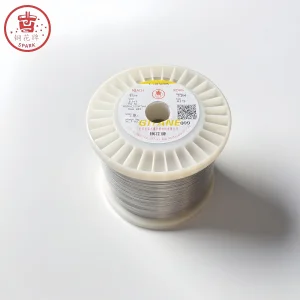
| 0Cr25Al5 Standard Wire | 0.50mm – 6.00mm | DIN200 Spool / Coil | 50 kg | $4.80 – $7.50 / kg | 7 – 10 Days |
| 0Cr23Al5 Precision Ribbon/Strip | Thk: 0.1–3.0mm, Wth: 5–50mm | Coil / Wooden Case | 100 kg | $5.20 – $8.20 / kg | 10 – 14 Days |
| 0Cr21Al6Nb Micro Wire | 0.08mm – 0.45mm | ABS Spool / Vacuum Pack | 20 kg | $9.50 – $16.00 / kg | 12 – 15 Days |
| SPARK SGHYZ (1400°C Ultra-Grade) | 1.00mm – 10.00mm | Coil / Heavy Duty Spool | 50 kg | $12.00 – $22.00 / kg | 14 – 20 Days |
| SGHT Powder Metallurgy Wire | 2.00mm – 8.00mm | Custom Coiled Bundle | 25 kg | $28.00 – $45.00 / kg | 20 – 25 Days |
| Cr20Ni80 High-Purity Wire | 0.50mm – 8.00mm | DIN250 Spool / Coil | 30 kg | $21.00 – $29.00 / kg | 7 – 12 Days |
| Cr30Ni70 Premium Nichrome Wire | 0.30mm – 5.00mm | Spool / Plastic Reel | 25 kg | $26.00 – $36.00 / kg | 10 – 15 Days |
| Cr15Ni60 Domestic/Industrial Wire | 0.40mm – 7.00mm | Coil / Spool | 50 kg | $15.50 – $21.00 / kg | 7 – 10 Days |
1. Raw Material Index Sourcing Dynamic
NiCr alloy pricing is strongly index-linked to LME Nickel market quotes and Ferro-chrome spot rates. FeCrAl pricing is dramatically more stable, making FeCrAl an economically ideal selection for large-scale industrial furnace installations requiring long-term budget predictability.
2. Diameter & Cold-Drawing Processing Surcharges
Micro-wires ($\le 0.10\text{ mm}$) incur higher cold-drawing die passes, intermediate bright annealing heat treatments, and laser inspection costs. Heavy rod sizes ($\ge 8.0\text{ mm}$) benefit from lower processing surcharges per kilogram.
3. Custom Fabrication & Surface Finishes
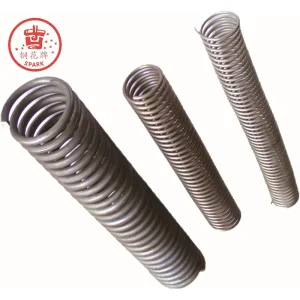
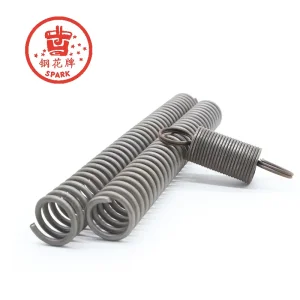
Special surface treatments including oxidized golden finish, pickled matte finish, hydrogen-annealed bright finish, or pre-wound spiral coil elements are quoted upon engineering drawing submission.
China Manufacturing Supply Chain Resilience & Capacity
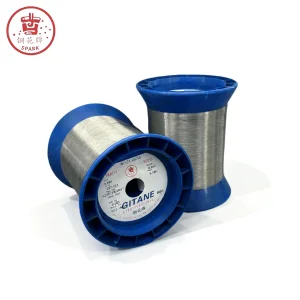
Inside Beijing Shougang Gitane New Materials: Full-cycle metallurgical integration from melting to finished spool wire, delivering unrivaled quality control and rapid lead times globally.
Vertical Metallurgical Integration
Our facility features Vacuum Induction Melting (VIM), Electroslag Remelting (ESR), precision hot rolling, continuous wire rod drawing, and protective atmosphere bright annealing lines. Complete in-house control guarantees zero cross-batch chemical variance.
Rigorous Quality Management System
Certified to ISO9001 quality management since 2003. Every production lot undergoes spectral chemical analysis, room and elevated temperature tensile testing, electrical resistance variation testing, and 50-hour accelerated high-temperature life tests.
Global Export Logistics Efficiency
Located in Shahe, Changping District, Beijing, with streamlined access to Tianjin Port and Beijing Capital Airport. We provide seaworthy export packaging, moisture-barrier vacuum foil wrapping, and custom fumigated wooden crating.
Engineering Implementations & Application Scenarios
How leading global industrial OEM manufacturers integrate SPARK high resistivity alloy wire across mission-critical thermal processing environments.
1. Semiconductor & Solar Wafer Processing
High-purity SGHT and SGHYZ FeCrAl wire elements are specified in horizontal and vertical diffusion furnaces running up to 1350°C. Zero heavy-metal vapor emission protects silicon wafers against contamination during oxidation and annealing cycles.
2. Automotive Automotive Heat Treatment
0Cr25Al5 heavy strip and wound spiral heating wire power continuous mesh belt carburizing and quenching lines for automotive drive shafts, gears, and engine components, delivering long lifetime under high thermal shock.
3. Lithium Battery Cathode Sintering
Roller hearth kilns (RHK) utilized in lithium iron phosphate ($\text{LiFePO}_4$) and NCM cathode synthesis deploy SPARK 0Cr21Al6Nb elements to withstand aggressive chemical vapors and continuous $24/7$ kiln operation.
4. Petrochemical & Heat Exchanger Units
Seamless high-pressure heat exchanger steel tubing (such as St35.8 DIN17175 / ASTM A179) paired with external high resistivity heating jackets maintain precise viscosity temperature control in petrochemical refining pipelines.
5. High-Precision Laboratory Equipment
Micro-diameter Cr20Ni80 and Cr20Ni80S wires provide ultra-stable resistance tolerance ($\pm 2\%$) for analytical instrumentation, laboratory muffle furnaces, medical sterilizers, and thermal sensors.
R&D Technology Roadmap & Future Outlook
Advancing metallurgy through powder metallurgy dispersion strengthening, rare-earth grain boundary engineering, and zero-carbon thermal processing.
Phase 1: Rare-Earth Micro-Alloying (RE Tech)
By controlling micro-additions of Yttrium (Y), Cerium (Ce), Lanthanum (La), and Zirconium (Zr), SPARK engineers have enhanced oxide layer adhesion by 300%. The reactive element effect key-locks the protective $\alpha\text{-Al}_2\text{O}_3$ skin to the substrate alloy, preventing scale spallation during rapid thermal shock.
Phase 2: Powder Metallurgy (PM) Dispersion Strengthening
Traditional cast FeCrAl alloys suffer from grain coarsening and sag deformation above 1300°C. Our PM SGHT technology introduces fine oxide dispersion particles throughout the matrix, suppressing grain boundary sliding and boosting high-temperature creep strength by over 400% at 1400°C.
Phase 3: Smart Thermal Digital Twin Design
Leveraging AI-assisted thermal simulation models, we assist industrial furnace builder clients in calculating optimal surface load power density ($W/\text{cm}^2$), element pitch-to-diameter ratios ($b/d$), and projected service lifetime before winding single coils.
Compliance, Quality Assurance & Local Technical Support
Complete documentation, international standard compliance, and end-to-end engineering support for B2B procurement officers.
International Standard Compliance
All SPARK high resistivity alloy wire products strictly adhere to standard specifications: China National Standard GB/T 1234-2012, American Standards ASTM B603 (FeCrAl) & ASTM B344 (NiCr), and German Standard DIN 17470. Fully compliant with EU RoHS & REACH environmental regulations.
Traceable Mill Test Certificates (MTC 3.1)
Every export order is accompanied by an official EN 10204 3.1 Mill Test Certificate detailing direct spectral heat analysis, room temperature tensile strength, percentage elongation, dimensional gauge tolerance, and ambient electrical resistivity values.
Engineering Field & Remote Design Support
Our metallurgical team provides comprehensive guidance on element wire length calculation, transformer voltage matching, furnace atmosphere compatibility (Air, $\text{N}_2$, $\text{H}_2$, Ammonia dissociating gas, Vacuum), and furnace element replacement retrofits.
Technical FAQ: High Resistivity Alloy Wire Sourcing
Answers to essential technical questions asked by furnace designers, electrical engineers, and global procurement managers.
1. How do I calculate the required wire diameter for a specific furnace heat output?
Wire gauge selection depends on available supply voltage ($V$), desired power rating ($P$), operating temperature, and maximum allowable surface load power density ($W, \text{W/cm}^2$). First, compute furnace resistance $R = V^2 / P$. Next, using the alloy's high-temperature resistivity factor $C_t$ ($R_t = R_{20} \times C_t$), determine the physical length and cross-sectional area of the wire to ensure surface load ($W$) stays within safe parameters (typically $1.2 – 2.5 \text{ W/cm}^2$ for FeCrAl in industrial air furnaces).
2. Should I choose FeCrAl or NiCr wire for carburizing or nitrogen atmospheres?
In carburizing (carbon-rich) atmospheres, FeCrAl is generally superior due to its impermeable $\alpha\text{-Al}_2\text{O}_3$ scale, which resists carbon penetration and "green rot" deterioration better than NiCr. However, in pure nitrogen or ammonia-dissociated atmospheres, FeCrAl can form aluminium nitrides ($\text{AlN}$) which embrittle the wire; under such nitrogen-heavy conditions, specialized NiCr alloys (e.g., Cr30Ni70 or Cr20Ni80) are strongly recommended.
3. Why does FeCrAl wire become brittle after its first high-temperature operation?
When FeCrAl wire is heated above 900°C–1000°C, crystal grains grow rapidly, transforming the microstructure into a coarse ferritic state. Upon cooling back to room temperature, the wire exhibits reduced ductility. This is normal metallurgical behavior. While in service, elements should not be bent cold. If repairs or adjustments are necessary, the wire should be gently heated with a torch until dull red before reshaping. Alternatively, specify SPARK SGHT powder metallurgy wire for superior ductility retention.
4. What is the typical life expectancy of SPARK 0Cr25Al5 heating wire?
Under continuous operation at 1150°C in clean air with appropriate surface loading ($1.5 \text{ W/cm}^2$), SPARK 0Cr25Al5 elements regularly exceed 8,000 – 12,000 operational hours. Service life depends heavily on thermal cycle frequency, atmosphere purity, chemical contaminants (e.g., flux vapors, sulfur, heavy metals), and physical support alignment inside the furnace chamber.
5. What custom forms, spooling, and delivery options are available?
We provide round wire ($0.05\text{mm} – 12.0\text{mm}$), flat ribbon/strip ($0.1\times 1.0\text{mm} – 4.0\times 100\text{mm}$), pre-wound spiral heating coils, zig-zag wavy elements, and straight rod elements. Packaging options include DIN125, DIN200, DIN250 plastic spools, vacuum-sealed coils, and fumigated export wooden crates.
Complete Resistance Wire & Alloy Solutions (Catalog 2)
Explore our full line of direct factory-supplied FeCrAl, NiCr, SGHT, and SGHYZ high-temperature resistance alloy wires, ready for global shipping.