
High-Performance Electric Heating Elements & Wires
Direct-from-factory certified resistance heating alloys engineered for glass tempering furnaces, annealing lehrs, and high-temp glass processing lines.
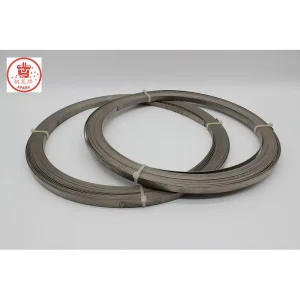
China High-Quality 2.00mm 0Cr25Al5 Heating Wire from China Suppliers | Factory Wholesale with ISO9001:2005 Manufacturers, Factory
Explore Specifications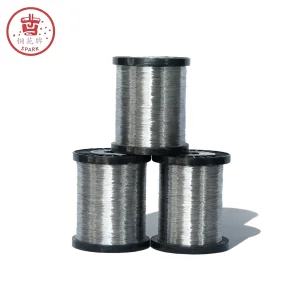
Wholesale China 0Cr25Al5 Electric Heating Wire - High-Performance Resistance Wire from Leading Suppliers & Factory Manufacturer, Factory
Explore Specifications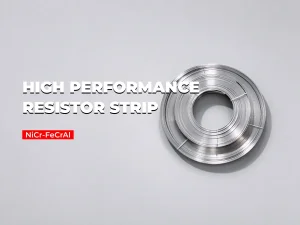
China FeCrAl & NiCr Resistance Strips | High Temperature Industrial Heating Ribbons Pricelist, Quotes
Explore Specifications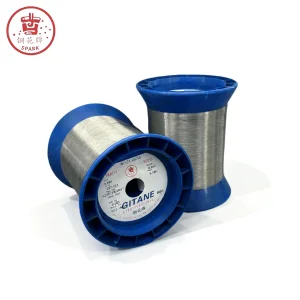
China High-Temperature 0Cr21Al6Nb Electric Heating Wire - China Suppliers & Factory for Superior Heat Resistance Manufacturers, Factories
Explore Specifications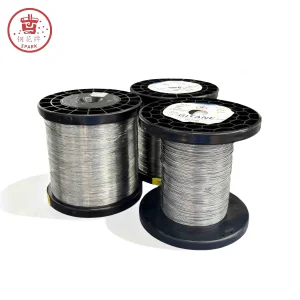
Wholesale Ultra-High Temperature Electric Heating Wire SGHT from China Suppliers | Premium Factory Manufacturing Manufacturer, Factories
Explore Specifications
China High-Quality Electric Heating Tubes from China Factory - Leading Suppliers for Efficient Heating Solutions Manufacturer, Factory
Explore Specifications
China China Suppliers HRE High Temperature Electric Heating Wire - 1350℃ Alloy Resistance Wire from Factory Factory, Quotes
Explore Specifications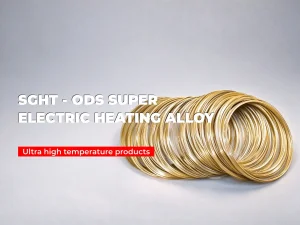
China SGHT Powder Metallurgy FeCrAl Heating Wire | 1425°C Ultra High Temperature Suppliers, Quotes
Explore SpecificationsElectrification of Glass Manufacturing: Global Industry Landscape
Transitioning from direct fossil combustion to high-efficiency electro-thermal heating systems across continuous glass processing environments.
Industrial Decarbonization Pressures
The global glass manufacturing sector accounts for substantial thermal energy consumption. Under tight net-zero regulations (such as the EU Emissions Trading System and US DOE Clean Industrial Technology initiatives), glass producers are aggressively adopting hybrid electric furnaces and full-electric forehearth heating systems, driving global demand for ultra-durable heating alloys.
TCO & Energy Productivity Optimizations
Electric heating achieves upwards of 90% thermal efficiency compared to ~35-45% in conventional gas-fired furnaces. By utilizing specialized FeCrAl (Iron-Chromium-Aluminium) and NiCr (Nickel-Chromium) elements, plant operators eliminate localized hot spots, reduce stack losses, and cut annual power costs per ton of glass melted or processed.
Modern Glass Processing Tech Demands
High-end glass products—such as ultrathin solar photovoltaic cover glass, automotive smart electrochromic glass, and pharmaceutical neutral borosilicate tubing—require precise zone-controlled thermal gradients. Precision electric heating elements manufactured in China provide the tight tolerances needed for modern production lines.
Material Science: FeCrAl vs. NiCr Alloys in Glass Thermal Processing
Selecting the optimal crystal structure, chemical formulation, and oxide skin dynamics for severe glass furnace micro-environments.
FeCrAl Alloys (Iron-Chromium-Aluminium)
Core Metallurgy: Grades like 0Cr25Al5, 0Cr21Al6Nb, HRE, and SGHYZ form a continuous, dense, slow-growing layer of alpha-alumina ($\alpha\text{-Al}_2\text{O}_3$) when heated above 900°C. This oxide scale acts as an exceptional electrical insulator and chemical barrier against aggressive glass vapors.
- Max Temperature: 1250°C to 1425°C continuous rating.
- Resistivity Advantage: High electrical resistivity (~1.45 $\mu\Omega\cdot\text{m}$) allows thicker wire cross-sections, prolonging element lifespan.
- Density Benefit: ~15% lighter than NiCr alloys, delivering greater linear meterage per kilogram.
NiCr Alloys (Nickel-Chromium)
Core Metallurgy: Grades such as Cr20Ni80 and Cr30Ni70 rely on a chromic oxide ($\text{Cr}_2\text{O}_3$) scale. NiCr alloys retain superior hot strength and high ductility after prolonged high-temperature exposure, resisting thermal shock embrittlement.
- Max Temperature: Rated up to 1200°C–1250°C.
- Mechanical Stability: Exceptional resistance to sagging and creep during rapid thermal cycling or mechanical vibration.
- Corrosion Performance: Excellent stability in nitrogen and moist air atmospheres; non-magnetic characteristics ideal for high-frequency equipment.
Technical Insight: Powder Metallurgy (APM/SGHT) Revolution
| Alloy Grade | Alloy System | Max Temp (°C) | Resistivity at 20°C ($\mu\Omega\cdot\text{m}$) | Primary Oxide Layer | Recommended Glass Industry Application |
|---|---|---|---|---|---|
| SGHT (PM) | FeCrAl (Powder Met) | 1425°C | 1.45 ± 0.05 | $\alpha\text{-Al}_2\text{O}_3$ (ODS) | High-temp glass melting, ceramic fiber plates, laboratory kilns |
| SGHYZ / HRE | FeCrAl + Rare Earth | 1350°C - 1400°C | 1.42 ± 0.05 | Dense $\text{Al}_2\text{O}_3$ Scale | Glass tempering furnace zones, forehearth radiant heaters |
| 0Cr21Al6Nb | FeCrAl + Niobium | 1350°C | 1.40 ± 0.04 | $\text{Al}_2\text{O}_3$ + Nb Stabilized | Float glass tin bath roof heating, bending furnace elements |
| 0Cr25Al5 | Standard FeCrAl | 1250°C | 1.42 ± 0.04 | Standard $\text{Al}_2\text{O}_3$ | Annealing lehrs, glass bottle heat-treatment channels |
| Cr20Ni80 | 80/20 Nichrome | 1200°C | 1.09 ± 0.03 | $\text{Cr}_2\text{O}_3$ protective layer | Precision glass mold heating, fast-cycle tempering, heating tubes |
Glass Manufacturing Application Scenarios
Custom-engineered thermal solutions optimized for every stage of industrial glass production.
1. Glass Tempering Furnaces (SG140 & SGHYZ Wire)
Glass tempering lines require fast thermal response and tight temperature cross-uniformity across large heating chambers. Pre-coiled heavy gauge spiral heating elements (made from SG140 alloy) resist sag during intense horizontal radiation duty, maintaining physical integrity over tens of thousands of thermal cycles.
2. Float Glass Tin Bath Roof Heating
In flat glass float processes, the roof above the molten tin bath utilizes suspended heavy-section FeCrAl resistance strips (0Cr21Al6Nb / 0Cr25Al5 ribbons). These elements maintain precise thermal profiles across the ribbon width, with low volatility prevent contamination of the optical surface.
3. Glass Container Annealing Lehrs
Bottle and container glass annealing lehrs operate continuously under high production throughput. Alumina ceramic fiber embedded heating plates and tubular sheath heaters ensure uniform cooling ramps to eliminate internal stress without risk of thermal fracture.
4. Automotive Bending & Lamination
Complex curved windshields and sunroofs require localized zone heating. High-precision Cr20Ni80 Nichrome ribbons and coiled elements provide rapid heat control for complex mold geometries.
5. Optical & Special Borosilicate Glass
For high-purity laboratory glass melting, zero-emissivity powder metallurgy SGHT heating wire operates up to 1425°C without flaking micro-particles into sensitive melts.
6. Forehearth Electric Boosting Heaters
Immersion elements and overhead radiant heating modules engineered for glass forehearth conditioning channels ensure precise viscosity control prior to gob formation.
China Glass Manufacturing Heater Pricelist & Cost Factors Guide
Understanding wholesale price metrics, raw material indexing, direct factory manufacturing economics, and custom fabrication surcharges.
Key Pricing Cost Drivers
Industrial glass heater pricing depends on several metallurgical and manufacturing variables:
- Raw Alloy Market Value: Nickel price fluctuations on the LME heavily impact NiCr grades (Cr20Ni80), making FeCrAl (0Cr25Al5) a more price-stable choice for large-scale installations.
- Wire Diameter & Strip Dimensions: Fine gauge wires (<0.5mm) require extensive cold drawing and intermediate bright annealing passes, increasing labor costs per kilogram compared to heavy rod/wire (>3.0mm).
- Manufacturing Processing: Standard spooled wire carries lower cost than pre-formed, coil-stretched, or ceramic-encapsulated heating elements requiring manual assembly.
- Metallurgical Purity Tier: Vacuum Induction Melting (VIM) and Powder Metallurgy (SGHT) process routes require advanced capital equipment, yielding premium operational longevity.
Standard Factory Pricelist Benchmark (Indicative Volume Basis)
*Prices are subject to metal market fluctuations & order volume specs. Contact sales for live quotes.
| Category | Grade / Form | Est. Factory Price Range (USD/kg) |
|---|---|---|
| Standard FeCrAl Wire | 0Cr25Al5 (Ø 2.0mm - 6.0mm) | $6.50 – $11.80 / kg |
| High-Temp FeCrAl Wire | 0Cr21Al6Nb / HRE (Ø 1.5mm - 5.0mm) | $9.80 – $16.50 / kg |
| Powder Met Alloy | SGHT / SGHYZ (Ultra-High Temp) | $22.00 – $38.00 / kg |
| Nichrome Wire | Cr20Ni80 / Cr30Ni70 | $28.50 – $45.00 / kg |
| Pre-Formed Elements | Spiral Coils / Ceramic Plates | Custom Quote / Drawing |
Localization Support, Quality Assurance & ISO Manufacturing
Ensuring compliance with international standards, backed by Shougang Gitane's rigorous testing facility.
ISO 9001 & GB/T 1234-2012 Certified
Our manufacturing facility operates strictly under ISO 9001 quality management systems. All industrial heating alloys strictly conform to National Standard GB/T 1234-2012, as well as ASTM B603 and DIN 17470 specifications.
Full Mill Test Traceability (MTC)
Every shipment is accompanied by detailed Mill Test Certificates (MTC), including spectrographic chemical composition breakdown, room-temperature resistance testing, oxidation lifetime tests, and tensile strength validation.
Global Engineering & Export Support
We deliver direct engineering consultation for OEM glass machinery manufacturers across Europe, North America, Southeast Asia, and the Middle East—providing thermal balance calculations, surface load guidance, and custom packaging for long-distance sea transit.
Frequently Asked Questions: Glass Industry Heating Alloys
In-depth technical answers addressing alloy selection, surface loading, installation best practices, and maintenance.
Why is FeCrAl preferred over NiCr in continuous glass tempering furnaces?
What is maximum surface loading ($W/\text{cm}^2$) for glass furnace heating elements?
How does Shougang Gitane's powder metallurgy SGHT alloy prevent element sag?
Can I substitute 0Cr25Al5 for Cr20Ni80 in existing glass annealing lehrs?
What delivery forms are available from your China manufacturing facility?
How are pre-formed spiral elements packed for international sea freight?
What causes flaking of protective oxide layers, and how can it be avoided?
How do I request a formal factory pricelist quote for bulk procurement?
High-Temperature Glass Furnace Heating Elements & Assemblies
Complete product range of specialized resistance elements, furnace ribbons, and heating plates for commercial glass factories.
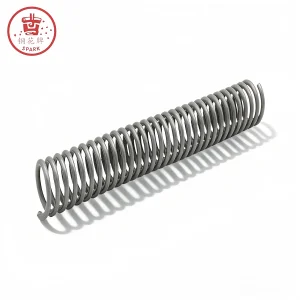
Wholesale High-Quality NiCr & FeCrAl Electric Heating Elements from China Suppliers | Shougang Gitane Factory Supplier, Pricelist
Explore Specifications
China Spiral Type Electric Heating Element from China Suppliers - High-Quality Factory Manufacturing for Efficient Heating Factories, Pricelist
Explore Specifications
Wholesale SG140 Alloy for Tempering Furnace - High-Performance Heating Wire from China Suppliers and Factory Factories, Quotes
Explore Specifications
Wholesale Cr20Ni40 Nickel Chrome Heating Wire - High-Temperature Resistance Alloy from China Suppliers & Factory Manufacturer, Factories
Explore Specifications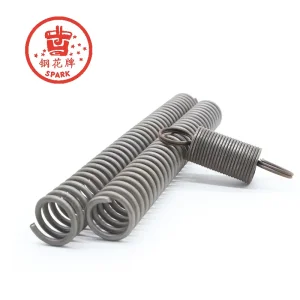
China Hot sale China Alumina Ceramic Fiber Resistance Wire Heating Plate Factory, Quotes
Explore Specifications
Wholesale China Cr20Ni80 Electric Heating Wire - High-Temperature Resistance Wire from Reliable Suppliers & Factory Suppliers, Factory
Explore Specifications
China SPARK 0Cr21Al6Nb Electric Heating Wire - High-Temperature Alloy from China Suppliers and Factory Supplier, Suppliers
Explore Specifications
China China SPARK Cr20Ni80 Electric Heating Wire Resistance Wire Suppliers Factory High Temperature 1200℃ Oxidation Resistant Suppliers, Quotes
Explore Specifications