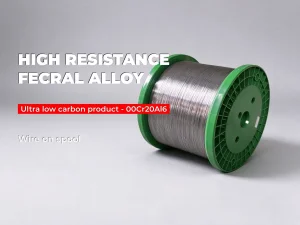
Featured FeCrAl & Resistance Heating Alloys
Direct factory supply of precision-engineered high-temperature resistance wires, strips, and coiled elements. Verified batch-to-batch chemical stability and extended oxidation life.
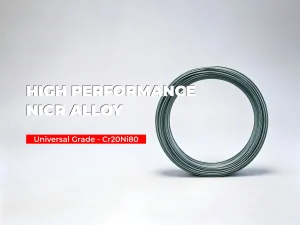
China Cr20Ni80 Nickel Chromium Heating Wire Suppliers | Factory Direct 80/20 NiCr

Wholesale China 0Cr25Al5 Electric Heating Wire - High-Performance Resistance Wire

China Suppliers Factory Price 2.00mm 0Cr25Al5 Heating Elements ISO9001 Certified
China Suppliers High Quality 2.00mm 0Cr25Al5 Bare Heating Wire ISO9001 Direct

China High-Quality Electric Heating Tubes: Efficient Industrial Thermal Solutions

Wholesale China Cr30Ni70 High Temperature Alloy Wire Suppliers - Durable 50H @ High Temp
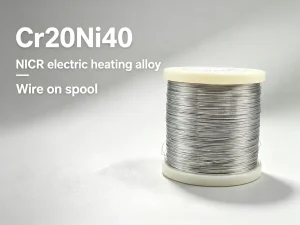
Wholesale China Cr20Ni40 Nickel Chrome Heating Wire High-Temperature Resistant Alloy
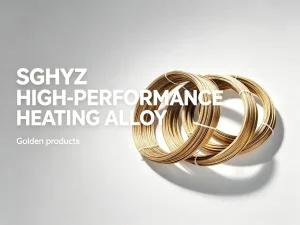
China High-Performance FeCrAl Heating Alloy Wire - 1400°C Grade Factory Pricelist
1. Executive Summary & Metallurgical Foundations of FeCrAl Alloys
Understanding the science behind high-temperature Iron-Chromium-Aluminum (FeCrAl) resistance alloys and their distinct advantages over Nickel-Chromium (NiCr) systems in heavy industrial applications.
Alpha-Alumina Oxide Scale Mechanism
FeCrAl alloys owe their superior operating limit (up to 1425°C) to the formation of a dense, thermodynamically stable, and self-healing alpha-alumina ($\alpha\text{-Al}_2\text{O}_3$) passivation film. Unlike chromium oxide ($\text{Cr}_2\text{O}_3$) scales found in NiCr alloys which volatile above 1200°C, the $\alpha\text{-Al}_2\text{O}_3$ scale provides exceptional electrical insulation and impedes inward oxygen diffusion, dramatically extending element longevity under continuous thermal stress.
High Electric Resistivity ($1.30–1.45 \ \mu\Omega\cdot\text{m}$)
FeCrAl exhibits an electric resistivity significantly higher than that of NiCr alloys ($1.09 \ \mu\Omega\cdot\text{m}$). High resistivity enables system designers to utilize thicker wire cross-sections for the same resistance, providing enhanced mechanical stability, superior resistance to sag at elevated temperatures, and a substantial increase in cross-sectional surface area dedicated to radiant heat output.
Lower Density & Raw Material Economy
With a mass density of approximately $7.10 \ \text{g/cm}^3$ compared to $8.40 \ \text{g/cm}^3$ for NiCr, FeCrAl yields approximately 15% to 18% more length per unit weight. Combined with the absence of expensive nickel price volatility, FeCrAl represents the most cost-effective solution for high-power industrial heat processing infrastructure.
Standard commercial FeCrAl alloys can experience rapid grain growth at temperatures exceeding 1100°C, leading to room-temperature embrittlement post-heating. Advanced Chinese manufacturing processes integrate rare-earth micro-additions—specifically Yttrium (Y), Neodymium (Nd), and Niobium (Nb)—to pin grain boundaries via reactive element oxide dispersions. Grades such as 0Cr21Al6Nb and SGHYZ (1400°C) maintain structural integrity and minimize high-temperature creep sag, doubling service life in continuous tunnel kilns and high-load heat-treatment setups.
2. Global Market Dynamics & Procurement Demand Vectors
Strategic procurement analysis for industrial purchasing directors, engineering managers, and furnace OEMs across Europe, North America, and the Asia-Pacific region.
Macro Industrial Transformation Vectors
The global push toward industrial decarbonization is accelerating the transition from fossil-gas combustion furnaces to clean electrical resistance heating. Strategic sectors driving volume procurement for FeCrAl heating wire include:
- Lithium Battery Cathode Production: Roller Hearth Kilns (RHK) requiring ultra-uniform thermal profiles up to 1250°C under strict atmospheric conditions.
- Photovoltaic & Semiconductor Manufacturing: Single-crystal silicon ingot growing furnaces and diffusion tubes demanding low-outgassing, ultra-pure FeCrAl wire (e.g., SGHT grade).
- Automotive Heat Treatment: Continuous carburizing, annealing, and hardening furnaces retrofitting gas burner tubes with radiant electric heating elements.
- Advanced Engineering Ceramics: Silicon Nitride ($Si_3N_4$) and Zirconia sintering units requiring stable heating above 1350°C.
Procurement TCO (Total Cost of Ownership) Criteria
When evaluating Chinese FeCrAl heating wire manufacturers, global procurement engineers assess far more than the initial FOB price per kilogram. Total Cost of Ownership encompasses thermal watt density limits, operational downtime frequency, and element replacement speed:
- Surface Loading Capacity ($W/cm^2$): Premium Chinese FeCrAl grades support higher watt density, allowing smaller furnace footprints without element burn-out.
- Batch Resistance Consistency: Precise cold-resistance tolerance ($\pm 3\%$) ensures balanced 3-phase electrical loads, preventing hot spots and breaker tripping.
- Coil Ductility & Fabrication Speed: Consistent annealing processes guarantee easy coiling and zero wire cracking during automated element winding.
3. FeCrAl Grade Comparison Matrix & Wholesale Pricelist Benchmarks
Engineering specification guide and budget price ranges for major Chinese FeCrAl alloy wire grades produced according to GB/T 1234-2012 and international equivalents.
| Alloy Grade | Max Temp (°C) | Resistivity ($\mu\Omega\cdot\text{m}$) | Density ($\text{g/cm}^3$) | Chemical Comp. (%) | Key Industrial Application | Est. Wholesale Price (USD/kg) |
|---|---|---|---|---|---|---|
| 0Cr25Al5 | 1250°C | 1.42 | 7.10 | Cr: 23-26, Al: 4.5-5.5, Fe: Bal. | Industrial furnaces, domestic heaters, radiant tubes | $4.80 – $7.50 |
| 0Cr23Al5 | 1250°C | 1.35 | 7.25 | Cr: 21-24, Al: 4.2-5.3, Fe: Bal. | Heat treatment elements, plastic sealing, brake resistors | $4.20 – $6.80 |
| 0Cr21Al6 | 1300°C | 1.45 | 7.10 | Cr: 21-23, Al: 5.5-6.5, Fe: Bal. | High-load continuous furnaces, ceramic kilns | $5.50 – $8.20 |
| 0Cr21Al6Nb | 1350°C | 1.45 | 7.10 | Cr: 21-23, Al: 5.5-6.5, Nb: 0.5, Fe: Bal. | High-temperature industrial kilns, lithium battery RHK | $6.80 – $10.50 |
| 0Cr27Al7Mo2 | 1400°C | 1.53 | 7.10 | Cr: 26-28, Al: 6.0-7.5, Mo: 2.0, Fe: Bal. | Diffusion furnaces, fast thermal processing (RTP) | $12.00 – $18.50 |
| SGHYZ / HRE | 1400°C | 1.45 | 7.10 | Rare Earth Micro-Alloyed FeCrAl | Heavy ceramic kilns, powder metallurgy, crystal growth | $11.50 – $16.00 |
| SGHT (PM Grade) | 1425°C | 1.45 | 7.10 | Powder Metallurgy Dispersion Alloy | Ultra-high temp laboratory kilns, semiconductor processing | $22.00 – $35.00 |
*Note: Pricing depends heavily on order wire diameter (fine wires < 0.1mm command higher manufacturing labor cost), spooling specs, surface coating (oxidized/bright), and volume tier. Contact sales engineering for exact project quotes.
4. Macro Industry Solutions & Thermal Design Engineering
Translating physical alloy properties into high-performance industrial furnace thermal systems. Critical engineering formulas and atmospheric considerations.
Surface Load Calculation & Thermal Life
The single most critical variable governing FeCrAl element life is Surface Loading ($W/cm^2$)—the electrical power dissipated per unit area of wire surface. Operating at excessive watt density accelerates oxidation and leads to premature localized burn-out.
Recommended Design Limits:
- Industrial Air Furnaces (1000°C–1200°C): $1.8 – 2.5 \ \text{W/cm}^2$
- High Temp Kilns (1200°C–1350°C): $1.0 – 1.6 \ \text{W/cm}^2$
- Enclosed Tube Heaters / Embedded Elements: $0.8 – 1.2 \ \text{W/cm}^2$
Furnace Atmosphere Suitability Guide
While FeCrAl thrives in oxidizing environments (air, $O_2$), furnace operators must select resistance alloys carefully when handling reactive industrial gases:
- Air & Oxidizing Atmospheres: Optimum condition. $\alpha\text{-Al}_2\text{O}_3$ protective layer regenerates continuously.
- Nitrogen ($N_2$ Atmosphere): Susceptible to nitriding above 1050°C if aluminum content is high. NiCr alloys or specialized pre-oxidized FeCrAl recommended.
- Hydrogen ($H_2$ Reducing): FeCrAl performs exceptionally well in dry hydrogen up to high temperatures, as hydrogen does not attack the underlying iron-aluminum lattice.
- Carburizing Atmospheres: FeCrAl exhibits superior resistance to "green rot" carbon penetration compared to nickel-based alloys, provided periodic re-oxidation is performed.
5. Manufacturing Quality Control, Compliance & Global Logistics
Rigorous metallurgical standards from raw melt to final delivery ensuring seamless integration into international supply chains.
VIM + ESR Melting Rigor
Production starts with Vacuum Induction Melting (VIM) followed by Electroslag Remelting (ESR). This double-melt process eliminates non-metallic inclusions, minimizes gas entrapment, and delivers ultra-clean ingot metallurgy essential for uniform drawing down to 0.05mm fine wire.
Compliance Standards
Products comply fully with GB/T 1234-2012, ASTM B603, and DIN 17470 testing protocols. Factory exports are backed by ISO 9001 certification, REACH, RoHS environmental safety clearances, and Mill Test Certificates (MTC) detailing exact chemical heat analysis and room-temperature electrical resistance.
Export Packaging & Door-To-Door Logistics
To prevent oxide layer damage or atmospheric moisture corrosion during ocean transport, wire products are shipped on plastic spools or in tight coils wrapped with anti-corrosion VCI film, sealed inside moisture-proof vacuum foil, and encased in reinforced ISPM-15 wooden crates.
6. Technology Roadmap & Future Metallurgy Trends
Pioneering powder metallurgy innovations, dispersion strengthening, and smart predictive thermal modeling for tomorrow's ultra-high temperature processing.
Powder Metallurgy & ODS Alloy Development
Traditional ingot-melted FeCrAl alloys encounter structural limitations above 1350°C due to coarse grain growth and thermal creep. Chinese metallurgical research centers are pioneering Oxide Dispersion Strengthened (ODS) FeCrAl alloys produced via Powder Metallurgy (PM). By uniformly dispersing nano-scale Yttrium Oxide ($Y_2O_3$) particles throughout the metallic matrix, PM-FeCrAl alloys maintain remarkable tensile strength at 1400°C+, enabling vertical furnace elements to resist sag and distortion over thousands of operating hours.
Digital Twin Thermal & Life Estimation Modeling
Leading manufacturers are pairing physical alloy delivery with advanced thermal simulation software. By inputting furnace dimensions, insulation material specs, ambient gas velocity, and target cycle times, engineers can accurately model temperature distributions, calculate localized surface stress, and predict element replacement schedules down to the month—enabling proactive maintenance in continuous 24/7 manufacturing plants.
7. Technical Q&A / Frequently Asked Questions
Expert answers to critical engineering, purchasing, and application inquiries regarding China FeCrAl high-temperature heating wires.
Complete FeCrAl Product Catalog & Specialized Alloys
Explore additional high-grade electric heating wires, special furnace alloys, and custom spiral heating elements available direct from Chinese manufacturing facilities.

China 0Cr21Al6Nb Electric Heating Wire - High Temperature Resistance Wire Supplier

Wholesale SG140 Alloy Supplier China - Electric Heating Wire for Tempering Furnace
Wholesale China 0Cr25Al5 Electric Heating Wire High Performance Resistance Wire

Wholesale China Suppliers Factory Spiral Electric Heating Element High-Quality Alloys
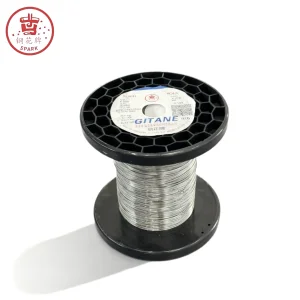
Wholesale High Temperature Electric Heating Wire SGHYZ 1400℃ Premium Resistance Wire
Wholesale SG140 Alloy Electric Heating Wire for Tempering Furnace Factory Manufacturer
China Suppliers Factory Direct SPARK 0Cr21Al6Nb Electric Heating Wire / Resistance Wire