
High-Temperature FeCrAl & Resistance Alloy Solutions
Precision-engineered electrothermal wire, strip, and heating elements rated up to 1425°C from premier Chinese manufacturing facilities.



1. Global FeCrAl Industry Landscape & Thermal Decarbonization
In the contemporary thermal processing landscape, Iron-Chromium-Aluminum (FeCrAl) heating alloys represent a cornerstone material family for industrial electrification. As global manufacturing sectors aggressively transition away from fossil-fuel combustion toward zero-emission electrical heat treatment, high-performance resistance heating alloys have witnessed an unprecedented surge in demand across ceramic sintering, semiconductor wafer fabrication, lithium-battery cathode calcination, and metallurgy.
FeCrAl alloys possess fundamental thermodynamic advantages over traditional Nickel-Chromium (NiCr) systems, primarily due to their ability to operate at elevated temperatures up to 1425°C while offering higher electrical resistivity ($\sim 1.45\,\mu\Omega\cdot\text{m}$) and lower material density ($\sim 7.10\,\text{g/cm}^3$). This technical combination yields up to 20–30% weight savings for equivalent thermal output, drastically cutting raw material expenditures and thermal mass inertia in dynamic furnace operations.
Historically dominated by European legacy manufacturers, the global FeCrAl supply ecosystem has undergone a strategic realignment. Advanced Chinese metallurgical complexes—led by enterprises such as Beijing Shougang Gitane New Materials Co., Ltd.—have closed the technological gap through continuous vacuum induction melting (VIM), electro-slag remelting (ESR), and specialized rare-earth micro-alloying techniques. Chinese manufacturers now deliver world-class alloy consistency with exceptional cost efficiency, making China the premier global sourcing hub for high-temperature resistance materials.
2. China's Manufacturing Efficiency & Metallurgical Superiority
How state-of-the-art Chinese production lines combine rare-earth chemistry, scale integration, and rigid quality systems to deliver unmatched value.
Vertical Integration & Raw Material Security
Chinese suppliers leverage fully integrated supply chains—from high-purity iron ore refining to specialized chromium and aluminum alloying. This vertical alignment insulates buyers from global spot-market volatility while guaranteeing metallurgical traceability down to individual heat numbers.
Advanced Rare-Earth (REE) Micro-Alloying
By precisely controlling minute additions of Yttrium (Y), Zirconium (Zr), Hafnium (Hf), and Cerium (Ce), Chinese metallurgists have solved the traditional fragility issues of coarse FeCrAl grains. REE doping anchors the protective oxide layer, drastically reducing scale spallation during rapid thermal cycling.
Powder Metallurgy (PM) Breakthroughs
Next-generation grades like SPARK SGHT utilize rapid powder atomization and hot isostatic pressing (HIP). This achieves ultra-fine, homogeneous dispersion of oxide particles ($\text{Y}_2\text{O}_3$), conferring unprecedented hot-yield strength and creep resistance up to 1425°C.
Strict Adherence to GB/T 1234 & International Standards
Products undergo rigorous 100% eddy-current flaw detection, laser dimensional profiling, and accelerated life testing per GB/T 1234-2012, ASTM B603, and DIN 17470 standards, certified with EN 10204 3.1 Mill Test Certificates.
3. High-Temperature Thermodynamics & Oxidation Mechanics
The operational endurance of electrothermal alloys hinges entirely on the self-passivating oxide scale formed on the wire surface when exposed to oxygen at elevated temperatures. Understanding these chemical kinetics is essential for optimizing element longevity in industrial furnaces.
Alpha-Alumina ($\alpha\text{-Al}_2\text{O}_3$) Scale vs. Chromia ($\text{Cr}_2\text{O}_3$) Scale
When an FeCrAl wire (containing typically 20–26% Cr and 4.5–6.5% Al) is energized above 1000°C, aluminum selectively migrates to the outer surface, reacting with ambient oxygen to generate a thermodynamically stable, continuous layer of alpha-alumina ($\alpha\text{-Al}_2\text{O}_3$). In contrast, NiCr alloys form a chromia ($\text{Cr}_2\text{O}_3$) scale.
Alpha-alumina offers several profound advantages in demanding furnace environments:
- Superior Thermodynamic Stability: $\text{Al}_2\text{O}_3$ possesses a lower Gibbs free energy of formation than $\text{Cr}_2\text{O}_3$, making it virtually inert to further oxygen ingress and preventing internal oxidation of the underlying metal matrix.
- Higher Melting Threshold: Alpha-alumina melts at 2054°C, whereas chromia volatizes into volatile $\text{CrO}_3$ gas at temperatures above 1200°C, leading to rapid degradation of NiCr elements in high-temperature air.
- Higher Electrical Insulation: The oxide film formed on FeCrAl is highly electrically insulating, preventing short circuits between closely spaced coil turns or between the element and refractory ceramic supports.
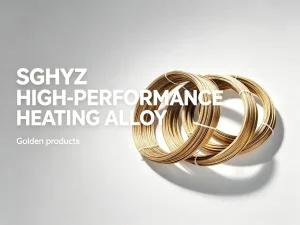
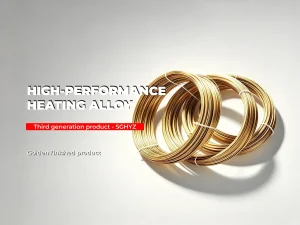
- Light Gray / Golden Passivation Layer: Advanced grades like SPARK SGHYZ exhibit a uniform golden-tinted protective oxide after initial pre-oxidation, signaling optimized adhesion and grain refinement.
4. FeCrAl vs. NiCr Grade Comparison Matrix
Engineers and buyers can use this quantitative benchmark to select the optimum alloy grade based on operating temperature, resistivity requirements, and environmental conditions.
| Alloy Grade | Material Family | Max Temp (°C) | Resistivity ($\mu\Omega\cdot\text{m}$, 20°C) | Density ($\text{g/cm}^3$) | Thermal Expansion ($10^{-6}/\text{K}$) | Primary Industrial Applications |
|---|---|---|---|---|---|---|
| SPARK SGHT | FeCrAl (Powder Met) | 1425°C | 1.45 | 7.10 | 15.0 | Semiconductor diffusion, high-purity ceramic sintering, ultra-high temp kilns |
| SPARK SGHYZ | FeCrAl (Golden Wire) | 1400°C | 1.45 | 7.10 | 15.0 | Industrial furnaces, heavy-duty radiant tubes, lab furnaces |
| SPARK HRE | FeCrAl (RE Doped) | 1350°C | 1.42 | 7.15 | 15.2 | Powder metallurgy sintering, ceramic kilns, continuous heat-treating lines |
| 0Cr25Al5 | FeCrAl (Standard) | 1250°C | 1.42 | 7.15 | 15.4 | Industrial heating elements, heat treatment furnaces, brake resistors |
| 0Cr23Al5 | FeCrAl (Commercial) | 1250°C | 1.35 | 7.25 | 15.4 | Domestic appliances, quartz heater tubes, commercial ovens |
| 0Cr21Al6Nb | FeCrAl (+Niobium) | 1350°C | 1.45 | 7.10 | 15.0 | High creep-resistance applications, industrial furnaces, kilns |
| Cr20Ni80S | NiCr (Precision) | 1200°C | 1.09 | 8.40 | 17.0 | Cyclic duty heating, precision appliances, clean-room medical elements |
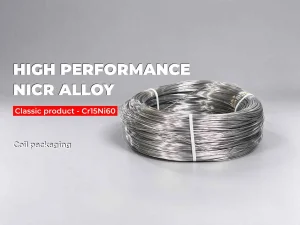
| Cr15Ni60 | NiCrFe (Standard) | 1150°C | 1.12 | 8.20 | 17.0 | Domestic heating, industrial resistors, low-temperature drying equipment |
5. Surface Loading ($W/\text{cm}^2$) & Element Calculation Framework
A critical determinant of FeCrAl heating element life is the surface watt loading ($p$), defined as the electrical power emitted per unit area of wire surface area. Exceeding recommended surface load limits leads to localized overheating, grain growth accelerated creep, and early burnt-out failures.
Mathematical Formula for Wire Surface Load
For a round wire with diameter $d$ ($\text{mm}$) and length $L$ ($\text{m}$), total power $P$ ($\text{W}$) is calculated as:
Where total resistance $R$ ($\Omega$) at operating temperature $T$ is governed by the Temperature Correction Factor ($C_t$):
Recommended Maximum Surface Loads in Air
- Industrial Furnaces (1200°C–1350°C): $1.5 - 2.5\,\text{W/cm}^2$
- Intermittent / Batch Ovens (800°C–1100°C): $2.5 - 4.0\,\text{W/cm}^2$
- Domestic Appliances & Air Heaters (Convective Airflow): $4.0 - 8.0\,\text{W/cm}^2$
- Radiant Tube Elements (Enclosed Environment): $1.2 - 2.0\,\text{W/cm}^2$
When operating in reducing or nitrogenous atmospheres ($H_2$, $N_2$, $CO$, Ammonia dissociated gas), allowable surface loading must be de-rated by 20% to 50% due to the destabilization of the protective oxide scale.
6. Global Application Scenarios for FeCrAl Alloys
From advanced clean-tech manufacturing to heavy industrial heat treatment, FeCrAl heating wire powers essential global thermal processes.
Photovoltaic & Semiconductor Furnaces
Ultra-pure grades like SGHT and SGHYZ are specified in silicon ingot crystal growth, diffusion furnaces, and LPCVD oxidation equipment. Low gas outgassing and high resistance stability ensure non-contaminating operation up to 1400°C.
Lithium-Battery Cathode Sintering Kilns
Roller hearth kilns producing LFP and NCM lithium battery powders rely on SPARK 0Cr25Al5 and HRE ribbon elements. The alloys resist corrosive alkaline vapor exposure while maintaining tight temperature uniformity across long tunnel kilns.
Ceramic & Technical Glass Kilns
Continuous tunnel kilns firing zirconia, alumina ceramics, and specialty optical glass require heavy-gauge spiral wire or ceramic radiant tubes. High resistance to thermal shock prevents element sag during continuous 24/7 campaigns.
Automotive Exhaust Catalytic Substrates
Special thin FeCrAl foil (0.03mm–0.05mm thickness) is corrugated into metallic honeycomb catalysts for automotive and diesel emission abatement, enduring severe mechanical vibration and gas corrosion.
7. China FeCrAl Pricelist Structure & Global Sourcing Factors
Navigating electrothermal alloy procurement requires a clear understanding of commercial pricing drivers. FeCrAl alloys from reputable Chinese manufacturers are priced on a per-kilogram (USD/kg) or per-ton basis, influenced by several metallurgical and physical parameters.
Primary Cost Determinants
- Raw Material Purity & Rare-Earth Chemistry: Standard grades (e.g., 0Cr23Al5) utilize standard electric-arc furnace scrap, making them highly economical. Premium grades (e.g., SGHYZ, SGHT) require high-purity electrolytic iron, virgin chromium, and micro-alloyed Yttrium/Zirconium additions, increasing base alloy ingot cost.
- Form Factor & Dimensional Precision: Heavy wire diameter ($\ge 3.0\,\text{mm}$) requires minimal drawing steps and carries the lowest processing premium per kilogram. Fine wire ($< 0.10\,\text{mm}$) or thin ribbon requires multiple diamond-die cold drawing, intermediate hydrogen annealing, and laser inspection, increasing cost per kg.
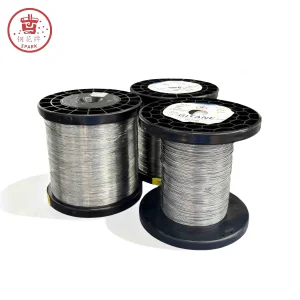
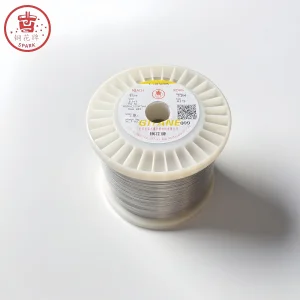
- Surface Treatment & Delivery State: Bright annealed wire, oxidized golden surface pre-treatment, or custom spooled packaging (DIN 200, DIN 250 plastic spools) affect final unit pricing.
- Order Volume & Packaging: Bulk factory orders (over 1,000 kg per heat) qualify for tier-one pricing schedules. Samples or small prototype batches carry setup surcharges.
Typical Export Pricelist Benchmark (Indicative Framework)
Note: Actual pricing fluctuates based on LME Chromium/Aluminum commodity indices and currency rates. Request formal quotes for project tenders.
| Grade Category | Diameter / Size Range | Min. Order Qty (MOQ) | Estimated FOB Price Range (USD / kg) | Standard Delivery Packaging |
|---|---|---|---|---|
| Standard FeCrAl (0Cr25Al5, 0Cr23Al5) | $\phi 1.0\,\text{mm} - 8.0\,\text{mm}$ Wire | 100 kg | $8.50 - $13.50 / kg | Coils in wooden cases / Pallets |
| High-Temp FeCrAl (HRE, 0Cr21Al6Nb) | $\phi 0.8\,\text{mm} - 6.0\,\text{mm}$ Wire | 100 kg | $12.00 - $18.00 / kg | Coils / Spools |
| Ultra-High Temp (SGHYZ 1400°C Golden) | $\phi 1.5\,\text{mm} - 7.0\,\text{mm}$ Wire | 50 kg | $18.50 - $28.00 / kg | Precision Spools / Coils |
| Powder Met FeCrAl (SGHT 1425°C) | Custom Wire & Strip | 25 kg | $35.00 - $55.00 / kg | Sealed export cartons |
| Nichrome Alloy (Cr20Ni80 / Cr20Ni80S) | $\phi 0.5\,\text{mm} - 5.0\,\text{mm}$ Wire | 50 kg | $28.00 - $42.00 / kg | Spools / Coils |
Complete FeCrAl, NiCr & Furnace Element Catalog
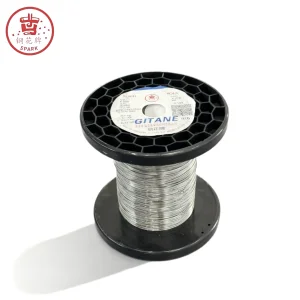
Explore our extensive range of specialized heating wires, radiant tube cores, and customized industrial furnaces.

8. Frequently Asked Questions (FAQ) & Procurement Insights
In-depth technical answers addressing wire selection, furnace atmospheres, life extension, and bulk ordering procedures.