
Featured Industrial Electrothermal Products (Part I)
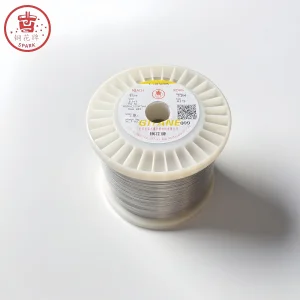
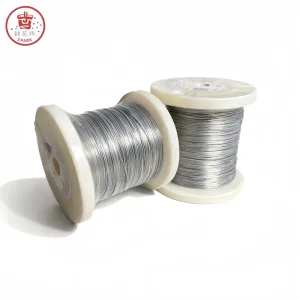
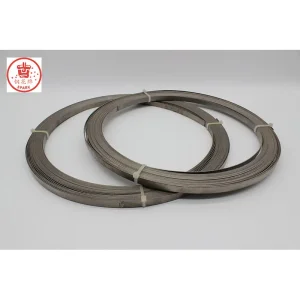
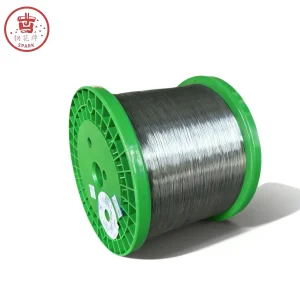
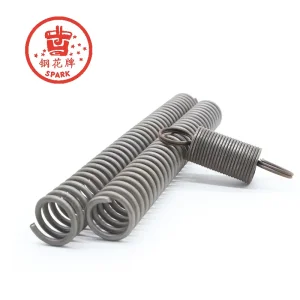
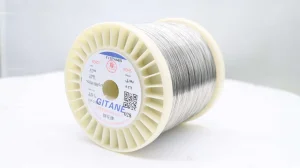
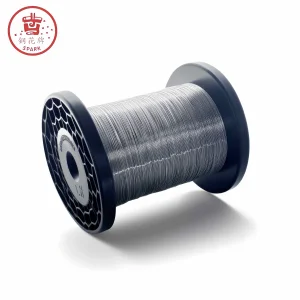
1. Executive Technical Summary: Metallurgical Mechanics of FeCrAl 1400℃ Ignition Alloy
In extreme thermal ignition environments, such as industrial gas turbines, catalytic combustors, flare stacks, and high-frequency pulsed ignition systems, conventional resistance heating wires experience rapid degradation. Standard Iron-Chromium-Aluminium (FeCrAl) and Nickel-Chromium (NiCr) alloys fail prematurely due to high-temperature oxidation spallation, grain boundary growth, thermal fatigue, and dielectric breakdown of the protective oxide layer.
As a premier state-backed enterprise under Beijing Shougang Gitane New Materials Co., Ltd. (operating with over 60 years of metallurgical heritage), our FeCrAl 1400℃ High Temperature Ignition Alloy Wire represents an advanced engineering breakthrough. Optimized specifically for rapid thermal cycling and extreme transient ignition loads, this alloy leverages precise micro-alloying techniques—incorporating Rare Earth (RE) elements such as Yttrium (Y), Zirconium (Zr), Hafnium (Hf), and Lanthanum (La)—to achieve unprecedented high-temperature stability.
The Physics of Rare-Earth Doped Oxide Layer Formation
When exposed to oxygen at temperatures exceeding 1000℃, standard FeCrAl alloys form a surface film of mixed oxides. However, at temperatures approaching 1400℃, phase transformations from metastable $\gamma$-Al₂O₃ and $\theta$-Al₂O₃ to stable $\alpha$-Al₂O₃ occur rapidly. Un-doped alloys suffer from compressive thermal stresses during rapid heating and cooling cycles, leading to interfacial spallation and accelerated sub-scale aluminum depletion.
Our proprietary 1400℃ ignition grade wire solves this fundamental failure mode through the "Reactive Element Effect" (REE). The micro-addition of Yttrium and Hafnium alters the transport mechanism of ionic species through the scale:
- Suppression of Outward Cation Transport: Rare-earth ions segregate along the oxide grain boundaries, effectively blocking outward $Al^{3+}$ cation diffusion and forcing growth to proceed exclusively via inward $O^{2-}$ anion transport.
- Elimination of Interfacial Voids: Inward oxide growth prevents the formation of Kirkendall voids at the metal-scale interface, dramatically increasing interfacial adhesion strength.
- Pegging Effect (Micro-Anchoring): Rare-earth oxide projections ("pegs") extend downward into the substrate metal, anchoring the protective $\alpha$-Al₂O₃ scale and rendering it immune to severe mechanical and thermal shock during rapid electrical ignition pulses.
Metallurgical Gain: Thermal Expansion and Density Advantage
Compared to NiCr resistance alloys, our 1400℃ FeCrAl ignition wire possesses a 15% lower density (7.10 g/cm³ vs. 8.40 g/cm³) and significantly higher electrical resistivity (1.45 μΩ·m vs. 1.09 μΩ·m). This allows system designers to utilize smaller cross-sectional wire diameters, reducing component mass while boosting instant heat-up response times for thermal ignition pins and burner igniters.
| Alloy Grade / Feature | Standard FeCrAl (0Cr25Al5) | NiCr 80/20 Grade | SPARK 1400℃ High-Temp Ignition FeCrAl |
|---|---|---|---|
| Max Working Temperature | 1250℃ | 1200℃ | 1400℃ Continuous / 1425℃ Peak |
| Electrical Resistivity (20℃) | 1.42 μΩ·m | 1.09 μΩ·m | 1.45 ± 0.03 μΩ·m |
| Melting Point | 1500℃ | 1400℃ | 1520℃ |
| Oxide Scale Type | Standard Al₂O₃ | Cr₂O₃ Layer | Doped Adherent $\alpha$-Al₂O₃ (REE Anchored) |
| Thermal Shock Resistance | Moderate | High | Extreme (Engineered for Pulsed Ignition) |
| Carburization Resistance | Fair | Poor (High Ni Risk) | Superior (Dense Alumina Barrier) |
2. Technical Roadmap & Future Outlook (2025–2035)
The global transition toward zero-emission energy infrastructure, ultra-high-efficiency combustion engines, and next-generation ceramic matrix composites (CMCs) demands ignition materials that operate well beyond classical limits. Shougang Gitane’s R&D division is driving a long-term technology roadmap focused on advanced powder metallurgy, nanostructured grain boundaries, and high-moisture/hydrogen-rich combustion resistance.
A. Powder Metallurgy (PM) vs. Vacuum Induction Melting (VIM + ESR)
While standard high-temperature wires are manufactured through conventional Vacuum Induction Melting (VIM) followed by Electroslag Remelting (ESR), continuous exposure to 1400℃ promotes rapid grain growth, leading to creep sagging and brittle room-temperature handling after thermal aging.
Our future-focused Powder Metallurgy (PM) FeCrAl Synthesis bypasses classical ingot segregation. By atomizing pre-alloyed liquid metal into ultra-fine spherical powders followed by Hot Isostatic Pressing (HIP) and precision hot extrusion, PM FeCrAl achieves:
- Grain Structure Pinning: Uniform dispersion of nanometer-scale Yttrite ($Y_2O_3$) particles restricts high-temperature grain boundary sliding, boosting creep rupture strength by up to 300% at 1350℃–1400℃.
- Elimination of Macro-Segregation: Prevents aluminum-depleted central cores, ensuring uniform chemical resistivity across wire drawn to sub-millimeter gauge sizes ($0.10\text{ mm}$ to $0.50\text{ mm}$).
B. Resilience in Hydrogen and High-Moisture Environments
As global power systems transition to hydrogen blending ($H_2 / CH_4$) and pure $H_2$ fuel combustion, combustion exhaust gas moisture levels increase dramatically ($H_2O$ vapor content exceeding 20-30%). High-temperature water vapor volatilizes standard chromium oxide ($Cr_2O_3$) scales into volatile $CrO_2(OH)_2$ gas, causing catastrophic rapid oxidation in NiCr alloys.
Shougang Gitane’s 1400℃ RE-doped FeCrAl alloy exhibits complete immunity to chromia volatilization. Its self-healing $\alpha$-Al₂O₃ protective film maintains parabolic oxidation rates even under $100\%\text{ H}_2O$ environments at 1350℃, guaranteeing long-term ignition reliability for green hydrogen combustion chambers and fuel cell auxiliary systems.
Future Milestone: Micro-Coaxial Core Ignition Technology
By 2028, Shougang Gitane will commercialize a dual-core composite wire featuring a high-ductility internal core clad with ultra-high-temperature PM-FeCrAl. This breakthrough will allow complex bend radius cold-forming while retaining a 1450℃ surface temperature rating.
3. Macro Industry Solutions & Application Architecture
The versatile electrothermal properties of our FeCrAl 1400℃ alloy wire make it an indispensable component across high-value global industries. Below is an engineering breakdown of customized solutions tailored for critical operational sectors.
Aerospace & Turbines
Combustor igniter pins, auxiliary power units (APU), and high-altitude flare stack systems requiring instant surface temperature generation above 1350℃ within 1.5 seconds.
Industrial Gas Heating
Direct spark ignition (DSI) rods and hot-surface igniters (HSI) for industrial boilers, radiant tube heaters, and glass annealing furnaces.
Semiconductor & Solar
Diffusion furnace elements, MOCVD epitaxy heaters, and photovoltaic silicon wafer processing lines operating in ultra-clean thermal chambers.
Automotive Exhaust Systems
Electrically Heated Catalysts (EHC) for cold-start emissions control, diesel particulate filter (DPF) regeneration, and heavy-duty transport engines.
Engineering Application Spotlight: Hot Surface Igniters (HSI) vs. Direct Spark Igniters (DSI)
In modern commercial gas burners, Hot Surface Igniters (HSI) constructed from our fine-gauge FeCrAl 1400℃ wire replace fragile silicon carbide (SiC) igniter elements. SiC elements suffer from extreme brittleness during shipping and operation. FeCrAl ignition wire offers structural ductility combined with low thermal mass:
- Rapid Transient Heat-Up: Reaches 1200℃–1350℃ in less than 2.0 seconds under controlled voltage spikes.
- Vibration and Mechanical Shock Resistance: High yield strength ($>650\text{ MPa}$ in annealed state) prevents cracking under severe combustion chamber resonance.
- Dielectric Isolation: When pre-oxidized, the dense surface alumina film exhibits a electrical breakdown dielectric strength exceeding $10^6\text{ V/m}$, guarding against current leakage to grounded metal burner housings.
4. China Factory 4.0: Supply Chain Resilience & Manufacturing Advantage
As a core enterprise of the Shougang Group, Beijing Shougang Gitane operates an advanced 88,000 m² state-of-the-art production facility in Changping District, Beijing, housing over 39,000 m² of modern heavy industrial workshops. We control the complete metallurgical manufacturing chain from elemental ore selection to finished wire spooling.
Fully Integrated Closed-Loop Production Process
Quality control at Shougang Gitane is not merely an inspection phase—it is embedded into every step of our Factory 4.0 manufacturing architecture:
- Vacuum Induction Melting (VIM) & ESR Refining: Pure elemental iron, high-purity aluminum ($>99.99\%$), and chromium are melted under strict vacuum conditions to eliminate trace impurities such as Sulfur ($S < 0.003\%$) and Phosphorus ($P < 0.008\%$), which otherwise compromise high-temperature scale adhesion.
- Micro-Alloying Injection: Automated rare-earth feeding systems introduce precisely calibrated quantities of Yttrium, Zirconium, and Hafnium under inert argon cover gas.
- Hot Radial Forging & Multi-Pass Rolling: Heavy ingot breakdown utilizing automated hot rolling mills guarantees isotropic grain distribution.
- Continuous Hydrogen Annealing Wire Drawing: Multi-head cold drawing dies paired with continuous bright hydrogen annealing furnaces produce defect-free, mirror-finish wire surfaces free of scratches or drawing lubricant residues.
- Automated Optical Inspection (AOI) & Laser Eddy Current Testing: 100% online dimensional verification guarantees wire diameter tolerances as tight as $\pm 0.005\text{ mm}$ with continuous surface flaw detection.
5. Engineering Selection Criteria & Surface Load Calculation
For procurement managers and thermal system design engineers, selecting the optimal wire gauge and establishing correct surface load metrics ($W/\text{cm}^2$) is critical to maximizing the operational lifespan of FeCrAl 1400℃ ignition elements.
Surface Load Formula & Optimization
The surface load ($w$) represents the electrical power dissipated per unit area of the wire's surface:
Where:
- P: Total power dissipation in Watts ($W$).
- d: Wire diameter in centimeters ($cm$).
- L: Active heated wire length in centimeters ($cm$).
Engineering Rule of Thumb for 1400℃ Ignition Duty: While continuous furnace heating elements at 1300℃ are limited to surface loads between $1.5\text{ to }2.5\text{ W/cm}^2$, rapid transient ignition elements manufactured from our RE-doped FeCrAl wire can sustain localized pulsed loads up to $6.0\text{ to }10.0\text{ W/cm}^2$ due to the exceptional thermal stability of the anchored $\alpha$-Al₂O₃ protective oxide layer.
| Atmosphere Environment | Max Permissible Temp (1400℃ Wire Grade) | Surface Load Adjustment Factor | Key Operational Consideration |
|---|---|---|---|
| Air / Oxidizing | 1400℃ | 100% (Standard Rating) | Optimal environment for self-healing $\alpha$-Al₂O₃ scale maintenance. |
| Pure Nitrogen ($N_2$) | 1250℃ | 80% Factor | Nitridation risk at temperatures $>1300$℃; pre-oxidation treatment mandatory. |
| Hydrogen ($H_2$ Dry) | 1350℃ | 90% Factor | Excellent resistance; requires high chemical purity to avoid oxide reduction. |
| Carburizing Atmosphere | 1200℃ | 70% Factor | Alumina scale protects against carbon ingress; periodic re-oxidation recommended. |
| Vacuum | 1150℃ | 60% Factor | Aluminum evaporation occurs under ultra-high vacuum at temperatures $>1200$℃. |
6. Global Regulatory Compliance, Quality Assurance & Local Logistics
Beijing Shougang Gitane supports multinational OEMs and high-tech industrial clients with complete international regulatory compliance, standardized quality documentation, and robust global supply chain packaging.
ISO 9001:2015 & GB/T 1234
Full certified quality management system controlling melt-to-spool physical and electrical parameters.
RoHS & REACH Compliant
Strictly zero Lead, Cadmium, Mercury, or Hexavalent Chromium; 100% environmentally safe for global export.
Conflict-Free Minerals
Audited raw material sourcing guaranteeing ethical compliance in accordance with global enterprise procurement mandates.
VCI Anti-Corrosion Packaging
Precision spooling sealed with Volatile Corrosion Inhibitor (VCI) vacuum wrapping inside export-grade wooden cases.
Mill Test Certificates & Material Traceability
Every wire coil and spool shipped from our Beijing facility is accompanied by an official EN 10204 3.1 Mill Test Certificate (MTC) detailing:
- Exact Heat Number and Chemical Composition (Direct Optical Emission Spectrometry).
- Measured Electrical Resistivity at 20℃ ($\mu\Omega\cdot\text{m}$).
- Tensile Strength ($\text{MPa}$), Elongation Percentage ($\%$), and Yield Point.
- Dimensional Tolerance Inspection Report (Laser Optical Measurement log).
- Accelerated Oxidation Life Test Result (50-Hour High-Temp Cycle Test).
7. Frequently Asked Questions (Technical Procurement Q&A)
Featured Electrothermal & High Temp Wire Alloys (Part II)
Need Custom FeCrAl 1400℃ Ignition Alloy Specifications?
Contact our metallurgical engineering team today for technical consultation, material sampling, customized resistance calculations, and direct factory quotation.
Request Technical Consultation