Redefining High-Temperature Industrial Heating Engineering
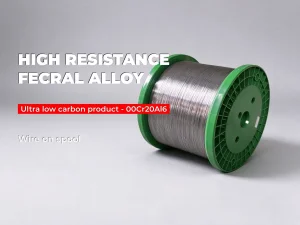
Advanced iron-chromium-aluminum (FeCrAl) and nickel-chromium (NiCr) electric resistance alloys manufactured in China have crossed a major metallurgical threshold. By combining rare-earth micro-alloying with specialized vacuum induction processing, these alloys solve the long-standing industry trade-off between structural stability, radiative thermal yield, and operational life span.
Creep & Sag Resistance
High-temperature structural deformation (sagging) in horizontal furnace elements causes inter-turn short circuits and premature failures. Chinese metallurgical formulations incorporate reactive elements (Y, Zr, Hf) that lock grain boundaries, reducing dislocation climb and grain boundary sliding by over 65% compared to standard commercial grades.
0.88 Radiant Emissivity
When pre-oxidized under tightly controlled thermal ramps, the material forms a self-healing, adherent alpha-alumina (α-Al ο „) scale. This surface nanostructure achieves a total hemispherical emissivity (ε) of 0.88, transforming electrical energy into radiant heat with near-theoretical maximum radiative coupling.
≥ 80 Hours Rapid Life Standard
Under rigorous accelerated life testing protocols (intermittent thermal cycling at 1200°C), the alloy maintains structural and electrical integrity for 80+ hours. This correlates directly to over 15,000+ operational hours in continuous industrial thermal processes without catastrophic resistance drift.
Microstructural Control & Anti-Sag Mechanisms
Preventing high-temperature plastic deformation in un-supported resistance heating elements through advanced alloy chemistry and dispersion strengthening.
The Physics of High-Temperature Sagging
In industrial electric furnaces operating between 1000°C and 1400°C, metallic resistance elements operate at homologous temperatures ($T/T_m$) exceeding 0.75. Under these conditions, the dominant deformation mechanisms are dislocation creep and Coble grain-boundary diffusion creep. Self-weight forces cause horizontal coils to stretch, sag, and eventually contact neighboring loops, leading to localized arc-fusing.
To minimize the creep strain rate (˙ε), the alloy structure must maximize effective grain diameter ($d$), suppress grain-boundary diffusion ($D_{gb}$), and introduce nanoscale pinning centers to impede dislocation motion.
Reactive Element Micro-Alloying (REMA) Solution
Chinese metallurgy suppliers have refined the addition of specialized rare-earth dopants, specifically optimizing ratios of Yttrium (Y), Zirconium (Zr), Hafnium (Hf), and Cerium (Ce). These elements concentrate at grain boundaries, forming stable oxide and intermetallic dispersion precipitates that act as physical obstacles to dislocation movement.
- Grain Boundary Pinning (Zener Drag): Sub-micron Zr-rich oxides prevent grain sliding during thermal cycling.
- Reduced Void Nucleation: Suppresses Kirkendall void formation caused by unequal counter-diffusion of Fe and Al ions.
- Enhanced Mechanical Rigidity: Increases high-temperature yield strength ($R_{p0.2}$) at 1200°C by over 40% compared to standard FeCrAl alloys.
Surface Emissivity Optimization (ε = 0.88)
Maximizing heat transfer efficiency to reduce furnace power consumption and accelerate production cycle times.
The Stefan-Boltzmann Radiative Advantage
Above 800°C, radiant heat transfer accounts for over 90% of total thermal energy exchange inside an industrial furnace chamber. Radiative heat transfer ($Q$) follows the Stefan-Boltzmann law:
A higher surface emissivity (ε) directly increases energy flux ($Q$) for the exact same wire operating temperature, reducing electrical power requirements and thermal stress on furnace insulation.
Controlled Pre-Oxidation Protocol
Untreated bright FeCrAl alloy wire exhibits a raw emissivity of approximately 0.22 to 0.30, reflecting most radiated energy back into itself. China's top factories deliver pre-treated heating elements subjected to controlled thermal oxidation in oxygen-enriched atmospheres.
This forms a uniform, non-porous layer of α-Al ο „ oxide film with optimized micro-roughness, permanently elevating emissivity to 0.88 in the fully oxidized state.
Energy Efficiency & Carbon Reduction
By increasing emissivity from 0.65 (typical aged competitive elements) to 0.88, industrial heat-treatment plants observe:
- 12% to 18% reduction in electrical kWh per ton of processed steel/ceramics.
- 15% faster ramp times to setpoint temperature during cold startup cycles.
- Lower internal wire temperatures for identical furnace thermal output, extending wire service life.
Rapid Life Testing Standard: ≥ 80 Hours at 1200°C
Rigorous cyclic testing methodology based on GB/T 1234-2012 and ASTM B78 guidelines to guarantee long-term field stability.
| Performance Parameter | Standard Commercial Grade | Premium European Brand | China SPARK Optimized FeCrAl |
|---|---|---|---|
| Rapid Accelerated Life Test (1200°C) | ≥ 40 - 50 Hours | ≥ 75 - 80 Hours | ≥ 80 - 110 Hours |
| Surface Emissivity (ε, Oxidized) | 0.60 - 0.70 | 0.80 - 0.85 | 0.88 |
| Max Operating Temp (Continuous) | 1250°C | 1400°C | 1400°C - 1425°C |
| Creep Deflection Rate (1200°C, 100h) | > 4.5% Deflection | < 1.5% Deflection | < 1.2% Deflection |
| Oxide Scale Spallation Resistance | Moderate (Flaking observed) | Excellent | Superior (α-Al ο „ Self-Healing) |
The Accelerated Thermal Cycle Test Method
The rapid life test is conducted on standardized test wires ($d = 0.70\text{ mm}$ or $1.00\text{ mm}$) subjected to repeated direct-electrical heating cycles:
- 2 Minutes ON: Wire rapidly heated to 1200°C via controlled electrical current.
- 2 Minutes OFF: Power cut off; rapid air-cooling down to room temperature.
- Failure Criterion: Test continues until complete thermal-stress burnout or resistance increase exceeding 20%.
Achieving ≥ 80 hours under these brutal thermal shock cycles proves that the protective alumina skin possesses incredible adhesion, preventing repetitive cracking and spallation during rapid operational temperature cycling.
Aluminum Depletion Dynamics & Service Life
The ultimate end-of-life mechanism for FeCrAl wire is the depletion of matrix aluminum below critical limits (~2.5% Al), leading to iron-chromium rapid oxidation ("green rot" / catastrophic breakdown). China's advanced smelting processes keep initial Al content strictly tuned between 5.5% and 6.5% while fine-tuning trace active elements to slow aluminum consumption rates down to under 0.015% per 100 operational hours.
Localized Industry Application Scenarios
Deploying specialized high-temperature resistance wire solutions across high-growth manufacturing sectors worldwide.
1. Semiconductor & Solar PV
Used in silicon ingot crystal pullers (Czochralski process), LPCVD diffusion furnaces, and solar cell wafer sintering kilns operating continuously between 1150°C and 1350°C. High sag resistance prevents vertical element distortion inside cleanroom quartz chambers.
2. Lithium Battery Cathode Calcination
Roller hearth kilns (RHK) synthesizing NMC and LFP cathode active materials require precise thermal uniformity and resistance to aggressive lithium vapor atmospheres. Pre-oxidized 0.88 emissivity FeCrAl elements resist chemical attack and maintain stable radiant heat output.
3. Industrial Heat Treatment Furnaces
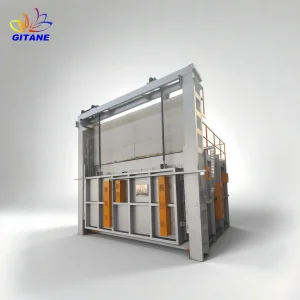
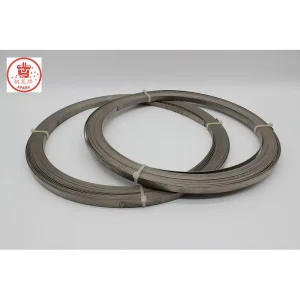
For carburizing, nitriding, annealing, and forging furnaces in automotive and aerospace plants. High-emissivity wire elements coiled in ceramic tubes or heavy ribbon configurations yield massive electrical energy savings over continuous multi-year campaigns.
4. Advanced Ceramics & Glass Industry
Firing structural ceramics, zirconia implants, and glass bending/tempering furnaces. The lack of surface spallation prevents flake contamination on sensitive glass optical surfaces or ceramic components.
5. Petrochemical Cracking & Reforming
Electric heaters for refinery gas streams, hydrogen generation reformers, and synthetic fuel processing plants demanding severe thermal endurance, high hot-tensile strength, and continuous 24/7 reliability.
6. High-Power Commercial Appliances
Rapid-heating commercial ovens, air heaters, industrial hair dryers, and radiant cooking equipment benefiting from instant thermal radiation and extended thermal cycling life.
China Supply Chain Resilience & Metallurgical Scale
Vertical integration from raw material refining to finished element fabrication delivers unmatched quality control and cost efficiencies.
Integrated VIM & ESR Melting
Vacuum Induction Melting (VIM) followed by Electroslag Remelting (ESR) eliminates gaseous impurities (nitrogen, oxygen, hydrogen) and tramp element inclusions (lead, tin, sulfur), yielding ultra-pure melt ingots with exact stoichiometric precision.
Rare Earth Domestic Sourcing
China's global leadership in rare-earth mining and refining (Yttrium, Cerium, Lanthanum) guarantees an uninterrupted, cost-effective supply of critical micro-alloying dopants, insulating international OEM buyers from global supply chain volatility.
Multi-Pass Cold Drawing & Rolling
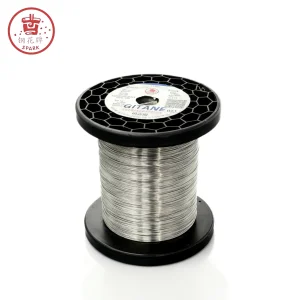
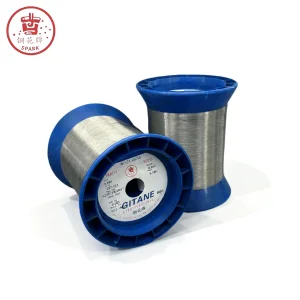
State-of-the-art multi-pass drawing lines with real-time laser micrometer dimensional feedback produce fine wires from 0.05mm to 12.0mm and flat ribbons with micrometer-level dimensional consistency (±0.002mm).
Technical Roadmap & Future Outlook
Advancing from conventional cast alloys to powder metallurgy and nano-dispersion strengthening for extreme 1425°C+ applications.
REMA FeCrAl Alloys
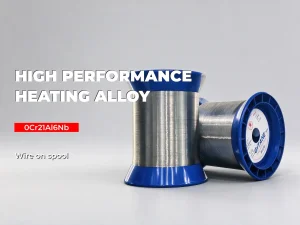
0Cr25Al5, 0Cr21Al6Nb, and HRE grades with 0.88 emissivity and ≥80h life at 1200°C. Fully standardized across global furnace production.
Powder Metallurgy (PM) FeCrAl
Gas-atomized powder compacting (SGHT grade) producing completely isotropic grain structures with zero hot-shortness and max service temperatures up to 1425°C.
Nanoscale ODS Alloys
Oxide Dispersion Strengthened (ODS) alloys with nanometer Y„O„ particles dispersed via mechanical alloying for zero sag deflection under heavy mechanical loading.
Green Hydrogen Metallurgy
Transitioning melt-refining furnaces to green hydrogen and renewable electricity, lowering the embedded carbon footprint of exported heating alloys by 80%.
Global Compliance & OEM Customization Support
Delivering certified high-temperature solutions tailored to international engineering standards and factory requirements.
Standards Compliance
All products meet or exceed GB/T 1234-2012, ASTM B78, DIN 17470, and ISO 9001:2015 standards. Full chemical composition MTRs (Mill Test Reports) and RoHS/REACH environmental compliance certificates accompany every batch.
Custom Element Fabrication
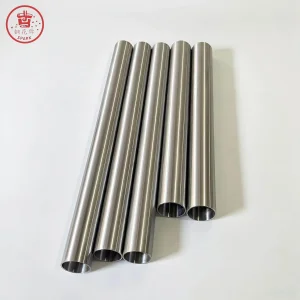
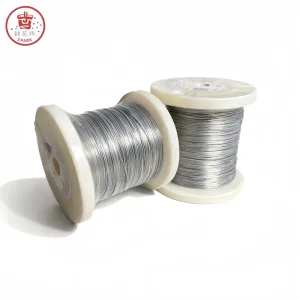
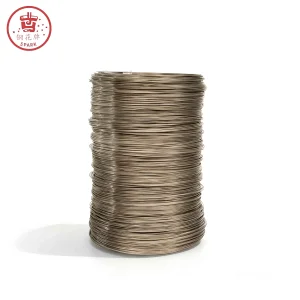
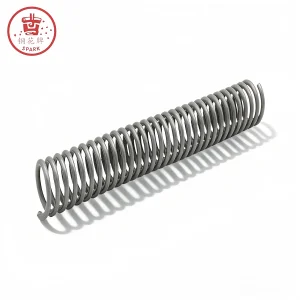
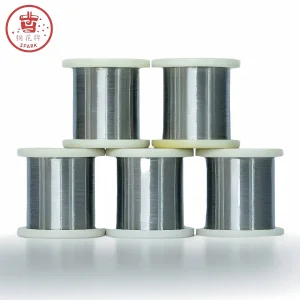
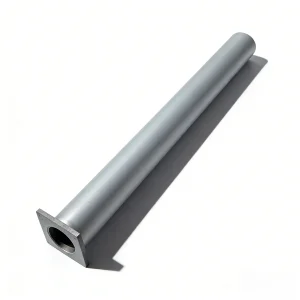
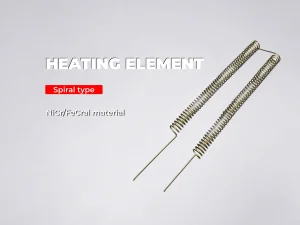
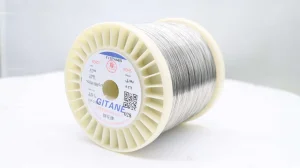
Beyond raw wire spools, suppliers deliver fully fabricated, ready-to-install heating elements: open coil spirals, meander corrugated ribbons, rod-over-bend elements, and ceramic-embedded radiant tubes.
Engineering & Thermal Modeling
In-house thermal design engineers assist international clients with wire pitch calculation, surface power density ($W/cm^2$) optimization, cold-leg terminal design, and refractory support selection.
Frequently Asked Questions (FAQ)
Expert engineering insights regarding high-temperature resistance alloy specification, installation, and operation.
What causes horizontal resistance wire elements to sag, and how is it prevented?
+
Why is a surface emissivity of 0.88 significant for electric heat treatment furnaces?
+
How does the Rapid Life Test (≥ 80 hours at 1200°C) translate to real-world furnace life?
+
When should I choose FeCrAl over NiCr (Nichrome) alloys?
+
What atmospheric considerations affect the life of FeCrAl heating elements?
+
What surface power load ($W/cm^2$) is recommended for long wire service life?
+