Top-Tier Electric Heating Alloys & Elements
Precision-drawn resistance alloys engineered for high structural integrity, exceptional creep strength, and minimal thermal elongation under continuous high-temperature service.
1. The Metallurgy of Creep Resistance in Industrial Resistance Alloys
High-temperature industrial processing equipment operates under thermal regimes where structural integrity becomes a major design vulnerability. In heavy industrial furnaces, kilns, and semiconductor processing chambers, heating elements are subjected to prolonged isothermal stress at temperatures exceeding 1000°C. Under these conditions, standard resistance wire undergoes continuous plastic deformation known as creep, leading to element sagging, localized short-circuiting, phase instability, and premature element failure.
To mitigate these failure modes, advanced metallurgical engineering focuses on controlling grain boundary mobility and vacancy diffusion. In iron-chromium-aluminum (FeCrAl) and nickel-chromium (NiCr) alloy systems, creep deformation is primarily governed by dislocation climb-glide mechanisms at intermediate high temperatures and Coble/Nabarro-Herring diffusional creep at ultra-high service limits (above 1200°C).
Micro-Alloying & REE Dispersion
By incorporating Reactive Earth Elements (REE) such as Yttrium (Y), Zirconium (Zr), Hafnium (Hf), and Lanthanum (La), modern Chinese metallurgical plants immobilize grain boundaries through oxide dispersion strengthening (ODS). This suppresses grain boundary sliding under tensile loading.
Protective Al2O3 Scale Growth
In FeCrAl alloys (e.g., 0Cr25Al5, SGHYZ, SGHT), creep resistance is intimately linked with the formation of a dense, thermally grown α-Al2O3 (alpha-alumina) scale. This oxide scale acts as a barrier against internal oxidation and micro-void coalescing, which otherwise accelerate rupture times.
Secondary Recrystallization Control
Engineered cold-drawing sequences followed by controlled hydrogen-atmosphere annealing induce a columnar grain structure parallel to the wire axis. Large, elongated grains significantly reduce grain boundary surface area perpendicular to the applied thermal stress vector.
Engineering Capability Metrics
Quantifiable benchmark indicators demonstrating why Tier-1 global furnace builders partner with leading Chinese heating wire manufacturers.
2. Global Market Dynamics & Procurement Demand Shift
The global transition toward industrial decarbonization has fundamentally reshaped high-temperature processing industries. Major manufacturing hubs across Europe, North America, and the Asia-Pacific region are actively phasing out fossil-fuel-fired burners in favor of high-efficiency zero-emission electric heating systems. This macro shift has drastically increased global demand for high-reliability, creep-resistant electric heating elements capable of operating continuously in harsh chemical and oxidative environments.
Global procurement directors and process engineers now evaluate resistance wire suppliers not merely on initial unit price, but on total cost of ownership (TCO), life cycle thermal efficiency, dimensional stability, and supply chain security. Standard commercial-grade heating wires that stretch or sag after 1,000 thermal cycles lead to unacceptable maintenance downtime and expensive element replacement programs.
Key Strategic Procurement Drivers:
- Extended Hot Structural Life: Requirement for wire elements that resist deformation when mounted horizontally on ceramic tubes or furnace walls without intermediate support hooks.
- Consistency in Electrical Resistivity: Batch-to-batch tolerance tight limits (within ±3%) to prevent current imbalances and localized overheating across multi-zone industrial furnaces.
- Atmosphere Compatibility: Stable operation across oxidizing, reducing, vacuum, carburizing, and nitriding atmosphere chambers.
3. China Factory 4.0: Metallurgical Supply Chain Resilience & Efficiency
China's industrial heating alloy manufacturing industry has undergone a radical technological metamorphosis over the last decade. Leveraging enterprise-scale metallurgical integration, domestic suppliers such as Beijing Shougang Gitane New Materials Co., Ltd. have combined decades of physical metallurgy research with fully automated Industry 4.0 production infrastructure.
By managing the complete manufacturing value chain—from Vacuum Induction Melting (VIM) and Electroslag Remelting (ESR) through hot rolling, precision multi-pass wire drawing, continuous bright annealing, and automated spooling—Chinese production facilities guarantee microstructural homogeneity and eliminate trace impurity segregation.
Automated Quality Control (GB/T 1234-2012)
Real-time laser diameter gauges and online Eddy Current flaw detection equipment ensure every meter of drawn wire complies strictly with national standard GB/T 1234-2012 and international ISO standards, preventing mechanical micro-cracks before shipping.
Powder Metallurgy & ODS Engineering
For ultra-critical applications rated to 1425°C, advanced factories utilize powder metallurgy techniques (e.g., SPARK SGHT grade), achieving superior mechanical creep strength compared to conventional ingot casting routes.
Integrated Supply Chain Agility
Direct integration with domestic raw material refineries insulates global procurement managers from volatile nickel, chromium, and rare-earth price spikes, guaranteeing stable lead times and transparent factory-direct quotes.
4. Engineering Selection Framework: High-Temperature Resistance Alloy Matrix
Selecting the optimal heating wire alloy requires balancing maximum continuous operating temperature, room-temperature ductility, electrical resistivity, and thermal expansion properties. The following technical matrix provides clear engineering guidelines based on standardized metallurgical specifications:
| Alloy Grade | Material Family | Max Service Temp | Resistivity @20°C (μΩ·m) | Creep & Sag Resistance Profile | Primary Industrial Applications |
|---|---|---|---|---|---|
| SGHT (PM FeCrAl) | Powder Metallurgy FeCrAl | 1425°C | 1.45 ± 0.05 | Ultra-High (Columnar ODS Grain) | Semiconductor diffusion, ceramic sintering kilns |
| SGHYZ | Enhanced FeCrAl + REE | 1400°C | 1.42 ± 0.05 | Very High (Denser alumina layer) | High-temperature laboratory & industrial furnaces |
| HRE | High-Performance FeCrAl | 1350°C | 1.40 ± 0.05 | High (Refined grain boundary) | Powder metallurgy sintering, radiant heating tubes |
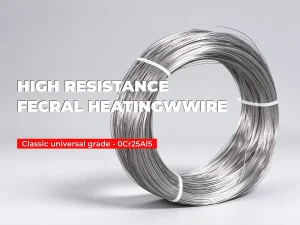
| 0Cr25Al5 | Standard FeCrAl | 1250°C | 1.42 ± 0.05 | Moderate (Requires support hooks) | Industrial heat treatment furnaces, kilns |
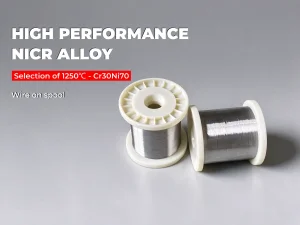
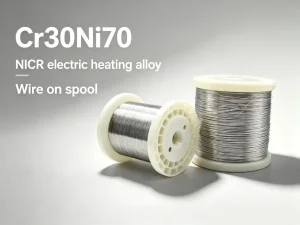
| Cr30Ni70 | Nickel-Chromium | 1250°C | 1.18 ± 0.04 | High Hot Strength (Excellent Ductility) | High-temp electric heating equipment, cycling duty |
| Cr20Ni80 | Nichrome | 1200°C | 1.09 ± 0.04 | High Ductility (Post-service pliable) | Precision home appliances, industrial heaters |
5. Localized High-Temperature Industrial Application Scenarios
Engineered creep-resistant heating wires are deployed across demanding industrial production environments globally. Each specific thermal process requires customized element design, precise surface loading calculations (W/cm²), and tailored alloy selection.
Semiconductor & Photovoltaic Manufacturing
Vertical wafer diffusion furnaces and photovoltaic polysilicon crystal growth chambers require zero sag and zero particle shedding at 1350°C. SGHT powder metallurgy wires ensure precise thermal profiling across silicon ingot zones without element contamination.
Automotive EV Battery Cathode Sintering
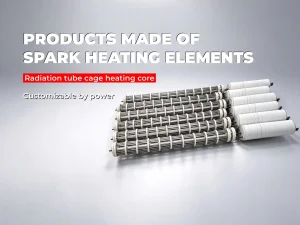
Continuous roller hearth kilns producing LFP and NCM lithium battery cathode powders operate under aggressive corrosive gas atmospheres. Customized FeCrAl radiant tube coils prevent element embrittlement and resist sagging over 24/7 continuous operation.
Heavy Metallurgy Heat-Treatment Furnaces
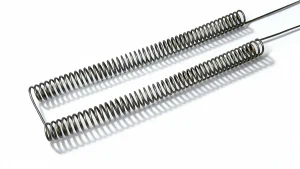
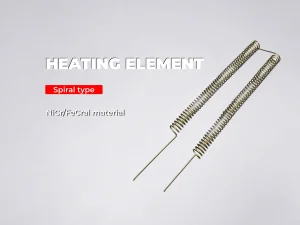
Large car-bottom annealing furnaces and aluminum alloy aging lines rely on heavy-gauge spiral wire and ribbon elements. The micro-structure of Cr30Ni70 and 0Cr25Al5 withstands high vibration, cycling fatigue, and heavy thermal shocks.
Frequently Asked Questions (FAQ)
In-depth technical responses covering engineering considerations, microstructural dynamics, and procurement best practices.
What metallurgical mechanism causes heating wire to sag at high temperatures?
Heating wire sags primarily due to thermal creep deformation under its own weight or mechanical tension at elevated operating temperatures. At temperatures above 0.5 Tm (melting temperature in Kelvin), grain boundaries soften and atomic diffusion accelerates. Dislocation climb-glide and grain boundary sliding occur over time, resulting in irreversible plastic elongation. Utilizing alloys with reactive element additions (Y, Zr, La) or powder-metallurgy ODS processing dramatically reduces grain boundary mobility, thereby maximizing creep resistance.
How does FeCrAl compare to NiCr regarding sag resistance and continuous operating temperature?
FeCrAl alloys offer a higher maximum service temperature (up to 1425°C for PM grades) compared to NiCr alloys (typically max 1200°C-1250°C), alongside higher electrical resistivity and lower material density. However, standard FeCrAl forms a coarse grain structure during prolonged heating, which reduces its hot strength compared to NiCr. To overcome this, advanced FeCrAl grades (such as SGHYZ and SGHT) are specifically micro-alloyed or powder-processed to deliver superior creep resistance matching or exceeding NiCr hot strength at 1300°C+.
Why is grain size control crucial during the wire drawing and bright annealing stages?
Grain size dictates the balance between room-temperature ductility (needed for coiling and element fabrication) and high-temperature creep resistance. If the grain structure is too fine prior to installation, rapid grain growth will occur during the first heating cycle, causing dimensional instability. Precise bright annealing parameters ensure controlled grain morphology that develops optimal columnar structures during thermal commissioning.
What surface loading (W/cm²) is recommended to prevent excessive element creep?
Recommended surface load decreases as service temperature increases. For standard industrial furnace atmospheres at 1000°C, a surface loading of 2.0–3.0 W/cm² is typical. At extreme temperatures (1300°C–1400°C), surface loading should be reduced to 0.8–1.5 W/cm² for FeCrAl wires to minimize internal thermal gradients, reduce mechanical stress on the wire core, and extend element creep rupture life.
Can China creep-resistant heating wire replace European or Japanese premium grades directly?
Yes. Leading Chinese manufacturers produce high-performance resistance wires compliant with GB/T 1234-2012, ASTM, and DIN standards. Advanced grades such as SPARK SGHT and SGHYZ offer identical or superior electrical resistivity, oxidation life, and creep resistance compared to legacy Western brands, delivering significant cost savings and faster factory-direct delivery timelines.
Explore Complete Resistance Wire & Furnace Solutions
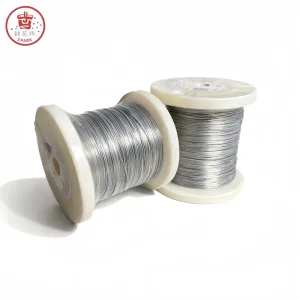
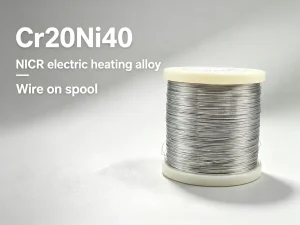
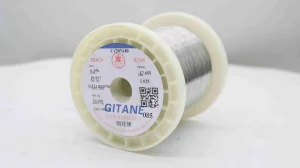
Select from our extended catalog of industrial heating elements, bright-finished spools, and custom-engineered furnace alloys.