Featured Creep Resistant Products (Part 1)
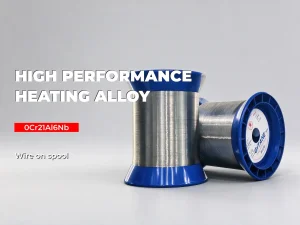
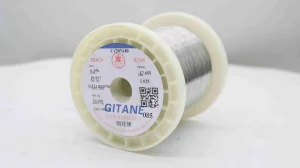
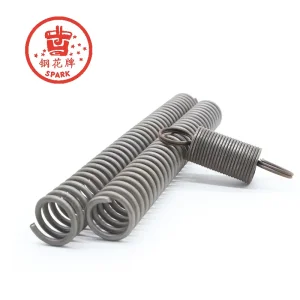
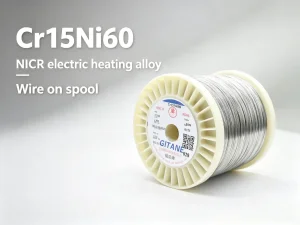
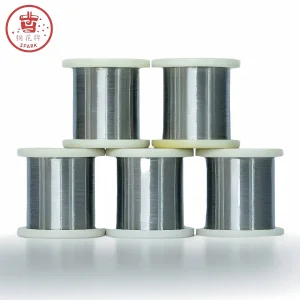
Explore our flagship high-temperature resistance alloy wires, spirals, and custom furnace components designed to eliminate sag and structural deformation at temperatures up to 1425°C.



Understanding Creep Resistance in Ultra-High-Temperature Electric Heating Alloys
In thermal processing environments exceeding 1000°C, structural failure of resistance elements rarely occurs due to melting. Instead, the primary mechanism of premature heating element failure is thermal creep deformation. Creep is defined as the time-dependent, irreversible plastic deformation of metallic alloys under constant mechanical stress at elevated temperatures. When heavy coils, thick ribbons, or unsupported spiral heating elements are subjected to prolonged thermal cycles, gravity and electromagnetic forces induce sagging, elongation, physical contact between adjacent turns, short-circuiting, and local hot-spot degradation.
As a premier China creep resistant heating element supplier and factory, Beijing Shougang Gitane New Materials Co., Ltd. (a member of the prestigious Shougang Group) has spearheaded advanced research into rare-earth dispersion strengthening and powder metallurgy. By engineering resistance alloys with tailored grain boundaries and protective oxide films, Gitane’s SPARK brand heating elements offer unparalleled dimensional stability, high-temperature rupture strength, and extended service life in critical industrial kilns.
The Mechanics of High-Temperature Creep Deformation
When electric heating alloys operate above 0.5 $T_m$ (where $T_m$ is the absolute melting temperature in Kelvin), atomic diffusion accelerates exponentially. Creep progression occurs across three distinctive phases:
- Primary (Transient) Creep: Initial rapid deformation where strain hardening slows down the rate of deformation.
- Secondary (Steady-State) Creep: A stable equilibrium between work hardening and dynamic recovery. This stage dictates the operational longevity of heavy furnace heating coils.
- Tertiary Creep: Micro-void formation at grain boundaries, leading to rapid cross-sectional necking and mechanical rupture.
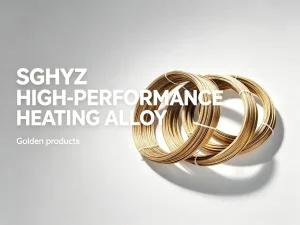
Standard commercial iron-chromium-aluminum alloys (such as basic 0Cr25Al5 or 0Cr23Al5) suffer from rapid grain growth above 1100°C. Large, unconstrained grains promote easy boundary sliding, causing unsupported horizontal coils to stretch and deform within a few hundred thermal cycles. Gitane’s specialized high-performance grades—such as SPARK SGHYZ (1400°C), SGHT (1425°C Powder Metallurgy), and 0Cr21Al6Nb—incorporate grain-refining niobium and rare-earth additions that lock grain boundaries and form a dense, protective $\alpha-\text{Al}_2\text{O}_3$ alumina scale.
Metallurgical Matrix & Creep Performance Comparison
The table below provides empirical technical metrics contrasting standard heating alloy grades against Gitane's specialized creep-resistant SPARK series:
| Alloy Grade | Composition Family | Max Temp (°C) | Resistivity (μΩ·m, 20°C) | Creep Rupture Strength (1200°C / 100h) | Primary Industrial Applications |
|---|---|---|---|---|---|
| SPARK SGHT (PM) | FeCrAl + ODS / PM | 1425°C | 1.45 ± 0.05 | Ultra-High (> 18 MPa) | Semiconductor diffusion, ceramic sintering kilns |
| SPARK SGHYZ | FeCrAl + RE + Nb | 1400°C | 1.42 ± 0.05 | High (> 12 MPa) | High-temperature industrial furnaces, gold refining |
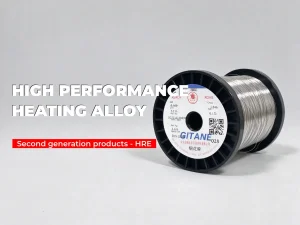
| SPARK HRE | FeCrAl + Rare Earth | 1350°C | 1.40 ± 0.05 | Medium-High (> 8 MPa) | Powder metallurgy sintering, radiant tubes |
| 0Cr21Al6Nb | FeCrAl + Niobium | 1350°C | 1.40 ± 0.05 | Medium (> 6 MPa) | Industrial heat treatment, continuous furnaces |
| SPARK Cr20Ni80 | NiCr (Nichrome) | 1200°C | 1.09 ± 0.05 | Exceptional Hot Ductility | Plastic extruders, sealed appliances, nitrogen atmosphere |
Why Source Creep Resistant Alloys from China Factory Direct?
Leveraging Shougang Group’s total vertical integration, Beijing Shougang Gitane offers global buyers unmatched manufacturing scale, precise metallurgical consistency, and dramatic Total Cost of Ownership (TCO) reductions.
Vertical Raw Material Control
From ultra-pure iron ore smelting to vacuum induction melting (VIM) and electroslag remelting (ESR), our parent organization controls the entire chemical composition pipeline. This prevents unwanted trace elements (such as S, P, and Cu) from compromising high-temperature creep strength.
Advanced Powder Metallurgy (PM)
For extreme non-sag applications (up to 1425°C), Gitane utilizes gas atomization and hot isostatic pressing (HIP) to create Oxide Dispersion Strengthened (ODS) FeCrAl alloys. Powder metallurgy eliminates micro-segregation, yielding zero-sag heating elements superior to traditional casting methods.
Custom Drawing & Fabrication
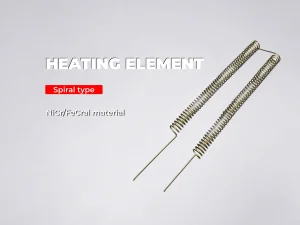
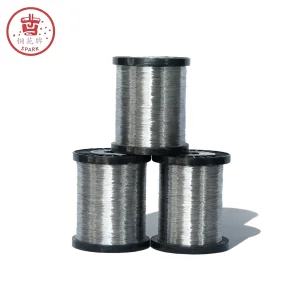
We supply seamless options across all product geometries—round wire ($0.05\text{mm}$ to $12\text{mm}$), cold-rolled strip, heavy rectangular ribbons, pre-wound spiral coils, and fully engineered ceramic fiber embedded heating plates tailored to client CAD drawings.
Localized Application Scenarios for Creep Resistant Heating Elements
Creep-resistant heating alloys are irreplaceable in industrial equipment operating near thermal limits where element replacement causes costly production downtime. Key application sectors include:
1. Semiconductor & Solar Photovoltaic
In silicon crystal growth, diffusion furnaces, and LTCC green tape co-firing, precise temperature field uniformity ($\pm 0.5^\circ\text{C}$) is mandatory. SPARK SGHT powder metallurgy elements prevent coil sagging in vertical furnace chambers, eliminating thermal gradient distortion.
2. Powder Metallurgy & Sintering
Continuous mesh belt kilns sintering stainless steel, titanium, or structural ceramics operate under heavy mechanical loading. HRE and SGHYZ ribbons provide high hot strength, resisting carburization, nitriding, and creep elongation under heavy continuous conveyor workloads.
3. Advanced Technical Ceramics
Zirconia sintering for dental or aerospace applications requires operating temperatures up to 1400°C. SPARK high-purity golden FeCrAl wires prevent ceramic contamination while maintaining structural stiffness without ceramic tube support.
Compliance Assurance & Global Procurement Support
Sourcing high-temperature resistance alloys internationally requires complete confidence in metallurgical compliance, batch traceability, and rapid engineering support. Beijing Shougang Gitane guarantees full compliance with global industrial standards:
- Quality System Accreditations: Certified to ISO 9002 in 1996 and upgraded to ISO 9001 in 2003. Strict compliance with China National Standard GB/T 1234-2012 for high-resistance electric heating alloys.
- Traceability & Testing: Every shipment includes a comprehensive Mill Test Report (MTR) covering chemical spectrographic analysis, 20°C electrical resistivity tests, room-temperature tensile strength, and accelerated high-temperature lifecycle (creep rupture) testing.
- Global Engineering & Custom OEM Services: Our team of over 150 metallurgical engineers provides direct consulting on element design, surface power density calculation ($\text{W/cm}^2$), pitch-to-diameter coiling optimization, and atmosphere compatibility (reducing, oxidizing, vacuum, or inert gases).
- Localization & Rapid Export Logistics: Customs-ready protective export packaging (vacuum-sealed anti-corrosion wrap, reinforced wooden crates, high-impact spooling) ensures products arrive in pristine condition across North America, Europe, Southeast Asia, and the Middle East.
Future Trends: Electrification of Industrial Heat & Next-Gen Alloys
As global industries accelerate toward carbon neutrality, industrial thermal processes are rapidly transitioning from fossil fuel combustion (gas-fired burners) to clean zero-emission electric resistance heating. High-temperature industrial heat electrification requires heating elements that can handle significantly higher power densities without premature creep failure.
Beijing Shougang Gitane is at the forefront of this green energy transition, developing next-generation micro-alloyed FeCrAl elements that enable high-capacity electric heating in heavy industries such as steel annealing, glass melting, and petrochemical cracking. By switching to creep-resistant SPARK elements, furnace operators achieve up to 35% higher energy efficiency, precise digital temperature control, and zero direct greenhouse gas emissions.
Frequently Asked Questions (FAQ)
Technical guidance and procurement answers directly from our senior metallurgical engineering team.
Original Factory Information & Heritage Reference
Beijing Shougang Gitane New Materials Co., Ltd. is a specialized manufacturer with a history of over 60 years, dedicated to producing special alloy materials including electric heating resistance alloys, electronic resistance alloys, stainless steel wires, and spiral heating elements for industrial and domestic applications.
The company covers an area of 88,000 square meters, with a workshop area of 39,268 square meters. Gitane employs over 500 staff members, with technical personnel accounting for approximately 30%. The company obtained ISO 9002 quality system certification in 1996 and ISO 9001 quality system certification in 2003. All products are manufactured strictly according to GB/T 1234-2012 standards, ensuring world-class stability and high-temperature service life.
Featured Creep Resistant Products (Part 2)
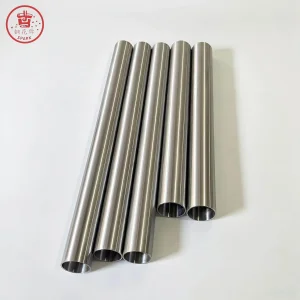
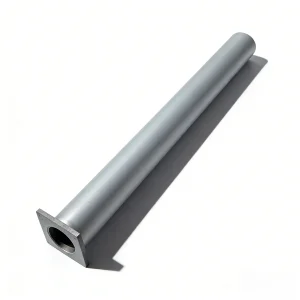
Explore our complete range of nickel-chrome, iron-chromium-aluminum alloys, and specialized tubular heating elements available for direct factory export.