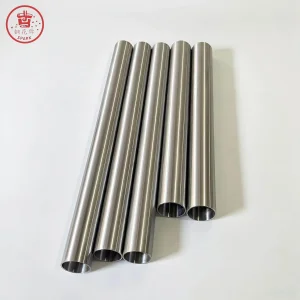
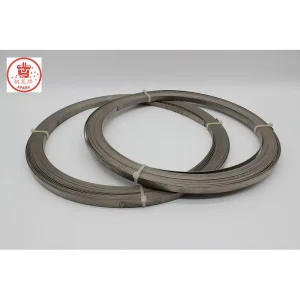
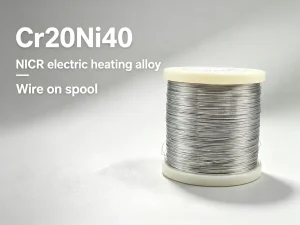
Featured High-Temperature Alloys & Elements
Explore precision-engineered resistance heating wires, ribbons, and custom elements manufactured in Beijing to international standards (ASTM B344, GB/T 1234, DIN 17470).
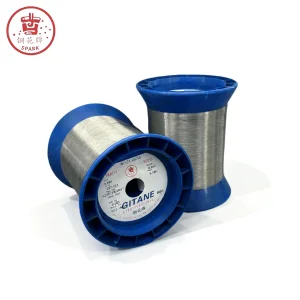
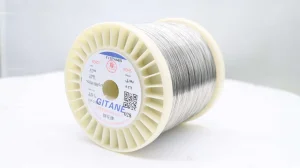
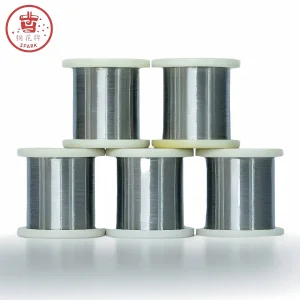

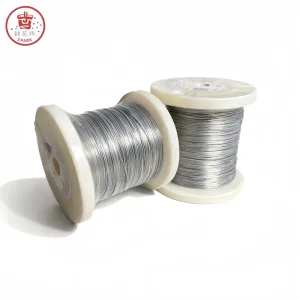
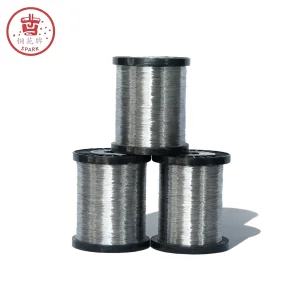
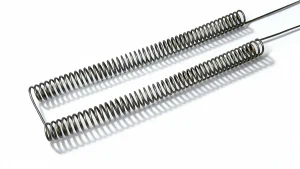
Comprehensive Engineering Guide to Cr20Ni80S Heating Wire
Understanding the micro-structural mechanics, chemical stabilization, and parabolic oxidation kinetics of Chinese-manufactured Nichrome 80/20 variants.
In high-temperature thermal engineering, Cr20Ni80S heating wire represents the gold standard for austenitic nickel-chromium resistance alloys. Derived from the classic 80/20 Nickel-Chromium stoichiometry (UNS N06003 / W.Nr. 2.4869), the specialized "S" grade designation denotes specific elemental optimizations—typically micro-alloying enhancements with Silicon (Si), Rare Earth Elements (REE like Yttrium and Cerium), and tight control over interstitial impurities. These refinements drastically elevate hot strength, extend thermal fatigue life, and eliminate scale spallation during rapid thermal cycling up to 1200°C (2192°F).
Chemical Stoichiometry and Physical Characteristics
The operational longevity of Cr20Ni80S rests on its balance of elements. High nickel content ensures a non-magnetic austenitic matrix at room and elevated temperatures, providing high ductility, superior hot plasticity, and absence of brittle phase transitions during heating and cooling cycles.
| Element | Standard Weight Percentage (%) | Cr20Ni80S Optimized Grade (%) | Primary Technical Function |
|---|---|---|---|
| Nickel (Ni) | 78.0 – 81.0% | Balance (Min 78.5%) | Stabilizes FCC austenitic structure, imparts corrosion resistance & high-temp ductility. |
| Chromium (Cr) | 19.0 – 21.0% | 19.5 – 21.5% | Forms self-passivating, refractory Chromium Oxide (Cr₂O₃) protective scale. |
| Silicon (Si) | 0.75 – 1.50% | 1.20 – 1.85% | Improves fluid melt quality, enhances resistance to carburization & high-temp oxidation. |
| Rare Earths (Ce/Y) | Optional / Trace | 0.05 – 0.15% | "Reactive Element Effect" (REE) - anchors protective scale, prevents thermal fatigue spalling. |
| Iron (Fe) | ≤ 1.0% | ≤ 0.75% | Strictly limited to prevent formation of brittle intermetallic phases and keep hot strength high. |
| Carbon (C) | ≤ 0.08% | ≤ 0.03% | Ultra-low carbon suppresses chromium carbide precipitation along grain boundaries. |
China Factory 4.0: Manufacturing Excellence & Supply Chain Resilience
Why Tier-1 Chinese manufacturers offer unparalleled cost efficiency, chemical consistency, and scale stability for global B2B procurement partners.
Vacuum Metallurgy (VIM + ESR)
Leading Chinese manufacturers utilize twin-stage Vacuum Induction Melting (VIM) followed by Electroslag Remelting (ESR). This process eliminates dissolved gases (O₂, N₂, H₂), reduces non-metallic inclusions to negligible levels, and ensures ultra-uniform grain boundaries across thousands of continuous wire meters.
Precision Cold Drawing & Bright Annealing
Utilizing diamond wire dies and continuous multi-pass hydro-speed wire drawing machines, diameter tolerances are held within ±0.005mm. Continuous hydrogen-atmosphere vertical tube furnaces guarantee a bright, scale-free surface finish with zero residual mechanical stress.
Integrated Upstream Supply Chains
By leveraging China's comprehensive nickel and chromium refining clusters, factories maintain massive strategic raw material reserves. This vertical integration insulates international buyers from volatile spot-market pricing and provides reliable 2-to-3 week lead times on bulk custom spools.
Macro Industry Solutions & Field Implementations
From semiconductor crystal growth to green industrial electrification, Cr20Ni80S provides reliable thermal power across demanding sectors.
Semiconductor & Photovoltaics
In thermal diffusion zones and single-crystal silicon ingot growth furnaces, absolute thermal stability is required. Cr20Ni80S offers zero magnetic interference and minimal sag at operating temperatures above 1000°C, ensuring uniform wafer heating profiles.
Industrial Heat Treatment Furnaces
Applied extensively as corrugated ribbon and wound spiral elements in carburizing, nitriding, and bright annealing furnaces. Its resistance to carbon pickup and protective chromium-oxide barrier extends element lifespan under endothermic atmospheres.
Green Energy & Thermal Storage
As heavy industry shifts from fossil fuel combustion to clean electric process heat, Cr20Ni80S powers high-capacity electric thermal energy storage (TES) and grid-level molten salt heaters with exceptional efficiency.
Global Buyers' Guide: Surface Load Calculation & TCO Optimization
A rigorous engineering framework for evaluating alloy selection, surface loading ($W/cm^2$), and Total Cost of Ownership (TCO).
When engineering high-temperature heating elements, calculating the correct Surface Load ($W/cm^2$) is critical. Overloading an alloy causes localized overheating, accelerated grain growth, and early thermal burn-out. Conversely, underloading increases material weight and upfront element capital costs.
Where $p$ = Surface load ($W/cm^2$), $P$ = Power input (Watts), $d$ = Wire diameter ($cm$), and $L$ = Total wire length ($cm$).
Recommended Surface Load Limits for Cr20Ni80S vs FeCrAl Alloys
| Furnace Operating Temp (°C) | Cr20Ni80S Allowed Surface Load (W/cm²) | 0Cr25Al5 (FeCrAl) Load (W/cm²) | SGHYZ Ultra-Grade Load (W/cm²) |
|---|---|---|---|
| 600 °C – 800 °C | 5.0 – 7.5 W/cm² | 4.0 – 6.0 W/cm² | 6.0 – 8.5 W/cm² |
| 800 °C – 1000 °C | 3.0 – 5.0 W/cm² | 2.5 – 4.0 W/cm² | 4.5 – 6.5 W/cm² |
| 1000 °C – 1150 °C | 1.5 – 3.0 W/cm² | 1.2 – 2.2 W/cm² | 3.0 – 4.5 W/cm² |
| 1200 °C | 0.8 – 1.5 W/cm² (Max limit) | 0.8 – 1.4 W/cm² | 2.0 – 3.0 W/cm² |
Total Cost of Ownership (TCO) Financial Model
While iron-chromium-aluminum (FeCrAl) alloys offer lower initial raw material cost per kilogram due to lower density and zero nickel content, Cr20Ni80S provides significant long-term TCO savings in applications involving mechanical vibration, frequent thermal cycling, or maintenance accessibility constraints:
- Ductility Retained Post-Service: Cr20Ni80S remains fully ductile after hundreds of furnace hours. It can be bent, re-coiled, or repaired during routine maintenance without cracking. FeCrAl becomes extremely brittle post-heating and requires complete replacement if disturbed.
- Hot Creep Strength: The high nickel matrix provides superior resistance to sagging and deformation under its own weight, reducing the required density of ceramic support hooks and brick channels.
- Non-Magnetic Processing: Critical for precision electronic component manufacturing where high-frequency electromagnetic interference must be avoided.
Technical Roadmap & Next-Gen Innovations
How Chinese metallurgical institutes are reshaping resistance alloys through nano-structuring, green melting, and additive manufacturing.
Nano-Dispersed Oxide Layers
Current research focuses on incorporating nanoscale HfO₂ (Hafnium Oxide) and ZrO₂ particles directly into the melt. This micro-alloying innovation raises the maximum continuous operating threshold of Cr20Ni80S from 1200°C toward 1250°C with zero reduction in hot ductility.
Green Hydrogen Metallurgy
Leading Beijing factories are transitioning primary reduction and bright annealing lines to 100% green hydrogen power derived from wind and solar arrays. This achieves near-zero carbon footprints across exported heating wire batches.
Additive Manufacturing Feedstock
Custom spherical gas-atomized Cr20Ni80S powders are being commercialized for 3D printing complex 3D heating element geometries, internal cooling channels, and integrated heat-exchanger modules.
International Compliance, Certification, & Quality Control
Ensuring full traceability, chemical accuracy, and global regulatory compliance for tier-1 OEMs.
EN 10204 3.1 Mill Testing
Every shipment is accompanied by certified inspection documents specifying exact chemical heat analysis, room-temperature tensile properties, electrical resistance at 20°C (Ω/m), and optical surface inspection reports.
RoHS & REACH Verified
All alloys strictly comply with EU Directive 2011/65/EU (RoHS 2.0) and REACH Regulation (EC) No 1907/2006. Toxic heavy metal contaminants (Cd, Pb, Hg, Cr-VI) are guaranteed well below 10 ppm.
Customized Export Packaging
Spooled on DIN160, DIN200, or DIN250 plastic spools sealed in moisture-proof vacuum foil packaging with desiccant packs, then crated in ISPM-15 compliant heat-treated wooden boxes for overseas ocean freight.
Technical & Procurement Q&A
Direct answers from engineering experts on material specification, substitution, and life expectancy.
Additional High-Performance Resistance Alloys
Discover specialized grades optimized for ultra-high-temperature kilns, petrochemical heating tubes, and cost-efficient domestic appliances.