
High-Performance Electric Heating & Resistance Alloys (Part I)
Directly sourced from Beijing Shougang Gitane New Materials Co., Ltd. — Manufactured under strict ISO 9001 and GB/T 1234-2012 quality control protocols.
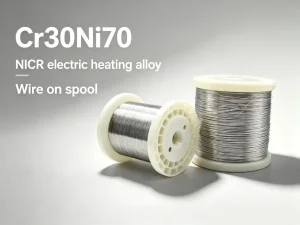
SPARK Cr30Ni70 High Temperature Alloy Wire - 50 Hours Accelerated Performance Rated
View Product Specs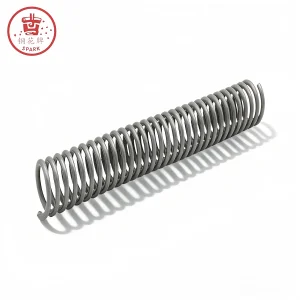
Wholesale High-Quality NiCr & FeCrAl Electric Heating Elements - Factory Solutions
View Product Specs
China High-Quality Cr15Ni60 Heating Wire - Durable Electric Heating Alloy Factory Direct
View Product Specs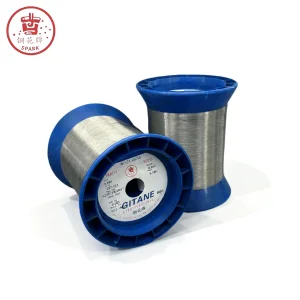
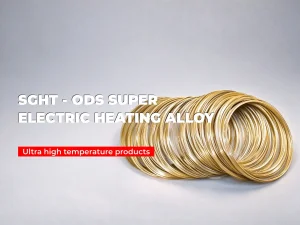
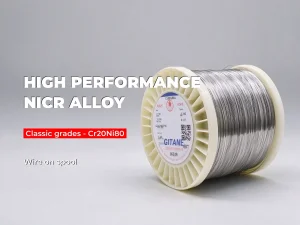
Engineering Extreme Thermal Uniformity: Why Advanced Resistance Alloys Drive Semiconductor & Precision Heat Treatment Excellence
An authoritative technical analysis of micro-alloyed Nichrome (Cr20Ni80) and FeCrAl systems engineered to eliminate thermal gradients, resist creep deformation, and deliver ultra-pure process atmospheres.
In modern industrial manufacturing, particularly across semiconductor wafer processing, sub-micron electronics annealing, aerospace component press-hardening, and crystal growth, thermal management is no longer merely about reaching target temperatures—it is governed by the rigorous physics of thermal gradient control and micro-zone uniformity. In semiconductor processing furnaces (such as LPCVD, thermal oxidation, gate oxide growth, and rapid thermal processing), a deviation of even $\pm 1.0^\circ\mathrm{C}$ across a 300mm wafer plane can result in unacceptable film thickness variations, lattice defects, and catastrophic yield losses.
Achieving absolute thermal uniformity requires electric resistance heating materials with exceptional resistance stability, zero micro-structural phase segregation, and precise physical dimensions. Among modern electrothermal materials, Cr20Ni80 (80/20 Nickel-Chromium alloy) stands out as the ultimate standard for applications demanding stringent thermal symmetry, high mechanical stability, and superior cold workability. Concurrently, advanced FeCrAl (Iron-Chromium-Aluminum) alloys—specifically powder metallurgy grades like SGHT and ultra-pure SGHYZ—push the boundary to continuous $1400^\circ\mathrm{C}-1425^\circ\mathrm{C}$ operating temperatures.
The Core Challenge: Thermal Sag, Resistance Drift, and Scale Spallation
When resistance heating elements are deployed in continuous precision furnaces, three primary metallurgical failure modes compromise system performance:
- Resistance Drift and Hot-Spot Formation: Non-homogeneous alloy compositions or local cross-sectional variations induce localized resistance fluctuations. As electric current flows, sections with higher local resistance experience elevated power dissipation ($P=I^2 R$), generating localized hot spots that rapidly degrade element life and ruin furnace zone uniformity.
- High-Temperature Creep and Sagging: Under prolonged thermal exposure above $1000^\circ\mathrm{C}$, gravitational forces and thermal expansion stresses cause heating coils to deform, sag, or short-circuit against adjacent turns. This is particularly problematic in un-supported horizontal element configurations.
- Oxide Spallation and Particle Contamination: In cleanroom environments and semiconductor quartz tubes, oxidation scales ($\mathrm{Cr_2O_3}$ or $\mathrm{Al_2O_3}$) that flake off during thermal cycling contaminate silicon substrates and process chambers, causing fatal particulate defects.
Comprehensive Comparison: Cr20Ni80 Nichrome vs. FeCrAl High-Resistance Alloys
Selecting the exact resistance alloy grade based on chemical composition, oxide structure, mechanical strength, and atmospheric compatibility.
| Alloy Grade | Alloy Family | Max Temp (°C) | Resistivity at 20°C (μΩ·m) | Density (g/cm³) | Microstructure | Primary Oxide Layer | Key Application Focus |
|---|---|---|---|---|---|---|---|
| Cr20Ni80 | Ni-Cr (80/20) | 1200°C | 1.09 ± 0.05 | 8.40 | Austenitic (Non-magnetic) | Dense Chromia ($\mathrm{Cr_2O_3}$) | Semiconductor tools, medical heat treatment, precision coils |
| Cr30Ni70 | Ni-Cr (70/30) | 1250°C | 1.18 ± 0.05 | 8.10 | Austenitic (Non-magnetic) | Chromia-rich Oxide Scale | Industrial furnaces, cyclic thermal equipment |
| 0Cr25Al5 | Fe-Cr-Al | 1250°C | 1.42 ± 0.07 | 7.10 | Ferritic (Magnetic) | Alumina ($\alpha-\mathrm{Al_2O_3}$) | High-temperature industrial kilns, radiant heating tubes |
| 0Cr21Al6Nb | Fe-Cr-Al + Nb | 1350°C | 1.45 ± 0.07 | 7.10 | Ferritic + Nb Carbides | Adherent Alumina Scale | Powder metallurgy sintering, heavy duty furnace coils |
| SPARK SGHYZ | Advanced FeCrAl | 1400°C | 1.48 ± 0.08 | 7.10 | Fine-Grained Ferritic | Pure Micro-Alloyed $\mathrm{Al_2O_3}$ | Ultra-high-temperature diffusion & crystal growth |
| SPARK SGHT | Powder Metallurgy FeCrAl | 1425°C | 1.50 ± 0.08 | 7.10 | PM Dispersion Strengthened | Self-Healing Ultra-Dense $\mathrm{Al_2O_3}$ | Extreme ceramic sintering, semiconductor epitaxy |
Oxidation Kinetics and Scale Integrity Mechanisms
The operational boundary between NiCr (Cr20Ni80) and FeCrAl alloys is dictated by the thermodynamic behavior of their passive oxide films. Under high temperature exposure, Cr20Ni80 forms a tenaciously adherent chromium oxide scale ($\mathrm{Cr_2O_3}$). The non-magnetic austenitic crystal lattice of Cr20Ni80 maintains exceptional structural integrity across thermal cycles. Unlike ferritic FeCrAl alloys which undergo grain growth and post-service embrittlement, Cr20Ni80 retains significant room-temperature plasticity even after thousands of operational hours.
Conversely, FeCrAl alloys rely on the growth of a protective alpha-alumina ($\alpha-\mathrm{Al_2O_3}$) film. While $\mathrm{Al_2O_3}$ offers higher electrical resistivity and superior oxidation resistance up to $1425^\circ\mathrm{C}$, ferritic FeCrAl elements become brittle at room temperature once cooled. Thus, for equipment requiring frequent maintenance, re-positioning, or severe mechanical vibration, Cr20Ni80 remains the material of choice.
Superior Formability & Welding Excellence: The Cr20Ni80 Advantage (常温塑性与焊接性能)
Detailed insights into why Cr20Ni80’s high room-temperature elongation and ductile austenitic phase streamline component fabrication and element assembly.
Unrivaled Room-Temperature Plasticity (出色的常温塑性)
With room-temperature elongation exceeding 25–30%, Cr20Ni80 wire and ribbon can be tightly cold-wound into intricate spiral coils, wave-shaped elements, or hairpin grids without micro-fracturing or spring-back distortion. This high ductility enables automated high-speed coil winding for OEM element fabricators.
Flawless Weldability & Joining (优异的焊接性能)
Cr20Ni80 exhibits excellent arc stability and weldability across TIG (GTAW), micro-plasma, spot resistance, and laser welding techniques. The absence of low-melting eutectic phases prevents hot-cracking in terminal lead connections, ensuring low-resistance electrical contacts that withstand mechanical vibration.
Post-Service Repairability
Because Cr20Ni80 maintains its ductile face-centered cubic (FCC) austenitic crystal structure throughout thermal cycling, aged elements can be physically inspected, adjusted, or re-welded in the field during furnace overhaul—dramatically lowering maintenance downtime and replacement costs.
Global Commercial Trends & Technical Procurement Dynamics
How global decarbonization, semiconductor fab expansions, and industrial electrification are reshaping resistance alloy sourcing requirements.
The global industrial heating sector is undergoing a structural transition driven by three macroeconomic imperatives:
1. Electrification of Fossil-Fired Industrial Kilns
To comply with stringent Net-Zero carbon mandates across Europe, North America, and East Asia, heavy industries are replacing gas burners with electric resistance heating systems. Electric heating achieves thermal conversion efficiencies exceeding 95% while eliminating direct combustion emissions. Consequently, global procurement managers are demanding resistance wire suppliers capable of providing bulk, high-purity alloy reels with consistent resistivity to power high-megawatt industrial furnaces.
2. Semiconductor Capital Expenditure & Fab Expansion
The global surge in silicon wafer manufacturing, SiC (Silicon Carbide) power devices, and advanced packaging has sparked record investment in vertical diffusion furnaces, epitaxial reactors, and rapid thermal processing equipment. Semiconductor OEMs require resistance alloys certified for zero particle shedding, ultra-tight wire dimensional tolerances ($\pm 0.003 \text{ mm}$), and guaranteed batch-to-batch chemical homogeneity.
3. Total Cost of Ownership (TCO) & Supply Chain Risk Mitigation
International procurement teams no longer evaluate resistance alloys solely on initial material price per kilogram. The primary KPI is **Mean Time Between Failures (MTBF)**. Unplanned downtime in a semiconductor or automotive press-hardening line can cost upwards of $50,000 per hour. As a result, Tier-1 buyers are partnering directly with integrated Chinese state-owned manufacturers like Shougang Gitane to guarantee supply stability, technical compliance, and rapid lead times.
China Supply Chain Resilience: Beijing Shougang Gitane’s Metallurgical Leadership
How vertical integration from vacuum melting to ultra-fine wire drawing delivers world-class alloy consistency and global supply chain security.
As a key enterprise under the prestigious Shougang Group (founded in 1919), Beijing Shougang Gitane New Materials Co., Ltd. represents over 60 years of specialized metallurgical innovation. Spanning an 88,000 m² modern manufacturing hub in Shahe, Beijing, Gitane integrates the entire manufacturing value chain under one quality management system:
VIM + ESR Advanced Melting
Utilizing Vacuum Induction Melting (VIM) and Electroslag Remelting (ESR), Gitane eliminates tramp elements (Sulfur, Phosphorus, Oxygen), preventing non-metallic inclusion clusters that cause premature wire snapping and hot spots.
Precision Cold Drawing & Rolling
Automated multi-pass wire drawing machines produce round wires down to 0.02 mm and ultra-thin strips with dimensional tolerances held to micron precision, ensuring strict electrical resistance per meter.
ISO 9001 & GB/T 1234 Traceability
Every production melt is issued a certified Mill Test Report (MTR) detailing chemical analysis, room-temperature tensile properties, electrical resistivity, and high-temperature oxidation life test results.
Localized Application Scenarios: Precision Engineering in Action
Discover how SPARK resistance alloys deliver proven reliability across specialized industrial processes worldwide.
1. Semiconductor Thermal Oxidation & LPCVD Furnaces
In vertical and horizontal quartz tube furnaces, Cr20Ni80 heating elements deliver highly symmetrical radiative heating across multi-zone profiles. Their clean oxide scale prevents particle contamination inside cleanrooms.
2. Aerospace Vacuum Heat Treatment & Brazing
Aerospace alloy components require precise solution treatment and stress relief under vacuum or inert gas. SPARK Cr20Ni80 and Cr30Ni70 wire coils retain high creep resistance, eliminating thermal sag in vacuum furnaces.
3. Photovoltaic Silicon Ingot Growth & Cell Sintering
Photovoltaic diffusion furnaces require continuous operation at $1000^\circ\mathrm{C}-1350^\circ\mathrm{C}$. Powder metallurgy FeCrAl (SGHT) and high-grade 0Cr25Al5 alloys deliver exceptional service life in solar cell manufacturing.
4. Automotive Press-Hardening & Carburizing Lines
Continuous roller hearth furnaces for high-strength automotive steel stamping depend on heavy-gauge FeCrAl ribbon elements to sustain rapid heat flux and withstand aggressive carburizing furnace atmospheres.
High-Performance Electric Heating & Resistance Alloys (Part II)
Explore our full line of fine wires, heavy strips, coiled elements, and specialized ultra-high-temperature alloys.

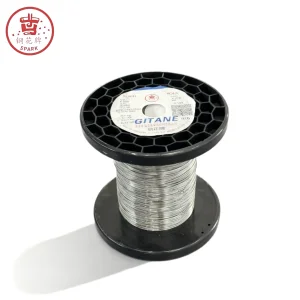
Wholesale China Suppliers Cr15Ni60 Electric Heating Wire - High Temp Oxidation Resistant
View Product Specs
Wholesale High-Quality SPARK 0Cr25Al5 Electric Heating Wire - China Factory Direct
View Product Specs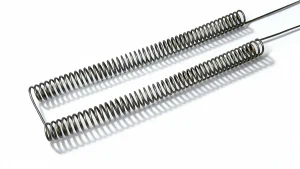
China Spiral Type Electric Heating Element from China Suppliers - High Quality Factory
View Product Specs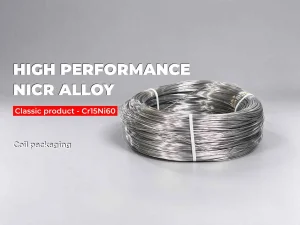
China High-Quality Cr15Ni60 Nickel-Chromium-Iron Heating Wire for 1150°C Resistance
View Product Specs

China Cr20Ni80 Electric Heating Wire Suppliers | High-Quality Resistance Wire Factory
View Product SpecsFrequently Asked Questions by Furnace Engineers & Procurement Officers
Expert answers regarding material selection, surface loading guidelines, atmospheric compatibility, and coil fabrication.
Q1: Why is Cr20Ni80 preferred over FeCrAl alloys for precision semiconductor applications despite its lower maximum operating temperature?
While FeCrAl alloys achieve higher maximum temperatures (up to $1425^\circ\mathrm{C}$), Cr20Ni80 is preferred in precision semiconductor tools ($<1150^\circ\mathrm{C}$) because of its non-magnetic austenitic microstructure, superior ductility after aging, and non-spalling chromia ($\mathrm{Cr_2O_3}$) oxide scale. Unlike FeCrAl, Cr20Ni80 does not become brittle upon cooling, preventing particulate shedding in cleanrooms and allowing maintenance personnel to physically adjust coils without breaking them.
Q2: What maximum surface load (W/cm²) is recommended for Cr20Ni80 heating elements?
The safe surface load depends heavily on furnace operating temperature and element installation type. For continuous industrial furnaces operating at $1000^\circ\mathrm{C}$, a conservative surface load of $1.5 - 2.5 \text{ W/cm}^2$ is recommended for Cr20Ni80. In clean radiative environments with excellent heat dissipation, surface loads up to $3.5 \text{ W/cm}^2$ can be safely sustained without localized overheating.
Q3: How does Cr20Ni80 perform in specialized furnace atmospheres (Hydrogen, Nitrogen, Vacuum, Carburizing)?
Cr20Ni80 exhibits excellent stability in pure Hydrogen ($\mathrm{H_2}$), Nitrogen ($\mathrm{N_2}$), and Vacuum environments where alumina-forming alloys might suffer reduction or nitriding issues. However, in strongly carburizing atmospheres, Ni-Cr alloys can be vulnerable to "green rot" (internal chromium oxidation/carburization) between $800^\circ\mathrm{C}$ and $1050^\circ\mathrm{C}$. For carburizing environments, FeCrAl or higher-silicon Ni-Cr-Fe alloys (like Cr15Ni60) are recommended.
Q4: What welding procedures should be followed when joining Cr20Ni80 wire to terminal leads?
TIG (GTAW) welding with matching ERNiCr-3 filler wire or direct resistance spot welding is recommended. Ensure wire ends are thoroughly degreased. Pre-heating is unnecessary due to Cr20Ni80's high inherent cold ductility. Maintain a clean, argon-shielded gas envelope during TIG welding to prevent heavy oxidation at the weld joint zone.
Q5: What dimensional tolerances and delivery packaging can Shougang Gitane provide for bulk OEM orders?
Gitane offers standard fine wire diameters down to 0.02 mm ($\pm 0.002 \text{ mm}$ tolerance) and heavy industrial wires up to 10.0 mm ($\pm 0.015 \text{ mm}$). Delivery options include plastic DIN spools, steel reels, or continuous catchweight coils packaged in moisture-proof vacuum containers with heat-treated export wooden pallets.
Request Technical Datasheets & Custom Alloy Quotes
Partner with Beijing Shougang Gitane New Materials Co., Ltd. for direct factory pricing, certified Mill Test Reports, and bespoke element design support.
Download Engineering Catalog