
Explore our factory-direct industrial heating wires, FeCrAl alloys, and NiCr heating elements engineered for extreme thermal operational stability up to 1425°C.

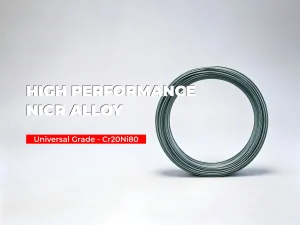
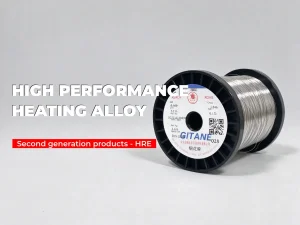

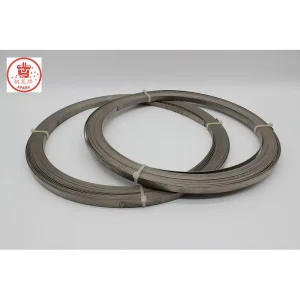
In high-temperature thermal processing and electrothermal engineering, Cr20Ni80 (Nichrome 80/20) represents the benchmark for austenitic resistance heating alloys. Manufactured under rigorous quality standards by Beijing Shougang Gitane New Materials Co., Ltd. (a key enterprise of the state-owned Shougang Group), China-manufactured Cr20Ni80 exhibits extraordinary thermodynamic stability, uniform electrical resistance, and superior surface scale adhesion when continuously exposed to ambient atmospheric air at operating temperatures up to 1200°C (2192°F).
The fundamental scientific rationale behind why China Cr20Ni80 performs stably in air lies in its single-phase face-centered cubic (FCC) crystal structure combined with selective oxidation kinetics. When subjected to high temperatures in air, the chromium content (nominally 20.0% to 23.0%) selectively reacts with atmospheric oxygen to build a highly adherent, self-healing passivating oxide scale comprised predominantly of chromia ($\alpha\text{-Cr}_2\text{O}_3$) interspersed with a spinelloid sub-layer ($\text{NiCr}_2\text{O}_4$). This micro-thin ceramic film acts as a formidable diffusion barrier, dramatically suppressing inward oxygen transport and outward nickel cation migration.
Unlike ferritic Iron-Chromium-Aluminum (FeCrAl) alloys, which can become excessively brittle after thermal exposure due to grain growth and phase precipitation, Cr20Ni80 maintains exceptional post-heating ductility. This allows for cold re-coiling, effortless maintenance, and resistance to severe mechanical vibration or physical shock during continuous industrial operations.
To understand the information gain provided by Beijing Shougang Gitane’s advanced melting techniques, one must analyze the parabolic oxidation law that governs high-temperature scale growth in air:
(\Delta m / A)^2 = k_p \cdot t + C
Where \Delta m / A represents mass gain per unit surface area, t is exposure time, k_p is the parabolic rate constant, and C is an integration constant. In Gitane’s SPARK grade Cr20Ni80, micro-alloying additions of rare-earth elements (such as Cerium, Yttrium, and Zirconium) optimize k_p, drastically lowering the oxidation growth rate while keying the protective scale to the underlying matrix.
Controlled addition of trace Ce/Y suppresses the outward cation transport of Chromium and Nickel, shifting scale growth inward and preventing micro-void formation at the alloy-oxide interface.
Due to closely matched thermal expansion coefficients between the austenitic substrate ($\approx 17 \times 10^{-6}/\text{K}$) and chromia scale, the wire resists flaking during rapid heat-up and cool-down cycles.
Vacuum induction melting (VIM) removes low-melting-point tramp elements (Pb, Bi, Sn, Sb), preventing intergranular void formation and creep rupture under continuous high voltage load.
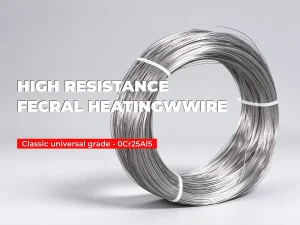
Engineers and procurement officials often evaluate Cr20Ni80 against FeCrAl alloys such as 0Cr25Al5 and 0Cr23Al5. While FeCrAl provides higher maximum temperature capabilities, Cr20Ni80 dominates applications requiring high structural integrity, hot yield strength, and non-magnetic operation.
| Performance Parameter | SPARK Cr20Ni80 (NiCr 80/20) | 0Cr25Al5 (FeCrAl) | 0Cr23Al5 (FeCrAl) |
|---|---|---|---|
| Nominal Chemical Composition | 80% Ni, 20% Cr | 25% Cr, 5% Al, Bal. Fe | 23% Cr, 5% Al, Bal. Fe |
| Max Service Temperature in Air | 1200°C (2192°F) | 1250°C (2282°F) | 1250°C (2282°F) |
| Crystal Structure & Phase | Austenitic (Non-magnetic) | Ferritic (Magnetic) | Ferritic (Magnetic) |
| Ductility After Long Heating | Excellent (Stays Ductile) | Poor (Becomes Brittle) | Poor (Becomes Brittle) |
| Hot Creep Strength at 1000°C | High (Resists Sagging) | Low (Requires Ceramic Support) | Low (Requires Support) |
| Green Rot & Carburization Resistance | Superior with RE additions | Moderate | Moderate |
| Density (g/cm³) | 8.40 | 7.10 | 7.25 |
| Electrical Resistivity (μΩ·m, 20°C) | 1.09 ± 0.05 | 1.42 ± 0.07 | 1.35 ± 0.05 |
As industrial decarbonization accelerates worldwide, global OEMs and furnace manufacturers are replacing gas-fired combustion systems with electrical resistance heating. China Cr20Ni80 performs as a vital enabler across major heavy industry sectors:
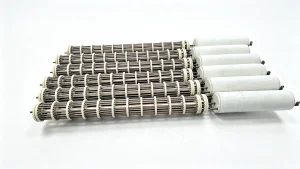
Diffusion furnaces, silicon ingot growth heaters, and wafer annealing equipment require non-contaminating, highly stable heating ribbons. Cr20Ni80 delivers uniform heat flux without emitting particulate scales.
AMS 2750 certified thermal processing units utilize Cr20Ni80 elements for strict temperature uniformity (+/- 3°C) during solution heat treatment of titanium and nickel-based superalloys.
High-end domestic cooking ranges, industrial toaster ovens, and water heaters specify fine Cr20Ni80 wire for rapid rapid-thermal response and multi-year longevity without failure.
Beijing Shougang Gitane New Materials Co., Ltd. provides end-to-end traceably certified products. All Cr20Ni80 heats undergo rigorous spectral analysis, electronic resistance tolerance verification, and full adherence testing compliant with GB/T 1234-2012, ASTM B344, and DIN 17471 standards.
- ISO 9001:2015 & ISO 14001: Integrated management system covering melt to final wire drawing.
- RoHS 3 & REACH SVHC: Fully compliant; free from restricted heavy metals, phthalates, and conflict minerals.
- Custom Mill Test Reports (MTR): Complete EN 10204 3.1 certification provided with chemical heat analysis and mechanical test data per shipment.
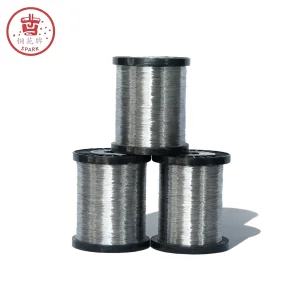
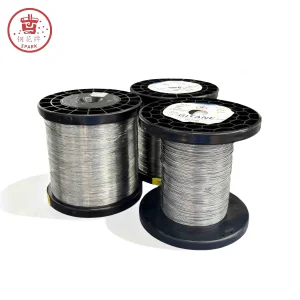
To prevent transit oxidation or mechanical coil damage during transoceanic freight, SPARK Cr20Ni80 wire is precision-wound on plastic spools (DIN160, DIN200, DIN250) or packaged in plastic-wrapped coils within reinforced export wooden cases.
Our technical engineering team offers localized heating element design consulting, calculating surface load density ($W/\text{cm}^2$), pitch ratio, and projected life cycles for high-volume buyers.
Implementation of ultra-fine grain refinement via controlled secondary annealing, increasing cold yield strength by 15%.
Transition of primary induction furnaces to 100% green hydrogen/renewable electric power for zero-carbon material footprints.
Customized high-purity Cr20Ni80 wire feedstocks designed specifically for Directed Energy Deposition (DED) additive manufacturing.
Multi-element co-doping (Y+Zr+La) to raise maximum continuous air operating threshold to 1250°C.
Browse our specialized high-temperature resistance alloys, precision flat ribbons, and engineered furnace elements directly from our manufacturing facility.
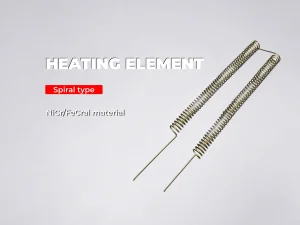


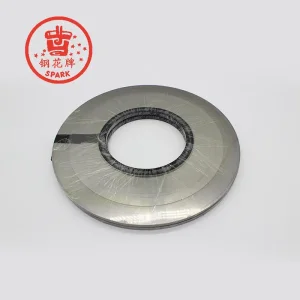

In-depth technical answers curated by Shougang Gitane’s senior metallurgical engineering director for furnace builders, product designers, and international procurement managers.