
Featured High-Temperature Wire & Alloy Elements
Verified resistance alloys sourced directly from accredited Chinese manufacturing plants meeting ISO 9001 and GB/T 1234-2012 quality standards.

China China 0Cr25Al5 Electric Heating Wire - High-Quality Resistance Wire from Reliable Suppliers & Factory Manufacturers, Quotes
View Specifications & Quotes
China China Suppliers Cr20Ni80 Electric Heating Wire Factory - High-Temperature Resistance Wire for Industrial Use Supplier, Pricelist
View Specifications & Quotes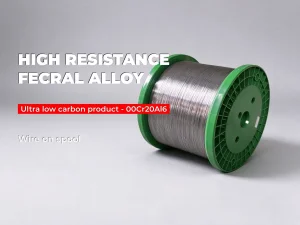
Wholesale 00Cr20Al6 Ultra Low Carbon FeCrAl Heating Alloy | Industrial Resistance Wire Manufacturers, Suppliers
View Specifications & Quotes
Wholesale Spiral Electric Heating Elements from China Suppliers - High-Quality Heating Solutions by Leading Factory Manufacturer, Manufacturers
View Specifications & Quotes
China China Suppliers Factory 00Cr20Al6 Ultra Low Carbon FeCrAl Heating Alloy for High-Performance Industrial Applications Supplier, Factory
View Specifications & Quotes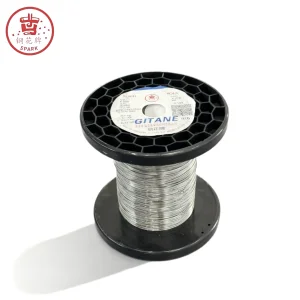
Wholesale 1400℃ High Temperature Electric Resistance Wire - SGHYZ from China Suppliers and Factory Manufacturers, Factories
View Specifications & Quotes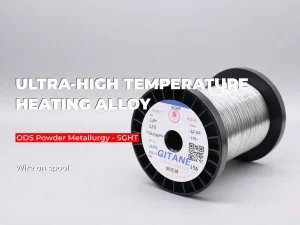
China 1425°C High Temperature FeCrAl Heating Alloy | SPARK SGHT Grade Supplier, Pricelist
View Specifications & Quotes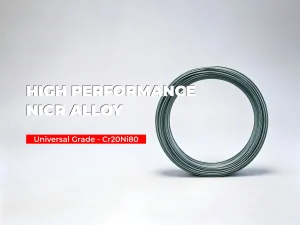
China Cr20Ni80 Nickel Chromium Heating Wire | 80/20 NiCr Resistance Wire for Industrial High-Temperature Heating Manufacturer, Manufacturers
View Specifications & QuotesExecutive Summary: Global Commercial & Industrial Landscape of Cr20Ni80 Wire
The global industrial heating market relies heavily on high-precision electrothermal resistance alloys. Among the various non-ferrous thermal formulations, Cr20Ni80 (Nickel-Chromium 80/20) represents the benchmark standard for high-temperature stability, mechanical ductility, and thermal cycle longevity up to 1200°C (2192°F).
Driven by the rapid expansion of semiconductor wafer fabrication, electric vehicle (EV) battery cell thermal processing, advanced ceramic sintering, and aerospace heat-treating, the demand for high-purity Cr20Ni80 wire has reached unprecedented levels. China has established itself as the dominant global hub for electrothermal alloy production, supported by vertically integrated smelting infrastructure, advanced Vacuum Induction Melting (VIM), Electroslag Remelting (ESR), and high-precision micro-drawing technologies.
China Sourcing Advantages
China's strategic control over refined nickel assets and ferrochromium supply chains provides a structural cost and volume advantage. Integrated manufacturers like Beijing Shougang Gitane New Materials offer full-process metallurgical control from ingot casting to ultra-fine wire drawing, eliminating multi-tier distributor markups.
Quality Standards Compliance
Leading Chinese exporters produce Cr20Ni80 in strict accordance with international standards including ASTM B344 (Standard Specification for Drawn or Rolled Nickel-Chromium Alloys), DIN 17470, JIS C2520, and national standard GB/T 1234-2012, ensuring drop-in replacement compatibility for Western furnace OEMs.
Metallurgical Architecture & Physical Engineering Properties
Cr20Ni80 (Ni80Cr20 / Nichrome V) is an austenitic solid-solution alloy featuring a face-centered cubic (FCC) crystal lattice. The absence of iron in significant quantities prevents phase degradation and embrittlement over extended thermal cycling.
Chemical Composition Matrix
The alloy consists nominally of 77.0%–80.0% Nickel (Ni) and 20.0%–23.0% Chromium (Cr). Trace elements include Silicon (0.75–1.60%) to promote oxide film adhesion, Manganese (≤1.0%), Carbon (≤0.08%), and Iron (≤1.0%). Advanced grades include micro-alloyed rare earth elements (Yttrium, Cerium) to mitigate high-temperature spallation.
Passivation & Oxidation Kinetics
When heated in an oxidizing atmosphere above 800°C, Cr20Ni80 selectively oxidizes to form a dense, adherent outer layer of Chromium Oxide ($\text{Cr}_2\text{O}_3$). Beneath this scale, a thin layer of $\text{NiCr}_2\text{O}_4$ spinel forms, acting as a secondary diffusion barrier against catastrophic hot corrosion.
Creep Resistance & Hot Strength
Unlike Ferritic Iron-Chromium-Aluminum (FeCrAl) alloys which suffer severe grain growth and structural sagging above 1000°C, Cr20Ni80 retains superior mechanical hot strength and structural integrity, resisting element distortion when unsupported in vertical furnace linings.
| Physical / Mechanical Parameter | Standard Imperial Value | Metric SI Value | Test Standard Benchmark |
|---|---|---|---|
| Nominal Electrical Resistivity at 20°C | 656 Ω·circ. mil/ft | 1.09 ± 0.05 μΩ·m | ASTM B63 / GB/T 1234 |
| Density | 0.303 lb/in³ | 8.40 g/cm³ | Direct Archimedes Balance |
| Maximum Operating Temperature in Air | 2192°F | 1200°C | Continuous Service Rating |
| Melting Point Range | 2552°F – 2588°F | 1400°C – 1420°C | Differential Scanning Calorimetry |
| Thermal Conductivity (20°C) | 10.4 BTU/h·ft·°F | 15.0 W/m·K | Laser Flash Analysis |
| Coefficient of Thermal Expansion (20–1000°C) | 9.4 × 10⁻⁶ /°F | 17.0 × 10⁻⁶ /K | Dilatometry |
| Tensile Strength (Annealed State) | 95,000 – 115,000 psi | 650 – 800 MPa | ASTM E8 Mechanical Testing |
| Elongation at Break | ≥ 30% | ≥ 30% | Standard Wire Tensile Test |
Cr20Ni80 Pricelist Drivers & Commercial Cost Models
Procurement engineers and sourcing managers evaluating Chinese suppliers must understand the underlying economic formula governing Cr20Ni80 pricing. Unlike standard carbon steel or stainless wire, nickel-chromium alloy pricing is highly dynamic and closely tied to global commodity markets.
Primary Price Equation
Total Wire Unit Price ($/kg) = [ (LME Nickel Price × 0.78) + (SMM Ferrochrome Price × 0.20) ] + VIM/ESR Smelting Cost + Cold Drawing/Annealing Processing Fee + Quality Yield Reserve + Export Packaging & Logistics
Because nickel accounts for approximately 78% of the alloy mass, fluctuations on the London Metal Exchange (LME) directly impact base material costs. Leading suppliers provide formula-based pricing linked to monthly LME nickel index averages to maintain contract transparency.
Dimensional Processing Premiums
The diameter and delivery form significantly influence processing costs per kilogram:
- Heavy Rod / Wire (3.0mm – 10.0mm): Lowest fabrication premium due to lower drawing pass counts. Ideal for industrial furnace ribbon and heavy coils.
- Medium Wire (0.8mm – 2.9mm): Standard commercial baseline; widely used in open coils and ceramic spool heaters.
- Fine & Ultra-Fine Wire (0.05mm – 0.7mm): Highest manufacturing cost due to multi-pass diamond die drawing, hydrogen atmosphere bright annealing, and strict spooling tension controls.
| Wire Diameter Range (mm) | Typical Delivery Form | Estimated Indicative Price Range (USD / kg)* | Lead Time (Standard MOQ: 100kg) |
|---|---|---|---|
| Ø 5.0mm – 10.0mm | Coils / Straightened Cut Lengths | $22.50 – $26.80 / kg | 10 – 14 Days |
| Ø 1.0mm – 4.9mm | DIN200 / DIN250 Spools or Coils | $24.00 – $28.50 / kg | 12 – 16 Days |
| Ø 0.3mm – 0.99mm | DIN160 / DIN200 Plastic Spools | $26.50 – $32.00 / kg | 15 – 20 Days |
| Ø 0.05mm – 0.29mm | High-Precision HK Spools / Shielded Box | $35.00 – $55.00+ / kg | 20 – 25 Days |
*Disclaimer: Prices are indicative guidelines as of Q1 2025 based on an LME Nickel baseline of $16,500–$18,500/MT. Official quotation required upon RFQ submission.
Global vs. Localized Application Engineering Scenarios
The versatile mechanical properties of Cr20Ni80 make it the alloy of choice across diverse geographic markets and operating conditions.
Semiconductor & Vacuum Heat Treatment
Used extensively in cleanroom diffusion furnace heating elements, LPCVD reactors, and high-vacuum aerospace annealing furnaces. Cr20Ni80's low vapor pressure at high temperatures prevents cross-contamination in ultra-clean thermal processing environments.
Consumer Appliances & Industrial Cartridges
Integrated into high-density cartridge heaters for plastic injection molding machinery, industrial hot-runner systems, commercial food service ovens, and precision mica heaters where rapid thermal response and frequent power cycling are required.
Petrochemical & Pipeline Pre-Heating
Deployed in flexible ceramic pad heaters (FCP) for weld pre-heating and post-weld heat treatment (PWHT) in oil & gas pipeline construction, as well as heavy-duty immersion heating units for crude oil viscosity management.
Technological Roadmap & Metallurgy Innovations (2025–2035)
As industrial processes demand higher energy efficiency and longer component lifespans, Chinese electrothermal research institutes are advancing the boundaries of nickel-chromium metallurgy.
1. Rare-Earth Oxide Dispersion Strengthening (ODS)
By incorporating nanoscale Yttrium Oxide ($\text{Y}_2\text{O}_3$) particles directly into the molten matrix via advanced powder metallurgy, next-generation Cr20Ni80 variants exhibit up to 40% higher creep strength at 1150°C compared to conventional ingot-cast alloys, dramatically delaying sag degradation.
2. Green Electric Arc Furnace (EAF) Smelting
To align with global Scope 3 decarbonization mandates, Chinese producers are transitioning to 100% green electricity powered melting facilities and zero-carbon hydrogen annealing lines, reducing the embedded carbon footprint of exported Cr20Ni80 wire by over 50%.
3. Micro-Alloying for Reduced Spallation
Precise control of trace Hafnium (Hf) and Zirconium (Zr) additions locks the chromium oxide film to the alloy substrate at the grain boundary level. This innovation increases cycle life during extreme thermal shock testing (Bash & Harsch ASTM B78 test) from 1,200 hours to over 2,500 hours.
4. Automated Laser Surface Profiling
Inline 3D laser scanners continuously monitor wire concentricity and surface finish during ultra-fine drawing down to micron-level tolerances, eliminating microscopic surface micro-cracks that act as stress concentrators during thermal expansion.
Macro Industrial Thermal Solutions & System Sizing Guidelines
Correct design of electric heating elements is essential to prevent premature burnout. Thermal engineers must balance total electrical power, surface load density ($W/\text{cm}^2$), and working furnace atmosphere.
Surface Load Calculation Formula
Surface load ($p$) determines the thermal intensity radiated by the wire surface per unit area:
$$p = \frac{P}{\pi \cdot d \cdot L} \quad (\text{W/cm}^2)$$
Where $P$ is element power (Watts), $d$ is wire diameter (cm), and $L$ is total active wire length (cm). Recommended maximum surface load guidelines for Cr20Ni80 in continuous industrial service:
- Air / Oxidizing Atmosphere (up to 1000°C): 3.0 – 5.0 W/cm²
- Air / Oxidizing Atmosphere (1000°C – 1150°C): 1.5 – 2.5 W/cm²
- Protective Nitrogen / Argon Atmosphere: 1.0 – 2.0 W/cm²
- Vacuum Furnace (10⁻³ mbar): 0.8 – 1.5 W/cm²
| Operating Atmosphere | Max Temp Rating | Compatibility Rating | Engineering Notes & Risk Mitigation |
|---|---|---|---|
| Air / Oxygen | 1200°C | Excellent | Forms self-healing Cr₂O₃ protective oxide scale. Best operational environment. |
| Nitrogen (N₂) | 1100°C | Good | Cr20Ni80 outperforms FeCrAl in nitrogen by avoiding brittle aluminum nitride formation. |
| Hydrogen (H₂ Dry) | 1150°C | Good | Requires pre-oxidation in air to form protective oxide layer prior to hydrogen exposure. |
| Carburizing Atmosphere (CO/CH₄) | 900°C | Caution Required | Susceptible to internal carburization ("Green Rot" corrosion) around 800-950°C if oxygen partial pressure is low. |
| Sulfur-Containing Gases (SO₂/H₂S) | 600°C | Not Recommended | Nickel reacts aggressively with sulfur to form low-melting-point nickel sulfide eutectics. Use FeCrAl instead. |
Frequently Asked Questions (Procurement & Technical FAQ)
What is the fundamental difference between Cr20Ni80 and FeCrAl (0Cr25Al5) heating wires?
Cr20Ni80 is a Nickel-Chromium alloy with a face-centered cubic (FCC) structure, offering high hot strength, non-magnetic properties, excellent ductility after long heating, and superior performance under thermal shock/frequent power cycling up to 1200°C. FeCrAl (e.g., 0Cr25Al5) is an Iron-Chromium-Aluminum ferritic alloy that can reach higher continuous temperatures (up to 1425°C) and has higher electrical resistivity at lower material cost, but becomes extremely brittle after heating and sags more under mechanical load.
How does raw nickel market volatility affect Cr20Ni80 pricelists from China?
Because Cr20Ni80 contains ~78% pure nickel by weight, its cost is directly indexed to the London Metal Exchange (LME) nickel spot price. When LME nickel prices fluctuate by $1,000/MT, the base cost of Cr20Ni80 wire changes by approximately $0.80–$0.95/kg. Leading Chinese suppliers provide formula pricing contracts to hedge market risks for long-term production agreements.
What quality documentation should buyers request when sourcing Cr20Ni80 from China?
Purchasers should mandate an ISO 10474 / EN 10204 Type 3.1 Mill Test Certificate (MTC) detailing: (1) Heat number and chemical composition analysis via optical emission spectrometry, (2) 20°C electrical resistivity test results, (3) Tensile strength and elongation metrics, (4) Dimensional tolerance report, and (5) High-temperature life cycle testing data according to GB/T 1234 or ASTM B344 standards.
What causes "Green Rot" corrosion in Cr20Ni80 wire and how can it be avoided?
Green Rot occurs in carburizing or weakly oxidizing atmospheres between 800°C and 950°C. Low oxygen partial pressure prevents the protective Cr₂O₃ scale from forming, allowing carbon to react with chromium to form chromium carbides ($\text{Cr}_{23}\text{C}_6$) along grain boundaries. This depletes the matrix of chromium, leading to rapid internal nickel oxidation characterized by a green fracture surface. It can be avoided by maintaining proper oxygen levels, pre-oxidizing elements, or using specialized silicon-enhanced alloys.
What wire gauges and delivery forms are standard for export orders?
Chinese suppliers offer Cr20Ni80 in round wire (0.05mm to 12.0mm), flat wire / ribbon (thickness 0.1mm–3.0mm, width 0.5mm–40mm), cold-rolled strip (up to 250mm wide), and pre-coiled spiral heating elements. Small diameters (<1.0mm) are shipped on DIN or HK precision spools, while heavy gauges are supplied in wooden-crated coils.
Can Cr20Ni80 be welded or joined to cold lead terminals?
Yes, Cr20Ni80 exhibits excellent weldability using TIG (GTAW), resistance spot welding, or laser welding techniques. When connecting heating coils to cold terminal rods, it is standard practice to use a heavier gauge NiCr terminal rod or double/triple twist the wire ends to reduce electrical resistance and prevent terminal overheating.
High-Temperature FeCrAl & NiCr Product Solutions
Explore full technical specifications, factory pricelists, and bulk order quotation options for specialized heating alloys.
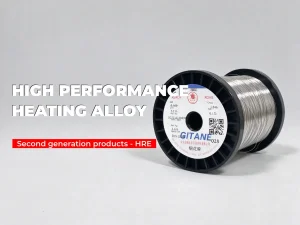
China High-Temperature FeCrAl Heating Alloy HRE 1350℃ - China Suppliers & Factory for Ceramic and Glass Applications Manufacturer, Supplier
View Specifications & Quotes
China SG140 Alloy Electric Heating Wire for Tempering Furnace - High Strength, Eco-Friendly Solution from China Suppliers & Factory Supplier, Pricelist
View Specifications & Quotes
China China Cr20Ni80 Electric Heating Wire - Reliable Resistance Wire Suppliers & Factory Manufacturers, Quotes
View Specifications & Quotes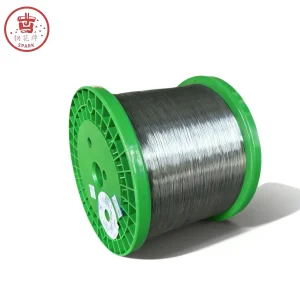
China High-Performance SPARK 0Cr20Al6 Electric Heating Wire 1350℃ - China Suppliers & Factory Manufacturer, Pricelist
View Specifications & Quotes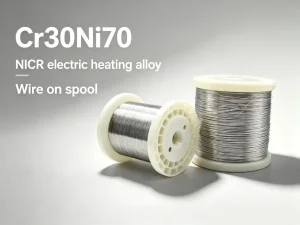
Wholesale High-Temperature Cr30Ni70 Alloy Wire from China Suppliers - Durable for 50 Hours in Electric Heating and Furnaces Factories, Pricelist
View Specifications & Quotes
China High-Performance 0Cr23Al5 Alloy Wire from China Suppliers - Factory Made for High-Temperature and Oxidation Resistance Suppliers, Factory
View Specifications & Quotes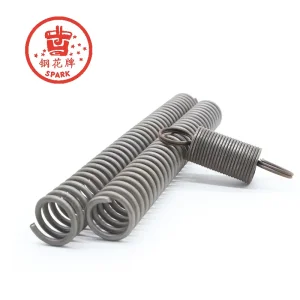
China Hot sale China Alumina Ceramic Fiber Resistance Wire Heating Plate Factory, Quotes
View Specifications & Quotes