
⚙️ Premium Heating Element Alloy Portfolio (Top Selections)
Explore our direct-from-factory resistance heating alloys, cold drawn wires, and custom fabricated heating spirals engineered for high-temperature industrial reliability.
🔬 1. Architectural Overview & Metallurgical Foundations
In thermal engineering, precision thermal delivery relies on the chemical stability, grain structure, and dimensional uniformity of the resistance heating element. Advanced industrial heating manufacturing in China covers the full range of electrical power and dimensional requirements, providing solutions for applications from ultra-fine electronic heating elements to heavy-duty thermal processing systems.
Modern electrothermal alloys—primarily categorized into Ferritic Iron-Chromium-Aluminum (FeCrAl) and Austenitic Nickel-Chromium (NiCr) systems—are engineered to convert electrical energy into thermal energy with minimal structural degradation. Matching dimensional specifications (wire diameter, ribbon cross-section, strip thickness, and rod length) with exact electrical power calculations ($P = V^2 / R$) requires tight control over cold drawing processing and metallurgical composition.
Dimensional Range & Tolerance Control
From micro-wires ($\varnothing$ 0.05 mm) for medical devices to heavy industrial rods ($\varnothing$ 12.0 mm) and cold-rolled strips, cold drawing processes ensure dimensional tolerances within $\pm 0.002$ mm, preventing localized hot spots caused by cross-sectional variations.
Thermal Density Optimization
Calculating surface load density ($W/cm^2$) prevents premature alloy burn-out. Tailored dimensional geometries ensure even heat dispersion, reducing thermal stress on element supports and refractories.
Protective Oxide Layer Formation
FeCrAl alloys form a self-healing $\alpha\text{-Al}_2\text{O}_3$ scale at high temperatures, offering high electrical resistance and oxidation protection. NiCr forms a protective $\text{Cr}_2\text{O}_3$ scale with strong mechanical ductility during cyclic thermal stress.
🏭 2. Delivery Conditions: The Three Standard Cold Drawn States
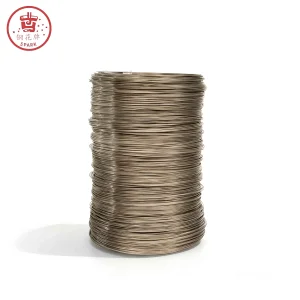
As a specialized supplier of electric heating materials, China's metallurgical facilities supply resistance wire, ribbon, and strip in three standard cold drawn delivery conditions. Selecting the correct delivery condition determines how easily material can be wound, formed, or integrated into industrial heating elements without structural defects.
| Delivery Condition | Microstructural State | Mechanical & Physical Characteristics | Primary Industrial Applications |
|---|---|---|---|
| Condition A: Bright Annealed (Soft / M-State) | Fully recrystallized austenitic or ferritic structure after atmosphere-controlled furnace annealing. | Maximum elongation ($> 20\%$), low yield strength, high ductility. Easy to coiling, bend, and weave without springback. | Precision spiral coils, tubular heater elements, woven mesh elements, domestic heating appliances. |
| Condition B: As-Drawn (Hard / Y-State) | Strain-hardened grain structure with high dislocation density resulting from cold reduction. | High tensile strength ($> 850\text{ MPa}$), high yield ratio, rigid, limited elongation ($< 3\%$). Maintains precise shapes under tension. | Straight pin applications, high-tension supporting rods, stretched frame elements, specialized spring-loaded heaters. |
| Condition C: Controlled Stress Relieved (Semi-Hard) | Partially annealed grain structure balancing work hardening with micro-stress relief. | Controlled springback, intermediate tensile strength, balanced ductility for automated precision forming. | Automated CNC element coiling, heavy ribbon bending, industrial furnace wave-shaped heating elements. |
Cold Drawing Engineering Excellence
Our multi-pass cold drawing process utilizes diamond dies, synthetic lubricant lubrication, and inline laser micrometer gauging. By removing micro-burrs and cold-working stresses, the standard cold drawn finish achieves surface roughness values down to $Ra \le 0.4\,\mu\text{m}$, preventing oxidation initiation sites and extending heater service life under continuous thermal cycling.
🌐 3. China Factory 4.0: Supply Chain Resilience & Manufacturing Efficiency
Integration of Industry 4.0 smart manufacturing into China's heating element production facilities provides structural cost advantages, rapid scalability, and material consistency. By connecting vacuum induction melting (VIM), electroslag remelting (ESR), hot rolling, and automated cold drawing lines, factory-direct suppliers offer reliable end-to-end traceabilities.
Automated Melt Control
Spectrometric analysis maintains alloy chemistry within $\pm 0.01\%$ for critical trace elements (Yttrium, Zirconium, Rare Earths), preventing grain growth at high temperatures.
Real-Time Resistivity Tracking
Eddy-current testing and continuous electrical resistance monitoring during cold drawing ensure consistent linear resistance ($\Omega/m$) across entire production spools.
Vertical Integration
In-house refining, drawing, bright annealing, spooling, and spiral forming reduce supply chain lead times from weeks to days for custom industrial orders.
Eco-Friendly Production
Closed-loop acid pickling, hydrogen bright annealing furnaces, and energy-recovery systems support low-carbon industrial manufacturing standards.
💼 4. Global Enterprise Procurement Needs & Engineering Customization
Global Original Equipment Manufacturers (OEMs) and industrial furnace engineering firms require suppliers capable of matching exact technical specifications. Meeting global procurement needs involves more than delivering wire—it requires custom metallurgical solutions based on furnace operating environments, thermal cycling frequency, and chemical atmospheres (reducing, oxidizing, carburizing, or nitriding).
Custom Alloy Selection Framework
Whether your project requires cost-effective 0Cr25Al5 for kiln manufacturing, high-density Cr20Ni80 for domestic appliances, or ultra-high temperature SGHT / HRE grades up to 1425°C, our engineers assist procurement teams with life-cycle cost analysis and alloy matching.
Packaging & Logistics Specifications
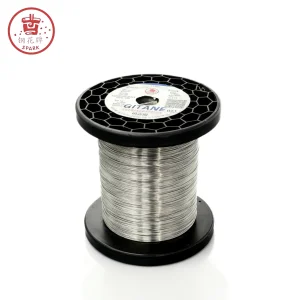
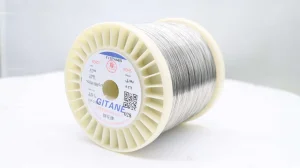
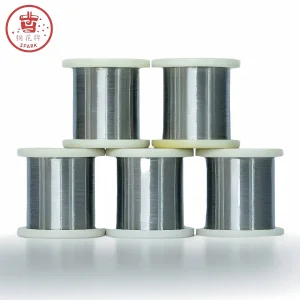
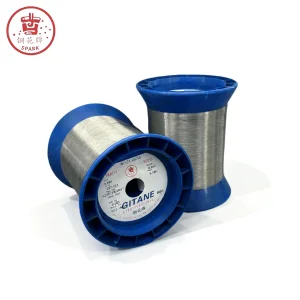
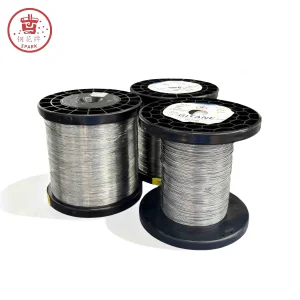
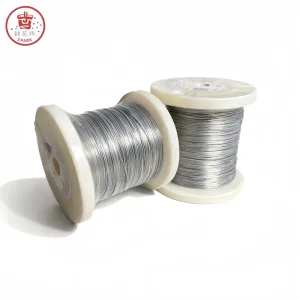
Delivery forms include plastic spools (DIN 100, DIN 200, DIN 355), wooden crates for heavy coils, straight bundles, and desiccant-sealed vacuum packaging to protect bright annealed surfaces during ocean transit.
Comprehensive Quality Certification
Every shipment includes certified mill test reports (MTR) detailing chemical analysis (GB/T 1234-2012, ASTM A580 standards), tensile testing, elongation percentages, and electrical resistivity values at 20°C.
🏗️ 5. Macro-Industry Solutions & Application Vectors
Precision heating alloys serve as core technical components across diverse industrial sectors. Matching material selection, cold drawn delivery condition, and power rating guarantees optimal performance in critical operating environments.
Automotive & EV Battery Manufacturing
Electric vehicle battery powder sintering and cathode thermal treatment demand tight temperature uniformity ($\pm 2^\circ\text{C}$). Our low-creep FeCrAl strip elements prevent sagging during continuous operation at 1200°C.
Solar Photovoltaic & Semiconductor Processing
Polysilicon ingot growth and diffusion furnaces require high-purity SGHT powder-metallurgy heating wire, free from heavy metal contaminants that could degrade semiconductor silicon wafers.
Industrial Heat Treatment Kilns
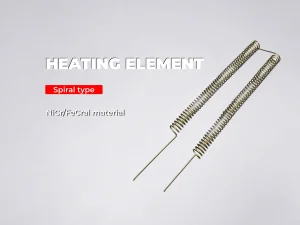
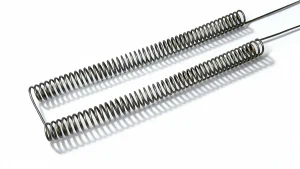
Hardening, tempering, and carburizing furnaces utilize heavy-gauge spiral wire and wave-shaped heating elements designed to withstand aggressive chemical atmospheres and thermal shock.
🚀 6. Technical Roadmap & Future Outlook in Thermal Metallurgy
As global industries transition toward electrification and carbon-neutral processing, demand for electrical heating materials operating at higher temperatures is accelerating. The future of heating element manufacturing focuses on three key technological advancements:
Nano-Dispersion Strengthening (ODS)
Incorporating yttrium oxide ($\text{Y}_2\text{O}_3$) nanoparticles into FeCrAl matrices via powder metallurgy creates Oxide Dispersion Strengthened (ODS) alloys. These materials maintain high mechanical strength and resist creep at temperatures up to 1450°C, extending heating element service life in demanding industrial kilns.
Atmosphere-Resistant Micro-Alloying
Adding precise amounts of Hafnium (Hf), Titanium (Ti), and Rare Earth Elements (REE) improves oxide scale adhesion. This prevents spallation during rapid thermal cycling in hydrogen-rich, nitrogen, and vacuum furnace environments.
Digital Twin Heating Element Design
Combining automated cold drawing parameters with thermal finite element analysis (FEA) allows engineering teams to simulate element lifespan, sagging rates, and surface flux before physical furnace installation, reducing prototyping costs.
✅ 7. Localized Support, Quality Control & Compliance Assurance
Quality assurance underpins every step of our manufacturing operations. Operating under certified ISO 9001:2015 and ISO 14001:2015 management systems, our products comply with strict international environmental and quality benchmarks including RoHS, REACH, and GB/T 1234-2012 electrothermal alloy standards.
Through global technical support, local distribution partners, and responsive sales engineering teams, buyers receive comprehensive support from initial element length and resistance calculations to post-installation failure analysis.
⚡ Advanced Heating Alloys & Industrial Furnace Materials
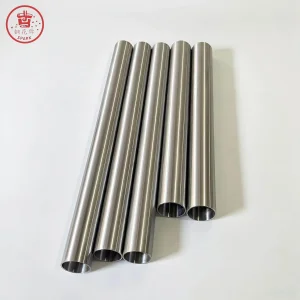
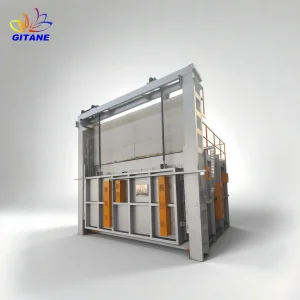
Complete your equipment specifications with our extended selection of high-performance heating wires, cold drawn ribbons, high-temperature tubes, and custom industrial electric furnaces.
❓ 8. Frequently Asked Technical & Sourcing Questions (FAQ)
Find authoritative answers to common engineering, procurement, and application questions regarding cold drawn heating wires and element designs.
What are the primary differences between FeCrAl and NiCr heating alloys?
FeCrAl alloys (such as 0Cr25Al5, HRE, and SGHT) offer higher maximum operating temperatures (up to 1425°C), higher electrical resistivity, and lower material density (~7.1 g/cm³), providing up to 20-30% weight savings compared to NiCr. They form a protective alumina scale. NiCr alloys (such as Cr20Ni80 and Cr30Ni70) operate up to 1200°C–1250°C, offer superior hot strength, resist sag, maintain excellent ductility after prolonged use, and perform better under thermal cycling and in nitrogen atmospheres.
Which of the three cold drawn delivery conditions should I select for automated element coiling?
For automated high-speed CNC spiral coiling, Condition A (Bright Annealed / Soft) is generally recommended due to its high elongation ($>20\%$) and minimal springback. However, if your coiling machine requires a slight stiffness to maintain tension without stretching the wire pitch, Condition C (Controlled Stress Relieved) provides ideal springback control.
How does wire diameter affect the maximum surface loading (W/cm²) capacity?
Thicker wire diameters have a lower surface-area-to-volume ratio, providing greater resistance to oxidation and cross-sectional burn-out. Consequently, heavier gauge wires (e.g., $\varnothing > 3.0\text{ mm}$) can handle higher surface loadings ($W/cm^2$) than fine wires ($\varnothing < 0.5\text{ mm}$) at the same operating temperature. Always consult our engineering surface load charts before finalizing element geometries.
What quality control documentation is supplied with factory orders?
Every factory shipment includes a certified Mill Test Report (MTR) detailing exact heat number traceabilities, chemical composition percentages (spectral analysis), tensile strength, elongation, 20°C electrical resistivity ($\mu\Omega\cdot\text{m}$), dimensional tolerances, and compliance certificates for ISO 9001, RoHS, and REACH standards.
Can China factory suppliers produce custom ribbon or flat wire dimensions?
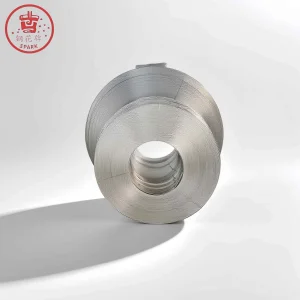
Yes. In addition to standard round wires, custom cold rolling mills can produce flat wire and cold-rolled ribbon across wide dimensional ranges (thicknesses from 0.10 mm to 4.0 mm, widths from 1.0 mm to 50 mm) with smooth rounded edges to eliminate localized high-voltage arcing.