
Industrial Grade Analytical Instrument Heating Solutions
Modern analytical chemistry equipment—such as Gas Chromatography (GC), High-Performance Liquid Chromatography (HPLC), Mass Spectrometry (MS), and Continuous Emission Monitoring Systems (CEMS)—demands extreme thermal stability, low thermal mass, zero contamination, and accurate temperature ramp kinetics. Below are top-tier heating alloy elements and micro-heaters supplied by China's leading metallurgical facilities.



Technology Roadmap & Metallurgy Innovation in Analytical Heating
Analytical instrument heaters represent the intersection of advanced metallurgy, precision mechanical packaging, and rapid electrical control loop engineering. Unlike broad-space industrial heaters or domestic appliances, analytical heaters are deployed directly inside critical measurement zones—such as capillary column sleeves, ionization chambers, sample vaporization zones, and optical absorption cells.
The fundamental technical metric governing analytical heater quality is Ohmic consistency and resistance-temperature stability. Variations in micro-grain composition or oxidation film structure can induce localized hot spots, leading to baseline drift, peak broadening in chromatography, or erroneous calibration curves in spectrometers.
FeCrAl Alloys (0Cr25Al5 & SGHYZ)
Iron-Chromium-Aluminium alloys offer high electrical resistivity (up to 1.45 μΩ·m) and superior surface load capability. Upon heating, FeCrAl forms a dense, self-healing α-Al O oxide layer that prevents further internal oxidation up to 1400°C. Ideal for inert atmosphere analytical vaporizers and high-temperature furnace tubes.
NiCr Alloys (Cr20Ni80 & Ni70Cr30)
Nickel-Chromium alloys retain high ductility after prolonged high-temperature exposure and exhibit non-magnetic properties at room temperature—a crucial requirement for mass spectrometers and electron-microscopy ionization chambers where magnetic interference distorts charged particle trajectories.
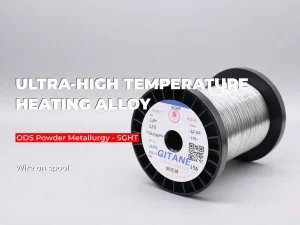
Powder Metallurgy (SPARK SGHT 1425°C)
Manufactured through rapid solid-state sintering, SGHT eliminates traditional casting segregation. This yields exceptional hot-sag resistance, zero structural distortion during rapid micro-duty thermal cycling, and extended service lifetimes exceeding 10,000 thermal shock cycles.
Future Technology Outlook: Microfluidics & Ultra-Fast Thermal Cycling
The analytical instrumentation sector is transitioning rapidly toward miniaturization (Lab-on-a-Chip) and portable field analyzers. Future analytical heater designs rely heavily on thick-film ceramic heaters, micro-tubular coiled elements, and etched foil flexible heater circuits. By integrating resistance wires directly onto aluminum nitride (AlN) or polyimide substrates, current China-based OEMs achieve heating rates up to 200°C/second with power consumption under 15 Watts.
Macro-Industry Solutions for Instrument Manufacturers
Specific analytical techniques place distinct mechanical and thermal burdens on heating elements. China suppliers provide tailored geometry and wire specifications across high-value sectors.
1. Gas Chromatography (GC) & Column Ovens
Technical Requirement: Uniform spatial heat distribution to eliminate column temperature gradients, paired with rapid cooling response.
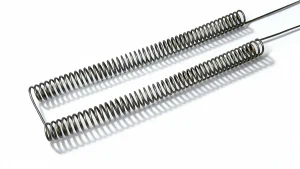
China Factory Solution: Helical open-coil 0Cr23Al5 and Cr20Ni80 resistance wires suspended in lightweight alumina fiber casings. Custom coil pitch ensures less than 0.05°C thermal variance across a 30-meter coiled fused-silica capillary column.
2. Mass Spectrometry (MS) Ion Transfer Sleeves
Technical Requirement: Non-degassing, ultra-high vacuum (UHV) compatibility up to 10-8 Torr, and zero magnetic field generation.
China Factory Solution: Precision-wound Ni70Cr30 micro-tubular elements encased in non-magnetic 316L/Inconel 600 sheaths with high-purity MgO ceramic insulation, ensuring minimal outgassing during ionization.
3. Biotechnology & Real-Time PCR Thermal Cyclers
Technical Requirement: Extremely rapid thermal ramping (up to 10°C/sec) with zero overshoot to prevent enzyme denaturation.
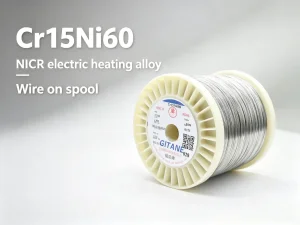
China Factory Solution: Integrated micro-cartridge heaters paired with Peltier elements utilizing ultra-fine Cr15Ni60 alloy wire for precise localized supplemental heating.
4. CEMS & Petrochemical Online Analyzers
Technical Requirement: Explosion-proof, corrosion-resistant tracing sleeves preventing sample condensation of acid gases (SOx, NOx).
China Factory Solution: Fluoropolymer (PTFE/PFA) and silicone insulated heating cables powered by SPARK high-resistivity alloy wire, certified under ATEX/IECEx standards.
China Factory 4.0: Supply Chain Resilience & Efficiency
How Chinese metallurgical hubs like Beijing Shougang Gitane leverage vertical integration to deliver world-class heating elements at competitive price points.
Vertical Melt-to-Wire Integration
By controlling the complete manufacturing cycle—from Vacuum Induction Melting (VIM) and hot rolling to continuous hydrogen-annealed cold drawing—China factories guarantee total elemental purity and eliminate middleman cost markups.
Automated Micro-Coiling
Advanced CNC coiling machinery handles micro-wires down to Ø 0.05 mm with ultra-tight resistance tolerances (±1.5%). Laser micrometers provide continuous online outer-diameter monitoring, rejecting out-of-spec wire in real-time.
Rapid OEM Prototype Turnaround
Integrated engineering teams deliver custom thermal simulations, CAD drawing approvals within 24 hours, and functional prototype samples within 7 business days, shortening the time-to-market for new instrument releases.
Analytical Instrument Heaters Benchmark Pricelist
Pricing in analytical heating elements depends on metallurgical grade, wire diameter, surface finish, precision tolerance, and custom terminal configuration. Below is an indicative industry wholesale pricelist matrix for international procurement.
| Heating Material / Element Type | Standard Metallurgical Grade | Dimension / Spec Range | Max Temp Range | Est. Wholesale Price (USD) | Primary Analytical Application |
|---|---|---|---|---|---|
| FeCrAl Micro Resistance Wire | 0Cr23Al5 / 0Cr25Al5 | Ø 0.10 mm – 0.80 mm | 1250°C | $12.50 – $28.00 / kg | GC Oven Coils, Sample Vaporizers |
| Ultra-High Temp FeCrAl Wire | SPARK SGHYZ / HRE | Ø 0.50 mm – 3.00 mm | 1350°C – 1400°C | $25.00 – $48.00 / kg | High-Temp Combustion Analyzers |
| Powder Metallurgy Element | SPARK SGHT Grade | Custom Strip / Wire | 1425°C | $55.00 – $95.00 / kg | Semiconductor & Atomic Absorption |
| Nichrome Micro Wire / Ribbon | Cr20Ni80 / Cr15Ni60 | Ø 0.08 mm – 1.00 mm | 1100°C – 1200°C | $32.00 – $65.00 / kg | MS Ion Sources, Non-magnetic Zones |
| High-Nickel Precision Alloy | Ni70Cr30 Grade | Wire & Coiled Springs | 1250°C | $45.00 – $85.00 / kg | Vacuum Furnace & Mass Spectrometry |
| Custom Cartridge Micro Heater | Incoloy Sheath + NiCr Wire | Ø 3.0 mm – 8.0 mm (L: 20-100mm) | 800°C | $3.50 – $12.00 / unit | HPLC Column Heaters, Injectors |
| Spiral Tubular Heating Element | SUS316 / Incoloy 800 Sheathed | Custom Bending / Sleeves | 900°C | $8.00 – $25.00 / unit | Industrial Process Gas Sampling |
Key Cost Factors to Consider in Sourcing Contracts
When evaluating quotations from Chinese suppliers, buyers should account for:
- Resistance Tolerance: Standard tolerances are ±5%. Precision analytical applications require tight tolerances (±1.5% to ±2%), which increases laser testing labor and pricing.
- Surface Treatment: Bright annealed vs. oxidized pre-conditioned surfaces affect initial outgassing behavior inside analytical chambers.
- Lead Wire Insulation: High-temperature ceramic bead sleeves, fiberglass braids, or PTFE leads add custom assembly charges.
Regulatory Compliance & Global Localization Support
Exporting analytical heating hardware to Europe, North America, and Japan requires absolute compliance with international environmental and electrical safety directives. Tier-1 Chinese suppliers provide complete documentation packages for incoming compliance audits.
-
RoHS 3 & REACH Compliance: Heavy metals like Lead (Pb), Cadmium (Cd), and Mercury (Hg) are strictly controlled below 100 ppm, preventing toxic outgassing during high-temperature analytical vaporization.
-
ISO 9001:2015 Quality Systems: Heat traceability is guaranteed. Mill Test Certificates (MTC) per EN 10204 3.1 accompany every shipping batch, detailing chemical heat analysis and room-temperature electrical resistance.
-
UL 499 & CE Marking: Electric heating elements built for instrument integration undergo dielectric withstand tests (1500V Hi-Pot test) and insulation resistance testing (>100 MΩ at 500V DC).
Global Logistics & Packaging Architecture
Micro-diameter resistance wires (<0.10 mm) and ceramic heating elements are fragile and prone to oxidation or physical deformation during transit. Premier China manufacturers employ:
- Vacuum Sealed ESD Foil Bags: Eliminates moisture ingress and airborne chemical contamination during ocean/air shipment.
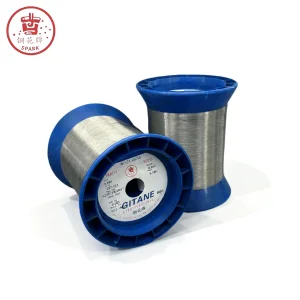
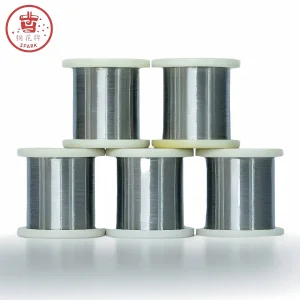
- Precision Plastic Spools & Foam Tray Sleeves: Prevents wire tangling and coil deformation.
- DDP Freight & Local Warehousing: Strategic stocking partnerships in Europe and North America enable 48-hour delivery for high-frequency spare parts.
Frequently Asked Questions (FAQ)
Key questions procurement managers and engineering specialists ask when selecting analytical instrument heating components.
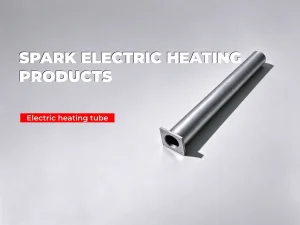
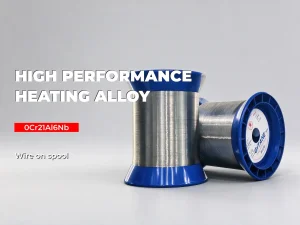
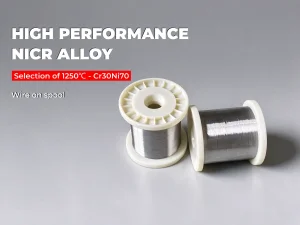
High-Performance Alloys & Specialized Tubular Elements
Explore additional factory-direct electric heating wires, alloy strips, and high-temperature elements optimized for demanding analytical instrument assemblies.
Accelerate Your Analytical Thermal Engineering
Partner directly with China's leading metallurgical experts. Request custom micro-coil samples, obtain certified alloy material datasheets, or consult with our thermal design engineers today.