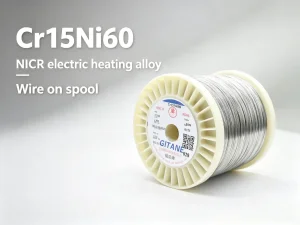
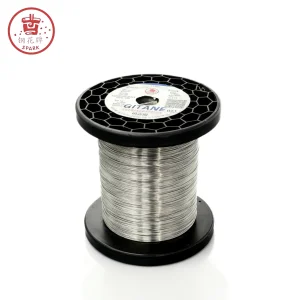
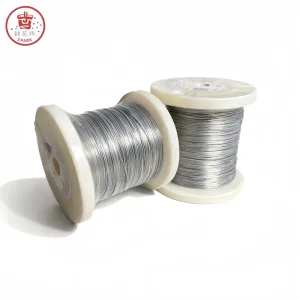
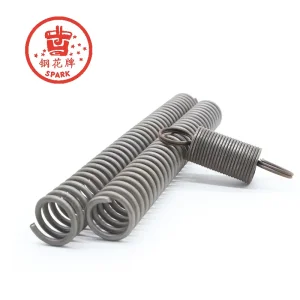
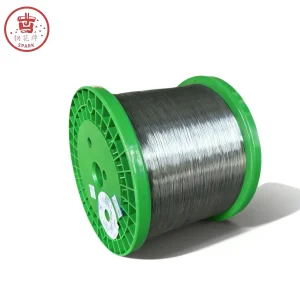
Core metallurgical alloys, resistive cores, and high-temperature steel tubing manufactured for high-watt-density cartridge heaters and critical thermal applications.
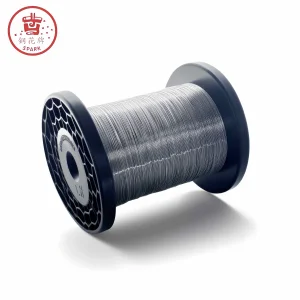
In advanced aerospace engineering and life-critical medical devices, thermal management is not merely a utility—it is a foundational safety and operational parameter. High-density cartridge heaters rely entirely on the integrity of their internal heating cores.
Aerospace applications demand thermal assemblies capable of surviving severe environmental extremes: shock, multi-axis vibration, rapid ambient temperature swings (-55°C to over +1000°C), and low-pressure vacuums. The internal heating cores of sheathed tubular elements must maintain tight resistance tolerances, zero dielectric breakdown under high voltage spikes, and supreme oxidation resistance without micro-fracturing during continuous operational cycles.
Medical heating assemblies demand strict biosafety compliance, absolute leakage-current suppression (<10 µA), rapid thermal response times, and hyper-uniform temperature distribution. From hemodialysis fluid warming to surgical tissue sealing and in-vitro diagnostic analyzers, internal cores for cartridge heaters must yield rock-solid resistance stability to prevent localized hotspots that could compromise sensitive biological fluids or critical patient diagnostics.
The functional heart of any sheathed cartridge heater is its inner resistance core. Choosing between Nickel-Chromium (NiCr) and Iron-Chromium-Aluminum (FeCrAl) alloys dictates thermal response, mechanical durability, and long-term grain structure integrity under stress.
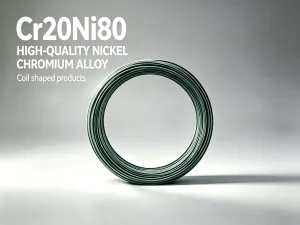
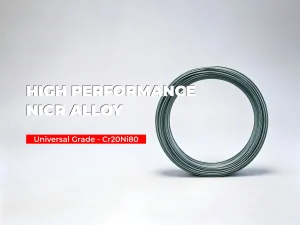
Austenitic Nickel-Chromium alloys provide high ductility, excellent hot strength, and non-magnetic properties. After prolonged high-temperature exposure, NiCr cores retain mechanical workability, preventing brittle fracture under heavy shock loads. Cr20Ni80 forms an adherent, non-scaling chromia surface layer ($\text{Cr}_2\text{O}_3$), making it the premier choice for medical devices and rapidly cycling aerospace heating systems up to 1200°C.
Ferritic Iron-Chromium-Aluminum alloys feature higher electrical resistivity ($1.35 - 1.45 \ \mu\Omega\cdot\text{m}$) and lower density compared to NiCr. Operating up to 1425°C (SGHT Powder Metallurgy grade), FeCrAl forms a protective alpha-alumina ($\text{Al}_2\text{O}_3$) oxide layer with superior dielectric insulation property. It enables ultra-high power densities while minimizing total metallic core weight in aerospace structures.
The resistance spiral core is centralized within high-purity electro-fused Magnesium Oxide (MgO) powder ($>99.5\%\ \text{MgO}$). Through rotary swaging and tube compression, MgO grain packing density reaches $3.0 - 3.2\ \text{g/cm}^3$. This eliminates air voids, optimizes dielectric strength, and maximizes heat transfer from the inner core element to the outer metallic sheath tube.
| Alloy Grade | Structure Family | Resistivity (μΩ·m, 20°C) | Max Core Temp (°C) | Density (g/cm³) | Primary Oxide Layer | Target Industrial Application |
|---|---|---|---|---|---|---|
| Cr20Ni80 (SPARK NiCr) | Austenitic (Ni-Cr) | 1.09 ± 0.05 | 1200°C | 8.40 | Chromia ($\text{Cr}_2\text{O}_3$) | Medical Hemodialysis, Surgical Tools, Rapid Thermal Cycling |
| Cr30Ni70 (SPARK NiCr) | Austenitic (Ni-Cr) | 1.18 ± 0.05 | 1250°C | 8.10 | Chromia ($\text{Cr}_2\text{O}_3$) | Precision Scientific Sensors, Extreme Nitriding Environments |
| 0Cr23Al5 (SPARK FeCrAl) | Ferritic (Fe-Cr-Al) | 1.35 ± 0.05 | 1250°C | 7.25 | Alumina ($\text{Al}_2\text{O}_3$) | Industrial Cartridge Cores, Aerospace De-icing Heaters |
| 0Cr25Al5 (SPARK FeCrAl) | Ferritic (Fe-Cr-Al) | 1.42 ± 0.05 | 1300°C | 7.10 | Alumina ($\text{Al}_2\text{O}_3$) | High Watt-Density Cartridges, Mold Die Heating Assemblies |
| SGHT (PM FeCrAl) | Powder Metallurgy FeCrAl | 1.45 ± 0.05 | 1425°C | 7.10 | Dense $\alpha$-$\text{Al}_2\text{O}_3$ | Aerospace Thruster Thermal Control, High-Temp Semiconductor Dies |
Discover how internal heating cores for cartridge heaters drive accuracy, safety, and operational continuity across aerospace hardware and medical diagnostics.
- Satellite & Payload Propulsion Heating: Micro-tubular internal cores installed inside thruster line heaters to maintain hydrazine fuel liquidity in deep-space cryogenic vacuums (-150°C ambient).
- Pitot-Static Tube Anti-Icing: Swaged Cr20Ni80 internal heating cores operating under high-frequency aircraft vibration to prevent ice accumulation at high altitudes.
- Environmental Control Systems (ECS): High-watt density sheath cartridge elements for rapid cabin air warming and window defrosting units.
- Optoelectronic Sensor Heating: Precision wire-wound micro cores inside thermal stabilization jackets for airborne radar and optical surveillance cameras.
- Dialysate Warming Systems: Ultra-stable internal heating cores for in-line fluid warmers that deliver exact 37.0°C body temperature fluid with zero localized hotspots.
- In-Vitro Diagnostic (IVD) Analyzers: Compact swaged cartridge cores integrated into reagent disk incubation plates, providing fast thermal stabilization within ±0.1°C.
- Electrosurgical Vessel Sealing: Precision micro-tubular heating elements built into laparoscopic surgical instruments for rapid tissue cauterization.
- Medical Respiratory Humidifiers: Corrosion-resistant, low-leakage-current sheathed heating assemblies used in hospital ICU mechanical ventilators.
Zero-Tolerance Quality Benchmark for Medical & Aviation Applications
Every batch of internal heating cores produced by our China manufacturing facility undergoes 100% helium mass spectrometry leak testing, high-voltage dielectric breakdown testing (up to 2500V for 1 second), and automated digital resistance sorting to eliminate field failure risks.
Leveraging over 60 years of metallurgical legacy (Shougang Gitane / SPARK Brand), our advanced manufacturing cluster delivers unparalleled quality, rapid scalability, and cost efficiency for international procurement teams.
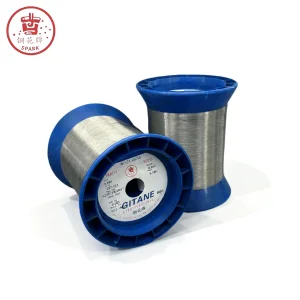
Unlike secondary assembly plants, our facility controls the entire production chain: vacuum induction melting (VIM), electro-slag remelting (ESR), continuous hot rolling, precision cold drawing, and bright annealing. This ensures complete traceability from raw alloy ingot to finished coiled core wire.
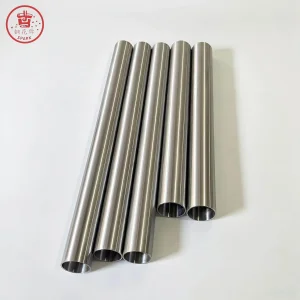
Equipped with modern multi-stage rotary swaging mills and high-speed CNC element winding machines, we compress internal cores to microscopic dimensional tolerances. Outer diameter consistency is held within ±0.02 mm, providing seamless fitment inside standard and metric cartridge sheath tubes.
Benefiting from China's robust raw material supply network and scalable industrial energy infrastructure, we deliver premium aerospace- and medical-grade thermal components at 25% to 40% lower landed cost compared to European or North American counterpart factories.
Navigating global supply chains requires rigorous compliance and responsive engineering communication. We bridging international standards with seamless local support.
Our quality management systems strictly align with top-tier international standard frameworks. All thermal alloy wire and sheath tubular components conform to ISO 9001:2015, ISO 13485 (Medical Devices System alignment), RoHS 3 (EU 2015/863), REACH chemical safety protocols, and UL94-V0 insulation standards. Complete Mill Test Reports (MTRs) per EN 10204 3.1 accompany every shipping lot.
We provide comprehensive OEM/ODM engineering collaboration. Our application engineers offer rapid prototyping (samples delivered within 7–10 days), customized coil pitch calculations, watt-density profile mapping, and flexible logistics support including DDP, CIF, and FOB terms to North America, Europe, Southeast Asia, and the Middle East.
The market for internal heating cores is rapidly evolving toward extreme miniaturization, intelligent sensing integration, and carbon-neutral green alloy production.
Next-gen medical and aerospace cartridge heaters require embedded real-time temperature feedback. Modern internal core architectures integrate grounded or ungrounded Type J/K thermocouples inside the central core axis, enabling closed-loop PID thermal control within microsecond response intervals.
As medical surgical pens and aerospace drone sensors downsize, internal cores must achieve outer wire coil diameters below 1.0 mm while maintaining high breakdown voltage resistance. Advanced micro-drawing technique enables stable mass production of sub-millimeter heating cores.
Conventional casting alloys suffer from grain growth and sagging at high temperatures. Powder metallurgy dispersion-strengthened FeCrAl alloys (such as SGHT) are replacing traditional core materials in ultra-high temperature applications up to 1425°C due to zero elongation creep and superior structural longevity.
Get immediate answers to crucial engineering questions regarding internal heating core selection, swaging parameters, and international order fulfillment.
Explore additional alloy grades, special resistance strips, ceramic fiber heating plates, and high-temperature sheath tubing available directly from our factory floor.