
Featured Electrical Heating Alloys & Custom Elements
Rigidly calibrated resistance heating wires, ribbons, and coils meeting stringent ±5% tolerance standards for global industrial applications.

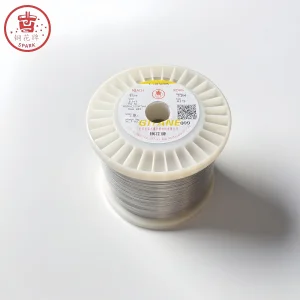
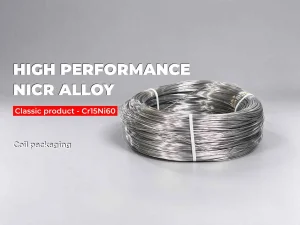

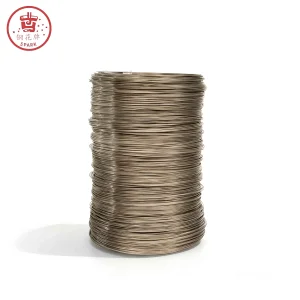


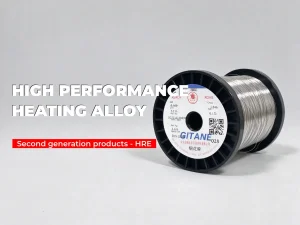
Why Controlling Batch-to-Batch Resistance Variance to Within ±5% Is Critical
In modern high-temperature industrial processing—ranging from semiconductor crystal growth kilns to automotive heat-treatment furnaces—the thermal equilibrium of an electric heating system depends directly on the electrical resistance of the constituent alloy wire. When purchasing electrothermal materials like FeCrAl (Iron-Chromium-Aluminum) and NiCr (Nickel-Chromium), global original equipment manufacturers (OEMs) face severe operational risks if batch-to-batch electrical resistance deviates significantly.
According to Joule's First Law ($P = I^2 R = V^2 / R$), thermal output changes inversly or directly with electrical resistance depending on power control modes. A batch variation exceeding ±5% introduces localized hot spots, thermal gradients across multi-zone heating chambers, premature element failure, and unexpected energy consumption spikes. Leading Chinese alloy manufacturers have revolutionized processing technologies to tightly clamp batch resistance variations strictly within the ±5% standard (and down to ±2% for premium grades).
Resistance tolerance isn't merely measured at room temperature (20°C). Superior Chinese factories utilize dynamic temperature-dependent testing to guarantee that the Ct factor (resistance ratio at working temperatures up to 1400°C) tracks identically across consecutive production lots, preventing system recalibration during element replacements.
How Chinese Factories Guarantee Batch Resistance Within ±5%
Controlling resistance tolerance requires absolute mastery over two key metallurgical parameters: chemical alloy composition homogeneity and dimensional cross-sectional uniformity along thousands of meters of wire.
1. Vacuum Melting & ESR Refining
The journey to ±5% resistance precision begins at the liquid metal stage. Chinese Tier-1 suppliers utilize Vacuum Induction Melting (VIM) coupled with Electroslag Remelting (ESR). This double-melting process eliminates non-metallic inclusions, minimizes gas content ($O_2, N_2, H_2$), and prevents elemental segregation of Chromium, Aluminum, and Rare Earth additions (Yttrium, Zirconium, Cerium).
2. Laser-Guided Continuous Cold Drawing
Because electrical resistance $R = \rho \cdot \frac{L}{A}$, even a minor micron-level deviation in wire diameter ($A$) distorts resistance values exponentially. Modern Chinese factories employ high-speed continuous wire drawing lines integrated with multi-axis non-contact laser optical micrometers that measure diameter tolerances continuously in real-time, instantly auto-adjusting drawing dies.
3. Hydrogen-Atmosphere Bright Annealing
Internal mechanical stress from cold working alters electrical resistivity. Chinese production facilities deploy continuous tube annealing furnaces under 100% pure hydrogen protective gas. Precise thermal profiling ensures uniform recrystallization and grain size across the entire coil batch, fixing the physical resistivity ($\rho$) to an exact value.
| Process Parameter | Standard Market Tolerance | China Precision Manufacturing Standard | Impact on Customer Operations |
|---|---|---|---|
| Batch Resistance Tolerance | ±8% to ±10% | ±3% to ±5% | Eliminates re-sorting of coils; ensures uniform heating across zones. |
| Wire Diameter Variance | ±0.03 mm | ±0.005 mm | Prevents localized thin-spots and localized electrical overheating. |
| Alloy Composition Shift | ±1.5% Cr / Al drift | ±0.2% Strict Control | Guarantees repeatable protective $\alpha-Al_2O_3$ scale formation. |
| Surface Finish (Ra) | > 0.8 µm | < 0.3 µm Golden/Bright | Reduces mechanical wear on automated spring coiling machines. |
Future Trends in Electrothermal Alloy Manufacturing
The global transition towards industrial electrification and decarbonization is transforming performance expectations for electrical resistance materials.
1. Powder Metallurgy (PM) Alloys for Extreme Heat (>1400°C)
Traditional ingots melted via conventional casting suffer from grain coarsening at ultra-high operating temperatures. China's top manufacturers are pioneering Powder Metallurgy (PM) processes (such as SPARK SGHT grades). By gas-atomizing alloy melt into ultra-fine powder followed by Hot Isostatic Pressing (HIP), PM alloys deliver zero chemical segregation, high creep resistance, and batch resistance stability within tight ±5% limits even under extreme long-term thermal exposure.
2. AI & Optical Closed-Loop Die Monitoring
Industry 4.0 automated drawing lines now integrate AI computer vision systems that inspect 100% of wire surfaces for microscopic scratches, inclusions, or ovality errors. Continuous inline Eddy Current Testing (ECT) combined with laser feedback guarantees that every single meter inside a 500kg spool conforms precisely to resistance standard deviations without manual sampling.
3. Micro-Alloying with Reactive Elements (RE)
Adding microscopic amounts of Rare Earth elements (Yttrium, Hafnium, Cerium, Zirconium) alters oxide scale morphology. Chinese metallurgical research has established exact stoichiometric balances of RE additives that enhance the adhesion of protective alumina scales ($\alpha-Al_2O_3$), extending element life by 30-50% while stabilizing hot-state electrical resistance over long operational cycles.
4. Electrification of Petrochemical & Steel Furnaces
As global industries substitute gas firing with clean electric heating, large-scale furnaces require massive resistance elements (flat strip and heavy gauge round wire). The market demands continuous multi-ton deliveries where batch 1, batch 50, and batch 100 perform with zero thermal variance—making Chinese factory-level ±5% resistance capability a mandatory supplier requirement.
Macro Industrial Solutions & Sector-Specific Deployments
How ±5% batch resistance tolerance solves real-world operational challenges across critical high-temperature industries.
Powder Metallurgy Sintering
Powdered metal components require extremely tight sintering temperature windows (e.g., 1120°C ±3°C). Replacing worn heating coils with new elements that vary in resistance by >10% creates cold zones, causing incomplete particle bonding and part rejection. Chinese high-precision HRE and 0Cr25Al5 wires with ±5% resistance tolerance ensure drop-in replacement consistency with zero thermal re-tuning required.
Semiconductor & Photovoltaic Manufacturing
Diffusion furnaces used in silicon wafer production and Solar Cell PERC processing demand pristine thermal uniformity across 2-meter long heating zones. High-resistance FeCrAl alloys manufactured under cleanroom conditions with exact ±3% resistance matching eliminate localized thermal distortion, protecting million-dollar semiconductor batches.
Automotive Heat Treatment Lines
Continuous mesh-belt tempering furnaces processing gears, bearings, and fasteners operate 24/7. When heating elements burn out, technicians replace individual coils. Using Chinese alloy wire engineered with strict batch-to-batch resistance controls prevents load imbalances across SCR (Silicon Controlled Rectifier) power controllers, extending furnace electrical system lifespans.
Ceramic & Glass Kilns
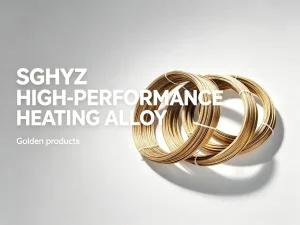
Firing high-end ceramics, glass bending, and optical lens annealing require synchronized heating rates. SPARK SGHYZ and 0Cr21Al6Nb alloys, backed by batch-matched resistance certifications, deliver exact wattage ratings across all heating circuits, preventing thermal shock cracking in sensitive ceramic and glass products.
Home Appliances & Commercial Heating
For mass manufacturers of water heaters, ovens, and hand dryers, tight electrical resistance tolerance translates directly to compliance with global safety standards (UL, CE, IEC). A strict ±5% resistance specification guarantees that finished elements meet mandatory electrical power wattage ratings without expensive inline trimming.
Aerospace & Defense Alloys
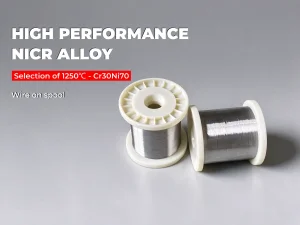
Vacuum heat treatment of titanium aerospace structural elements requires precise temperature ramps. NiCr alloys (Cr20Ni80 / Cr30Ni70) with verified resistance stability prevent temperature overshoot, protecting costly aerospace components from thermal stress defects.
Global Enterprise Procurement Requirements & Vendor Qualification
When international procurement teams audit Chinese factories for long-term contract supply of resistance heating materials, verifying resistance tolerance documentation is a primary milestone. Leading enterprise procurement protocols mandate compliance with the following quality criteria:
- Mill Test Certificate (MTC) to EN 10204 3.1: Full transparency displaying actual heat chemical analysis, room temperature resistivity ($\mu\Omega\cdot m$), measured linear resistance ($\Omega/m$), mechanical tensile strength, and elongation percentage.
- Cpk Statistical Process Control Reports: Vendor verification proving a Process Capability Index (Cpk) exceeding 1.33 for wire diameter and electrical resistance across a minimum of 30 consecutive production heats.
- Traceability Systems: Barcode/QR code tracking per coil linking raw material vacuum melt heat numbers directly to drawing machine logs and final inspection test points.
- International Standard Compliance: Production conforming strictly to GB/T 1234-2012, ASTM B603, DIN 17470, or JIS C2520 standards.
By specifying a guaranteed ±5% resistance deviation, enterprise buyers lower incoming quality control (IQC) reject rates to near 0%, reduce assembly line labor spent sorting wire spools, and eliminate costly customer warranty claims caused by element burnout.
Frequently Asked Questions (Technical & Commercial)
Expert answers to critical engineering questions regarding electrothermal alloy selection and resistance tolerance control.
Q1: How is linear electrical resistance ($\Omega/m$) calculated and measured in practice?
Linear resistance is calculated using the formula $R/m = \frac{4 \cdot \rho}{\pi \cdot d^2}$, where $\rho$ is the material resistivity at 20°C and $d$ is wire diameter in millimeters. In Chinese factory laboratories, resistance is measured on a precision double-bridge or four-terminal micro-ohm meter across an exact 1-meter straightened wire specimen under temperature-controlled conditions (20°C ±0.5°C) to prevent ambient temperature measurement distortion.
Q2: What is the main operational difference between FeCrAl and NiCr heating alloys?
FeCrAl alloys (e.g., 0Cr25Al5, HRE) offer higher maximum working temperatures (up to 1425°C), higher electrical resistivity, and lower physical density (meaning ~15% weight savings for equivalent element volume). NiCr alloys (e.g., Cr20Ni80) feature superior hot strength, excellent ductility after long-term use, higher resistance to thermal cycling fatigue, and better performance in protective nitrogen atmospheres.
Q3: Why is high aluminum content critical for FeCrAl resistance stability?
Aluminum reacts with oxygen at high temperatures to form a dense, protective alumina ($\alpha-Al_2O_3$) scale on the wire surface. This oxide scale acts as an electrical insulator and prevents further oxidation of the underlying metal core. Keeping the aluminum content strictly within target composition limits (e.g., 5.0% - 5.8%) prevents rapid aluminum depletion, stabilizing internal wire cross-section and resistance over time.
Q4: Can Chinese factories manufacture customized flat ribbon or pre-coiled spiral heating elements within ±5% resistance limits?
Yes. Chinese manufacturers produce customized flat ribbons (with strict width/thickness ratio monitoring) and precision pre-coiled spirals. For pre-coiled elements, resistance is verified per completed element rather than just per meter of wire, taking into account tension-induced wire stretching during automated spring winding.
Q5: How does furnace atmosphere affect resistance variation during long-term operation?
Atmospheres containing carbon (carburizing), sulfur, or water vapor can attack alloy grain boundaries. In carburizing environments, carbon pickup forms chromium carbides, altering local electrical resistance and embrittling the element. Specifying special grades like 0Cr21Al6Nb or applying pre-oxidation treatments ensures that the ±5% initial resistance tolerance translates into extended operational service life.
Q6: What packaging standards are used to prevent wire deformation during ocean shipment?
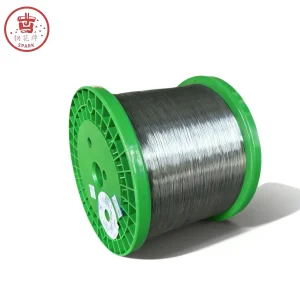
To preserve tight dimensional and resistance tolerances, wire is precision-spooled onto heavy-duty plastic DIN spools (e.g., K125, K200, K350) or packaged in wooden crates with desiccant bags and anti-rust VCI film wrapping. This guarantees that spools arrive without bent wire loops or mechanical surface abrasion that could distort electrical resistance.
High-Temperature Resistance Alloys & Specialized Solutions
Explore additional factory-direct electrothermal materials manufactured under strict ISO9001:2015 process controls.




Partner with China's Leading Precision Alloy Manufacturer
Need customized wire diameters, special strip dimensions, or guaranteed ±3% resistance tolerances for high-reliability projects? Contact our engineering team for technical support, sample evaluations, and factory-direct pricelists.
Request Custom Quotation