
China Cr20Ni80 (80/20) Nichrome Heating Wire Delivers Reliable Performance up to 1200°C with Superior Oxidation Resistance
High-Performance Heating Alloys & Components
Explore our precision-drawn electrothermal alloy wires, high-resistance Fe-Cr-Al products, and industrial heating cores engineered for demanding thermal environments.



Comprehensive Metallurgical Overview & Physical Chemistry of Cr20Ni80
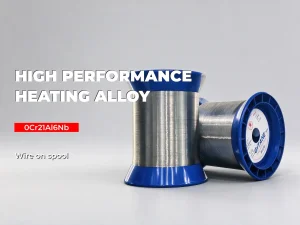
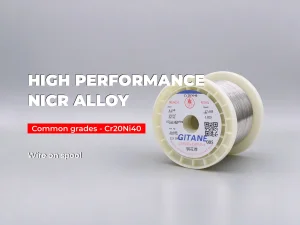
Cr20Ni80 (Nickel-Chromium 80/20), standardized globally under ASTM B344 (UNS N06003), DIN 17471 (NiCr 80 20), and GB/T 1234-2012 (Cr20Ni80), represents the pinnacle of binary non-ferrous electric resistance alloys. Composed nominally of 80% Nickel and 20% Chromium, this solid-solution austenitic alloy is engineered specifically for thermal stability, hot mechanical strength, and exceptional oxidation resistance in operating environments reaching up to 1200°C (2192°F).
Chemical Composition & Microstructure Controls
The exceptional thermal longevity of China-manufactured Cr20Ni80 heating wire hinges on stringent chemical purity during Vacuum Induction Melting (VIM) and Electro-Slag Remelting (ESR). Trace element additions—specifically micro-alloyed rare earth elements such as Yttrium (Y), Cerium (Ce), and Zirconium (Zr)—are introduced to refine grain boundaries and dramatically optimize oxide scale adhesion.
| Element | Standard Weight Percentage (%) | Metallurgical & Thermal Function |
|---|---|---|
| Nickel (Ni) | 77.0 - 80.0% (Balance) | Provides FCC austenitic structure, high ductility, non-magnetic character, and post-service workability. |
| Chromium (Cr) | 20.0 - 23.0% | Forms a continuous, self-healing protective Chromia ($\text{Cr}_2\text{O}_3$) passivation film. |
| Iron (Fe) | ≤ 1.0% (Ultra-Low Trace) | Strictly limited to prevent internal oxidation and preserve hot creep strength. |
| Silicon (Si) | 0.75 - 1.60% | Enhances oxidation barrier at grain boundaries; promotes fluxing during oxide layer formation. |
| Manganese (Mn) | ≤ 0.70% | Deoxidizing agent during melting; controls residual sulfur content. |
| Rare Earths (Y/Ce) | 0.05 - 0.15% | Keyhole anchoring effect on oxide film, dramatically suppressing spallation during rapid thermal cycles. |
Information Gain Insight: The self-passivating Chromia ($\text{Cr}_2\text{O}_3$) film formed on Cr20Ni80 features a near-perfect coefficient of thermal expansion match with the underlying parent alloy matrix. Unlike Iron-Chromium-Aluminum (FeCrAl) alloys, which form alumina scale ($\text{Al}_2\text{O}_3$) that can flake off during frequent thermal shock, Cr20Ni80 retains its protective oxide shell under cyclic thermal stress.
Global Industrial Landscape: Ni-Cr (80/20) vs. Fe-Cr-Al Alloys
Selecting the optimal electric heating resistance wire requires evaluating operational thermal cycles, furnace atmosphere chemistry, mechanical structural needs, and life-cycle cost efficiency. While FeCrAl alloys (e.g., 0Cr25Al5, Kanthal A1) offer higher maximum operating temperatures (up to 1400°C) and lower raw material mass density, Cr20Ni80 Nichrome wire remains the undisputed standard for high-reliability, heavy-duty cyclic applications.
Engineering Comparison Matrix: Cr20Ni80 vs. FeCrAl Alloys
| Engineering Property | Cr20Ni80 Nichrome (80/20) | FeCrAl (e.g., 0Cr25Al5 / Kanthal A1) | Engineering Significance |
|---|---|---|---|
| Hot Creep Strength (1000°C) | Very High (> 12 MPa) | Low (< 3 MPa) | Cr20Ni80 coils maintain structural shape without sagging or requiring ceramic support pins. |
| Ductility After Prolonged Use | Fully Ductile (Austenitic) | Brittle (Grain Growth) | Cr20Ni80 elements can be repaired, rewound, or serviced after hundreds of operational hours. |
| Thermal Cycling Resistance | Superior | Moderate to Fair | Zero spalling of $\text{Cr}_2\text{O}_3$ scale during repeated power-on/power-off sequences. |
| Magnetic Character | Non-Magnetic | Magnetic | Essential for precision instruments, induction heating, and electromagnetic sensitive furnaces. |
| Atmosphere Compatibility | Air, Nitrogen, Inert Gas, Moist Air | Air, Sulfur-rich atmospheres | Cr20Ni80 resists nitriding in nitrogen-rich furnace environments far better than FeCrAl. |
Localized High-Value Industrial Application Scenarios
Due to its unique combination of non-magnetic character, extreme thermal shock tolerance, and mechanical ductility, China Cr20Ni80 Nichrome heating wire is deployed across critical high-value industrial manufacturing infrastructure globally:
1. Semiconductor & Photovoltaic Wafer Processing
In horizontal/vertical diffusion furnaces, PECVD chambers, and crystalline silicon ingot annealing units, Cr20Ni80 elements provide ultra-clean, uniform radiative heat without shedding ceramic or metallic flakes, protecting delicate silicon wafers from particulate contamination.
2. Industrial Metallurgy Heat Treatment Furnaces
Utilized in pit furnaces, bell-type annealing furnaces, carburizing lines, and sealed-quench furnaces. Cr20Ni80’s high hot yield strength prevents coil distortion when suspended in heavy ceramic tubes or custom furnace brick grooves.
3. Aerospace & Precision Defense Manufacturing
Employed in vacuum brazing units, autoclave heating blanket structures, and preheating systems for carbon-fiber composites, where precise non-magnetic heating elements prevent field interference with sensitive sensor calibration.
4. Medical & Analytical Laboratory Equipment
Integrated into high-speed Raman spectrometers, precision autoclaves, ceramic sintering kilns for dental prosthetics, and catalytic reaction chambers where tight temperature tolerances (±1°C) and zero air contamination are mandatory.
5. Heavy Industrial Radiant Tubes & Tubular Elements
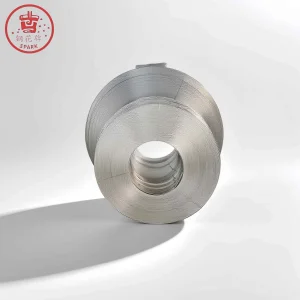
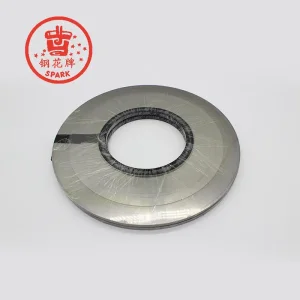
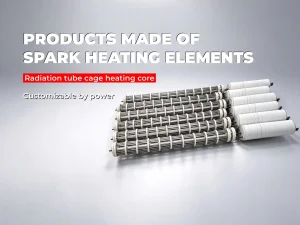
Formed into heavy-gauge spooled spirals, ribbon bundles, or tubular ceramic cores inside radiant tubes for gas-fired or electric continuous steel processing lines and aluminium melting holding furnaces.
6. Premium Commercial & Domestic Heating Appliances
Engineered into high-end toaster ovens, industrial space heaters, professional hair dryers, infrared saunas, and plastic extrusion nozzle heaters that endure tens of thousands of rapid thermal cycles without embrittlement.
China Factory Supply Chain Resilience & Manufacturing Efficiency
China's electrothermal alloy industry—anchored by fully integrated metallurgy enterprises such as Beijing Shougang Gitane New Materials Co., Ltd.—provides global buyers with unparalleled supply chain resilience, cost efficiency, and rigorous quality assurance. Over decades of industrial evolution, Chinese manufacturers have established end-to-end control over the entire electrothermal alloy production value chain.
End-to-End Vertical Integration Workflow
From raw nickel cathode melting to fine wire spooling, Chinese factories eliminate third-party processing bottlenecks through an integrated 6-stage workflow:
Electrolytic Nickel (>99.9%) and pure Chromium are melted under vacuum to eliminate dissolved gases ($\text{O}_2$, $\text{N}_2$, $\text{H}_2$).
Heavy ingots are forged and rolled into high-density wire rods with uniform grain structures.
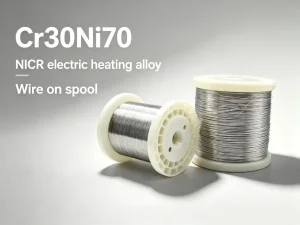
Precision diamond dies draw wire down to specified diameters ranging from 0.05mm micro-wire to 10.0mm rod.
Bright annealing in a pure Hydrogen atmosphere restores optimal ductility and guarantees a bright, oxide-free surface finish.
Automated digital bridge testing verifies linear resistance tolerances (±3%) along every single meter of wire.
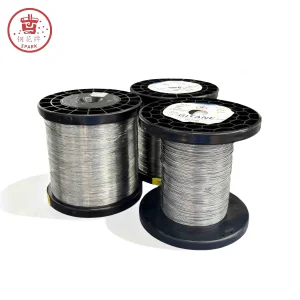
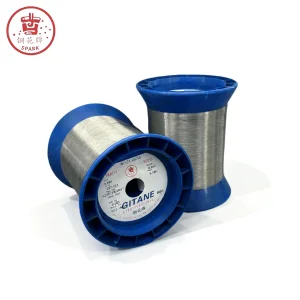
Spooled onto DIN standard reels, shrink-wrapped with desiccants to prevent oxidation during international maritime transit.
Supply Chain Security & Scale: Operating out of modern 88,000 m² production bases with dozens of continuous annealing lines, Chinese factories maintain strategic buffer reserves of high-purity Nickel and Chromium. This scale buffers global OEMs against raw material price volatility and guarantees expedited delivery quotes within 24 hours.
Technology Roadmap, Advanced Metallurgy & Future Outlook
As global industrial heat processes shift away from fossil-fuel combustion toward zero-carbon industrial electrification, demanding higher operating efficiency, next-generation Nichrome alloy development focuses on three primary technological vectors:
A. Oxide Dispersion Strengthening (ODS)
By incorporating nanometer-scale Yttrium Oxide ($\text{Y}_2\text{O}_3$) particles throughout the austenitic matrix, advanced ODS Cr20Ni80 alloys achieve a 40% increase in high-temperature creep strength at 1150°C, pushing operational limits closer to 1250°C without sag.
B. Ultra-Fine Micro-Wire Precision Drawing
To supply smart wearable medical devices, flexible heating textiles, and micro-electromechanical systems (MEMS), research pipelines now yield ultra-fine Cr20Ni80 wire down to 0.018 mm (18 microns) in diameter with uniform resistance.
C. Green Metallurgy & Low-Carbon Melting
Leading Chinese manufacturers are transitioning arc furnaces and VIM facilities to 100% renewable hydroelectric and solar power grids, dramatically reducing the embodied carbon footprint ($CO_2/ton$) of electrothermal alloys supplied to European and North American OEMs.
Quality Assurance, Compliance Standards & Global Logistics Support
To ensure seamless integration into international procurement workflows, all Cr20Ni80 products undergo rigorous multi-stage quality control certified under ISO 9001:2015 quality management systems.
Comprehensive Compliance & Documentation Portfolio
- Mill Test Certificates (MTC EN 10204 3.1): Shipped with every coil, specifying exact heat batch chemical analysis, mechanical tensile strength, elongation percentage, and room temperature resistivity ($\mu\Omega\cdot\text{m}$).
- Environmental Directives: Fully compliant with EU RoHS 3 (Directive 2015/863) and REACH (EC 1907/2006), guaranteeing zero hazardous heavy metals or restricted SVHC substances.
- Accelerated Life Testing (Bash-Harsch Test ASTM B78): Periodically sampled wires undergo automated cyclic burnout testing at 1150°C to verify accelerated thermal lifespan metrics exceeding global benchmarks.
- Global Logistics Options: Supported by custom seaworthy wooden packaging, air-freight expedited spools, and DDP/CIF/FOB international shipping terms.
Frequently Asked Questions (Technical FAQ)
How do I calculate the recommended surface load ($W/cm^2$) for Cr20Ni80 wire in an industrial furnace?
- At 800°C: Recommended surface load is 4.0 to 6.0 W/cm².
- At 1000°C: Recommended surface load is 2.5 to 4.0 W/cm².
- At 1200°C: Recommended surface load must be reduced to 1.2 to 2.0 W/cm² to prevent localized thermal runaway and prolong element lifespan.
Why does Cr20Ni80 show a positive temperature coefficient of resistance (TCR)?
Can Cr20Ni80 be welded or joined to terminal leads?
How does sulfur exposure affect Cr20Ni80 heating elements?
What delivery forms and dimension tolerances are available from China factories?
Explore Additional High-Temperature Electrothermal Products
Review our extended product portfolio including FeCrAl grades, ultra-high temperature elements, NiCrFe wires, and specialized analytical furnace instruments.

Request Direct Factory Quotes & Technical Datasheets
Partner with China's premier electrothermal alloy manufacturer. Speak directly with our metallurgical engineers to receive customized element sizing, resistivity calculations, and factory-direct volume pricing within 24 hours.