
Featured 1250°C High-Temperature Resistance Alloys
Explore flagship FeCrAl and NiCr heating wire products directly manufactured for industrial furnaces, kilns, and heating elements.
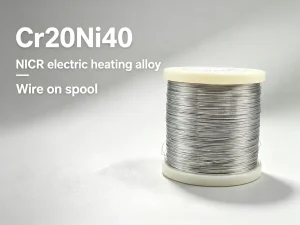
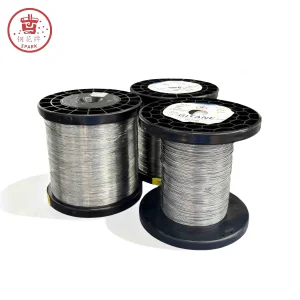
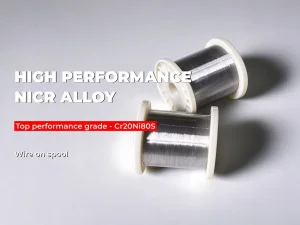

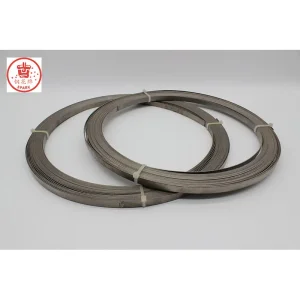
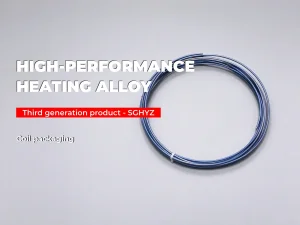


Executive Summary & The Metallurgy of 1250°C Heating Alloys
A deep dive into the high-temperature solid-state chemistry and phase stability of industrial electrothermal alloys.
In modern high-temperature industrial processing, selecting the optimum electrical resistance alloy for operation up to 1250°C is a critical engineering decision. The longevity, electrical stability, and thermal efficiency of heat-treatment furnaces, ceramic kilns, and semiconductor processing equipment directly depend on the microstructural integrity of the heating elements. As global industries accelerate the electrification of process heat to meet carbon-neutrality mandates, demand for premium-grade China 1250°C heating wire has reached an all-time high.
At temperatures reaching 1250°C, conventional metallic conductors suffer from catastrophic high-temperature oxidation, rapid grain growth, and severe thermal creep. To maintain structural and electrical stability, modern industrial heating wires rely on two major alloy systems: Iron-Chromium-Aluminum (FeCrAl) alloys and Nickel-Chromium (NiCr) alloys.
The Thermodynamics of Protective Oxide Scale Formation ($\alpha$-$\text{Al}_2\text{O}_3$ vs $\text{Cr}_2\text{O}_3$)
The primary mechanism enabling metallic wire to survive at 1250°C continuous service is the formation of a self-healing, thermodynamically stable oxide scale on the alloy surface:
- FeCrAl Alloy System (e.g., 0Cr25Al5, 0Cr23Al5, HRE): When exposed to oxidizing atmospheres at temperatures above 1000°C, aluminum diffuses rapidly to the wire surface to form a continuous, dense, semi-transparent layer of alpha-alumina ($\alpha$-$\text{Al}_2\text{O}_3$). This alumina layer acts as an exceptional electrical insulator and ionic diffusion barrier, preventing oxygen from penetrating deeper into the core wire. Alumina scale possesses superior chemical inertness and a higher melting point (~2072°C) compared to chromium oxide, making FeCrAl the alloy family of choice for extreme 1250°C–1400°C duty.
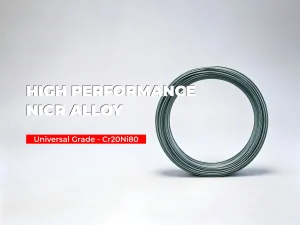
- NiCr Alloy System (e.g., Cr20Ni80, Cr30Ni70): Nickel-chromium wires develop a protective scale dominated by chromic oxide ($\text{Cr}_2\text{O}_3$) combined with nickel chromate ($\text{NiCr}_2\text{O}_4$) spinel phase. While $\text{Cr}_2\text{O}_3$ offers remarkable mechanical ductility and superior resistance to hot-to-cold thermal cycling, it undergoes volatile oxidation above 1200°C, transforming into gaseous $\text{CrO}_3$. Consequently, standard NiCr alloys are optimized for continuous service up to 1150°C–1200°C, whereas specialized high-chromium formulations (such as Cr30Ni70) are required for peak 1250°C operation.
Micro-Alloying with Rare Earth Elements (RE Additions)
A major technical breakthrough in Chinese high-temperature alloy manufacturing involves precise Rare Earth (RE) micro-alloying. By adding controlled trace amounts of Yttrium (Y), Reactive Hafnium (Hf), Zirconium (Zr), and Cerium (Ce), manufacturers like Beijing Shougang Gitane fundamentally modify the grain boundary dynamics of the oxide-metal interface. This "reactive element effect" pins the scale, dramatically eliminating spallation (flaking off of oxide scale under thermal stress) and extending element service life by up to 300% compared to non-RE modified generic alloys.
Technical Specification & Metallurgical Property Matrix
Comprehensive engineering data comparing Chinese standard grades for 1250°C industrial applications.
| Alloy Grade | Alloy Type | Max Temp (°C) | Resistivity at 20°C ($\mu\Omega\cdot\text{m}$) | Density ($\text{g/cm}^3$) | Melting Pt (°C) | Primary Industrial Applications |
|---|---|---|---|---|---|---|
| 0Cr25Al5 | FeCrAl | 1250°C | 1.42 ± 0.07 | 7.10 | 1500°C | Industrial furnaces, radiant tube heaters, ceramic kilns |
| 0Cr23Al5 | FeCrAl | 1250°C | 1.35 ± 0.07 | 7.25 | 1500°C | Heat treatment equipment, brake resistors, domestic elements |
| 0Cr21Al6Nb | FeCrAl + Nb | 1300°C | 1.45 ± 0.07 | 7.10 | 1510°C | Powder metallurgy kilns, high-duty industrial heating units |
| SPARK HRE | High-Temp FeCrAl | 1350°C | 1.45 ± 0.08 | 7.10 | 1520°C | Diffusion furnaces, high-efficiency ceramic sintering |
| SGHYZ / SGHT | PM FeCrAl | 1400°C - 1425°C | 1.48 ± 0.08 | 7.10 | 1530°C | Semiconductor wafer heating, crystal growth, ultra-high kilns |
| Cr20Ni80 | NiCr (80/20) | 1200°C | 1.09 ± 0.05 | 8.40 | 1400°C | Precision medical heaters, plastic molding, heavy appliances |
| Cr30Ni70 | NiCr (70/30) | 1250°C | 1.18 ± 0.05 | 8.10 | 1380°C | Nitriding atmospheres, heavy-duty industrial electric ovens |
Engineering Formulas for Heating Element Design
When designing 1250°C heating elements, calculating the correct Surface Watt Loading ($W$) is crucial to prevent premature wire burnout. Surface watt loading is defined as the thermal output power per unit surface area of the heating wire:
Where:
$W$ = Surface Watt Loading ($\text{W/cm}^2$)
$P$ = Total Power of the Heating Element ($\text{Watts}$)
$d$ = Wire Diameter ($\text{cm}$)
$L$ = Total Uncoiled Wire Length ($\text{cm}$)
For operations continuous at 1250°C in standard atmospheric air, recommended surface load parameters are:
- FeCrAl Alloys (0Cr25Al5): $1.4 - 2.2 \text{ W/cm}^2$ (depending on element support pitch and ceramic radiation factor).
- NiCr Alloys (Cr30Ni70): $1.1 - 1.8 \text{ W/cm}^2$ (to avoid accelerated chromium vaporization).
China's Supply Chain Resilience & Factory Efficiency Advantages
How state-of-the-art Chinese metallurgy delivers global competitive advantages in price, consistency, and scale.
Vertically Integrated Smelting
From primary Vacuum Induction Melting (VIM) and Electroslag Remelting (ESR) to hot rolling and precision wire drawing, total quality control is maintained within single production hubs like Shougang Gitane.
Raw Material Security
Direct domestic integration with high-purity iron ore, chromium concentrates, and rare earth refining ensures immune stability against international raw material market fluctuations and supply chain bottlenecks.
Rapid Delivery & Scale
With tens of thousands of tons in annual production capacity, China’s top heating wire manufacturers maintain extensive ready-to-ship inventories of standard wire gauges ($0.1\text{mm}$ to $10.0\text{mm}$).
China's dominance in the global high-temperature resistance alloy market is rooted in structural technological and industrial advantages. Historically, high-temperature wire manufacturing suffered from heat-to-heat variations in resistivity and ductility. However, leading Chinese facilities have incorporated automated hydrogen-atmosphere continuous annealing lines, optical laser diameter gauge tracking, and online eddy-current flaw detection.
Furthermore, China’s industrial ecosystem allows heating wire suppliers to provide customized delivery forms—ranging from bare drawn spools and precision flattened ribbons to fully engineered pre-coiled elements—at a fraction of Western manufacturing lead times.
Localized Application Scenarios & Engineering Case Studies
Tailored electrothermal solutions engineered for specific global and domestic industrial sectors.
Photovoltaic & Semiconductor Sintering
Automotive Heat Treatment & EV Batteries
Advanced Ceramics & Powder Metallurgy
Industrial Petrochemical Preheaters
Laboratory Muffle & Tube Furnaces
Domestic Heavy Heating Appliances
Global Industrial Energy Transition & FeCrAl Economic Gains
Why electrification of process heat is driving modern manufacturing toward high-temperature FeCrAl alloy adoption.
The global industrial sector is undergoing a profound energy shift. Driven by stringent carbon reduction targets, European and North American manufacturers are actively replacing legacy fossil fuel burners (natural gas, heavy fuel oil) with zero-emission electric heating systems. Industrial electric resistance heating boasts a efficiency near **100% conversion of electrical energy into thermal energy**, compared to gas burners which lose 30–50% of energy through exhaust flue gases.
Economic Analysis: FeCrAl vs. NiCr Alloy Life-Cycle Cost
When selecting 1250°C heating wire for large-scale industrial installations, purchasing managers must balance raw material expenditure against operational durability:
- Density Advantage: FeCrAl alloys have a lower density ($\sim 7.10 \text{ g/cm}^3$) compared to NiCr alloys ($\sim 8.40 \text{ g/cm}^3$). This means that for identical wire diameters and lengths, FeCrAl yields approximately 15% more total wire meters per kilogram of raw material purchased.
- High Electrical Resistivity: The higher resistivity of 0Cr25Al5 ($1.42 \mu\Omega\cdot\text{m}$) compared to Cr20Ni80 ($1.09 \mu\Omega\cdot\text{m}$) allows furnace designers to utilize thicker wire cross-sections for the same total resistance. Thicker wire substantially increases element cross-sectional area, extending thermal life before oxidation erosion causes failure.
- Cost Optimization: Nickel is an expensive, volatile commodity. By substituting NiCr with premium FeCrAl wire in 1250°C static furnace environments, plant operators achieve up to a 40% initial material cost reduction while simultaneously benefiting from higher temperature safety margins.
Technology Roadmap & Future Outlook (2025–2035)
Next-generation metallurgical developments pushing the limits of metallic resistance heating.
Oxide Dispersion Strengthening (ODS)
Powder metallurgy methods incorporating dispersed Yttria ($\text{Y}_2\text{O}_3$) nanoparticles directly into the iron matrix. ODS FeCrAl alloys increase sagging resistance at 1400°C+ by over 500% compared to ingot-cast alloys.
Pre-Oxidized Nanocoatings
Advanced factory pre-passivation treatments that establish an optimized $\alpha$-$\text{Al}_2\text{O}_3$ layer prior to customer installation, completely eliminating initial thermal commissioning scale breakdown.
Hydrogen Atmosphere Compatibility
Research into specialized chromium-free or modified Fe-Al binary systems engineered to operate in pure green hydrogen gas streams without embrittlement or wet-hydrogen steam erosion.
Localized Support & Global Compliance Assurance
Ensuring seamless integration, international standard certification, and rigorous quality inspection.
Procuring heating wire from international suppliers requires uncompromised trust in quality control systems. China’s premier manufacturers operate under full ISO 9001:2015 Quality Management Systems and ISO 14001 Environmental System Certifications. Every batch of 1250°C wire undergoes rigorous laboratory verification prior to export:
Precision double-bridge resistance measurements verifying tolerance within strict $\pm 3\%$ or $\pm 5\%$ GB/T 1234 standards.
Bash-type accelerated thermal cycle life tests measuring exact hours to failure under severe over-temperature conditions.
Precision spool winding, plastic film vacuum sealing, desiccant insertion, and reinforced fumigated wooden crate protection.
All shipments are accompanied by comprehensive Mill Test Certificates (MTC) according to EN 10204 3.1, detailing heat chemical analysis, mechanical tensile strength, elongation percentages, and exact room-temperature electrical resistance values.
Frequently Asked Questions (Technical Q&A)
Expert engineering answers to common inquiries regarding 1250°C heating wire specification and installation.
Explore Additional High-Temperature Alloy Product Lines
Select specialized wire grades, ribbons, and elements manufactured by China's leading suppliers.

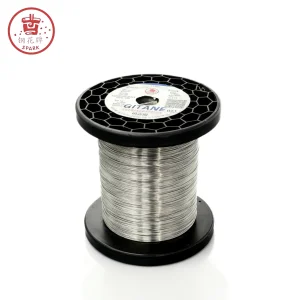
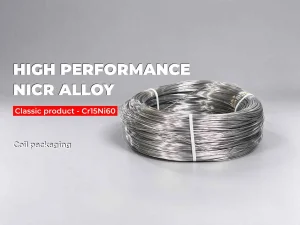


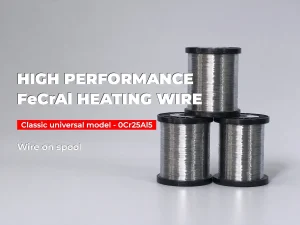
Request Customized 1250°C Heating Wire Engineering Quotations
Contact Beijing Shougang Gitane's metallurgical technical team today for sample requests, grade selection support, or volume factory pricing.
Contact Technical Sales